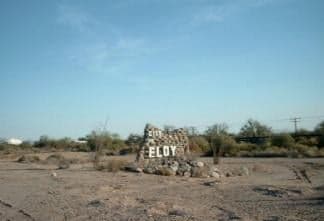
Photo: Wikipedia
Political ClimatePolitical Climate in Eloy, AZ
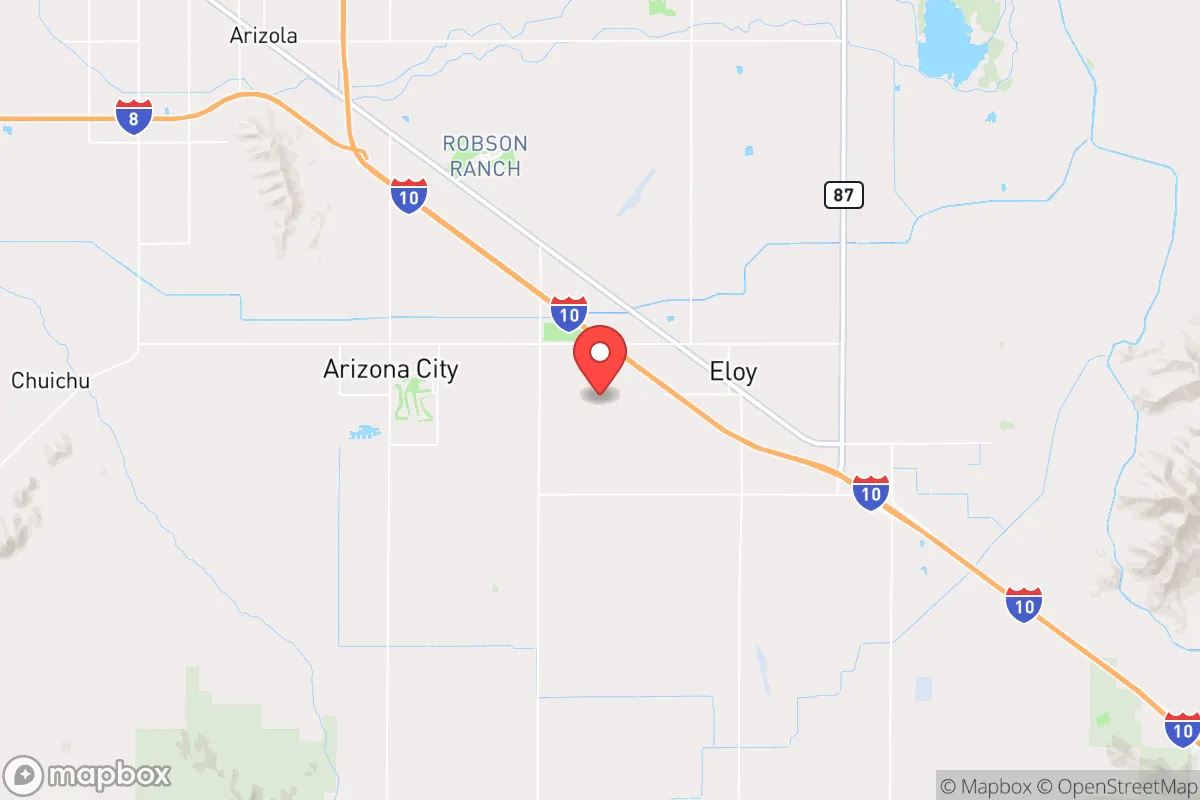
District shown is the primary district for this city’s centroid. Cities may span multiple districts.
Local Political AnalysisPolitical Analysis of Eloy, AZ
Eloy sits right in the middle of the political map, literally and figuratively, with a Cook PVI of EVEN. That means this town is a true bellwether, and for a long time, that meant a pretty solid, common-sense conservative vibe. You could count on folks here to value hard work, personal responsibility, and keeping the government out of your business. But lately, you can feel the ground shifting. The influx of people from places like Phoenix and Tucson, who are fleeing higher costs but bringing their big-city politics with them, is starting to chip away at that old foundation. It’s not a full-blown blue wave yet, but the trajectory is concerning if you value the kind of freedom that comes from a government that stays small and local.
How it compares
To really get Eloy, you have to look at who’s around us. Head north to Casa Grande, and you’ll see a more moderate, business-friendly conservative scene, but even there, the growth is bringing in a lot of new voices that lean left. Drive south to Coolidge, and it’s a different story—that place is still deeply red, with a strong ranching and agricultural base that hasn’t been diluted yet. The real contrast is with Tucson, about an hour south. That city is a progressive stronghold, and you can see the policy spillover—higher taxes, more regulations, and a general attitude that the government knows better than you do. Eloy is the buffer zone, but the pressure from the south is real. We’re seeing more local candidates who talk about “equity” and “inclusion” in ways that sound an awful lot like government overreach, and that’s a red flag for anyone who remembers when the town council’s biggest concern was keeping the streets paved and the water running.
What this means for residents
For the folks who’ve been here a while, the biggest worry is that Eloy’s political shift will mean more rules, more fees, and less personal freedom. We’re already seeing whispers of zoning changes that could make it harder to run a small business out of your home, and there’s talk about “affordable housing” mandates that usually just mean more government control over property rights. If you’re a gun owner, you’re still in good shape—Arizona preemption laws keep local governments from passing their own bans—but you can bet some of the newer residents would love to change that. The school board is another battleground. For years, it was all about local control and parental rights, but now you’ve got activists pushing for curriculum changes that sound more like social engineering than education. It’s a slow creep, but it’s there.
One thing that still sets Eloy apart is the strong sense of community and the fact that most folks still know their neighbors. The local economy is tied to the state prison and agriculture, which keeps things grounded in reality. But the long-term trend is clear: if you want to keep Eloy from turning into another Tucson, you have to stay engaged. Vote in every local election, show up to city council meetings, and don’t let the progressive newcomers frame the debate. The old Eloy—where a handshake meant something and the government stayed out of your garage—is worth fighting for. It’s not gone yet, but the window is closing.

State Political ClimatePolitical Climate in Arizona
State Political AnalysisPolitical Environment in the State
Arizona has transformed from a reliably conservative stronghold into a genuine battleground state over the past two decades, with a partisan lean that now tilts roughly 50-50 in statewide races. The state voted Republican in every presidential election from 1952 to 2016 except 1996, but flipped blue for Joe Biden in 2020 by just 10,457 votes, and remains deeply contested. The dominant coalitions are a fast-growing, moderate-to-liberal Maricopa County suburban bloc and a deeply conservative rural and exurban base, with the balance shifting leftward as Phoenix’s outer suburbs diversify and new arrivals from California and the Midwest bring more centrist or progressive leanings.
Urban vs. rural divide
The political map of Arizona is a story of two Arizonas. Maricopa County, home to Phoenix, Scottsdale, Mesa, and Chandler, casts about 60% of the state’s votes and has been the epicenter of the shift. Once a Republican stronghold, Maricopa County voted for Trump in 2016 by 3 points but flipped to Biden in 2020 by 2 points, driven by explosive growth in suburbs like Gilbert and Chandler, where educated, moderate voters have pushed the county left. Meanwhile, Pima County (Tucson) is reliably Democratic, while Pinal County (Casa Grande, Maricopa) is a swing area trending redder as exurban development accelerates. The rural counties—Mohave (Kingman, Lake Havasu City), Yavapai (Prescott, Sedona), Coconino (Flagstaff), and Apache—are overwhelmingly Republican, with Mohave County giving Trump 72% of the vote in 2020. The urban-rural split is stark: Phoenix and Tucson metros lean left, while the rest of the state is deeply conservative, creating a political tug-of-war that defines every election.
Policy environment
Arizona’s policy environment is a mixed bag for conservatives. The state has a flat income tax rate of 2.5% as of 2023, down from 4.5% in 2020, thanks to Republican-led tax cuts signed by Governor Doug Ducey. Property taxes are low, and there is no estate tax. However, the state’s regulatory posture is uneven: it’s a right-to-work state with limited union power, but local governments in Phoenix and Tucson have imposed strict zoning and environmental rules that can frustrate developers. Education policy is a flashpoint: Arizona has one of the most robust school choice programs in the nation, with universal Empowerment Scholarship Accounts (ESAs) available to all students since 2022, but public school funding remains a perennial battle. Healthcare is largely free-market, with no state-level individual mandate, but Medicaid expansion under the Affordable Care Act was accepted in 2013, a move that still rankles many conservatives. Election laws have been tightened: voter ID is required at the polls, and the state passed a law in 2022 requiring proof of citizenship for federal voter registration, though it’s been challenged in court. Overall, the policy environment is moderately conservative on taxes and school choice, but with significant progressive pockets in urban centers.
Trajectory & freedom
Arizona’s trajectory on personal freedom is a tale of two trends. On the positive side for conservatives, the state has expanded Second Amendment rights significantly: permitless carry (constitutional carry) became law in 2010, and in 2021, the legislature passed a law prohibiting state enforcement of federal gun regulations that don’t have a state equivalent. Parental rights were bolstered in 2022 with a law requiring schools to notify parents of any curriculum involving sexual orientation or gender identity (though it’s been blocked in court). Medical autonomy is strong: there is no state-level vaccine mandate, and in 2023, the legislature banned COVID-19 vaccine mandates for state employees and contractors. However, property rights have been eroded by local governments—Phoenix’s zoning policies have limited single-family home construction, and Tucson has rent control-like measures. On the downside, the state’s tax burden has decreased, but government spending has grown faster than inflation, and the state’s debt has increased. The most concerning trend for freedom-minded residents is the influx of progressive voters from California and other blue states, which is slowly shifting the political center of gravity leftward, particularly in Maricopa County’s suburbs.
Civil unrest & political movements
Arizona has seen its share of political flashpoints. The 2020 election integrity controversy was centered here, with the Arizona Senate’s audit of Maricopa County ballots (the “Cyber Ninjas” audit) becoming a national story. That audit, while controversial, reflected deep distrust among conservatives about election processes, and it led to the passage of stricter voter ID laws. Immigration politics are a constant: the state’s border with Mexico (about 370 miles) makes it a frontline for illegal immigration, and the 2010 SB 1070 law (requiring police to check immigration status during stops) remains a touchstone. In 2024, the state passed a law making it a state crime for non-citizens to enter Arizona outside a port of entry, which is being challenged in court. Protest movements have been active: Black Lives Matter protests in Phoenix in 2020 turned violent, with property damage and clashes with police, while conservative groups like the Arizona Freedom Caucus have organized rallies against vaccine mandates and school closures. Sanctuary policies are a local issue: Tucson and Phoenix have declared themselves “sanctuary cities” for undocumented immigrants, creating tension with state law. A new resident would notice the strong presence of political signage and activism, especially in suburban Phoenix, where yard signs for both parties are common.
Projection
Over the next 5-10 years, Arizona is likely to become more competitive and more purple, with a slow but steady leftward drift driven by demographic changes. The state is growing by about 1.5% annually, with most new residents coming from California, Texas, and the Midwest. These newcomers tend to be more moderate or liberal than native Arizonans, especially in the Phoenix suburbs. The Hispanic population, now about 32% of the state, is growing and leans Democratic, though not as heavily as in other states. The rural base will remain deeply conservative, but its share of the vote will shrink as Maricopa County’s population continues to explode. The Republican Party is fractured between the establishment wing and the MAGA-aligned Arizona Freedom Caucus, which could hurt its ability to win statewide races. A new resident moving in now should expect to see more competitive elections, with the possibility of Democratic control of the governorship and legislature within a decade, especially if the GOP fails to moderate its message. The policy environment will likely become more progressive on issues like education funding, environmental regulation, and voting access, though the state’s constitutional protections for school choice and gun rights will be hard to undo.
Bottom line for a new resident: Arizona offers a relatively low-tax, gun-friendly, and school-choice-rich environment today, but the political winds are shifting. If you’re moving here for the conservative policies, you’ll find a state that still leans right on many issues, but you’ll need to be prepared for a constant political fight to keep it that way. The suburbs of Phoenix are where the battle will be won or lost, and your vote will matter more here than in almost any other state. If you value personal freedom and limited government, Arizona is still a good bet—but don’t expect it to stay that way without active engagement.
* Values derived from national, state, county, city and local statistics and may differ in a specific area. Last updated: 2026-05-01T02:03:48.000Z
Narrative content on this page is AI-generated and may contain mistakes. Verify any details that matter before acting on them.
ReloMaps may earn a commission from affiliate links at no extra cost to you.

