Photo: Wikipedia
Political ClimatePolitical Climate in Everson, WA
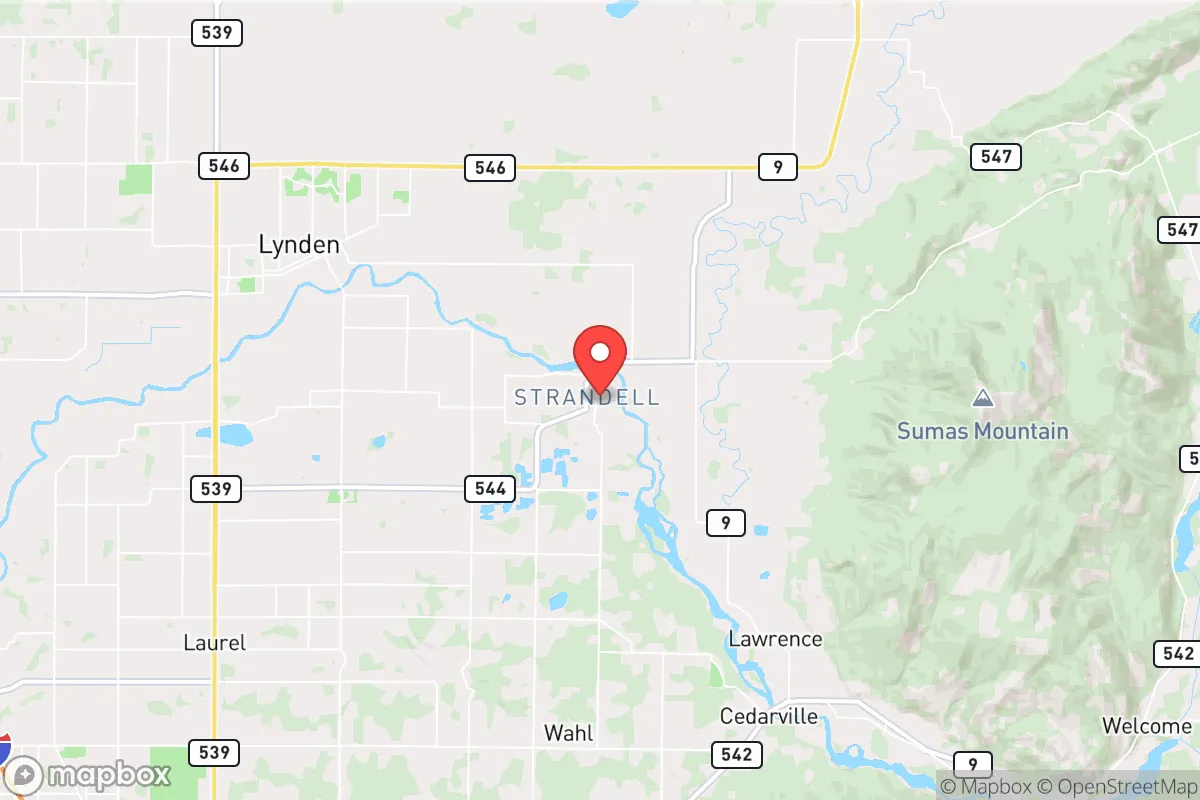
District shown is the primary district for this city’s centroid. Cities may span multiple districts.
Local Political AnalysisPolitical Analysis of Everson, WA
Everson, Washington, sits in a pocket of Whatcom County that leans reliably Democratic, with a Cook Partisan Voting Index of D+12, meaning the area votes about 12 points more Democratic than the national average. This isn’t a recent shift—it’s been building for decades, driven by the steady growth of Bellingham’s influence and the influx of younger, more progressive families moving north from Seattle. The county as a whole has trended blue since the 1990s, and Everson, while more rural than its neighbor Lynden, has followed suit, though with a noticeably more moderate flavor than the city of Bellingham itself.
How it compares
Compared to the broader state of Washington, Everson is actually a bit more Democratic-leaning than the state average. Washington’s statewide Cook PVI is D+8, so Everson’s D+12 puts it about 4 points bluer. That gap is largely because the state’s rural eastern half and parts of the Olympic Peninsula vote heavily Republican, pulling the statewide number rightward. Within Whatcom County, the contrast is stark: head just a few miles west to Lynden, and you’ll find a deeply conservative community shaped by its Dutch Reformed heritage, where Trump won handily in 2020. Drive east toward the Mount Baker foothills, and the politics get more libertarian and independent. Everson sits in the middle—a working-class town where union ties and environmental concerns often outweigh the social conservatism of nearby farming communities. The Nooksack River Valley’s agricultural economy still leans pragmatic, but the cultural pull of Bellingham (a 15-minute drive south) is undeniable in local elections.
What this means for residents
For liberal residents, Everson offers a comfortable baseline: local schools and county services generally align with progressive priorities, and you’re unlikely to face the kind of overt political friction you might in Lynden. But it’s not a monolith. Conservative residents here aren’t silenced—they’re outspoken at city council meetings and active in the local Grange and farm bureaus. The practical reality is that most local races are decided in the Democratic primary, but the general election often sees a competitive Republican challenger who can pull 40-45% of the vote. Property tax levies for schools and infrastructure usually pass, but not by landslides. The real tension isn’t between left and right so much as between growth and preservation: newer residents want denser housing and bike lanes; longtime families worry about losing the town’s small-scale character. Both sides find common ground in opposing the proposed coal terminal at Cherry Point, a rare bipartisan issue here.
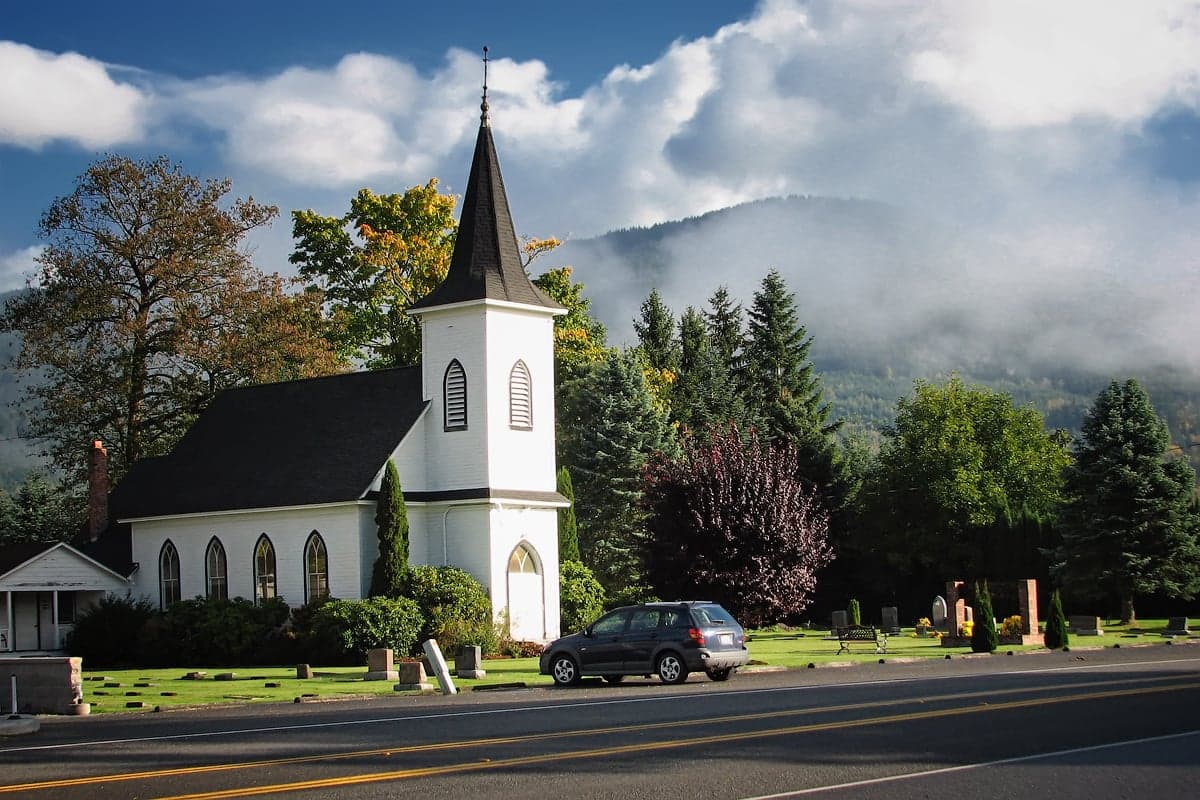
Culturally, Everson feels more like a Pacific Northwest mill town than a bedroom suburb. The Nooksack River runs through it, and the annual Raspberry Festival is a bigger deal than any political rally. You’ll see as many Trump flags on pickup trucks in the outlying areas as you will Harris-Walz signs on front porches in the newer subdivisions near Highway 9. The policy distinction that matters most day-to-day is land use: Whatcom County’s urban growth boundary keeps development tight, which frustrates conservatives who want more housing freedom and pleases liberals who prioritize farmland preservation. If you’re moving here, expect to navigate a community where your neighbor might be a dairy farmer or a remote tech worker, and where the local coffee stand serves both oat milk and whole cream without judgment. The politics are real, but they rarely dominate the conversation—unless you bring up the coal terminal.

State Political ClimatePolitical Climate in Washington
State Political AnalysisPolitical Environment in the State
Washington State has been a reliably blue stronghold for over a decade, with Democrats controlling the governorship, both U.S. Senate seats, and both chambers of the state legislature since 2012. The state’s overall partisan lean is roughly D+8 to D+10 in presidential elections, but that number masks a deep and growing urban-rural chasm. The trajectory over the last 20 years has been a steady march leftward on social and economic policy, driven almost entirely by the explosive growth of the Seattle metro area, while vast stretches of eastern and southwestern Washington have become increasingly Republican. For a conservative-leaning relocator, the practical reality is that you’ll be living in a state where your vote may not carry statewide elections, but where your local community—and your day-to-day life—can feel very different depending on which corner of the state you choose.
Urban vs. rural divide
The political map of Washington is a story of two states. The western third, dominated by the Puget Sound megaregion—Seattle, Bellevue, Tacoma, and Olympia—generates roughly 60% of the state’s vote and is overwhelmingly Democratic. King County alone (Seattle and its suburbs) casts about one-third of all ballots and routinely votes 70-75% Democratic. This is the engine of the state’s blue lean. In contrast, the eastern two-thirds of the state—counties like Spokane, Yakima, Grant, and Stevens—vote reliably Republican, often by 20-30 point margins. The Tri-Cities (Kennewick, Pasco, Richland) are a conservative stronghold, with Benton County voting +18 R in 2024. Even within the western half, there are notable exceptions: Clark County (Vancouver) has been a perennial swing county, flipping between parties, while Whatcom County (Bellingham) is reliably blue but less intensely so than Seattle. The divide isn’t just geographic—it’s cultural. Rural residents often feel ignored by Olympia, and the state’s land-use and environmental policies are a constant source of friction between the urban core and the agricultural and timber communities east of the Cascades.
Policy environment
Washington’s policy environment is defined by a few key structural features. There is no state income tax, which is a major draw for conservatives and high-earners alike, but the state relies heavily on a high sales tax (base rate 6.5%, but local add-ons push it to 8-10% in many cities) and high property taxes. The regulatory posture is generally business-friendly in tech and manufacturing, but strict on environmental and labor issues. Education policy is a mixed bag: the state funds K-12 at above-average levels, but school choice is limited—there are no private school vouchers, and charter schools are few and tightly regulated. Healthcare is heavily regulated, with a state-run insurance exchange and a high rate of Medicaid enrollment. Election laws are among the most liberal in the country: all-mail voting is universal, same-day registration is available, and ballots are automatically sent to every registered voter. This system is widely trusted by both parties in practice, though it has been a flashpoint for election integrity debates nationally.
Recent policy direction
Over the past five years, Washington’s legislature has moved aggressively on a range of issues that matter to relocators. On gun and self-defense law, the state passed a ban on the sale of certain semi-automatic rifles (HB 1240 in 2023), a 10-day waiting period for all firearm purchases, and a requirement for a permit to purchase a handgun. Magazine capacity over 10 rounds is also restricted. These laws are among the strictest in the nation and are a major consideration for gun owners. On parental and education rights, the state has expanded LGBTQ+ inclusive curriculum requirements and passed laws protecting transgender students’ access to facilities and sports, which has been a source of controversy. On speech and privacy, Washington has strong data privacy laws (the Washington Privacy Act) and has restricted the use of facial recognition by government agencies. On medical and bodily autonomy, the state has codified abortion rights into law and protects access to gender-affirming care for minors, including shielding providers from out-of-state legal actions. On property rights, the state’s growth management act and strict environmental regulations (like the Shoreline Management Act) can make development and home renovations costly and slow. On taxation, the state has flirted with a capital gains tax (enacted in 2021, currently under legal challenge) and a wealth tax proposal, though neither has been fully implemented. On voting and ballot access, the state has expanded automatic voter registration and same-day registration, making it very easy to vote but also raising concerns among conservatives about ballot security.
Civil unrest & political movements
Washington has a history of visible political activism. The 2020 protests in Seattle, including the Capitol Hill Autonomous Zone (CHAZ), were a national flashpoint and remain a symbol of the state’s progressive activism for many conservatives. The state also has a strong presence of organized conservative movements, particularly in eastern Washington, where groups like the Washington State Republican Party and local Tea Party affiliates are active. Immigration politics are a major dividing line: Washington is a sanctuary state, with laws limiting local law enforcement cooperation with federal immigration authorities (the Keep Washington Working Act). This has led to tensions in more conservative counties like Yakima and Grant, where agricultural communities rely on immigrant labor but also have strong anti-illegal immigration sentiment. Secession or nullification rhetoric is not mainstream, but there is a persistent “Liberty State” movement in eastern Washington that advocates for splitting the state along the Cascade crest—a proposal that has no realistic path but reflects deep cultural frustration. Election integrity controversies have been muted compared to other states, largely because the all-mail system is seen as efficient and secure by both parties, though some conservative activists have raised concerns about ballot harvesting and voter roll accuracy.
Projection
Over the next 5-10 years, Washington’s political trajectory is likely to continue its leftward drift, but with important caveats. The Seattle metro area will continue to grow, driven by tech and biotech, reinforcing the state’s blue lean. However, in-migration from other states—particularly from California and the Mountain West—is bringing a mix of political views. Some of these newcomers are conservative-leaning, especially those moving to the Tri-Cities, Spokane, or Clark County for lower housing costs and a more rural lifestyle. The state’s Democratic supermajority in the legislature may face challenges if the economy slows or if housing affordability continues to worsen, which could fuel a backlash. The capital gains tax and potential wealth tax are likely to be litigated for years, and a future Republican governor (if one is elected) could slow the pace of new regulations. But the fundamental demographic and cultural forces—urbanization, a highly educated workforce, and a strong environmentalist ethos—suggest that Washington will remain a solidly blue state for the foreseeable future, with the urban-rural divide only deepening.
For a new resident, the bottom line is this: if you’re a conservative moving to Washington, you will find welcoming communities in places like Spokane, the Tri-Cities, or Yakima, where your vote will matter locally and your values will be shared by your neighbors. But you will be living under a state government that is actively pursuing policies you likely oppose on guns, taxes, education, and social issues. If you’re a liberal, you’ll find a state that largely aligns with your views, especially in the Puget Sound region, but you’ll also encounter a deep cultural divide between the urban coast and the rural interior. The practical takeaway: choose your city carefully, because in Washington, your local community will shape your daily experience far more than the state’s overall political label.
* Values derived from national, state, county, city and local statistics and may differ in a specific area. Last updated: 2026-08-17T22:33:56.000Z
Narrative content on this page is AI-generated and may contain mistakes. Verify any details that matter before acting on them.
ReloMaps may earn a commission from affiliate links at no extra cost to you.

