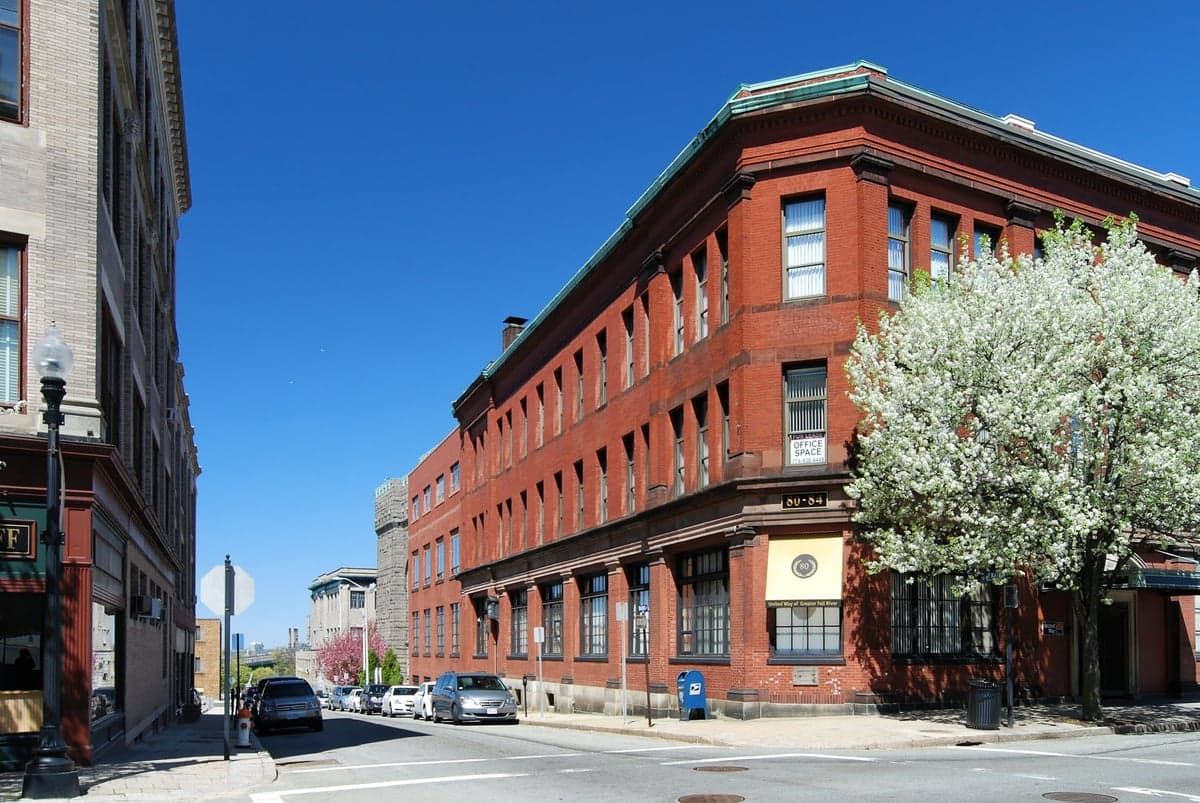
Photo: Wikipedia
Political ClimatePolitical Climate in Fall River, MA
District shown is the primary district for this city’s centroid. Cities may span multiple districts.
Local Political AnalysisPolitical Analysis of Fall River, MA
Fall River has been a Democratic stronghold for generations, with a Cook PVI of D+11 that puts it among the most reliably blue cities in Massachusetts. But if you’ve lived here long enough, you know the party label doesn’t tell the whole story. This is a working-class, Portuguese-American, union-heavy city where folks historically voted Democrat out of loyalty to labor and family tradition, not because they signed onto the whole progressive wishlist. Over the last decade, though, you’ve seen the local machine shift further left on social issues, and a lot of longtime residents—especially in the Flint Village and South End—are starting to feel like the party left them behind. The old-school Fall River voter who’s pro-gun, pro-business, and skeptical of government overreach is still here, but they’re getting quieter as the city’s politics get louder about identity and top-down mandates.
How it compares
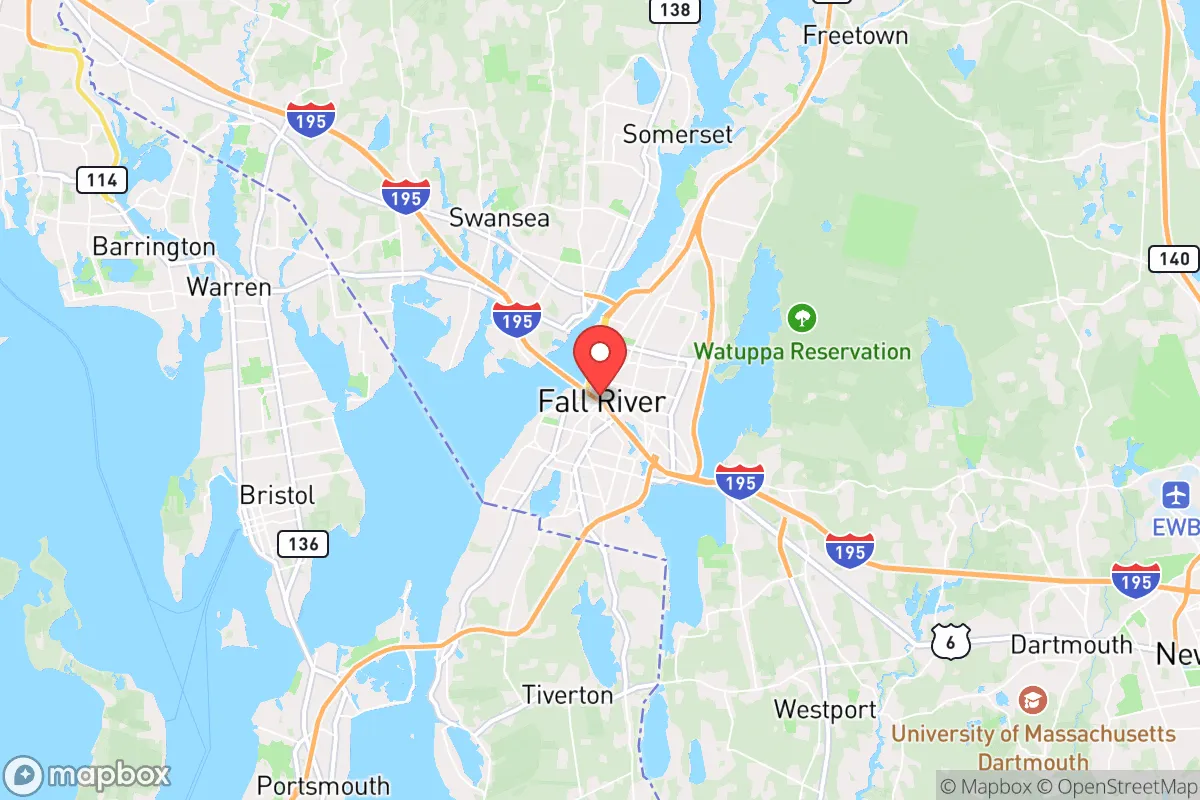
Drive 15 minutes west to Westport or Freetown, and you’re in towns that voted for Trump in 2020 and 2024—places where the local government pushes back on state-level housing mandates and mask requirements. Head north to Taunton, and you’ll find a more mixed picture, with a Republican mayor who’s been vocal about limiting property tax hikes and opposing sanctuary city policies. But Fall River itself? It’s surrounded by redder suburbs but stays blue because of the dense urban core and the powerful influence of the local Democratic committee, which has been tightening its grip on school board and city council races. The contrast is stark: you can live on the same street, but cross the city line into Somerset and suddenly the tax rate drops and the gun laws loosen. That’s the kind of political geography that makes you wonder if the city’s one-party rule is really serving the people who actually live here.
What this means for residents
For the average Fall Riverite, the political climate translates into a few concrete headaches. Property taxes have climbed steadily as the city funds new social programs and union contracts, with the average single-family tax bill hitting around $4,200 in 2025—up nearly 20% from five years ago. Meanwhile, the city council has been quick to adopt state-level progressive policies, like the 2024 ban on plastic bags and the push for rent control, which small landlords say is driving them out of business. If you own a home or run a shop, you’re feeling the squeeze from both the state and the city hall. And on personal freedoms, the local police department has been cooperative with state gun laws that go far beyond what most residents want—magazine limits, licensing delays, and a de facto ban on carrying in many public spaces. It’s the kind of environment where you start asking: who’s actually protecting our rights here?
Culturally, Fall River still holds onto its blue-collar identity—the diners on South Main still serve chourico and eggs, and the Portuguese feast in August draws crowds that don’t care about party politics. But the policy direction is unmistakable. The city’s embrace of sanctuary status in 2017, the push for ranked-choice voting, and the recent school board decision to remove police officers from high schools all signal a shift that feels out of step with the older, more conservative Portuguese and Irish families who built this place. If the trend continues, you’ll see more people voting with their feet—heading to Westport or Dartmouth where the tax burden is lighter and the government stays out of your business. For now, Fall River remains a blue island in a redder sea, but the cracks are showing, and the long-term outlook depends on whether the next generation of voters remembers what made this city work in the first place.

State Political ClimatePolitical Climate in Massachusetts
State Political AnalysisPolitical Environment in the State
Massachusetts has long been one of the most reliably Democratic states in the nation, but its political climate is far more nuanced than the national headlines suggest. Over the past 20 years, the state has shifted from a moderate, blue-collar Democratic stronghold to a deeply progressive one, driven largely by the Boston metro area and its affluent, educated suburbs. While the state hasn’t voted Republican in a presidential election since 1984, the real story is the widening chasm between the urban core and the rest of the state, and the steady erosion of personal freedoms under a one-party government that shows little interest in dissent.
Urban vs. rural divide
The political map of Massachusetts is a tale of two worlds. Greater Boston, including Cambridge, Somerville, and Brookline, is the engine of the state’s progressive tilt. These communities routinely vote 80-90% Democratic and drive policy on everything from rent control to sanctuary city status. The western part of the state, particularly Berkshire County, also leans left, but with a more libertarian, live-and-let-live streak. The real contrast is in Central and Southeastern Massachusetts. Worcester County has become a battleground; while the city of Worcester itself votes Democratic, the surrounding towns like Holden and Paxton are reliably Republican. Plymouth County and the South Shore have seen a notable rightward shift, with towns like Marshfield and Hanover flipping from purple to red over the last decade. The Cape and Islands (Barnstable County) are a mixed bag—retirees and second-home owners lean moderate, but the year-round population in places like Sandwich and Bourne is increasingly conservative. The rural towns of the Berkshires and the Connecticut River Valley (like Shelburne Falls) are the only places where you’ll find a genuine mix of old-school Yankee Republicans and progressive farmers, but they’re being squeezed out by Boston-driven policy.
Policy environment
Massachusetts has one of the highest tax burdens in the country, and it’s only getting heavier. The state income tax is a flat 5% (down from 5.15% in 2020, but that’s the only good news), and the sales tax is 6.25%. Property taxes are high, especially in the Boston suburbs, where a median home in Lexington or Newton can carry a $15,000+ annual bill. In 2022, voters approved a “millionaire’s tax” (a 4% surcharge on income over $1 million), which has already driven some high-earners to consider New Hampshire or Florida. The regulatory environment is among the most restrictive in the nation—permitting for new construction can take years, and the state’s energy policies are aggressively green, including a de facto ban on new natural gas hookups in many towns. Education policy is dominated by the teachers’ unions, and the state’s school choice program is weak compared to neighboring states. Healthcare is heavily regulated, with a state-level individual mandate that predates the ACA. Election laws are among the most liberal: no-excuse mail-in voting, same-day registration, and early voting are all permanent fixtures. For a conservative, the policy environment feels like a slow, steady squeeze—more taxes, more mandates, less local control.
Trajectory & freedom
On the freedom front, Massachusetts is trending in the wrong direction. The 2020 police reform bill (An Act Relative to Justice, Equity and Accountability in Policing) created a new state oversight board with the power to decertify officers, and it banned chokeholds and no-knock warrants. While some provisions were reasonable, the bill also made it harder for officers to use qualified immunity, which has led to a wave of retirements and a recruitment crisis. On gun rights, the state already has some of the strictest laws in the country—a licensing system that gives local police chiefs enormous discretion, a ban on “assault weapons” (defined so broadly it includes many common rifles), and a 10-round magazine limit. In 2024, the legislature passed a new gun law that requires microstamping on all new handguns (a technology that doesn’t really exist yet) and bans carrying firearms in most public places, including parks and government buildings. The state also passed a “parental rights” bill in 2022 that requires schools to notify parents if a child changes their gender identity or pronouns—but it was vetoed by Governor Maura Healey, and the veto was sustained. On medical freedom, Massachusetts was one of the first states to impose a COVID-19 vaccine mandate for schoolchildren (later rescinded), and it still has one of the most aggressive public health bureaucracies in the country. The trend is clear: the state government is expanding its reach into nearly every aspect of daily life, and there’s little political will to push back.
Civil unrest & political movements
Massachusetts has a long history of activism, but the balance has shifted dramatically. The 2020 Black Lives Matter protests in Boston were large and mostly peaceful, but they also led to the toppling of a statue of Christopher Columbus in the North End and a sustained push to defund the police (which ultimately failed). The state’s sanctuary status—Massachusetts has some of the strongest “Trust Act” protections for undocumented immigrants—has made it a flashpoint in the ongoing immigration debate. In 2023, the state’s emergency shelter system was overwhelmed by a surge of migrants, leading to a crisis in towns like Quincy and Woburn, where hotels were converted into shelters. This has fueled a growing backlash, with local officials in more conservative towns like Methuen and Haverhill passing resolutions to limit shelter placements. On the right, the “Massachusetts Republican Party” is a shell of its former self, but grassroots groups like the “MassFiscal Alliance” and local “school committee” candidates have had some success in suburban races. The “election integrity” movement is small but vocal, focused on the state’s mail-in voting system and the lack of voter ID requirements. There’s also a small but persistent “New Hampshire secession” movement among some conservatives in the northern part of the state, but it’s mostly a symbolic gesture.
Projection
Over the next 5-10 years, Massachusetts will likely become even more progressive, but the pace of change may slow as the costs become more visible. The state’s population is aging and slowly declining (it lost a House seat after the 2020 census), and the high cost of living is driving young families and middle-class workers to New Hampshire, Maine, and Texas. The in-migration that does occur is overwhelmingly from other blue states (New York, California) and from international immigrants, which reinforces the Democratic majority. The Republican Party is unlikely to win a statewide office anytime soon, but it could gain ground in the legislature if the urban-rural divide continues to widen. The biggest wildcard is the state’s fiscal health—the “millionaire’s tax” is already showing signs of revenue volatility, and the state’s pension system is underfunded. If a recession hits, the tax-and-spend model could face serious strain. For a conservative moving in now, the expectation should be that the political environment will remain hostile to your values, but you’ll find like-minded communities in the suburbs and rural towns—just don’t expect to change the state’s direction anytime soon.
Bottom line: Massachusetts offers world-class education, healthcare, and infrastructure, but it comes at the cost of high taxes, heavy regulation, and a government that is increasingly comfortable telling you how to live. If you’re a conservative, you’ll need to be strategic about where you live (think Holden, Marshfield, or Sandwich rather than Cambridge or Brookline), and you’ll need to accept that your vote will rarely matter in statewide elections. The state is beautiful, safe, and prosperous, but the political climate is a one-party system that shows no signs of cracking. If personal freedom and limited government are your top priorities, this is probably not the place for you. If you can tolerate the trade-offs, you’ll find a high quality of life—just keep your powder dry and your options open.
* Values derived from national, state, county, city and local statistics and may differ in a specific area. Last updated: 2026-04-19T06:06:07.000Z
Narrative content on this page is AI-generated and may contain mistakes. Verify any details that matter before acting on them.
ReloMaps may earn a commission from affiliate links at no extra cost to you.

