Photo: Wikipedia
Political ClimatePolitical Climate in Findlay, OH
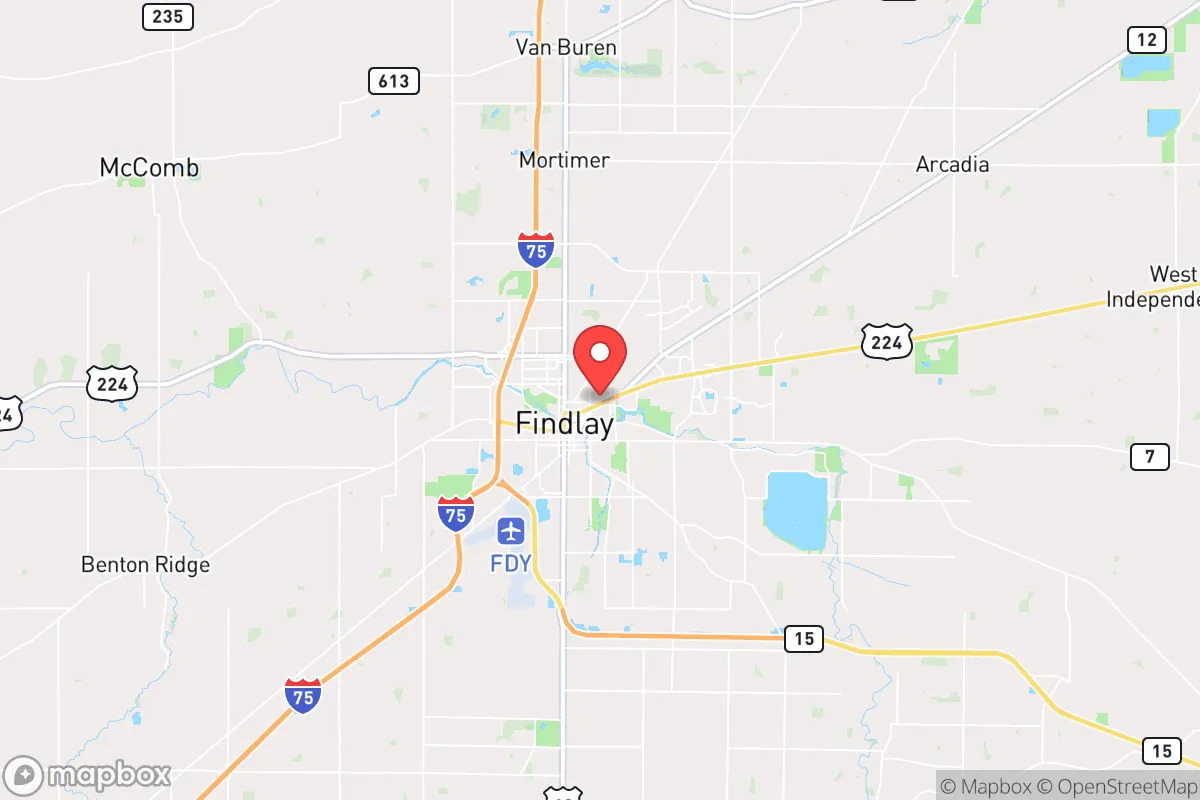
District shown is the primary district for this city’s centroid. Cities may span multiple districts.
Local Political AnalysisPolitical Analysis of Findlay, OH
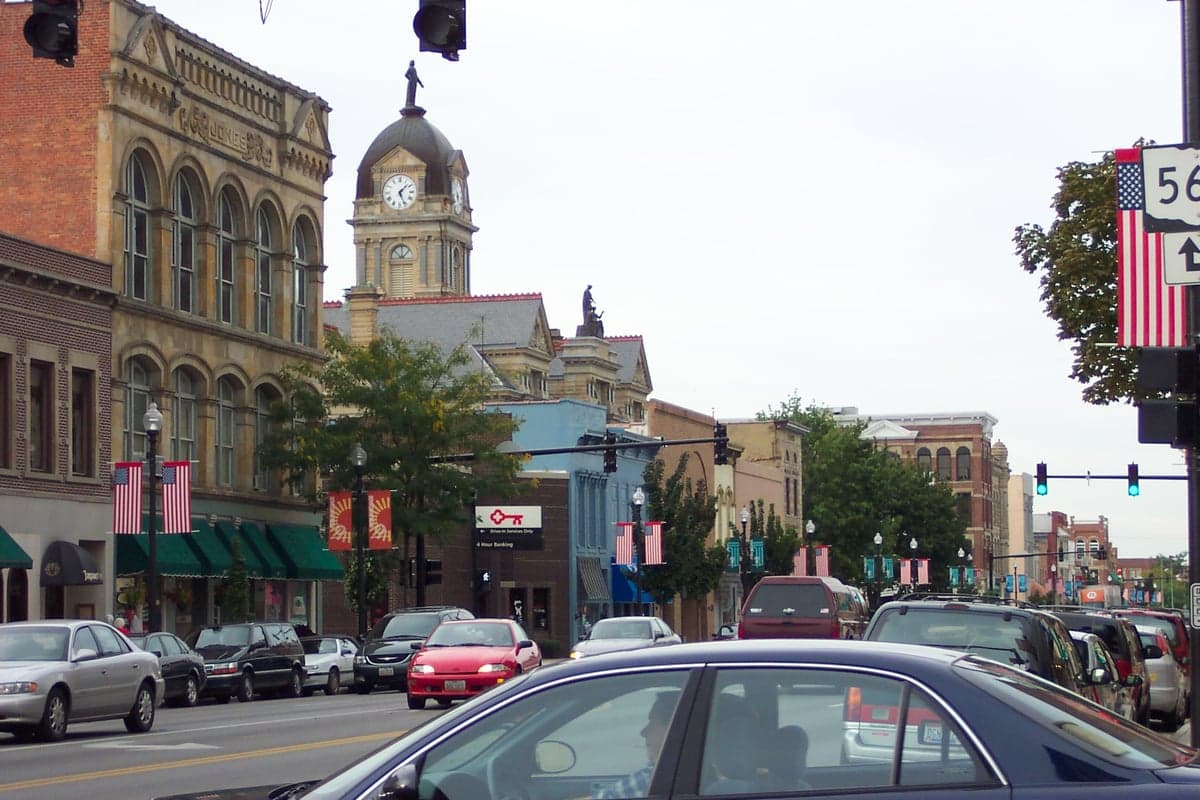
Findlay, Ohio, has long been a solidly conservative community, and that’s not changing anytime soon. With a Cook PVI of R+14, this town leans heavily Republican, and you can feel it in the local culture, the voting patterns, and the way people talk about their rights. It’s not just about party labels—it’s about a deep-seated belief in personal freedom, limited government, and keeping the feds and state out of your business. Over the last decade, Findlay has held its ground, even as some surrounding areas have started to drift left. The 2020 and 2024 elections only reinforced that: Hancock County went for Trump by wide margins, and local races rarely see a serious Democratic challenge. That’s not an accident—it’s a reflection of a community that values its independence and isn’t shy about pushing back against government overreach.
How it compares
If you drive 45 minutes east to Bowling Green, you’ll hit a college town that’s trending blue, with a younger, more transient population that’s embraced progressive policies. Lima, about 30 minutes west, is more mixed but still leans conservative, though it’s seen some demographic shifts that have nudged it slightly left. Findlay, by contrast, feels like a fortress of common sense. The surrounding towns—like Arlington, Mount Blanchard, and Vanlue—are even more conservative, often voting R+20 or higher. But what sets Findlay apart is its economic stability: the Marathon Petroleum headquarters anchors the local economy, and that blue-collar, energy-sector workforce tends to vote with their wallets and their values. You won’t find the same kind of progressive activism here that you’d see in Columbus or Cleveland. It’s a place where people still believe in the Second Amendment, local control, and keeping taxes low—and they vote accordingly.
What this means for residents
For folks living in Findlay, the political climate translates into a daily life that’s largely free from the kind of government overreach you hear about in bigger cities. There’s no talk of defunding the police, no push for radical zoning changes, and no serious movement to raise property taxes for social programs. The city council and county commissioners are reliably conservative, which means you’re not waking up to new mandates or restrictions on your business or your property. That said, there’s a quiet concern among long-time residents about the long-term trajectory. As the state as a whole sees more urban influence from Columbus and Cincinnati, there’s always a risk that state-level policies could start to chip away at local autonomy. For now, though, Findlay remains a place where you can live your life without the government breathing down your neck—and that’s exactly how most folks here want it.
Culturally, Findlay stands out for its emphasis on personal responsibility and community self-reliance. You won’t see the same kind of identity politics or social engineering experiments that have taken root in places like Toledo or Dayton. The local school board has resisted progressive curriculum changes, and the county has been a stronghold for pro-life and pro-Second Amendment advocacy. There’s a real sense that if you want something done, you do it yourself—not wait for a government program. That’s the Findlay way. Looking ahead, the biggest threat isn’t from within—it’s from the outside. As Ohio’s population shifts and the state legislature faces pressure from urban centers, there’s a chance that Findlay’s conservative values could be undermined by top-down mandates. But for now, this town is holding the line, and the people here are keeping a close eye on any signs of government creep. If you value your freedoms and want to live in a place that respects them, Findlay is still one of the best bets in the Midwest.

State Political ClimatePolitical Climate in Ohio
State Political AnalysisPolitical Environment in the State
Ohio has long been the quintessential swing state, but its political center of gravity has shifted noticeably rightward over the past decade. While still capable of producing close statewide races, the state has voted for Donald Trump by comfortable margins in both 2016 (8 points) and 2020 (8 points), and the 2022 midterms saw Republicans sweep every statewide executive office and maintain a supermajority in the legislature. The old "purple" Ohio is now reliably red-leaning, driven by a combination of rural consolidation, working-class realignment, and a steady exodus from the most Democratic urban cores.
Urban vs. rural divide
The political map of Ohio is a study in stark contrasts. The three major metros—Cleveland, Columbus, and Cincinnati—are Democratic strongholds, with Cuyahoga County (Cleveland) delivering over 66% for Biden in 2020 and Franklin County (Columbus) hitting 62%. But outside these islands, the state is overwhelmingly red. The rural and exurban counties of Morrow, Holmes, and Mercer routinely vote 75-80% Republican. The real story is the suburban shift: counties like Delaware (north of Columbus) and Warren (north of Cincinnati) have moved from competitive to solidly Republican, while Lake County (east of Cleveland) flipped from Obama to Trump and stayed there. The industrial Mahoning Valley, anchored by Youngstown, has undergone a dramatic realignment—Mahoning County went from +20 Obama in 2012 to +2 Trump in 2020, a 22-point swing that epitomizes the region's abandonment of the Democratic Party over trade and cultural issues.
Policy environment
Ohio's policy landscape is broadly conservative, with a few notable exceptions. The state has a flat income tax of 3.5% (down from 4.8% in 2019) and is on a path to eliminate it entirely, with the legislature passing further cuts in 2023. Property taxes are moderate, though recent reappraisals in fast-growing areas like Delaware County have sparked backlash. The regulatory environment is business-friendly, with right-to-work laws not on the books but a general anti-union tilt in the legislature. On education, Ohio has one of the most robust school choice programs in the nation, including the EdChoice voucher system that allows students in underperforming districts to attend private schools—a major draw for conservative parents. Healthcare is a mixed bag: the state expanded Medicaid under Obamacare, but the legislature has passed laws restricting abortion (a heartbeat bill that took effect after the 2022 Dobbs decision) and banning transgender surgeries for minors. Election laws have tightened, with voter ID requirements and limits on drop boxes, though early voting remains generous. The state also preempts local gun ordinances, ensuring uniform firearm laws statewide.
Trajectory & freedom
On the freedom front, Ohio has been a net positive for conservatives over the past five years, but the picture is nuanced. The 2022 passage of House Bill 99 eliminated the requirement for a permit to carry a concealed handgun, making Ohio a constitutional carry state—a clear expansion of Second Amendment rights. The Parental Bill of Rights (HB 8), signed in 2023, requires schools to notify parents of any changes to a student's health or well-being, including mental health services and gender identity discussions, and gives parents the right to opt their children out of certain curricula. This was a direct response to progressive school board policies in places like Upper Arlington and Shaker Heights. However, the state's Issue 1 defeat in 2023—where voters enshrined abortion rights in the state constitution—was a major setback for the pro-life movement and a reminder that direct democracy can override legislative will. On medical freedom, Ohio did not impose broad vaccine mandates during COVID, but local health departments in Franklin County and Cuyahoga County pushed aggressive restrictions that the state legislature has since moved to curtail with bills limiting future emergency powers. Property rights are generally strong, though the state's aggressive use of eminent domain for economic development projects in Cincinnati and Columbus has raised eyebrows.
Civil unrest & political movements
Ohio has seen its share of political turbulence. The 2020 George Floyd protests in Columbus and Cincinnati were large but largely peaceful, though looting in downtown Columbus led to a heavy National Guard presence. The state was a flashpoint for election integrity concerns in 2020, with then-Secretary of State Frank LaRose (a Republican) defending the process while Trump allies pushed for audits in Mahoning County and Stark County. The "Ohio Freedom Alliance" and similar grassroots groups have been active in school board meetings, particularly in suburban districts like Olentangy and Mason, pushing back against critical race theory and mask mandates. Immigration politics are less heated than in border states, but the arrival of Haitian migrants in Springfield (Clark County) has stirred local tensions and drawn national attention. There is no sanctuary city policy in Ohio; the state has passed laws prohibiting such designations. The most visible flashpoint for a new resident would likely be the ongoing cultural war in public schools—expect to see signs for school board candidates and heated debates at local meetings, especially in the fast-growing exurbs.
Projection
Over the next 5-10 years, Ohio is likely to become more, not less, Republican. The demographic trends favor the GOP: the state's population is aging, the rural and exurban counties are growing faster than the urban cores, and the in-migration from other states is disproportionately conservative (people moving from California and Illinois to places like Delaware County and Warren County). The Democratic base in Cleveland and Columbus is shrinking, and the party's brand in the industrial Midwest has not recovered from the trade and cultural shifts of the last decade. The state's path to eliminating the income tax will accelerate, making it even more attractive to high-earning conservatives. However, the 2023 abortion rights amendment shows that the GOP cannot take cultural conservatism for granted—the issue mobilized suburban women and young voters in a way that surprised the establishment. A new resident moving in now should expect a state that is broadly free and conservative, but with persistent cultural battles in the suburbs and a Democratic minority that is concentrated but vocal. The practical takeaway: Ohio offers a low-tax, high-freedom environment for those who align with its direction, but you'll need to be engaged locally to protect that trajectory from being eroded by ballot initiatives or urban county overreach.
Bottom line for a new resident: Ohio is a solid bet for a conservative-leaning family or individual. You get a low and falling tax burden, strong school choice, constitutional carry, and a legislature that is actively pushing back against federal and local overreach. The trade-off is that you'll live in a state where the cultural war is constant—especially in the suburbs and school boards—and where the urban counties will always try to impose their will on the rest of the state. If you're willing to be an active citizen, Ohio is a place where your vote and your voice still matter. If you're looking for a quiet, settled conservative haven, the exurbs of Cincinnati or Columbus are your best bet.
* Values derived from national, state, county, city and local statistics and may differ in a specific area. Last updated: 2026-04-21T19:12:13.000Z
Narrative content on this page is AI-generated and may contain mistakes. Verify any details that matter before acting on them.
ReloMaps may earn a commission from affiliate links at no extra cost to you.

