Political ClimatePolitical Climate in Sarasota County
Showing district-level results — no local-only data available.
Local Political AnalysisPolitical Analysis of Sarasota County
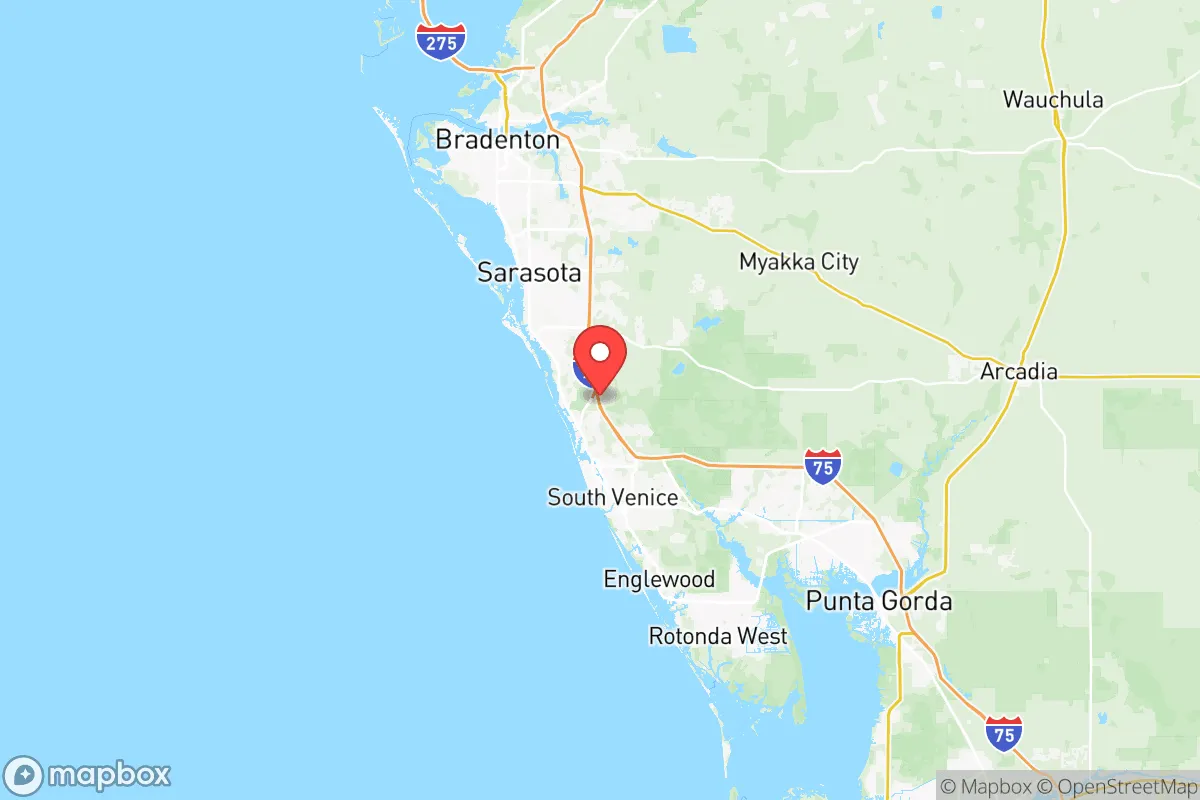
If you're looking at Sarasota County, you're looking at a place that's been reliably Republican for decades — the Cook PVI sits at R+11, which is no accident. But I've lived here long enough to watch the political ground shift under our feet. The county as a whole still votes red, but the city of Sarasota itself and parts of Siesta Key have been trending bluer, especially since 2020. Meanwhile, Venice and the rural eastern parts of the county remain deeply conservative. The real story is how those blue pockets are growing, and what that means for the kind of government overreach we're starting to see at the local level.
How it compares
Compared to Florida as a whole — which sits at R+5 — Sarasota County is significantly more conservative. That R+11 rating puts us in the same league as neighboring Manatee County (R+12) and Charlotte County (R+14), but with a twist: Sarasota has a much stronger progressive activist base, especially in the downtown core and along the barrier islands. In the 2024 election, Donald Trump carried Sarasota County by about 13 points, but lost the city of Sarasota precincts by double digits. Venice precincts, by contrast, went for Trump by 20+ points. North Port is the swing zone — it voted for Trump but by narrower margins, and local races there are often decided by a few hundred votes. That's where the real fight is happening now.
What this means for residents
For those of us who moved here to escape heavy-handed government, the trend is concerning. The Sarasota city commission has pushed through progressive policies like inclusionary zoning and a "climate adaptation" plan that adds layers of regulation on new construction. The school board, once reliably conservative, now has a 3-2 split after two progressive candidates won in 2022. That's led to debates over curriculum transparency and parental rights that would have been unthinkable a decade ago. Meanwhile, the county commission remains solidly Republican, but they've had to fight off state preemption on issues like vacation rentals and short-term rental regulations. The bottom line: if you value personal freedom and limited government, you'll feel more at home in Venice or the unincorporated areas than in downtown Sarasota.
Culturally, Sarasota County has always been a mix of old Florida and new money, but the policy divide is becoming sharper. Gun rights are still strongly protected — open carry is legal, and the county sheriff's office is vocal about not enforcing any federal overreach. Property rights are generally respected, though the city's new "complete streets" ordinances have drawn complaints from homeowners who feel their neighborhoods are being micromanaged. The biggest distinction from the rest of Florida is the sheer intensity of local activism: you'll see competing yard signs on every block, and the local Facebook groups are a daily battleground. If you're looking for a place where the political temperature is moderate, Sarasota County isn't it anymore — but if you want to know exactly where your neighbors stand, you'll find out fast.

State Political ClimatePolitical Climate in Florida
State Political AnalysisPolitical Environment in the State
Florida has been a reliable Republican stronghold for decades, with a Cook PVI of R+5, but don't let that number fool you—it's a purple state that's been trending rightward overall, though with some notable recent wobbles. Over the last 10-20 years, the state shifted from a classic swing state (think Bush v. Gore 2000) to a solidly red-leaning one, driven by massive in-migration from blue states and a growing conservative retiree and Hispanic population in places like Miami-Dade and the I-4 corridor. But the 2022 and 2024 cycles showed that Democrats can still compete in the big metros, and the margin of victory has narrowed in some suburban areas, so the trajectory is more of a slow red consolidation with blue pockets that refuse to fade.
Urban vs. rural divide
The political map of Florida is a tale of three Floridas: the deep-red Panhandle and rural interior, the purple-to-blue metros, and the conservative-leaning suburbs and exurbs that often decide elections. Miami-Dade County, once a Democratic bastion, has been shifting right—especially among Cuban and Venezuelan voters—and now votes Republican in statewide races, though it still has liberal pockets in Miami Beach and Coral Gables. Orlando (Orange County) and Tampa (Hillsborough County) are reliably blue, driven by younger, diverse populations and union influence. Jacksonville (Duval) leans red but is competitive, while Gainesville (Alachua) is a deep-blue college town. The Villages, a massive retirement community in central Florida, is one of the most Republican-voting places in America. The Panhandle—Pensacola, Panama City, and the rural counties—is solidly red, with some of the highest Trump margins in the state. St. Augustine (St. Johns County) is a fast-growing, affluent, and increasingly red suburb that's become a GOP stronghold. The divide isn't just about cities vs. countryside; it's about cultural values, economic interests, and the pace of change.
Policy environment
Florida's policy environment is a conservative dream in many ways, but with some recent overreach that gives longtime residents pause. The state has no personal income tax, low corporate taxes, and a regulatory climate that's business-friendly—no surprise that companies are relocating here. On education, Governor Ron DeSantis pushed through HB 1 (2023), expanding school choice and vouchers to nearly all families, and HB 1557 (2022), the Parental Rights in Education law (often called "Don't Say Gay"), which restricts classroom instruction on sexual orientation and gender identity in early grades. Election integrity saw SB 90 (2021), which tightened voter ID rules, limited drop boxes, and restricted mail-in voting—a response to 2020 concerns. Healthcare: no Medicaid expansion, and HB 5 (2023) banned abortion after six weeks, with limited exceptions. Gun rights are strong: SB 150 (2023) allowed permitless carry (constitutional carry). Property rights got a boost with SB 250 (2024), limiting HOA powers to fine homeowners. But there's a flip side: the state's preemption laws have been used to override local ordinances on everything from minimum wage to plastic bags, which some see as government overreach from Tallahassee.
Trajectory & freedom
On balance, Florida has become more free in many areas over the last decade—lower taxes, expanded school choice, constitutional carry, and less COVID-era lockdowns than most states. But the trajectory isn't a straight line toward liberty. The DeSantis administration's use of state power to punish private companies (like the Disney district dissolution after the company opposed HB 1557) and to crack down on protestors via HB 1 (2021), the anti-riot law, raised eyebrows among even some conservatives who worry about government overreach. The state also banned social media platforms from deplatforming political candidates (SB 7072, 2021), which was partly struck down in court. On medical freedom, Florida banned vaccine passports and prohibited mask mandates in schools, which many saw as pro-freedom. But the six-week abortion ban and the ongoing fight over transgender care for minors (SB 254, 2023) represent significant restrictions on personal autonomy. The net effect: Florida is freer than most states on economic and Second Amendment issues, but less free on social and medical choices, and the trend is toward more government involvement in cultural battles.
Civil unrest & political movements
Florida hasn't seen the level of civil unrest that plagued Portland or Seattle, but it's had its flashpoints. In 2020, protests erupted in Miami, Orlando, and Tampa after George Floyd's death, with some looting and clashes. The state's response was aggressive: DeSantis declared a state of emergency and deployed the Florida Highway Patrol and National Guard. Since then, organized activism has been more about immigration and education. The SB 1718 (2023) immigration law, which requires hospitals to ask about immigration status and expands penalties for transporting undocumented immigrants, sparked protests from immigrant rights groups. The "Don't Say Gay" law led to walkouts and rallies, especially in liberal enclaves like Gainesville and Miami Beach. On the right, the "Moms for Liberty" movement has been highly active in school board elections, pushing for parental rights and book challenges. Election integrity remains a hot topic: after 2020, Florida's GOP-led legislature passed SB 90, and there have been ongoing debates about the accuracy of voter rolls. A new resident would notice the political polarization in everyday life—yard signs, bumper stickers, and heated local Facebook groups are common, especially in swing suburbs like those around Tampa and Orlando.
Projection
Over the next 5-10 years, Florida is likely to remain a red-leaning state, but the margin could shrink as more blue-state transplants settle in the I-4 corridor and South Florida. The demographic trends are mixed: the influx of retirees from the Northeast and Midwest tends to be conservative, but younger professionals moving to Miami, Orlando, and Tampa are more liberal. The Hispanic vote, especially in Miami-Dade, is shifting right, but Puerto Rican and Central American communities in Orlando lean Democratic. The rural and exurban areas will stay deep red, while college towns and inner cities will get bluer. The biggest wildcard is the state's housing affordability crisis—if it pushes out young families and working-class voters, the political balance could shift. Expect continued conservative policy on taxes, education, and guns, but with more internal fights over the proper role of government in personal lives. The Disney fight showed that even conservative voters can get uneasy when the state uses its power to punish political opponents. A new resident moving in now should expect a state that's broadly free-market and culturally conservative, but with growing tensions between the "leave me alone" libertarian wing and the "we know what's best" populist wing of the GOP.
Bottom line for someone considering a move: Florida offers low taxes, school choice, strong gun rights, and a business-friendly climate—all big draws for conservatives. But you'll also find a state government that's increasingly willing to wade into cultural battles and override local control, which can feel like overreach even if you agree with the policies. The political climate is vibrant and polarized, so you'll need to pick your community carefully. If you want a reliably red, quiet suburban life, look at St. Johns County or The Villages. If you prefer a more purple, diverse environment, Tampa or Jacksonville might work. Just know that the political winds are shifting, and the Florida of 2035 may look different from the Florida of today—but it's still likely to be a freer and more prosperous place than most of the country.
* Values derived from national, state, county, city and local statistics and may differ in a specific area. Last updated: 2026-05-14T20:38:04.000Z
Narrative content on this page is AI-generated and may contain mistakes. Verify any details that matter before acting on them.
ReloMaps may earn a commission from affiliate links at no extra cost to you.

