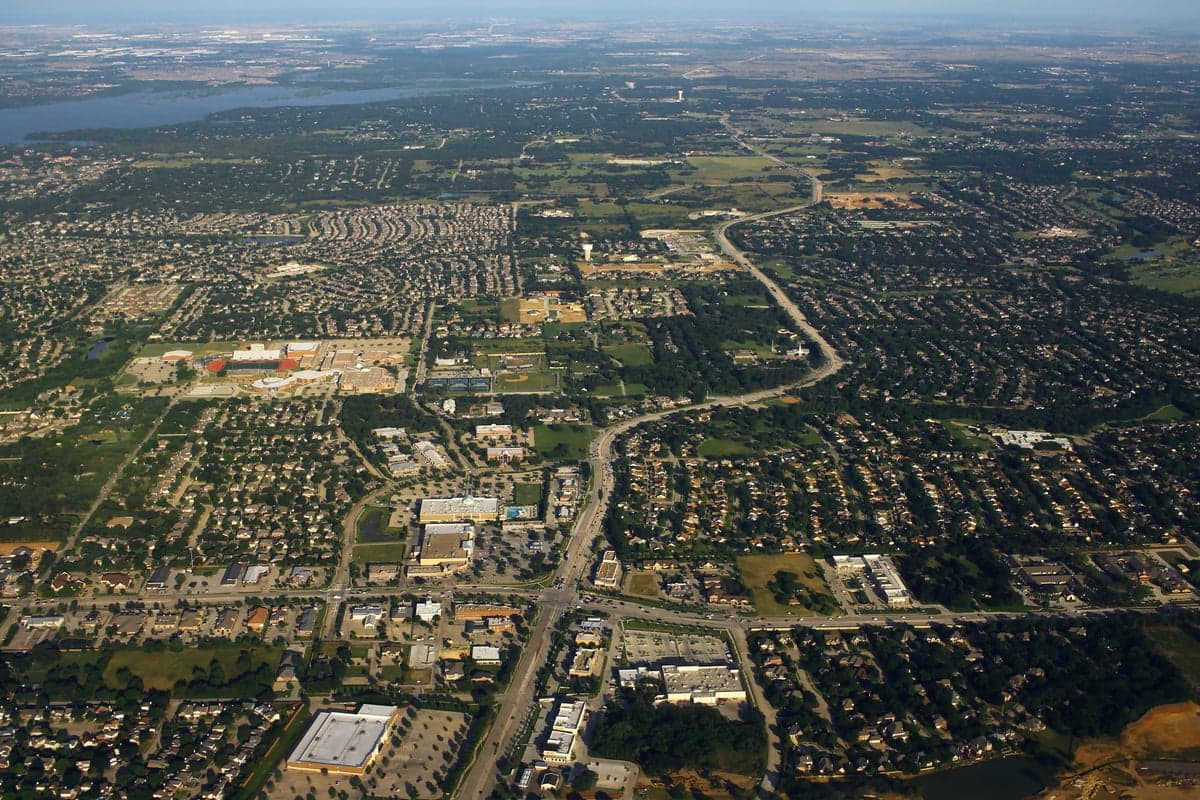
Photo: Wikipedia
Political ClimatePolitical Climate in Flower Mound, TX
District shown is the primary district for this city’s centroid. Cities may span multiple districts.
Local Political AnalysisPolitical Analysis of Flower Mound, TX
Flower Mound has long been a solidly conservative community, and that hasn't changed much, even as the rest of the Dallas-Fort Worth metroplex has gotten a little more purple. The Cook Partisan Voting Index (PVI) for the area sits at R+11, meaning it's 11 points more Republican than the national average. That's a pretty reliable number, and it reflects what you see on the ground—most folks around here vote for lower taxes, less regulation, and a government that stays out of your personal business. But I've been here long enough to see the edges start to fray a little, especially as more people move in from blue states and bring their voting habits with them. The core is still strong, but you can feel the pressure.
How it compares
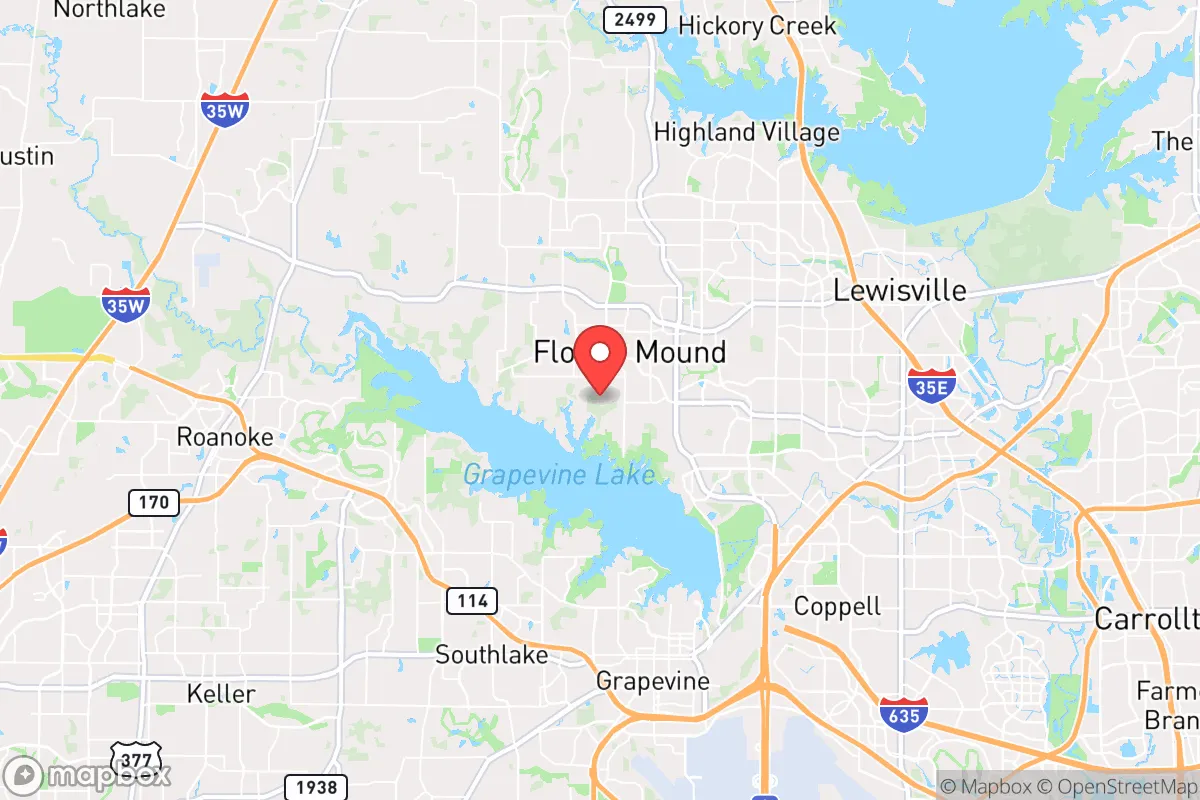
To really understand Flower Mound, you have to look at who's around us. Head south into Lewisville or Carrollton, and you'll find a much more mixed political scene—those areas have been trending left for years, with more progressive city councils and a heavier hand on local ordinances. Highland Village and Coppell are closer to Flower Mound's lean, but even they've seen some shifts. The real contrast is Dallas proper, which is a completely different world—high taxes, aggressive zoning, and a government that seems to want to manage every aspect of your life. Flower Mound, by comparison, has held the line. We've kept our zoning sane, our police funded, and our schools focused on academics, not social experiments. But the pressure is real: every new housing development brings a few more folks who think the way things are done in Austin or Portland is the way to go.
What this means for residents
For the people who live here, the R+11 lean means a few concrete things. First, your property taxes are still relatively low compared to neighboring towns that have gone all-in on bond packages and new spending. Second, the local government generally takes a hands-off approach to personal freedoms—whether that's how you run your business, what you do with your land, or how you choose to educate your kids. That's a big deal. I've seen towns around us start dictating what kind of light bulbs you can use or how many chickens you can keep, and that kind of overreach is a red flag. Flower Mound has mostly avoided that, but you have to stay vigilant. The school board elections are where the real fights happen now, and if you're not paying attention, you might wake up to a curriculum that's more about activism than arithmetic.
There's also a cultural distinction worth noting. Flower Mound is still a place where people wave at each other, where the Fourth of July parade is a big deal, and where the local churches are full on Sunday. That's not just nostalgia—it's a reflection of a community that values tradition and personal responsibility over government programs. The long-term trend, though, is uncertain. As the metroplex grows, the political gravity shifts. If you're looking for a place that still feels like the Texas you remember, Flower Mound is one of the last holdouts. But you can't take it for granted. Keep an eye on those local elections, because the character of this town depends on them.

State Political ClimatePolitical Climate in Texas
State Political AnalysisPolitical Environment in the State
Texas remains a solidly Republican state, but the margin has tightened noticeably over the past decade. In 2024, Donald Trump carried the state by roughly 9 points, down from 11 points in 2020 and 16 points in 2016. The dominant coalition is still a mix of rural conservatives, suburban moderates, and business-minded fiscal conservatives, but explosive growth in the blue-leaning metros of Austin, Dallas, Houston, and San Antonio is slowly shifting the map. The state’s political identity is now a tug-of-war between its traditional libertarian-conservative roots and the progressive influx from other states.
Urban vs. rural divide
The political geography of Texas is stark. The vast rural and exurban areas — places like Lubbock, Midland, and the Panhandle — vote Republican by 30 to 50 points. These are the backbone of the state’s conservative majority. Meanwhile, the major urban cores are deep blue: Harris County (Houston) went for Biden by 13 points in 2020, Dallas County by 16, Travis County (Austin) by 43, and El Paso County by 35. The real battleground is the fast-growing suburban ring counties — Collin, Denton, Fort Bend, and Williamson — which were once reliably red but are now trending purple. In 2024, Collin County (north of Dallas) voted for Trump by only 9 points, down from 16 in 2016. These suburbs are where the state’s political future will be decided, and they are increasingly influenced by out-of-state transplants who bring their voting habits with them.
Policy environment
Texas’s policy environment is a mixed bag for conservatives. On the plus side, there is no state income tax, which is a major draw. Property taxes are high — among the highest in the nation — but the state legislature has passed multiple rounds of compression and appraisal caps, most notably SB 2 (2023), which cut school property tax rates by roughly 15%. The regulatory posture remains business-friendly, with minimal zoning in many cities and a right-to-work law that keeps unions weak. On education, the state passed HB 3 (2019) to boost teacher pay and school funding, but also HB 3979 (2021) and SB 3 (2021), which limit how race and current events can be taught in public schools — a win for parental rights advocates. Healthcare policy is a flashpoint: Texas did not expand Medicaid under the ACA, and the state has some of the strictest abortion laws in the country after SB 8 (2021) and the trigger law that took effect in 2022. Election integrity saw major changes with SB 1 (2021), which tightened ID requirements, limited drive-through voting, and banned 24-hour polling places. For conservatives, these policies are generally seen as protecting election security and local control, but they have also drawn intense legal challenges and corporate backlash.
Trajectory & freedom
On balance, Texas has been moving more free in several key areas over the past five years, but with some worrying exceptions. The biggest expansion of personal liberty came in gun rights: HB 1927 (2021) made Texas a permitless carry state, allowing most adults to carry a handgun without a license or training. That’s a clear win for Second Amendment advocates. Parental rights were strengthened by HB 900 (2023), which requires age verification for library materials and restricts sexually explicit content in schools — though it’s currently tied up in court. On medical freedom, SB 29 (2023) banned COVID-19 vaccine mandates by private employers that receive state funds, and HB 440 (2023) prohibited mask mandates in schools. Property rights got a boost with SB 2038 (2023), which limits the ability of cities to regulate short-term rentals. However, there are red flags. The state’s heavy reliance on property taxes — even with recent cuts — still feels like a creeping burden. And the growing influence of big tech and corporate ESG policies in Austin and Dallas is creating a cultural environment that feels less free for traditional conservatives. The state’s power grid, managed by ERCOT, remains a vulnerability after the 2021 winter storm, and the legislature’s response (SB 3, 2021) has been criticized as insufficient.
Civil unrest & political movements
Texas has seen its share of political flashpoints. The 2020 Black Lives Matter protests in Austin and Houston were large and sometimes violent, leading to property damage and a lasting sense of insecurity in some downtown areas. In response, the legislature passed HB 9 (2021), which makes it a felony to bail out someone who later commits a violent crime — a direct response to the “bail fund” movement. Immigration politics are a constant source of tension. Governor Abbott’s Operation Lone Star, launched in 2021, has deployed state troopers and National Guard to the border, bused migrants to sanctuary cities like New York and Chicago, and led to the passage of SB 4 (2023), which makes illegal entry a state crime — currently blocked by federal courts. The secessionist rhetoric, while mostly fringe, has a real presence: the Texas Nationalist Movement has grown in visibility, though it has no serious political power. Election integrity remains a hot-button issue, with ongoing lawsuits over SB 1 and claims of voter fraud in Harris County. A new resident will notice that politics is a constant topic of conversation, especially in the suburbs, where yard signs and bumper stickers are common.
Projection
Over the next 5-10 years, Texas is likely to become more competitive at the statewide level, but not necessarily more liberal. The in-migration from California and the Northeast is real — roughly 1,000 people move to Texas every day — and many of them are moderate or conservative-leaning, drawn by jobs and low taxes. However, the Austin and Dallas suburbs are absorbing a disproportionate share of progressive transplants, which will continue to flip suburban seats in the state legislature. The Texas House is already narrowly divided, and Democrats are within striking distance of a majority by 2030. The state’s growing Hispanic population, particularly in the Rio Grande Valley and San Antonio, is not monolithic — many are socially conservative and economically populist — but they have trended slightly more Democratic in recent cycles. The biggest wildcard is the Republican primary: if the party continues to fracture between establishment conservatives and populist firebrands, it could open the door for Democratic wins in statewide races. For a conservative moving to Texas, the next decade will feel like a defensive battle — holding ground in the suburbs while the rural base shrinks. The state will remain a red-leaning purple state, but the margin for error is shrinking fast.
Bottom line for a new resident: If you’re moving to Texas for the freedom, you’ll find it — but it’s not guaranteed. The state’s political culture is still overwhelmingly conservative in the exurbs and rural areas, but the urban and suburban cores are shifting. You’ll want to pay close attention to local school board races and city council elections, because that’s where the real battles over parental rights, taxes, and zoning are being fought. The state-level policies are solid for now, but they require constant vigilance. Texas is still a place where you can live largely free from government overreach, but only if you stay engaged.
* Values derived from national, state, county, city and local statistics and may differ in a specific area. Last updated: 2026-04-19T07:18:29.000Z
Narrative content on this page is AI-generated and may contain mistakes. Verify any details that matter before acting on them.
ReloMaps may earn a commission from affiliate links at no extra cost to you.

