
Photo by Connor Anderson on Unsplash
Quality of Life in Fountain Hills, AZ
A high quality of life with strong walkability, manageable living costs, healthy neighborhood signals, and solid amenity access.
What does Quality of Life tell us?
Quality of Life blends cost of living, nearby amenities, socioeconomic signals, and neighborhood character. City-level scores represent the whole municipality; individual neighborhoods can differ.
What does this tell us?
Quality of Life blends cost of living, nearby amenities, socioeconomic signals, and neighborhood character. City-level scores represent the whole municipality; individual neighborhoods can differ.
Cost of Living
74% above national average
The Real Cost of Living in Fountain Hills, AZ for 2026
| Tier | Individual | Family (4) |
|---|---|---|
| Survival | $28k | $53k |
| Comfortable | $112k | $164k |
| Luxury | $189k+ | $293k+ |
| Elite (Top 5%) | $231k+ | $358k+ |
64%
The Area Signal
A metric tracking the socioeconomic signals of the area.


Hobbies
Explore the areaGroceries
1 within 10 miles
Gas
0 within 10 miles
Hospital
3 within 20 miles
Airport
PHX — Phoenix Sky Harbor International
Post Office
USPS — Scottsdale, AZ
Critical Amenities
Quality-of-Life Analysis
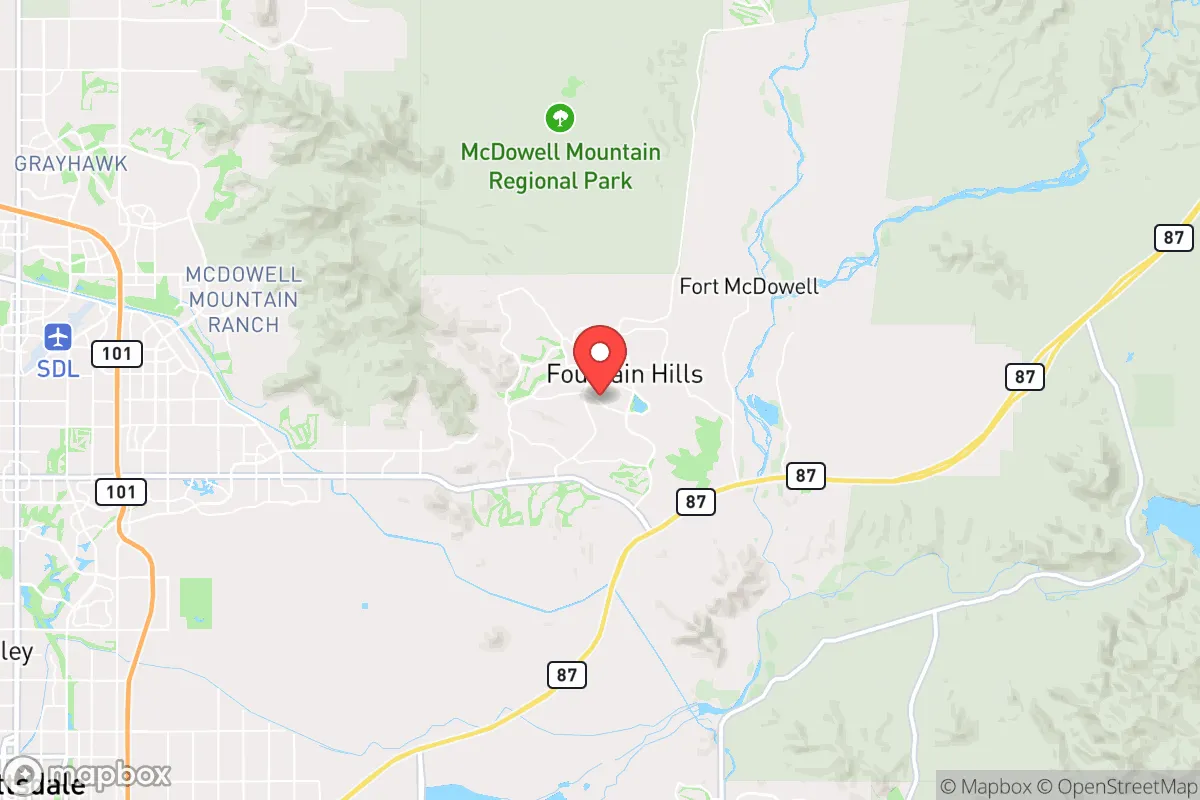
Fountain Hills, Arizona, is an affluent master-planned community of roughly 24,000 residents, known for its iconic 560-foot fountain—one of the world’s tallest—and its deliberate, low-density layout. The population skews older and wealthier than the state average, with a median age near 55 and a high proportion of retirees, second-home owners, and professionals who commute to Scottsdale or Phoenix. The town’s identity is built around quiet, scenic living on the Verde River’s edge, with a strong emphasis on golf, hiking, and community events rather than nightlife or urban bustle.
Cost of living, housing prices, and affordability compared to Scottsdale and Phoenix
Fountain Hills carries a cost-of-living index of 174—nearly 75% above the national average—placing it among the priciest suburbs in the Phoenix metro. The median home value of $575,200 is roughly 30% higher than the Phoenix metro median, though still below Scottsdale’s median of about $650,000. Renters face a median rent of $1,781, which is comparable to Scottsdale but significantly higher than the Phoenix average of $1,400. The average commute of 28.97 minutes reflects the town’s semi-rural location: most residents drive to jobs in Scottsdale (20 minutes), North Phoenix (25 minutes), or downtown Phoenix (35 minutes). Property taxes are relatively low—around 0.6% of assessed value—but HOA fees in many neighborhoods add $200–$400 monthly. For buyers seeking space and views, the premium over nearby cities is justified by larger lots and open desert surroundings, but first-time buyers and renters on median incomes will find the market challenging.
What daily life is like for families, retirees, and outdoor enthusiasts
Daily life in Fountain Hills revolves around outdoor recreation and a tight-knit, low-key social scene. The town’s centerpiece is the Fountain Hills Park, a 30-acre lake and fountain that hosts concerts, farmers markets, and holiday fireworks. The McDowell Mountain Regional Park, just east, offers 40+ miles of hiking and mountain biking trails, while the Verde River provides kayaking and fishing. Schools are served by the Fountain Hills Unified School District, which includes Fountain Hills High School (rated A- by Niche) and two elementary schools; the district’s small size (about 2,000 students) allows for personalized attention. Retirees dominate the demographic, with numerous active-adult communities like Sun Ridge and the Fountain Hills Senior Center offering classes, pickleball, and social clubs. Dining is limited to a handful of local spots—like the Italian Kitchen and the Fountain Grille—rather than chains, and shopping is minimal, with most residents driving to Scottsdale’s Kierland Commons or the Scottsdale Quarter for groceries and retail. The pace is deliberately slow: no traffic lights on the main drag (Avenue of the Fountains) until recently, and a strict noise ordinance keeps evenings quiet.
Fountain Hills is best suited for retirees, remote workers, and families who prioritize space, views, and outdoor access over urban convenience. The high cost of living and limited job base mean it works best for those with established wealth or the ability to commute. Younger professionals and renters on a budget will find more affordable options in nearby Mesa or Tempe, but for those seeking a serene, amenity-rich desert enclave with strong schools and low crime, Fountain Hills delivers a distinct quality of life that few Phoenix suburbs can match.

Crime in Fountain Hills, AZ
Crime rates similar to the national median for U.S. locations.
Violent CrimeViolent Crime Analysis
Property CrimeProperty Crime Analysis
Crime Analysis
Fountain Hills, Arizona, presents a mixed safety profile for prospective residents. While its violent crime rate of 359.9 per 100,000 residents is notably lower than the national average, its property crime rate of 1,453.3 per 100,000 is significantly higher than both state and national benchmarks. This combination places the town in a category where residents generally feel safe from violent confrontations but face a tangible risk of theft and property-related offenses.
Crime in context
To understand Fountain Hills' safety, it must be compared to broader trends. The town's violent crime rate is roughly 20% below the national average, a positive indicator for those concerned about assault, robbery, or homicide. However, the property crime rate is approximately 30% higher than the national average and well above the Arizona state average. This disparity is common in affluent suburban enclaves near large metro areas like Phoenix, where higher-value targets attract property criminals. A critical factor for readers to weigh is the influence of the broader Maricopa County justice system. As part of a large metropolitan area, Fountain Hills is subject to the policies of county prosecutors and judges. In recent years, some jurisdictions in the Phoenix metro have adopted progressive criminal justice reforms, including reduced bail and diversion programs for property offenders. While intended to reduce incarceration, these policies can result in more repeat offenders remaining on the street, directly increasing the risk of property crime for residents and undermining the deterrent effect of prosecution.
What residents experience
Daily life in Fountain Hills for most residents does not involve violent crime. The community is known for its quiet, retirement-oriented atmosphere and low-density housing. The primary safety concern is property crime, specifically vehicle break-ins, package theft, and burglary of unoccupied homes. Many incidents occur in public parking areas, such as those near the iconic Fountain Park, or in neighborhoods during daytime hours when homes are empty. Residents often report that crimes of opportunity are the most common, with unlocked cars and visible valuables being the primary targets. The town maintains its own police department, which is responsive but faces the challenge of patrolling a geographically spread-out, low-density community where criminals can quickly enter and exit via major roads like Shea Boulevard and the Beeline Highway.
Neighborhood-level variation in safety is modest but present. The most secure areas tend to be the gated golf-course communities, such as those around the SunRidge Canyon and Desert Canyon courses, which have private security and limited access. Conversely, neighborhoods closer to the main commercial corridors and the town's entry points see slightly higher rates of property crime. The area around the Fountain Hills Business Park and the shopping centers on Avenue of the Fountains experiences more vehicle-related theft. For families and retirees considering a move, the key takeaway is that while violent crime is rare, proactive measures like home security systems, neighborhood watch participation, and never leaving valuables in vehicles are essential to mitigating the elevated property crime risk.
* Values derived from national, state, county, city and local statistics and may differ in a specific area. Last updated: 2026-04-19T08:12:20.000Z
Narrative content on this page is AI-generated and may contain mistakes. Verify any details that matter before acting on them.
ReloMaps may earn a commission from affiliate links at no extra cost to you.

