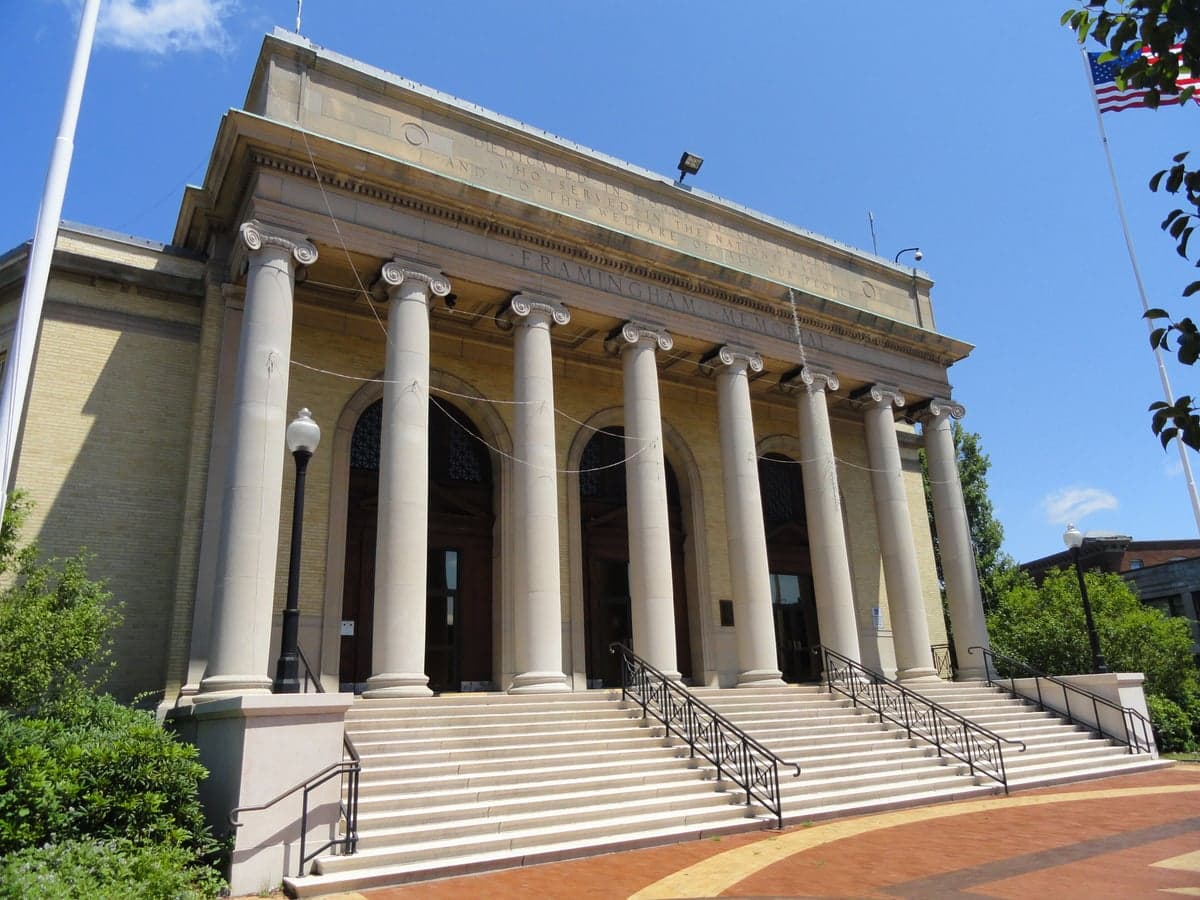
Photo: Wikipedia
Political ClimatePolitical Climate in Framingham, MA
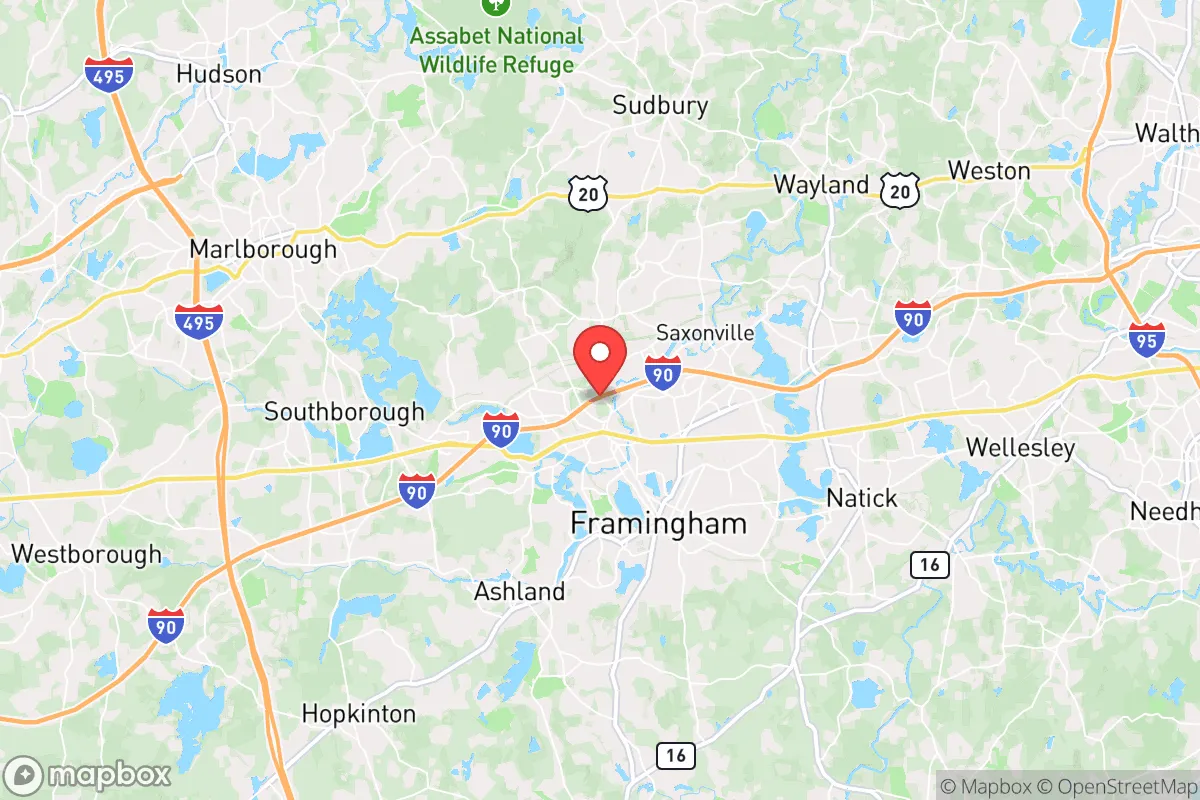
District shown is the primary district for this city’s centroid. Cities may span multiple districts.
Local Political AnalysisPolitical Analysis of Framingham, MA
Framingham’s political climate has shifted hard to the left over the past decade, and the numbers back it up. The Cook Partisan Voting Index (PVI) now sits at D+24, meaning the city votes 24 points more Democratic than the national average — a far cry from the moderate, blue-collar town it used to be. If you’ve lived here as long as I have, you’ve watched the old guard of independent-minded folks get replaced by a wave of progressive activism that’s reshaped everything from local zoning to school policy. The trajectory is clear: Framingham is becoming a laboratory for top-down social engineering, and it’s happening fast.
How it compares
Drive 15 minutes west to Southborough or Hopkinton, and you’ll find towns that still lean center-right, with Republican voters holding their own on school boards and select boards. Head east to Natick or Wellesley, and you get a similar D+ lean, but those communities have a stronger tradition of fiscal conservatism mixed with social liberalism. Framingham, by contrast, has embraced the full progressive playbook — sanctuary city status, rent control experiments, and a city council that’s openly hostile to charter schools and parental rights. The contrast is stark: while neighboring towns debate tax rates and road repairs, Framingham’s leadership is busy redefining public safety and rewriting housing codes to favor government-mandated density. It’s not just a political difference; it’s a cultural chasm that’s growing wider every election cycle.
What this means for residents
For the average family or small business owner, this shift translates into real, everyday friction. Property taxes have climbed steadily as the city expands its social programs and administrative staff — you’re paying for more government than you’re getting back. The school district has adopted curriculum changes that prioritize ideological training over academic rigor, and parents who speak up at school board meetings are often dismissed as “out of touch.” If you value personal freedom — the right to run your business without a dozen new regulations, or the right to opt your kid out of a lesson without a fight — Framingham is becoming a harder place to call home. The long-term outlook? Unless there’s a serious grassroots pushback, expect more of the same: higher costs, less local control, and a government that sees itself as your moral guide rather than your servant.
One cultural distinction worth noting: Framingham still has a strong Portuguese and Brazilian community, which historically leaned more conservative on family values and economic issues. But even that’s changing, as younger generations get pulled into the progressive orbit through schools and social media. The old diners and union halls where folks used to hash out disagreements over coffee are being replaced by activist meetups and city-sponsored “equity” workshops. If you’re looking for a place where you can live and let live without the government breathing down your neck, you might want to look at towns like Ashland or Holliston — places where the politics are still grounded in common sense and personal responsibility. Framingham’s heading in a different direction, and it’s not one that respects the freedoms that made this country worth living in.

State Political ClimatePolitical Climate in Massachusetts
State Political AnalysisPolitical Environment in the State
Massachusetts has long been one of the most reliably Democratic states in the nation, but the reality on the ground is far more nuanced than the national headlines suggest. The state hasn’t voted Republican in a presidential election since 1984, and Democrats hold supermajorities in both legislative chambers. However, the political climate is not a monolith—it’s a patchwork of deep-blue urban cores, fading-blue suburbs, and genuinely red or purple rural pockets. Over the last 20 years, the state has lurched leftward on social and economic policy, driven by Boston’s growing progressive activism and a steady exodus of moderate and conservative-leaning residents to New Hampshire, Florida, and Texas. For a conservative considering relocation, the key question isn’t whether Massachusetts is liberal—it’s how much personal freedom you’re willing to trade for world-class schools, infrastructure, and a stable economy.
Urban vs. rural divide
The political map of Massachusetts is a textbook case of the urban-rural chasm. Boston and its immediate suburbs—Cambridge, Somerville, Newton—are among the most progressive jurisdictions in the country, regularly electing self-described democratic socialists and pushing policies like rent control, sanctuary city status, and defunding police initiatives. The Boston metro area, home to roughly 4.8 million people, drives the state’s overall blue lean. Western Massachusetts, by contrast, tells a different story. Counties like Berkshire, Franklin, and Hampshire lean left but with a more libertarian, live-and-let-live streak, while the southeastern corner—Bristol and Plymouth counties—has become a genuine battleground. Towns like Fall River and New Bedford have trended toward Republicans in recent cycles, driven by working-class voters frustrated with high taxes and immigration policies. The most conservative strongholds are in the central and northeastern parts of the state: Worcester County towns like Holden and Paxton, and the North Shore communities of Middleton and Topsfield regularly vote 60%+ Republican. Even in deep-blue Middlesex County, suburbs like Wilmington and Burlington have flipped from reliably blue to competitive, reflecting a broader suburban shift rightward on education and parental rights issues.
Policy environment
Massachusetts’ policy environment is a mixed bag for conservatives. On the plus side, the state has a flat income tax rate of 5% (recently reduced from 5.15% via a 2022 ballot question), and property taxes are moderate compared to neighboring Connecticut and New York. But the overall tax burden remains among the highest in the nation, thanks to a 6.25% sales tax, high excise taxes on vehicles, and a new “millionaire’s tax” (a 4% surcharge on income over $1 million) passed in 2022. The regulatory climate is dense: zoning laws are notoriously restrictive, making housing expensive and scarce. Education policy is a bright spot—Massachusetts consistently ranks #1 in K-12 outcomes, with strong school choice options like charter schools and vocational-technical high schools. But the state has also moved aggressively on progressive social policy: it passed a sweeping abortion rights law in 2022 (the ROE Act), expanded gender identity protections in public accommodations, and enacted a strict gun control law in 2024 that bans “assault weapons” and limits magazine capacity to 10 rounds. Election laws are among the most liberal in the country, with no-excuse mail-in voting, same-day registration, and automatic voter registration—all of which have been permanent since 2022.
Trajectory & freedom
On the freedom index, Massachusetts is trending downward. The most significant contraction in personal liberty has been on the Second Amendment front. The 2024 gun law (H.4885) not only bans a wide range of firearms by name but also requires a state-issued license to purchase ammunition, mandates safe storage laws, and creates a statewide firearm registry. For conservatives who value gun rights, this is a dealbreaker. On parental rights, the state has moved in the opposite direction of Florida and Texas: a 2023 law prohibits schools from notifying parents if a child changes their gender identity or pronouns, and the state’s Department of Elementary and Secondary Education has issued guidance that effectively mandates LGBTQ-inclusive curricula. Medical freedom took a hit with the state’s strict COVID-19 vaccine mandates for healthcare workers and school employees, which remain in place for many settings. On the positive side, Massachusetts has no state-level mask or vaccine mandates currently, and the state’s high court has been relatively restrained on emergency powers. Property rights are constrained by strong rent control movements in Boston and Cambridge, though a statewide rent control ballot question failed in 2024.
Civil unrest & political movements
Massachusetts has a long history of political activism, and recent years have seen both left and right mobilize. Boston saw large-scale Black Lives Matter protests in 2020, and the city’s progressive activist network remains highly organized, pushing for police reform and defunding initiatives. On the right, the Massachusetts Republican Party has been revitalized by the “MassGOP” grassroots movement, which has focused on school board races and local elections. The state’s sanctuary policy—Massachusetts is one of the most aggressive sanctuary states, with a 2017 law (the “Safe Communities Act”) that limits cooperation with ICE—has become a flashpoint. In Lawrence and Lynn, immigration enforcement clashes have made local news, and the state’s 2023 law granting driver’s licenses to undocumented immigrants (the Work and Family Mobility Act) remains controversial. Election integrity has been a quieter issue here than in swing states, but the 2020 and 2022 cycles saw no major fraud allegations, and the state’s mail-in voting system has been widely accepted. The most visible political movement in 2025-2026 has been the “parental rights” movement, which has successfully flipped several school board seats in suburbs like Andover and Lexington.
Projection
Over the next 5-10 years, Massachusetts is likely to become more, not less, progressive on social issues, but the economic and demographic trends may create a counterbalance. The state’s population has been flat or declining since 2020, with net domestic out-migration of about 50,000 people per year—many of them moderate and conservative families heading to New Hampshire, Florida, or Texas. The people replacing them are younger, more educated, and more liberal, drawn by the tech and biotech sectors in Cambridge and Boston. This demographic shift will likely keep the state solidly blue in presidential elections, but the growing cost of living and regulatory burden could push more working-class and middle-class voters toward the GOP in state and local races. The 2024 gun law may face a legal challenge under the Supreme Court’s Bruen decision, but the state’s judiciary is liberal enough that a full repeal is unlikely. The most realistic projection is a state that remains a progressive policy laboratory but with a growing, vocal conservative minority concentrated in the suburbs and rural areas. For a conservative moving in, expect to pay high taxes, navigate dense regulations, and live in a culture that is increasingly hostile to traditional values—but also expect excellent schools, safe neighborhoods (outside of Boston’s high-crime areas), and a stable, well-managed government.
Bottom line for a new resident: Massachusetts is not a state for conservatives who want to see their values reflected in law or culture. But if you’re willing to trade political alignment for top-tier education, low crime in most suburbs, and a functional government that actually delivers services, it can work—especially if you choose your town carefully. Stick to the conservative-leaning suburbs of Worcester County or the North Shore, avoid Boston and Cambridge, and be prepared to fight for your rights at the local level. The state’s trajectory is leftward, but the fight is far from over.
* Values derived from national, state, county, city and local statistics and may differ in a specific area. Last updated: 2026-05-01T02:57:55.000Z
Narrative content on this page is AI-generated and may contain mistakes. Verify any details that matter before acting on them.
ReloMaps may earn a commission from affiliate links at no extra cost to you.

