 Popular
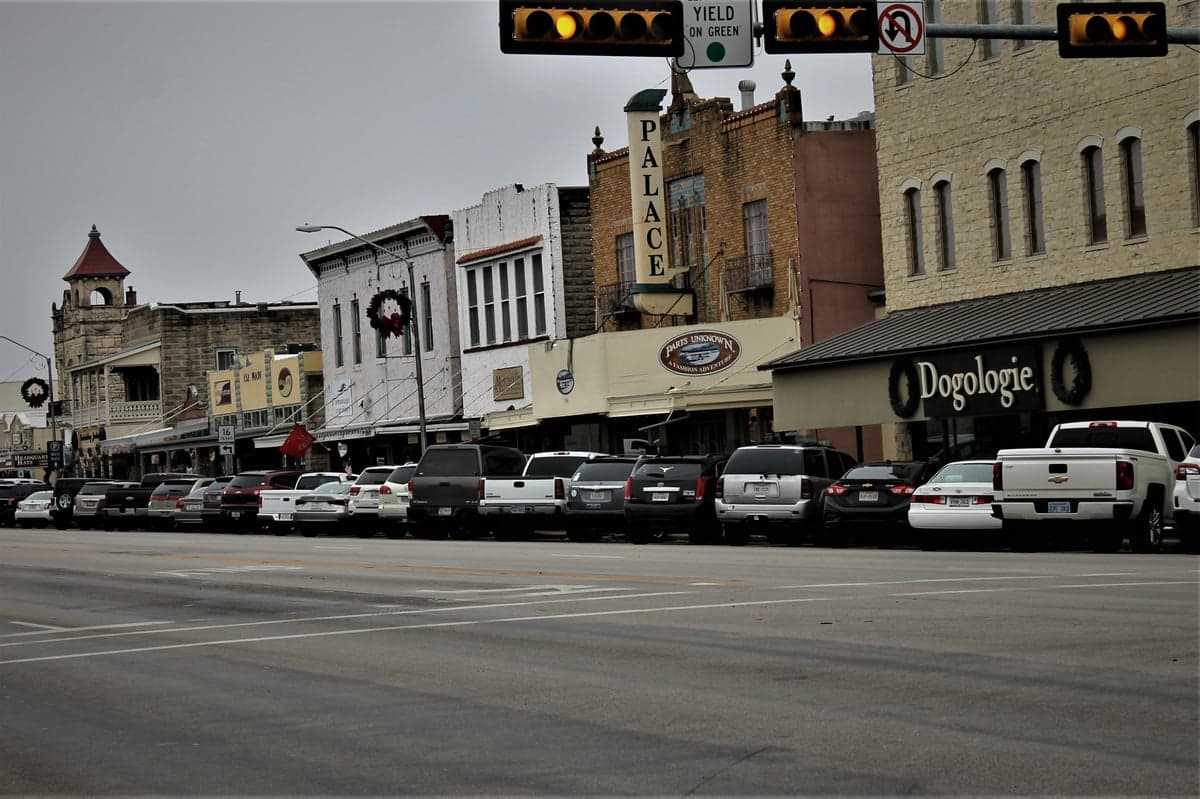
Photo: Wikipedia
Political ClimatePolitical Climate in Fredericksburg, TX
District shown is the primary district for this city’s centroid. Cities may span multiple districts.
Local Political AnalysisPolitical Analysis of Fredericksburg, TX
Fredericksburg, Texas, sits in a political climate that’s solidly conservative, but with a distinctly local flavor that sets it apart from the broader suburban sprawl of the Texas Triangle. The Cook Political Report’s Partisan Voter Index (PVI) rates the area at R+11, meaning it votes about 11 points more Republican than the national average. That’s a meaningful step to the right of Texas as a whole, which sits at R+4, but the real story here isn’t just the margin—it’s how the politics actually play out on the ground in Gillespie County.
How it compares
To put the R+11 in perspective, think of it this way: in the 2024 presidential race, Gillespie County went for Donald Trump by a margin north of 40 points, while the state as a whole was closer to a 14-point Republican win. The gap between Fredericksburg and the rest of Texas isn’t just about intensity, though. It’s about *kind*. Drive 30 minutes east to Johnson City or an hour to San Antonio’s northern suburbs, and you’ll find a more mixed electorate—still red, but with pockets of blue that can swing local races. Fredericksburg doesn’t have those pockets in any meaningful way. The county hasn’t voted for a Democratic presidential candidate since 1964, and even then, it was a landslide year for Lyndon Johnson, a native Texan. The local GOP primary is often the real election, and contested races there tend to hinge on questions of property rights, water access, and how much to push back on state mandates—not on whether to be conservative.
What this means for residents
For conservative residents, the R+11 lean means their values are the default setting of local government. The county commissioners court, the school board, and the city council are all reliably Republican, and policy debates usually center on how to manage growth rather than whether to embrace it. Property taxes are a perennial hot-button issue, and the local political culture is deeply suspicious of anything that smells like overreach from Austin or Washington. For liberal residents, the reality is more about finding your niche than changing the outcome. There’s a small but active Democratic club in town, and the annual Oktoberfest and the arts scene draw a crowd that’s more culturally diverse than the voting rolls might suggest. But if you’re a progressive, you’re likely to be in the minority at the county courthouse, and you’ll need to be comfortable with that. The upside is that Fredericksburg’s politics are generally civil—people know each other, and the “live and let live” ethos of the Hill Country tends to soften the sharp edges of partisanship.
The cultural distinction here is worth noting. Fredericksburg is a tourism and retirement hub, and that influx of newcomers—many from California, Colorado, and the Dallas-Fort Worth metroplex—has created a subtle tension. The old guard, often multi-generation German-Texan families, tends to be fiscally conservative but socially tolerant. The newer arrivals, many of whom moved here for the wine country and the slower pace, often bring a more hard-edged national partisanship with them. That dynamic is playing out in zoning fights and debates over short-term rentals, where the local “keep it small” instinct clashes with the growth that tourism dollars bring. Looking ahead, the trajectory is likely to stay red, but the flavor of that red may shift. If the newcomers keep coming, the R+11 could edge closer to R+8 or R+9 over the next decade—still solidly Republican, but with a more suburban, nationalized character than the county’s historical brand of independent-minded conservatism.

State Political ClimatePolitical Climate in Texas
State Political AnalysisPolitical Environment in the State
Texas is a solidly Republican state with a Cook PVI of R+4, but the political reality is far more layered than that single number suggests. The state has been drifting rightward on cultural and social issues even as its biggest metros have become reliably Democratic — a split that defines nearly every statewide race. Over the past 15 years, the GOP has consolidated its grip on the legislature and statewide offices, but the margin in presidential races has tightened from 16 points in 2012 to about 9 points in 2020 and roughly 14 points in 2024, driven by explosive growth in the suburbs of Austin, Dallas, and Houston.
Urban vs. rural divide
The political map of Texas is a tale of three distinct regions. The major metros — Austin, Dallas, Houston, San Antonio, and El Paso — are Democratic strongholds, with Travis County (Austin) delivering margins of 70%+ for Democrats in recent cycles. El Paso County is similarly lopsided, often exceeding 65% Democratic. Meanwhile, the rural and exurban counties that ring these metros — places like Ellis County south of Dallas, Comal County north of San Antonio, and Montgomery County north of Houston — are among the most Republican in the nation, routinely voting 75-80% GOP. The suburbs are where the real action is: Collin County (north of Dallas) and Fort Bend County (southwest of Houston) have both flipped or trended Democratic as educated, diverse professionals have moved in, while Williamson County north of Austin has gone from reliably red to a genuine battleground. The Panhandle and West Texas — Lubbock, Amarillo, Midland, Odessa — remain deeply conservative, with Lubbock County voting around 70% Republican in 2024.
Policy environment
Texas has no state income tax, which is the single biggest policy draw for relocators. The trade-off is a heavy reliance on property taxes and sales taxes — the average effective property tax rate hovers around 1.6-1.8%, among the highest in the nation. The state's regulatory posture is famously light-touch: no state-level occupational licensing for many trades, minimal environmental permitting friction, and a right-to-work law that keeps union density below 5%. Education policy is dominated by school choice — the 2025 legislative session passed a universal education savings account program worth up to $10,000 per student — and a curriculum that emphasizes patriotic education and bans critical race theory in public schools. Healthcare is a patchwork: Texas has the highest uninsured rate in the country at roughly 17%, having declined Medicaid expansion under the Affordable Care Act. Election law is restrictive by national standards: voter ID is required, mail-in voting is limited to those 65 and older or with a qualifying disability, and drop boxes are prohibited in most counties.
Recent policy direction
The last five years have seen Texas move decisively on a cluster of liberty issues. On guns, Texas became a permitless carry state in 2021, allowing any legal adult to carry a handgun without a license or training. On abortion, the state enacted SB 8 in 2021 — the heartbeat bill with a private enforcement mechanism — and then a near-total ban in 2022 following the Dobbs decision. Parental rights have been a major theme: the 2023 session passed a law requiring parental consent for minors to access social media and banning gender-affirming care for minors. Property rights got a boost with the 2023 passage of a law limiting the use of eminent domain for private development. On speech and privacy, Texas passed a law in 2021 prohibiting social media platforms from banning users based on political viewpoint — a law that has been partially upheld in court. The state has also moved aggressively on election integrity: felony penalties for mail-in ballot fraud were increased in 2021, and the 2023 session added new restrictions on voter assistance. The overall direction is unmistakable: Texas is betting on a model of low taxes, minimal regulation, and maximum individual autonomy on guns, education, and medical choice — while tightening the rules on voting access and abortion.
Civil unrest & political movements
Texas has seen its share of political flashpoints. The 2021 abortion law triggered a wave of protests in Austin and Houston, with thousands gathering at the Capitol. The state has also been a focal point of immigration politics: Governor Greg Abbott launched Operation Lone Star in 2021, deploying state troopers and National Guard to the border and busing migrants to Democratic cities like New York and Chicago. The border counties themselves — places like Maverick County (Eagle Pass) and Webb County (Laredo) — are heavily Democratic but have grown frustrated with federal immigration policy, creating a unique political dynamic. Secession rhetoric exists but is mostly performative: the Texas Nationalist Movement has pushed for a referendum, but polling consistently shows only 20-25% support for independence. Election integrity controversies have been persistent since 2020, with Republican officials claiming widespread fraud in Harris County (Houston) — claims that have led to increased scrutiny of that county's elections but no major fraud convictions. A new resident would notice the visible presence of both movements: large Trump flags and "Come and Take It" banners in rural areas, and progressive activism concentrated in the urban cores.
Projection
Over the next decade, Texas is likely to become more competitive at the statewide level even as it remains Republican-controlled. The demographic math is straightforward: the state's growth is concentrated in the Democratic-leaning metros and the increasingly purple suburbs. Harris County alone added over 600,000 residents between 2010 and 2020, and Tarrant County (Fort Worth) — historically a GOP anchor — voted for Biden in 2020 and is now a true swing county. However, the GOP has responded by drawing aggressive district maps and tightening election laws, which will likely preserve legislative majorities even if the presidential margin narrows. The rural-urban divide will probably widen, with the Panhandle and West Texas becoming even more Republican as their populations age and the metros grow younger and more diverse. A relocator moving to Texas in 2026 should expect a state that remains Republican-controlled for the foreseeable future, but with a growing Democratic minority that will make statewide races increasingly competitive — think 55-45 rather than 60-40. The policy direction on taxes, guns, and education is unlikely to reverse, regardless of which party holds power.
For a new resident, the practical takeaways are clear. If you're conservative, Texas offers a policy environment that aligns with your priorities — low taxes, strong gun rights, school choice, and a government that is generally deferential to individual and parental authority. If you're liberal, you'll find a vibrant and growing community in the metros, but you'll be living under a state government that is actively hostile to many of your policy preferences, from abortion access to voting rules. The state's political culture is one of fierce independence and localism — the suburbs and cities often feel like different countries, and the state government in Austin is far more conservative than the city that hosts it. Texas is not a place where politics fades into the background; it's a place where the political climate shapes daily life in tangible ways, from the taxes you pay to the schools your kids attend to the rights you can exercise. Come for the economy and the space, but understand that you're also signing up for a state that is actively defining what American conservatism looks like in the 21st century.
* Values derived from national, state, county, city and local statistics and may differ in a specific area. Last updated: 2026-09-05T23:51:40.000Z
Narrative content on this page is AI-generated and may contain mistakes. Verify any details that matter before acting on them.
ReloMaps may earn a commission from affiliate links at no extra cost to you.

