
Photo: Wikipedia
Political ClimatePolitical Climate in Greenwood, IN
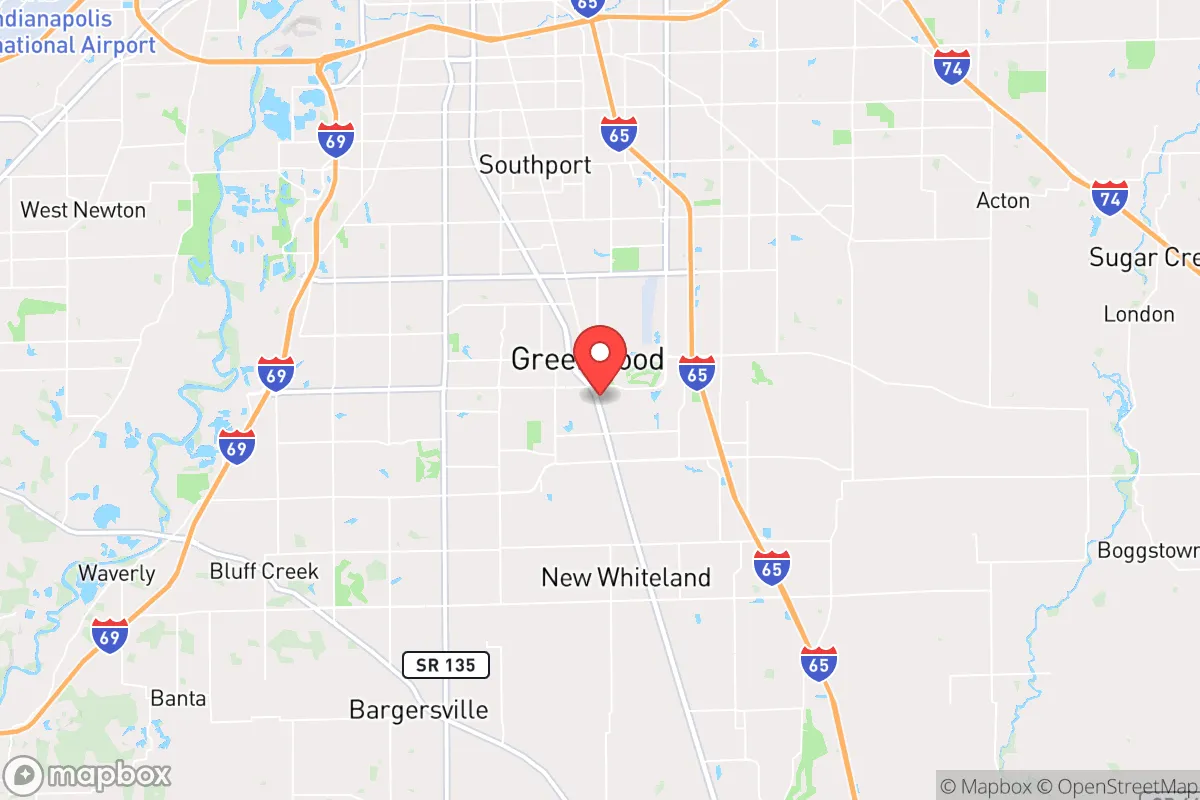
District shown is the primary district for this city’s centroid. Cities may span multiple districts.
Local Political AnalysisPolitical Analysis of Greenwood, IN
Greenwood, Indiana, has long been a solidly conservative community, and that hasn't changed much despite some national trends. The Cook Partisan Voting Index (PVI) for the area sits at R+16, meaning it votes about 16 points more Republican than the national average. That's not just a number on a map; it reflects a deep-rooted belief in limited government, personal responsibility, and keeping taxes low. You see it in local elections, school board races, and the way folks talk about things at the coffee shop. It's a place where the idea of the government telling you how to live your life is met with a healthy dose of skepticism, and that's a tradition that's held strong for decades.
How it compares
Drive ten miles north into Indianapolis, and you're in a completely different world politically. Marion County is a deep blue stronghold, with policies and a tax structure that reflect a much more progressive agenda. The contrast is stark. Greenwood, along with the rest of Johnson County, acts as a kind of conservative buffer zone. Further south, places like Franklin and Edinburgh share a similar outlook, but Greenwood is the economic engine of that conservative corridor. The difference isn't just theoretical; it shows up in things like lower property tax rates, less restrictive business regulations, and a general attitude that the county government's job is to keep the roads paved and the schools safe, not to micromanage your personal choices. For a long time, that was just the way things were, and most folks liked it that way.
What this means for residents
For someone living here, the political climate translates into a pretty straightforward daily reality. You're not constantly bumping into new ordinances about what you can and can't do on your own property. The local government tends to take a "wait and see" approach on a lot of social issues, preferring to let the state handle it rather than getting ahead of themselves. That said, there's a growing undercurrent of concern. You see it in the school board meetings, where there's a real pushback against curriculum that feels like it's pushing a political agenda instead of teaching kids how to think. The worry is that the same progressive overreach that's bogged down Indianapolis could start creeping south. The long-term fear is that if we're not careful, the same folks who want to control what you can buy at the hardware store or how you heat your home will find their way into county offices. So far, the community has been pretty good at keeping that at bay, but it's a constant vigilance.
One of the biggest cultural distinctions here is the strong sense of local control. People in Greenwood don't like being told what to do by someone in a state office building, let alone Washington D.C. This is a place where the Second Amendment is still a given, not a debate topic. You'll see "Keep Johnson County Conservative" signs in yards, and it's not just a slogan; it's a genuine reflection of the community's values. The biggest shift I've seen in my time here is the growing unease about federal overreach, especially on environmental regulations and energy policy. There's a real fear that mandates coming from the top are going to hit our pocketbooks and limit our freedoms in ways we haven't seen before. For now, Greenwood remains a reliable pocket of common sense, but keeping it that way is going to take active participation from everyone who values their personal liberty.

State Political ClimatePolitical Climate in Indiana
State Political AnalysisPolitical Environment in the State
Indiana has been a reliably red state for decades, but don’t let the “R” next to its name fool you—the political climate here is more complicated than a simple partisan label. The state leans Republican by about 16 points in presidential elections, but that margin has been shrinking as the Indianapolis metro area and a few college towns have shifted leftward. Over the last 10-20 years, the GOP has solidified its grip on the legislature and governor’s office, but the coalition is fracturing between traditional conservatives, libertarian-leaning populists, and a growing progressive urban base. If you’re looking for a place where personal freedom and limited government are still the default, Indiana is a solid bet—but you need to know where the fault lines are.
Urban vs. rural divide
The political map of Indiana is a textbook case of the urban-rural split. The Indianapolis metro area, including Marion County and its suburban donut like Hamilton County (the wealthiest and most Republican county in the state), is the engine of GOP power. But even that is shifting: Marion County has voted Democratic in every presidential election since 2008, and the city of Indianapolis itself is now a deep blue stronghold. Meanwhile, the rest of the state—places like Fort Wayne, Evansville, and the vast rural stretches of the Wabash Valley and southern Indiana—remains deeply red. The real battlegrounds are the suburban counties surrounding Indy: Hamilton, Hendricks, and Johnson counties are still reliably Republican, but the margins are tightening as young families and professionals move in. The college towns of Bloomington (home to Indiana University) and West Lafayette (Purdue) are blue islands, with Bloomington being one of the most progressive small cities in the Midwest. If you’re moving to Indiana, your experience will depend heavily on whether you’re in a cornfield or a cul-de-sac in Carmel.
Policy environment
Indiana’s policy environment is a mixed bag for conservatives. On the plus side, the state has a flat income tax rate of 3.15% (down from 3.23% in 2024, with a scheduled phase-down to 2.9% by 2027), no estate tax, and a relatively low property tax burden thanks to a constitutional cap of 1% of assessed value for owner-occupied homes. The regulatory climate is business-friendly, with a right-to-work law still on the books (though it’s been under constant attack from unions) and a tort reform system that limits lawsuit abuse. On education, Indiana has a robust school choice program—vouchers and charter schools are widely available—and the state’s parental rights law (HEA 1608, passed in 2022) requires schools to notify parents of any curriculum changes involving human sexuality. However, the state also has a sales tax on groceries (7%), which hits low-income families hard, and the gas tax is among the highest in the Midwest. Election laws are solid: voter ID is required, and the state has cleaned up its voter rolls aggressively. But there’s a growing concern about the influence of the state’s medical licensing boards, which have been used to punish doctors who spoke out against COVID mandates—a red flag for anyone who values medical freedom.
Trajectory & freedom
Indiana is on a trajectory that should give conservatives cautious optimism, but vigilance is required. The state has expanded personal liberty in several key areas: in 2022, Indiana became a constitutional carry state (no permit needed to carry a handgun), and the legislature has repeatedly blocked any attempt to create a red flag law. Parental rights were strengthened with HEA 1608, and the state has resisted federal overreach on vaccine mandates, with the governor issuing an executive order in 2021 banning vaccine passports. However, there are troubling signs. The state’s medical freedom took a hit during COVID when the governor’s emergency powers were used to shut down businesses and mandate masks—powers that the legislature has since clawed back with the 2021 emergency powers reform law (SEA 5). Property rights are generally strong, but there’s been a creeping trend of local governments using zoning laws to block new housing, which drives up costs and limits personal choice. The biggest freedom concern is the state’s surveillance apparatus: Indiana has one of the most aggressive license plate reader programs in the country, and the state police have been criticized for overreach in data collection. If you value privacy, keep an eye on the legislature’s next moves on biometric data and facial recognition.
Civil unrest & political movements
Indiana has seen its share of political flashpoints, but they’re mostly localized. The 2020 protests in Indianapolis over George Floyd’s death turned violent, with looting and fires in the downtown area, and the city’s Democratic mayor has been criticized for a soft-on-crime approach that has led to a spike in homicides (the city hit a record 271 homicides in 2021). On the right, the “Indiana Freedom Coalition” and local Moms for Liberty chapters have been active in school board races, particularly in Hamilton County and the suburbs of Fort Wayne. Immigration politics are relatively quiet—Indiana is not a border state, and the state has no sanctuary cities, though Indianapolis has a “welcoming city” ordinance that limits cooperation with ICE. Election integrity was a hot topic after 2020, but the state’s Republican secretary of state has been aggressive in purging inactive voters and requiring citizenship verification for new registrants. The most visible political movement right now is the school choice and parental rights push, which has energized conservative voters in the suburbs. If you move here, you’ll see yard signs for school board candidates more than for president.
Projection
Over the next 5-10 years, Indiana is likely to remain red, but the shade is fading. The Indianapolis metro area is growing fast—Hamilton County alone added over 30,000 people between 2020 and 2024—and those new residents are often younger, more diverse, and more moderate. The rural areas are losing population, which means the GOP’s base is shrinking even as its legislative power remains strong due to gerrymandering. The biggest wildcard is the state’s cultural shift: as more people move from blue states (especially Illinois and California) to places like Carmel, Fishers, and Noblesville, they bring their politics with them. You’re already seeing this in Hamilton County, where the Republican primary has become a battle between establishment conservatives and more libertarian-leaning newcomers. The state’s tax cuts are popular, but they’re also squeezing the budget, and there’s a growing debate about whether to cut services or raise taxes. If you’re moving here now, expect to see a state that is still conservative but increasingly divided between the old guard and the new suburbanites. The freedom trajectory is positive for now, but it could flip if the legislature loses its nerve on school choice or gun rights.
Bottom line: Indiana is a good bet for a conservative-leaning family or individual who wants low taxes, strong gun rights, and school choice, but you need to pick your county carefully. Stick to the suburban rings around Indianapolis—Hamilton, Hendricks, or Johnson counties—or the reliably red areas like Fort Wayne or Evansville. Avoid Bloomington and the core of Indianapolis if you want a politically like-minded community. The state is trending in the right direction on most freedom issues, but the urban-rural divide is widening, and the next decade will test whether Indiana can stay red or become another Ohio—a purple state that’s up for grabs every cycle. If you value your liberty, get involved in local politics now, because the fight is happening at the school board and county commission level, not just in the statehouse.
* Values derived from national, state, county, city and local statistics and may differ in a specific area. Last updated: 2026-04-22T09:22:53.000Z
Narrative content on this page is AI-generated and may contain mistakes. Verify any details that matter before acting on them.
ReloMaps may earn a commission from affiliate links at no extra cost to you.

