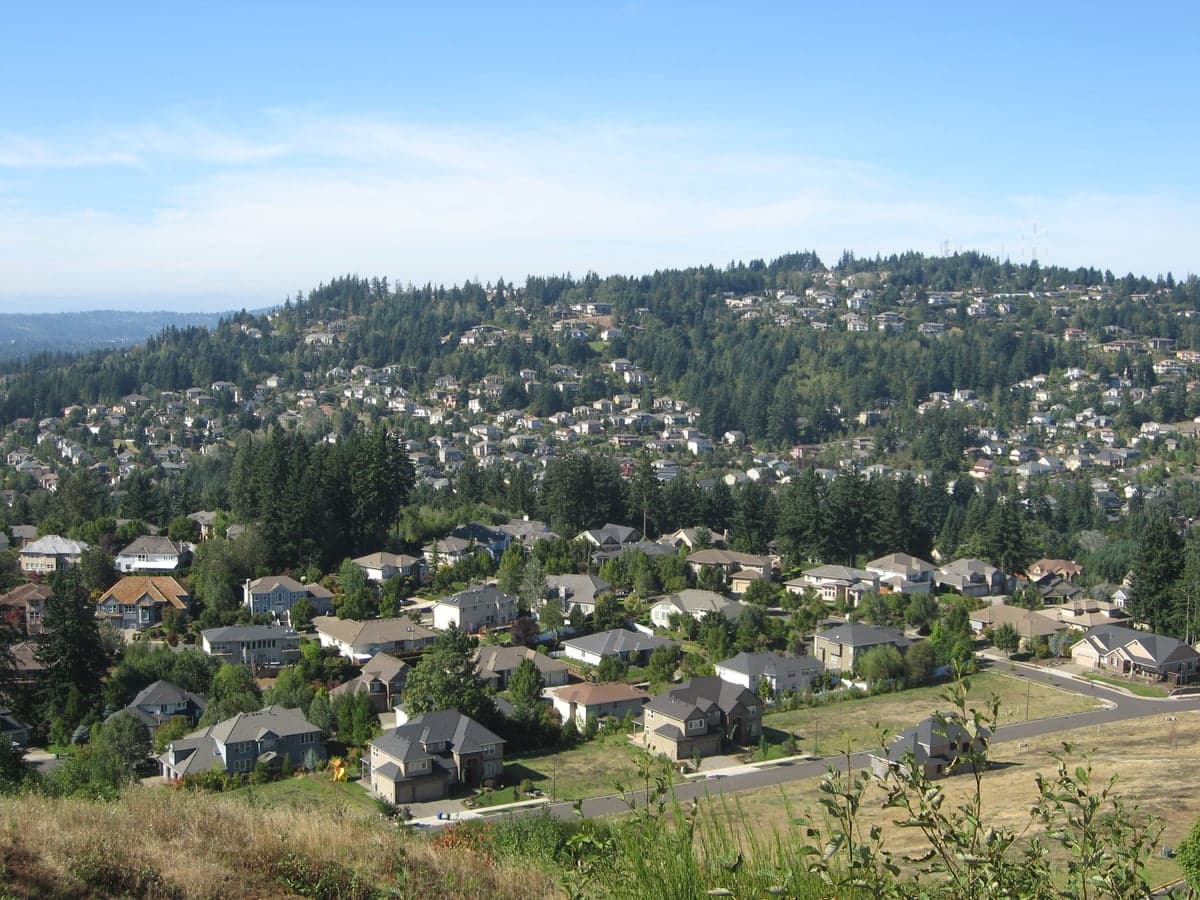
Photo: Wikipedia
Political ClimatePolitical Climate in Happy Valley, OR
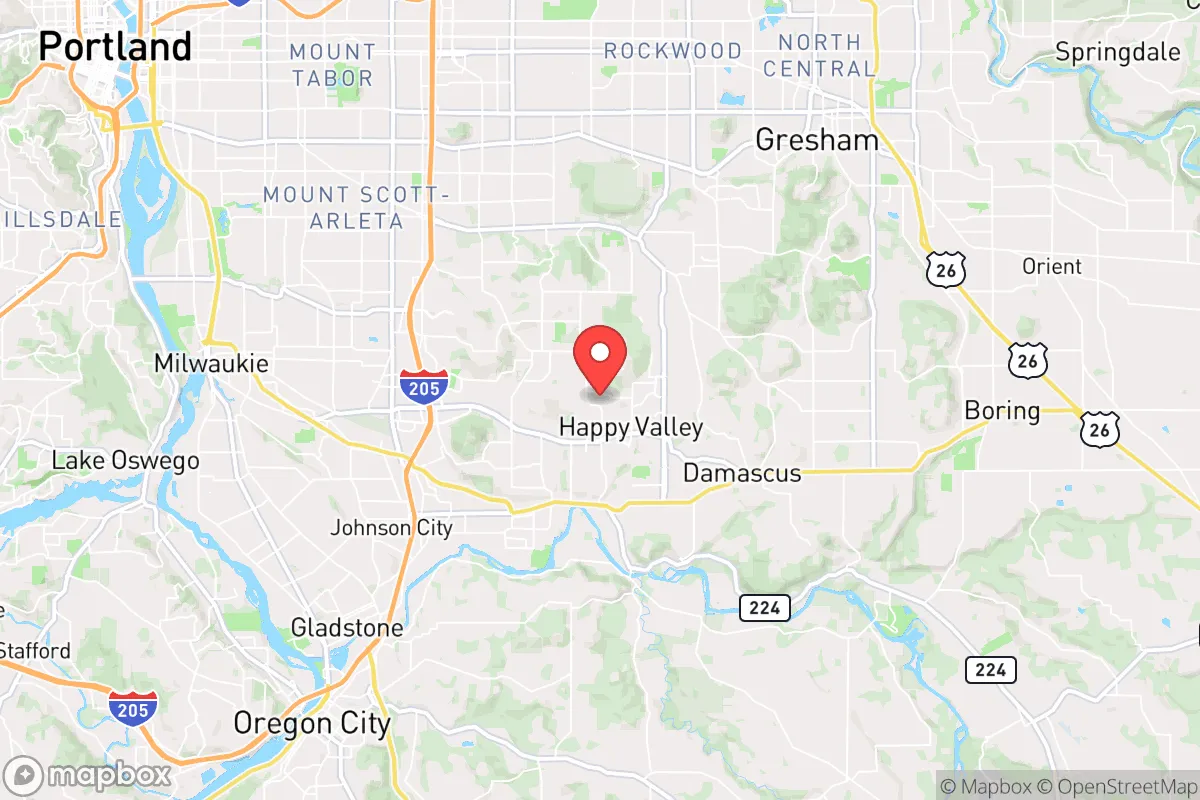
District shown is the primary district for this city’s centroid. Cities may span multiple districts.
Local Political AnalysisPolitical Analysis of Happy Valley, OR
Happy Valley, Oregon, has a Cook PVI of D+24, meaning it leans heavily Democratic, and that shift has been pretty dramatic over the last decade. I’ve lived here long enough to remember when this was a quiet, conservative-leaning suburb where folks mostly kept to themselves and local government stayed out of your business. Now, the political climate is dominated by progressive activism, with city council and school board seats increasingly filled by candidates who prioritize social agendas over the practical concerns of families and small business owners. The trajectory is clear: Happy Valley is moving further left, and it’s happening faster than many long-time residents are comfortable with.
How it compares
To understand Happy Valley’s politics, you have to look at the surrounding areas. Drive 15 minutes south to Oregon City or Canby, and you’ll find communities that still vote reliably Republican, with a focus on property rights and lower taxes. Head west into Milwaukie or Portland proper, and you’re in deep-blue territory, but Happy Valley used to be a buffer zone—a place where moderate conservatives could live without the constant political pressure. That buffer is gone. The D+24 rating puts us on par with Lake Oswego, another once-moderate suburb that has fully embraced progressive policies. The difference is that Lake Oswego has always been wealthier and more liberal; Happy Valley’s shift feels like a betrayal of its roots as a family-oriented, freedom-minded community.
What this means for residents
For residents, the biggest concern is government overreach into personal freedoms. We’ve seen it in the push for stricter land-use regulations that make it harder to build or renovate your own home without endless permits and fees. There’s also a growing movement to impose “equity” mandates on local businesses, which sounds nice in theory but often means more paperwork and less flexibility for entrepreneurs. School board meetings have become battlegrounds over curriculum and parental rights, with progressive members pushing for policies that limit what parents can know about their kids’ activities. If you value the ability to live your life without the city council dictating how you run your household or your business, these trends are genuinely alarming. The long-term outlook is that Happy Valley will continue to mirror Portland’s policies, just with better schools and newer houses.
Culturally, the area has lost some of its independent, self-reliant character. There used to be a strong sense of “live and let live,” but now there’s more pressure to conform to a specific political orthodoxy. For example, the annual community events that once celebrated local history and small-town values have been rebranded to emphasize diversity and inclusion—which isn’t a bad thing on its own, but it often comes at the expense of the traditional celebrations that brought everyone together. If you’re considering a move here, just know that the political climate is increasingly one-sided, and if you lean conservative, you’ll find yourself in the minority more often than not. It’s still a safe, well-maintained place to raise a family, but the price of that safety is a growing list of rules and expectations that can feel suffocating for those who just want to be left alone.

State Political ClimatePolitical Climate in Oregon
State Political AnalysisPolitical Environment in the State
Oregon has shifted from a purple swing state to a reliably blue stronghold over the past two decades, with Democrats controlling every statewide office and both legislative chambers since 2018. The state’s overall partisan lean is now roughly D+10, driven overwhelmingly by the Portland metro area, which casts about 40% of the state’s vote. However, this blue veneer masks a deep and growing urban-rural chasm—eastern and southern Oregon are deeply red, and many residents feel the state government in Salem has become increasingly disconnected from their values on taxes, guns, and personal liberty.
Urban vs. rural divide
The political map of Oregon is a tale of two states. The Portland metro—Multnomah, Washington, and Clackamas counties—delivers massive Democratic margins, with Multnomah County alone often going 75-80% blue. This urban core is surrounded by a ring of suburban and exurban counties that have trended leftward in recent cycles, such as Bend (Deschutes County), which flipped from red to purple and now leans Democratic. Meanwhile, the rest of Oregon is deeply conservative. Eastern Oregon counties like Malheur, Harney, and Lake routinely vote 70-80% Republican. The Rogue Valley (Jackson and Josephine counties) is a conservative stronghold, with Medford and Grants Pass as red islands in a blue state. The Willamette Valley outside Portland—places like Salem, Eugene, and Corvallis—is reliably blue, but the rural stretches between them are red. The Oregon Coast is a mixed bag: Lincoln County leans left, while Curry and Coos counties lean right. This divide means that a resident of Klamath Falls or Pendleton lives under a completely different political reality than someone in Portland, yet both are subject to the same state laws.
Policy environment
Oregon’s policy environment is a case study in progressive governance that many conservatives find overbearing. The state has no sales tax, but relies heavily on a progressive income tax (top rate 9.9%) and high property taxes, which can be a shock to newcomers from low-tax states. The regulatory posture is aggressive: Oregon has some of the strictest land-use laws in the nation, a cap-and-trade carbon program (HB 2020, later replaced by the Climate Protection Program), and a tight rental control law (SB 608) that limits annual rent increases to 7% plus inflation. Education policy is dominated by teachers’ unions, and the state has seen declining test scores and chronic absenteeism. Healthcare is heavily regulated, with a state-run insurance exchange (Cover Oregon) and a Medicaid expansion (Oregon Health Plan) that covers about 1 in 4 residents. Election laws are among the most liberal: Oregon was the first state to adopt vote-by-mail (1998) and later automatic voter registration (2016), and it now allows same-day voter registration. For conservatives, the lack of voter ID laws and the prevalence of ballot drop boxes raise election integrity concerns, though no major fraud scandals have emerged.
Trajectory & freedom
Oregon is becoming less free by any conservative measure. The most visible flashpoint is Measure 114 (2022), a voter-approved gun control law that requires a permit to purchase a firearm, bans magazines over 10 rounds, and mandates a waiting period. It was blocked by a state court and remains tied up in litigation, but the message is clear: the state is hostile to the Second Amendment. On parental rights, HB 2002 (2023) expanded access to abortion and gender-affirming care for minors without parental consent, a direct blow to family authority. The state also passed HB 2023 (2023), which prohibits school districts from requiring parental notification when a child changes their gender identity at school. On property rights, Oregon’s land-use system (SB 100, 1973) remains the most restrictive in the West, limiting development on farmland and forestland. The Climate Protection Program (2021) imposes emissions caps on large emitters, driving up energy costs. On the tax front, Measure 118 (2024)—a proposed corporate tax hike to fund a universal basic income—was defeated, but similar proposals are likely to return. The trajectory is clear: more regulation, higher taxes, and less personal autonomy.
Civil unrest & political movements
Oregon has a long history of political activism, much of it on the left. The Portland protests of 2020—sparked by George Floyd’s death—turned into months-long nightly demonstrations, with the federal government deploying DHS agents to the city. The Antifa and far-left militancy in Portland is well-documented, and the city remains a flashpoint for clashes between left-wing activists and right-wing groups like the Proud Boys and Patriot Prayer. On the right, the Oregon Citizens Alliance (1980s-90s) and the Greater Idaho movement (a proposal to move 13 eastern Oregon counties to Idaho) represent a growing secessionist sentiment. The sanctuary state law (1987) prohibits state and local law enforcement from using resources to enforce federal immigration law, making Oregon a magnet for illegal immigration. Election integrity remains a hot-button issue: the 2020 election saw no major fraud, but the vote-by-mail system and ballot drop boxes are viewed with suspicion by many conservatives. A new resident in Bend or Medford will see far less visible unrest than in Portland, but the political tension is palpable in local government meetings and school board elections.
Projection
Over the next 5-10 years, Oregon is likely to become more blue and more regulated. The Portland metro continues to grow, while rural counties lose population, tilting the electoral map further left. In-migration from California—about 40% of new residents—tends to bring progressive voting habits, though some are fleeing high taxes and housing costs. The Greater Idaho movement is unlikely to succeed, as it requires approval from both state legislatures and Congress. However, it could gain traction as a symbolic protest. Expect more gun control, more climate regulation, and more expansion of government healthcare. The 2026 gubernatorial race will be a bellwether: if a moderate Democrat wins, the state may slow its leftward march; if a progressive wins, expect a full-speed sprint. For a conservative moving in now, the realistic outlook is that Oregon will continue to feel like a blue state with red islands, and the political climate will become increasingly hostile to traditional values.
Bottom line for a new resident: If you’re a conservative considering Oregon, know that you’ll be living in a state where your vote for president or Senate is effectively meaningless, but your local vote in Bend, Medford, or Pendleton can still matter. You’ll pay high income taxes, face strict gun laws, and deal with a government that often seems to work against your values. The natural beauty is unmatched, but the political freedom is shrinking. Choose your county carefully—and be prepared to fight for your rights at the local level.
* Values derived from national, state, county, city and local statistics and may differ in a specific area. Last updated: 2026-05-03T10:47:54.000Z
Narrative content on this page is AI-generated and may contain mistakes. Verify any details that matter before acting on them.
ReloMaps may earn a commission from affiliate links at no extra cost to you.

