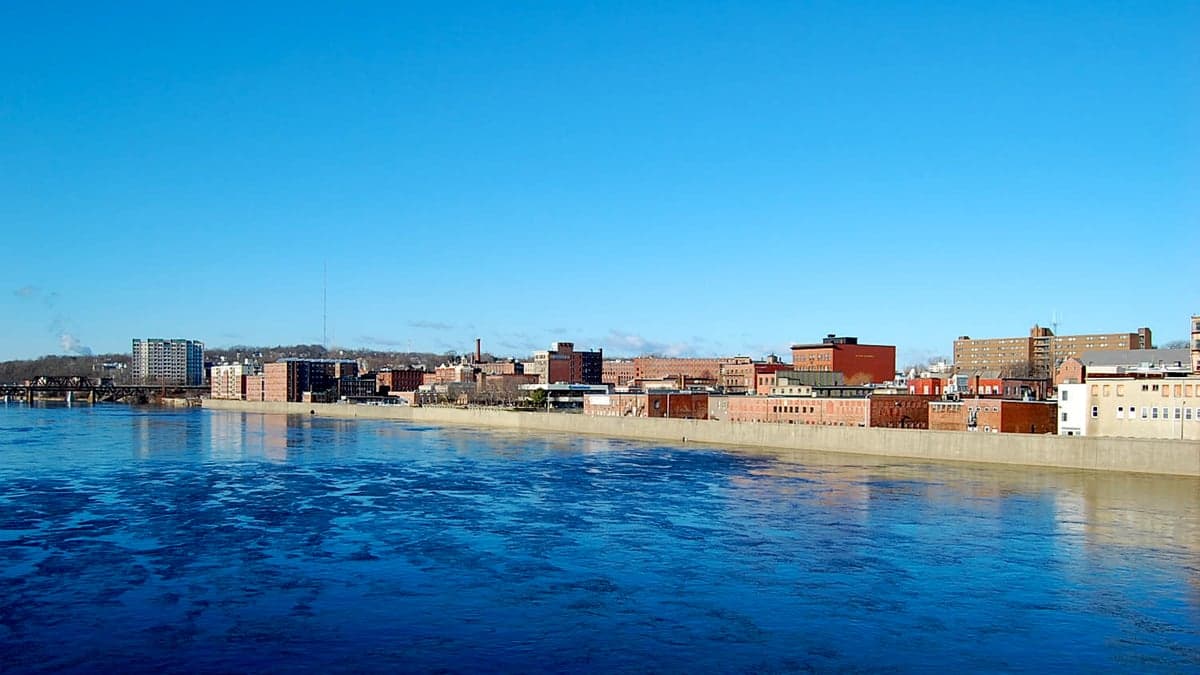
Photo: Wikipedia
Political ClimatePolitical Climate in Haverhill, MA
District shown is the primary district for this city’s centroid. Cities may span multiple districts.
Local Political AnalysisPolitical Analysis of Haverhill, MA
Look, I’ve been around Haverhill long enough to remember when this town was a lot more middle-of-the-road, politically speaking. We used to have a healthy mix of folks who just wanted to be left alone to run their businesses and raise their families. But over the last decade or so, the needle has swung hard to the left. The Cook PVI now sits at D+11, which tells you everything you need to know: Haverhill is a solidly Democratic city, and it’s getting bluer every cycle. The local elections are dominated by progressive candidates, and the city council and school committee are increasingly filled with people who see government as the answer to every problem, not a potential threat to our personal freedoms.
How it compares
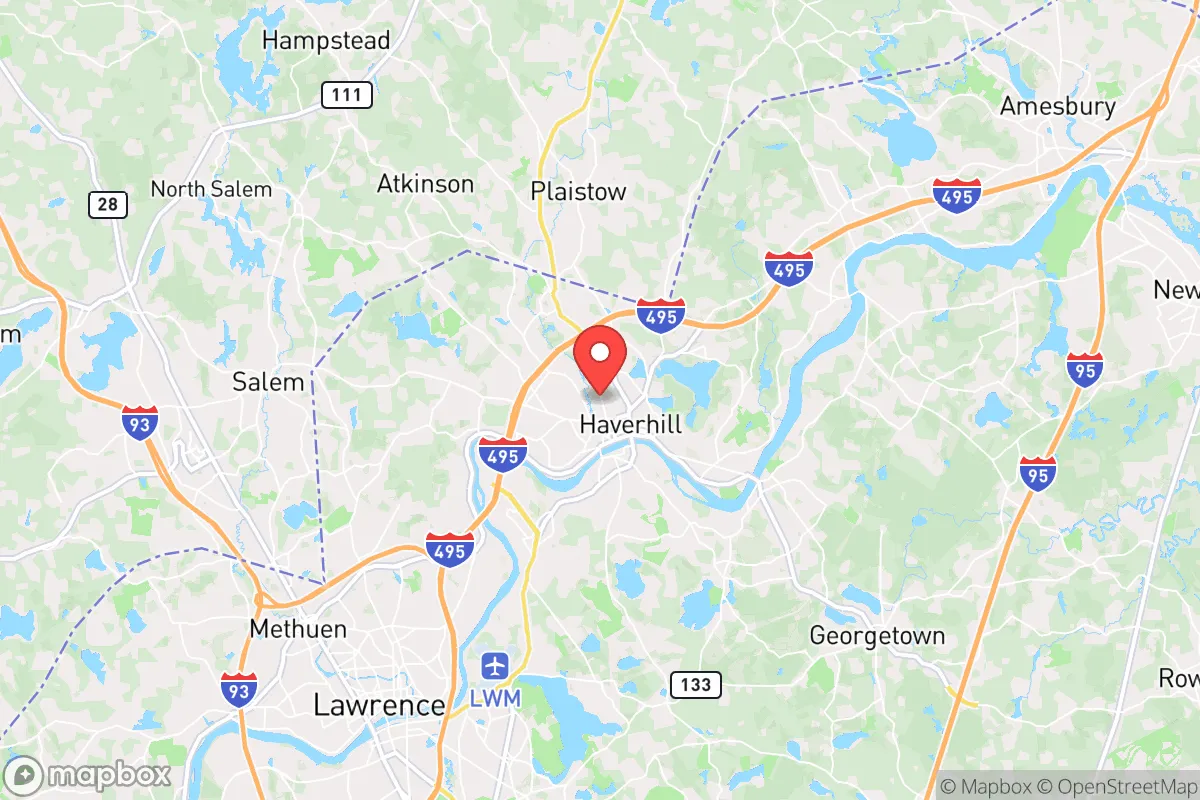
If you drive ten minutes west to Salem, New Hampshire, you’ll feel like you’re in a different country. Salem is still a place where the Second Amendment is respected and property taxes are kept in check. Same goes for Plaistow and Atkinson just over the border. Those towns vote reliably Republican and push back on the kind of top-down mandates that have become routine in Massachusetts. Even Methuen, right next door, has a more independent streak than Haverhill does. The contrast is stark: you can live in a town where the local government trusts you to make your own decisions, or you can live in Haverhill, where the city council is constantly looking for new ways to regulate your life—from plastic bag bans to rental inspection schemes that treat landlords like criminals. It’s a real shame, because Haverhill used to have that same live-and-let-live spirit.
What this means for residents
For families and small business owners, the political shift has real consequences. The school system is under constant pressure to adopt progressive curricula that prioritize social agendas over reading and math. Meanwhile, property taxes keep climbing to fund new programs and administrative bloat, with little accountability. If you own a firearm, you already know Massachusetts is one of the most restrictive states in the country, and Haverhill’s local leadership isn’t interested in pushing back against that. The city has also embraced “sanctuary” policies that limit cooperation with federal immigration enforcement, which raises legitimate concerns about public safety and the rule of law. For anyone who values personal responsibility and limited government, it’s getting harder to feel at home here. A lot of my neighbors have already voted with their feet and moved north to New Hampshire, where the state motto is literally “Live Free or Die.”
On the cultural front, Haverhill has leaned into the kind of identity politics that divides communities rather than uniting them. There’s a lot of talk about “equity” and “inclusion,” but in practice, it often means pushing out traditional values and silencing dissenting voices. The downtown revitalization has brought some nice restaurants and breweries, but the cost has been a loss of the old Haverhill character—the blue-collar, independent spirit that built this city. Looking ahead, I don’t see the trend reversing unless there’s a major grassroots push from residents who are fed up with being treated like subjects rather than citizens. For now, if you’re thinking of moving here, just know what you’re signing up for: a city that’s increasingly run by people who believe they know better than you do.

State Political ClimatePolitical Climate in Massachusetts
State Political AnalysisPolitical Environment in the State
Massachusetts has long been one of the most reliably Democratic states in the nation, with a partisan lean that has only deepened over the past two decades. In the 2024 presidential election, the state gave Kamala Harris a 25-point margin over Donald Trump, a shift from the 23-point margin for Joe Biden in 2020 and the 27-point margin for Hillary Clinton in 2016. The dominant coalition is a blend of urban progressives, suburban moderates, and a shrinking but vocal Republican base concentrated in the central and southeastern parts of the state. Over the last 10-20 years, the state has moved steadily leftward on cultural and economic issues, driven by in-migration from younger, college-educated professionals and the exodus of more conservative-leaning families to New Hampshire, Florida, and Texas.
Urban vs. rural divide
The political map of Massachusetts is a classic tale of two states. The Boston metro area, including Cambridge, Somerville, and Brookline, is the engine of the state’s progressive politics, routinely delivering 80-90% Democratic margins. These areas are home to the state’s largest universities, tech hubs, and a dense concentration of government and nonprofit workers. In contrast, the western and central parts of the state, including Worcester, Springfield, and Pittsfield, are more moderate but still lean Democratic. The true conservative strongholds are the southeastern corner and the Cape Cod region, where towns like Plymouth, Barnstable, and Sandwich have seen Republican votes hold steady in the 40-45% range. The most notable shift in recent years has been in the Merrimack Valley, including Lowell and Lawrence, where growing immigrant populations have pushed these once-purple areas solidly blue. The rural towns of the Berkshires and the North Shore remain Republican-leaning but are increasingly outnumbered by the urban and suburban vote.
Policy environment
Massachusetts has one of the highest tax burdens in the country, with a flat income tax rate of 5% that is set to rise to 9% for income over $1 million following the 2022 "Millionaire’s Tax" ballot initiative. Property taxes are high, averaging 1.2% of home value, and the state imposes a sales tax of 6.25%. The regulatory environment is among the most stringent in the nation, particularly in housing, energy, and healthcare. The state has a robust public education system, consistently ranking first in K-12 outcomes, but it also mandates strict vaccine requirements for school attendance and has some of the most restrictive gun laws in the country, including a ban on "assault weapons" and a strict licensing regime. Election laws are highly progressive: same-day voter registration, no-excuse mail-in voting, and automatic voter registration are all in place. The state also has a "sanctuary state" law (the 2017 Trust Act) that limits cooperation between local law enforcement and federal immigration authorities.
Trajectory & freedom
Over the past five years, Massachusetts has become less free by nearly any measure of personal liberty. The 2020 COVID response was among the most aggressive in the nation, with Governor Charlie Baker imposing some of the longest-lasting business closures and mask mandates in the country. In 2022, the state passed the H.5090 gun control bill, which expanded the "red flag" law, banned the sale of certain semi-automatic rifles, and required a license to purchase ammunition. On parental rights, the state passed the 2022 Parentage Act, which removed the legal distinction between biological and "de facto" parents, and in 2023, the state enacted a law requiring public schools to adopt policies that affirm a student’s gender identity without parental notification. The state also passed the ROE Act in 2020, codifying abortion rights and removing parental consent requirements for minors. On the economic front, the Millionaire’s Tax took effect in 2023, and the state has repeatedly rejected efforts to lower the income tax rate. Property rights have been eroded by the state’s Chapter 40B affordable housing law, which allows developers to bypass local zoning in towns that don’t meet a 10% affordable housing threshold.
Civil unrest & political movements
Massachusetts has seen a significant uptick in political activism on both sides. The 2020 George Floyd protests in Boston were among the largest in the country, with sustained demonstrations for weeks. The state has a strong progressive activist infrastructure, including the Massachusetts Teachers Association and the ACLU of Massachusetts, which have successfully pushed for progressive policies on education, criminal justice, and immigration. On the right, the Massachusetts Republican Party has struggled to maintain relevance, but grassroots groups like the Massachusetts Fiscal Alliance and the Massachusetts Gun Owners Action League have been active in opposing tax increases and gun control. The state’s sanctuary policies have been a flashpoint, particularly in Boston, Cambridge, and Somerville, where local officials have openly resisted federal immigration enforcement. In 2023, a controversy erupted in Wellesley when the school district implemented a policy allowing students to change their names and pronouns without parental consent, sparking a lawsuit and a statewide debate. Election integrity has been a minor issue, with the state’s mail-in voting system drawing criticism from conservatives but no major fraud cases.
Projection
Over the next 5-10 years, Massachusetts is likely to become even more progressive. The state’s population is aging and declining in rural areas, while the Boston metro continues to attract young, educated, and left-leaning transplants. The Republican Party is increasingly confined to a few state legislative seats and local offices in the southeastern part of the state. The state’s high cost of living and tax burden are driving out middle-class families, particularly those with conservative leanings, who are moving to New Hampshire, Florida, or Texas. The state’s housing crisis, driven by restrictive zoning and high demand, will likely force more progressive policies, including rent control and statewide zoning mandates. On the cultural front, expect further expansion of transgender rights, stricter gun laws, and continued erosion of parental rights in education. The state’s sanctuary policies will remain in place, and the state will likely become a leader in climate change regulation, including a ban on new gas hookups in buildings. For a conservative-leaning individual or family, the trajectory is clear: Massachusetts will continue to be a state where personal freedom is increasingly circumscribed by government mandates, high taxes, and a dominant progressive culture.
Bottom line for a new resident: If you value low taxes, gun rights, parental control over education, and a limited government, Massachusetts is likely a poor fit. The state offers world-class schools, healthcare, and infrastructure, but these come at the cost of high taxes, heavy regulation, and a political culture that is actively hostile to conservative values. If you are considering a move here, be prepared for a state where your personal freedoms will be increasingly constrained by state law, and where your vote will have little impact on statewide elections. For those who can afford it and align with the dominant political culture, Massachusetts remains a great place to live. For everyone else, it’s a place to visit, not to stay.
* Values derived from national, state, county, city and local statistics and may differ in a specific area. Last updated: 2026-05-01T05:45:35.000Z
Narrative content on this page is AI-generated and may contain mistakes. Verify any details that matter before acting on them.
ReloMaps may earn a commission from affiliate links at no extra cost to you.

