Photo: Wikipedia
Strategic Assessment of Hawaii County
Workable tactical position. Some exposure to population density or targets, but generally defensible in a crisis.
What does the Strategic Assessment tell us?
Our Strategic Assessment grades tactical survivability of an area. Major population centers, military targets, fallout zones, natural disasters, and border exposure all drive risk — lower exposure means a more defensible position in a crisis.
This is heavily inspired by Joel Skousen's Strategic Relocation book. Highly recommended you checkout the book ($)What does this tell us?
Our Strategic Assessment grades tactical survivability of an area. Major population centers, military targets, fallout zones, natural disasters, and border exposure all drive risk — lower exposure means a more defensible position in a crisis.
This is heavily inspired by Joel Skousen's Strategic Relocation book. Highly recommended you checkout the book ($)Strategic Pillars

Key Distances
Strategic Assessment Analysis
Hawaii County, the Big Island, offers a unique strategic proposition for those prioritizing resilience and distance from mainland instability. Its geographic isolation, while a logistical challenge, is its greatest defensive asset—far removed from the continental power grid, interstate choke points, and the fallout zones of major urban centers. For a relocator with a survivalist mindset, this island county provides a rare combination of natural resource abundance and low population density, though it demands serious preparation for its own set of risks.
Geographic position and natural advantages for long-term security
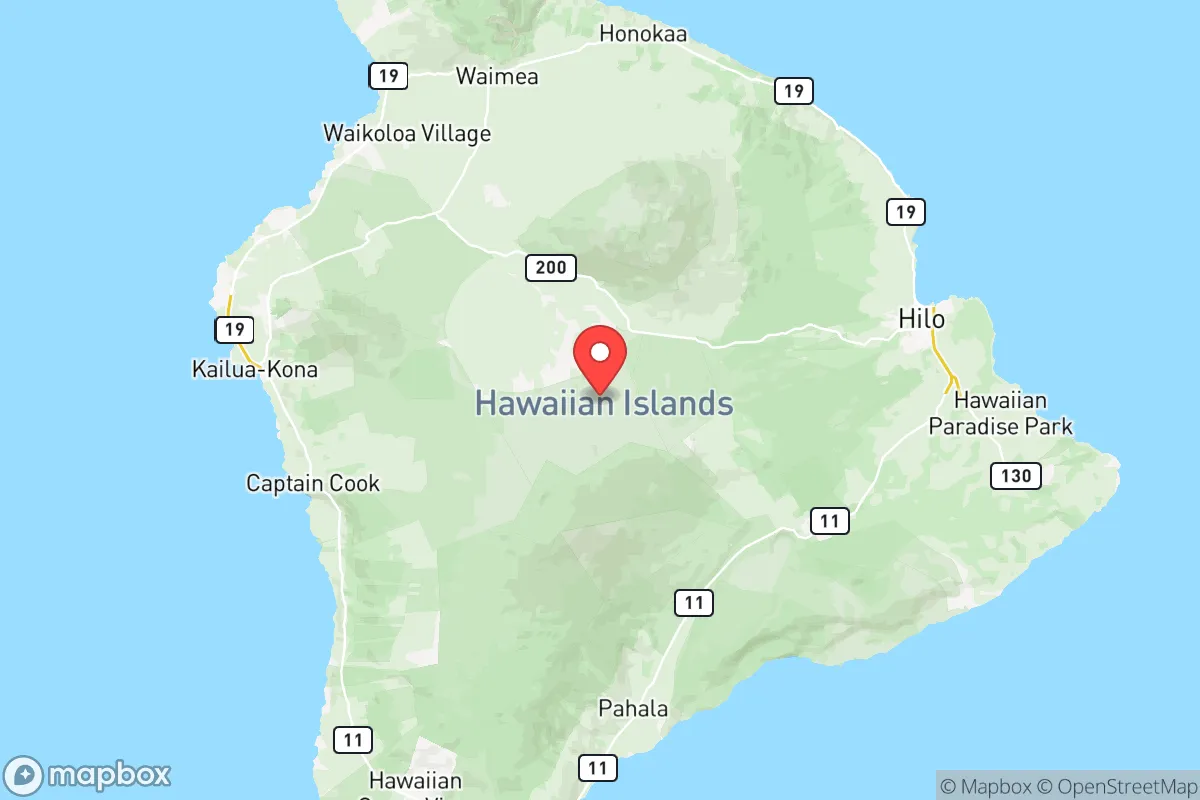
Hawaii County encompasses the entire Big Island, roughly twice the size of the other Hawaiian islands combined, with a population density of just 46 people per square mile—comparable to rural Montana. The island's isolation means it is over 2,500 miles from the nearest continental fallout target like Pearl Harbor or Los Angeles, making it one of the safest locations in the United States from a nuclear exchange or EMP event originating on the mainland. The county's primary population centers—Hilo on the east coast and Kailua-Kona on the west—are separated by a mountain range, creating natural redundancy. The Mauna Kea and Mauna Loa volcanoes provide high ground for observation and communication, while the island's volcanic soil supports year-round agriculture. The port of Hilo and the Kona International Airport are the only major logistical hubs, meaning any outside disruption would be slow to arrive, giving residents time to prepare.
Risks, exposures, and proximity to fallout-relevant landmarks
While the Big Island avoids mainland fallout dangers, it has its own exposure profile. The island is home to active volcanic zones, particularly around Kilauea and Mauna Loa, which can disrupt infrastructure and force evacuations. The 2018 Kilauea eruption destroyed over 700 homes in the Puna district, a reminder that even remote areas face natural threats. The Pohakuloa Training Area, a U.S. Army base in the island's interior, is a potential target for any adversary seeking to disrupt Pacific operations, though its remote location limits collateral damage. The Hilo Harbor and Kona Airport are critical chokepoints—if either is compromised by a tsunami (a real threat given the island's Pacific location) or civil unrest, resupply becomes impossible. The island's reliance on imported fuel and food means that a disruption to the Honolulu fuel depot or mainland shipping lanes would hit within weeks. For the prepper, the key risk is not fallout but supply chain fragility and volcanic activity.
Practical resilience for a relocator: food, water, energy, and defensibility
Hawaii County offers some of the best natural resilience in the U.S., but it requires active investment. The island has abundant rainfall, especially on the Hilo side, which averages over 130 inches annually—enough to support off-grid water catchment systems. Many rural properties already use rainwater catchment and septic systems, making them independent of municipal utilities. The volcanic soil is fertile, and a well-planned homestead can produce taro, sweet potatoes, bananas, and citrus year-round. For protein, the island has feral pigs, goats, and abundant fishing along the coast. Energy independence is achievable with solar, as the island averages 270 sunny days per year on the Kona side, though battery storage is essential due to the lack of a stable grid. Defensibility is high: the island's rugged terrain, limited road networks (only two major highways, Highway 19 and Highway 11), and dense jungle in areas like Puna and Ka'u make it easy to secure a property. However, the lack of a strong law enforcement presence in rural districts means that community networks and personal security are critical. The Hawaii County Police Department has about 500 officers for 4,000 square miles, so response times in remote areas can exceed an hour.
The overall strategic picture for conservative-minded relocators
For those seeking to escape the vulnerabilities of mainland urban centers—grid collapse, civil unrest, or fallout from a major conflict—Hawaii County presents a compelling but demanding option. Its isolation is both a shield and a trap: you are safe from most external threats, but you must be self-sufficient because help is far away. The county's low population density and abundant natural resources make it one of the few places in the U.S. where a determined family could achieve true off-grid resilience. However, the cost of entry is high—real estate in areas like Ocean View or Pahoa is relatively affordable (under $300,000 for raw land), but building materials, fuel, and specialized labor are expensive due to shipping costs. The political climate is mixed: Hawaii County leans left in elections, but rural areas like Waimea and North Kohala have strong conservative communities focused on self-reliance and local governance. The bottom line: if you have the capital to establish a homestead, the skills to maintain it, and the patience to deal with island logistics, Hawaii County offers a strategic redoubt unmatched in the lower 48. But it is not a retreat—it is a commitment to a different way of life, one that demands preparation, community, and a willingness to adapt to the island's own rhythms and risks.

* Values derived from national, state, county, city and local statistics and may differ in a specific area. Last updated: 2026-05-21T16:15:07.000Z
Narrative content on this page is AI-generated and may contain mistakes. Verify any details that matter before acting on them.
ReloMaps may earn a commission from affiliate links at no extra cost to you.

