
Photo: Wikipedia
Political ClimatePolitical Climate in Hawaii County
Showing district-level results — no local-only data available.
Local Political AnalysisPolitical Analysis of Hawaii County
Hawaii County, the Big Island, has a Cook PVI of D+12, matching the state of Hawaii as a whole, but don’t let that single number fool you—this place is far from a monolith. The Democratic stronghold is real, but it’s a different flavor than what you’d find in Honolulu, and the political winds are shifting in ways that should make anyone wary of government overreach sit up and take notice. The county has long been a mix of old-school local Democrats, independent ranchers, and a growing contingent of folks who just want to be left alone, but the last few years have seen a push toward progressive policies that feel more like they’re coming from a mainland city planner than from the people who actually live here.
How it compares
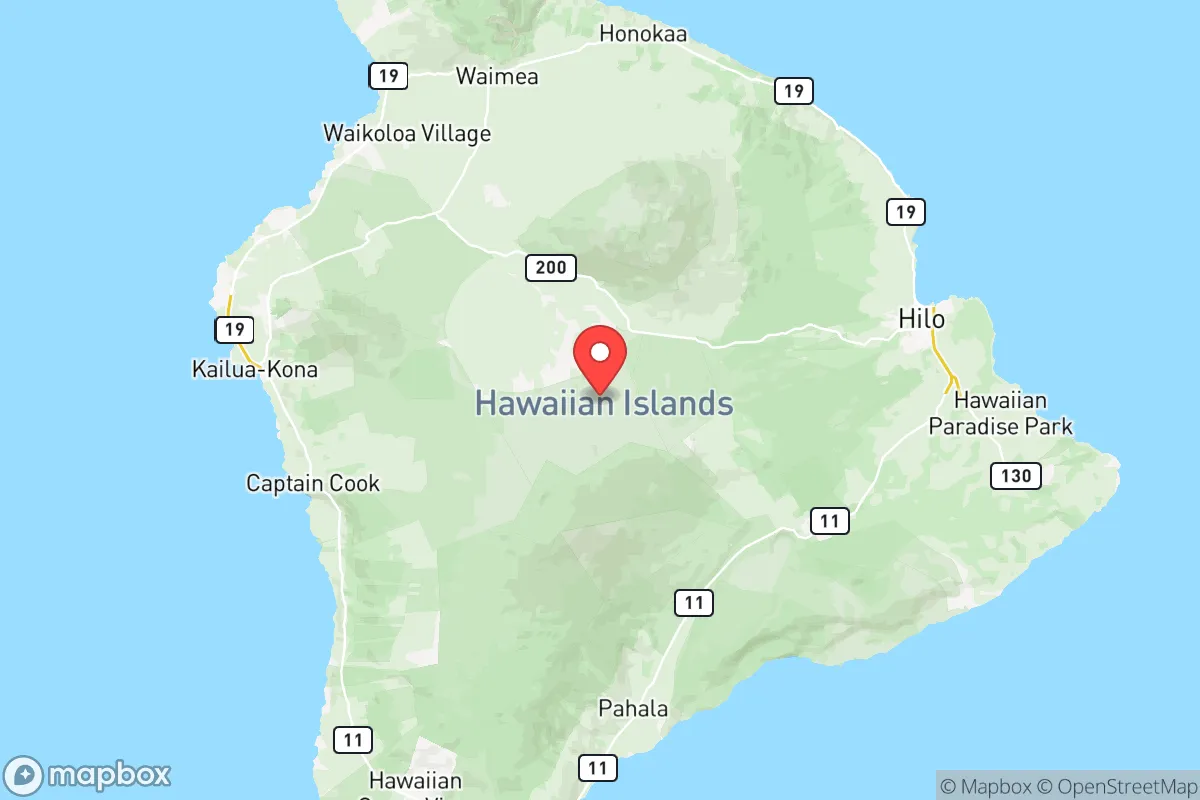
Compared to the rest of Hawaii, the Big Island is more politically diverse, with real geographic splits that you don’t see as much on Oahu. The eastern side, especially around Hilo, leans solidly blue—think government workers, university folks, and long-time local families who’ve voted Democrat for generations. But head to the west side, and you’ll find a different story. Kailua-Kona and Waimea have a noticeable conservative streak, with a mix of ranchers, veterans, and small business owners who are increasingly vocal about property rights and local control. The real swing precincts are in places like Pahoa and Volcano, where libertarian-leaning homesteaders and off-grid types often vote against any new tax or regulation, regardless of party. That’s where you see the tension: the county council has pushed through things like plastic bag bans and stricter vacation rental rules that feel like a slow creep of government into daily life, while many residents just want to be able to fix their own truck without a permit.
What this means for residents
For anyone who values personal freedom, the trend here is concerning. The county has been flirting with more progressive land-use policies, including talk of mandatory composting and tighter building codes that would hit rural homeowners hardest. If you’re in a place like Ocean View or Kurtistown, where people live on rainwater catchment and solar power precisely to avoid government entanglements, these moves feel like a direct threat. The local Democratic machine is strong, but it’s not the old-school kind that respected “live and let live”—it’s increasingly aligned with national progressive priorities. The silver lining is that the county’s sheer size and isolation make enforcement a joke; many residents simply ignore new rules, and the county lacks the manpower to crack down. But that’s a fragile peace, and if the trend continues, you can expect more folks to either move to the mainland or just go further off-grid.
The cultural distinction here is that the Big Island still has a strong independent streak, rooted in its agricultural and ranching history. Places like Honokaa and Hawi still feel like old Hawaii, where community matters more than politics. But the influx of remote workers and retirees from blue states is shifting the balance, bringing with them a desire for more regulation. If you’re considering a move, keep an eye on county council elections—that’s where the real fight over your rights will play out. For now, the Big Island remains a place where you can still carve out your own life, but the clock is ticking on that freedom.

State Political ClimatePolitical Climate in Hawaii
State Political AnalysisPolitical Environment in the State
Hawaii is a deep blue state with a Cook PVI of D+12, meaning it votes about 12 points more Democratic than the national average in presidential elections. The dominant coalition is a mix of unionized government workers, Native Hawaiian entitlement beneficiaries, and a tourism-dependent service class that reliably backs progressive candidates. Over the last 10-20 years, the state has shifted further left, with Republicans holding zero statewide offices since 2018 and the state legislature maintaining a supermajority of Democrats in both chambers. For a conservative considering relocation, the political climate here is less about competitive elections and more about navigating a one-party system that has steadily expanded government control over housing, education, and daily life.
Urban vs. rural divide
The political map is starkly divided between the urban core of Honolulu on Oahu and the more rural, less populated neighbor islands. Honolulu and its suburbs—places like Waipahu, Kaneohe, and Ewa Beach—drive the state’s Democratic dominance, with precincts routinely delivering 70-80% of the vote to Democratic candidates. The rest of Oahu, including the North Shore and windward side, leans even further left due to a concentration of environmental activists and Native Hawaiian sovereignty advocates. On the neighbor islands, the divide is more nuanced. Hilo on the Big Island is a progressive stronghold, while Kailua-Kona and the west side lean more conservative, though still not enough to flip a district. Maui’s central valley and Kihei are reliably blue, but upcountry areas like Makawao and Kula show pockets of Republican support. Kauai is overwhelmingly Democratic, with the exception of a few rural precincts near Hanalei. The rural-urban split is real, but even the most conservative precincts in Hawaii rarely break 55% Republican—this is not a state where you’ll find a deep red county like in Texas or Florida.
Policy environment
Hawaii’s policy environment is a textbook case of progressive governance with little opposition. The state has the highest combined tax burden in the nation, including a general excise tax of 4% on nearly all goods and services (effectively higher when passed through to consumers), and income tax rates that top out at 11%. Property taxes are relatively low for owner-occupied homes, but that’s a trade-off for sky-high housing costs driven by land-use regulations and a powerful hotel industry. Education policy is controlled by a single statewide school district—the Hawaii Department of Education—which means no local school boards and no charter school expansion to speak of. The state has a universal mail-in voting system, automatic voter registration, and same-day registration, which makes voting easy but also eliminates most election integrity measures. Healthcare is heavily regulated, with the state mandating employer-provided coverage and running a robust Medicaid program. The regulatory posture is hostile to new business: starting a construction project can take years due to environmental review laws, and the state’s rent control and tenant protections make it a landlord’s nightmare. For a conservative, the policy environment feels like a slow-motion squeeze on economic freedom and personal choice.
Trajectory & freedom
Hawaii is becoming less free by nearly every measure. The state has some of the strictest gun laws in the country, including a 2018 law that raised the minimum age to purchase a firearm to 21 and required registration of all firearms. In 2022, the legislature passed a ban on “ghost guns” and expanded red flag laws. On parental rights, the state has moved aggressively: in 2023, the legislature passed a law requiring public schools to adopt curriculum that includes “culturally responsive” and “gender-affirming” practices, effectively sidelining parental opt-outs. Medical autonomy took a hit with the 2023 law that expanded Medicaid coverage for gender transition procedures for minors, overriding parental consent requirements in some cases. Property rights are under constant assault from the state’s powerful Land Use Commission, which can rezone land without local input, and from rent control measures that cap annual increases at 5% plus inflation. The state’s tax burden continues to climb, with no serious effort at reform. The trajectory is clear: more regulation, higher taxes, and less individual discretion in education, healthcare, and property.
Civil unrest & political movements
Hawaii has a history of civil unrest tied to Native Hawaiian sovereignty movements, which have gained mainstream traction in the last decade. The Mauna Kea telescope protests in 2019 were a major flashpoint, with thousands of activists blocking construction of the Thirty Meter Telescope, leading to arrests and a prolonged standoff that the state ultimately backed down from. The movement has since morphed into a broader push for self-governance, with the state legislature considering bills to establish a Native Hawaiian governing entity. On the right, there is a small but vocal libertarian and Second Amendment movement, centered on the neighbor islands, that has organized against gun control and vaccine mandates. During COVID, Hawaii had some of the strictest travel restrictions in the nation, including a mandatory 14-day quarantine that was enforced with police checkpoints at airports—a move that sparked protests and lawsuits. Election integrity has been a minor issue, with a 2020 audit finding no widespread fraud, but the state’s universal mail-in system has raised concerns among conservatives about ballot harvesting and chain of custody. Immigration politics are less heated here than on the mainland, but the state has a sanctuary policy that limits cooperation with federal immigration enforcement. A new resident would notice the strong presence of activist groups on both sides, but the left’s dominance means their protests are more visible and more likely to shape policy.
Projection
Over the next 5-10 years, Hawaii is likely to become even more progressive, driven by demographic trends and in-migration patterns. The state’s population is aging and declining, with many native-born residents moving to the mainland for lower costs and more economic opportunity. Those who move in tend to be wealthy retirees from California and the Pacific Northwest, who bring their progressive politics with them. The Native Hawaiian sovereignty movement will continue to gain legislative traction, potentially leading to a formal governing entity that could impose additional taxes and land-use restrictions. The state’s housing crisis will force some policy changes—likely more rent control and government-subsidized housing, not deregulation. The Republican Party is effectively a non-factor, with no path to statewide power unless the Democratic coalition fractures over internal disputes (e.g., between labor unions and environmentalists). For a conservative moving in now, expect to find a state where your vote for governor or legislature is essentially symbolic, and where your personal freedoms will be increasingly constrained by state mandates on everything from what you can build on your property to what your children learn in school.
Bottom line for a new resident: If you value low taxes, local control of schools, gun rights, and minimal government interference in your personal life, Hawaii is a tough place to call home. The natural beauty and outdoor lifestyle are unmatched, but the political climate is a one-way street toward more progressive governance. You’ll need to be prepared to either adapt to a system that prioritizes collective outcomes over individual liberty, or accept that your vote and your voice will be a permanent minority. For families, the lack of school choice and the state’s aggressive curriculum mandates are particular concerns. For singles, the high cost of living and limited economic opportunity outside of tourism and government are real drawbacks. If you’re set on moving here, consider the neighbor islands—especially the west side of the Big Island or upcountry Maui—where the political climate is slightly more balanced, but don’t expect a red oasis. This is a blue state through and through, and it’s only getting bluer.
* Values derived from national, state, county, city and local statistics and may differ in a specific area. Last updated: 2026-05-21T16:15:07.000Z
Narrative content on this page is AI-generated and may contain mistakes. Verify any details that matter before acting on them.
ReloMaps may earn a commission from affiliate links at no extra cost to you.

