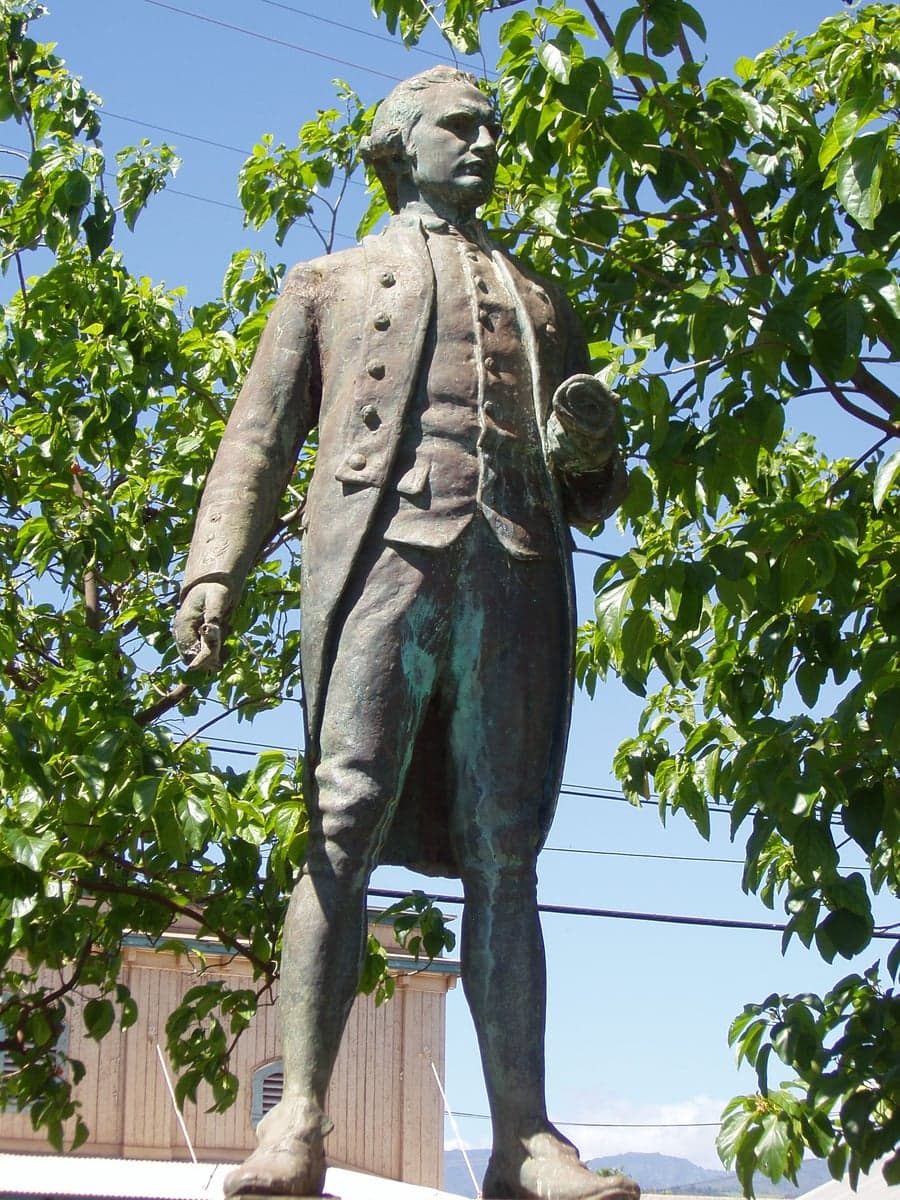
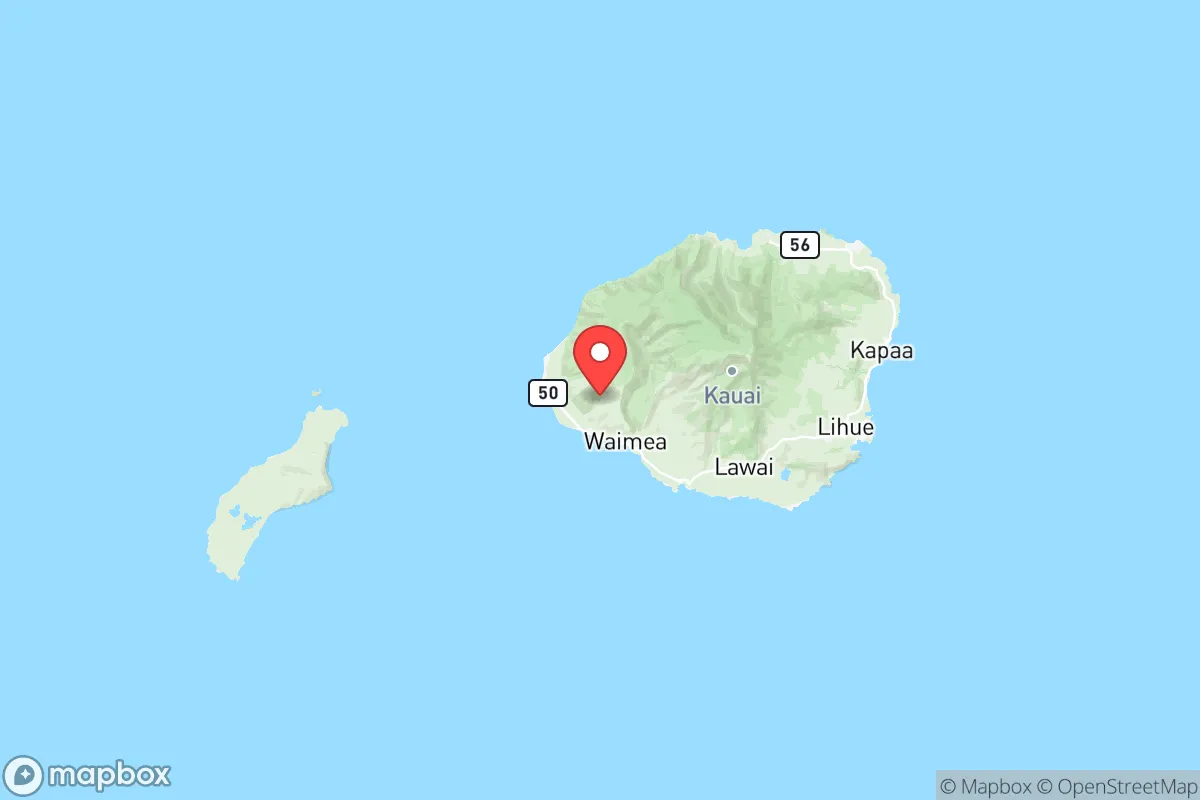
Photo: Wikipedia
Personal Sovereignty in Kauai County
Moderate friction. Expect trade-offs in some aspect of personal liberty and independence.
What does Personal Sovereignty tell us?
Personal Sovereignty measures your capacity for self-reliance and independence with minimal government friction. Higher scores mean fewer barriers between you and the way you want to live... but it assumes you have the space you need and good neighbors.
What does this tell us?
Personal Sovereignty measures your capacity for self-reliance and independence with minimal government friction. Higher scores mean fewer barriers between you and the way you want to live... but it assumes you have the space you need and good neighbors.
State Policy
Energy independence: Importer (2% of energy produced in-state)
Personal Liberty
Homesteading

Personal Liberty Analysis
Kauai County presents a complex and often contradictory picture for those prioritizing personal sovereignty. While the island’s remote geography and tight-knit communities offer a natural buffer from mainland chaos, the State of Hawaii’s centralized governance imposes significant constraints on individual autonomy. For a conservative-leaning individual or family seeking to minimize government overreach, Kauai requires a careful cost-benefit analysis: the trade-off is a lower-tax, slower-paced lifestyle against some of the nation’s most restrictive gun laws, limited off-grid feasibility, and a regulatory environment that can feel suffocating. The county’s autonomy environment is best described as a high-friction, high-reward proposition—strong on community self-reliance but weak on legal protections for individual rights.
Tax burden and regulatory posture: How state and county policies affect your wallet
Kauai County benefits from Hawaii’s relatively low property tax rates, which are among the lowest in the nation. The effective property tax rate on owner-occupied homes hovers around 0.3% to 0.4% of assessed value, a fraction of what you’d pay in Texas or New York. This is a genuine advantage for homeowners and those holding land for long-term self-sufficiency. However, the trade-off is a heavy state-level tax burden: Hawaii has a progressive income tax that tops out at 11%, a general excise tax (GET) of 4% applied to nearly all goods and services (including rent and groceries), and high fuel taxes. For a prepper or homesteader, the GET is particularly insidious—it taxes the inputs of self-reliance, from building materials to farming equipment. The regulatory posture is equally challenging. The County of Kauai’s Planning Department enforces strict zoning and building codes, especially in flood zones and conservation districts. Towns like Hanalei and Princeville on the North Shore are subject to some of the most restrictive vacation rental and short-term rental ordinances in the state, limiting property use. In contrast, areas like Kalaheo and Waimea on the west and south sides have more lenient enforcement for agricultural uses, but any new structure requires a lengthy permitting process that can take years. The overall regulatory posture is one of high friction for anyone wanting to build, modify, or use land independently.
Self-defense and gun law specifics: What you can and cannot own on Kauai
For those who view the Second Amendment as a cornerstone of personal sovereignty, Kauai—and Hawaii as a whole—is a hostile environment. Hawaii is a may-issue state for concealed carry, and in practice, permits are nearly impossible to obtain. The 2022 Supreme Court decision in NYSRPA v. Bruen forced some loosening, but as of 2026, the process remains onerous: applicants must demonstrate “exceptional circumstances,” pass a state-run background check, complete a training course, and pay substantial fees. Even then, the county police chief has broad discretion to deny. Open carry is effectively banned. Long guns are less restricted but still require registration and a permit to acquire. Assault weapons (as defined by state law) and magazines over 10 rounds are prohibited. For a prepper, this means your defensive capabilities are limited to bolt-action rifles, shotguns, and handguns with restricted capacity. The practical effect is that self-defense on Kauai relies more on community watch, physical security of your property, and less on firearms. Towns like Kapaa and Lihue have a visible police presence, but response times in rural areas like Kokee or Haena can exceed 30 minutes. The gun culture here is not absent—there are local shooting ranges and hunting clubs—but it operates under a cloud of state-level suspicion. If firearm ownership is non-negotiable for your sovereignty plan, Kauai is a poor fit.
Self-reliance and homesteading viability: Lot sizes, zoning, and off-grid feasibility
Kauai offers genuine potential for self-reliance, but it is heavily constrained by zoning and infrastructure realities. Agricultural land (AG zoning) is abundant, particularly in the Kilauea and Anahola areas, where lot sizes of 1 to 5 acres are common. These parcels are often affordable by mainland standards—$100,000 to $300,000 for raw land—but the catch is that building a residence requires a “farm dwelling” permit, which demands proof of active agricultural income. Off-grid living is technically possible but legally fraught. The county requires connection to the electrical grid if it is available within 500 feet, and rainwater catchment systems are allowed but must meet strict health department standards for potable water. Solar panels are common, but net metering policies have become less favorable in recent years. Septic systems are permitted, but the county health department inspects them rigorously. Composting toilets are legal but must be approved. The most viable path to self-reliance is to buy an existing home on AG land with established infrastructure, then expand your garden and livestock operations. Waimea and Hanapepe have a stronger homesteading culture, with community seed swaps and local farmers markets. However, the cost of living—especially imported goods—means that true self-sufficiency is a long-term project, not a quick escape. The regulatory posture is one of managed permission, not freedom to experiment.
Personal liberties: Parental rights, medical autonomy, speech, and property
On personal liberties, Kauai mirrors the broader state’s progressive tilt. Parental rights in education are limited: Hawaii has mandatory school attendance until age 18, and homeschooling is legal but requires annual notification and curriculum approval by the Department of Education. School choice is minimal outside of private or charter options in Lihue and Kapaa. Medical autonomy is constrained by state mandates. Hawaii has some of the strictest vaccine requirements for school entry, and during public health emergencies, the governor has broad powers to mandate treatments or restrictions. For those who prioritize medical freedom, this is a red flag. Free speech is protected under the First Amendment, but local politics on Kauai can be insular and conformist—public criticism of county officials or development projects can lead to social ostracism. Property rights are the most concerning area. The county’s comprehensive zoning code and the state’s Land Use Commission give government broad authority to restrict how you use your land. Short-term rental bans, agricultural use requirements, and conservation easements can limit your ability to generate income or modify your property. In Poipu, for example, strict vacation rental caps have forced many owners to convert to long-term leases. The overall environment is one where personal liberties are legally protected on paper but practically constrained by a dense web of regulations and a culture that prioritizes collective compliance over individual autonomy.
Compared to other areas of the country, Kauai County offers a unique but limited sovereignty package. The low property taxes and agricultural zoning create a foundation for self-reliance, but the state’s heavy hand on guns, medical choices, and property use makes it a poor fit for those who view personal sovereignty as a non-negotiable right. For a survivalist or prepper, Kauai is best seen as a retreat for those willing to work within the system—building community ties, navigating permits, and accepting legal restrictions—rather than a place to exercise full autonomy. If you value low taxes and a remote, slow-paced life above all else, it can work. If you want to own firearms without government permission, build a cabin without a permit, or homeschool without state oversight, look to the mainland interior. Kauai is a beautiful cage, but a cage nonetheless.

* Values derived from national, state, county, city and local statistics and may differ in a specific area. Last updated: 2026-06-03T05:30:38.000Z
Narrative content on this page is AI-generated and may contain mistakes. Verify any details that matter before acting on them.
ReloMaps may earn a commission from affiliate links at no extra cost to you.

