Photo: Wikipedia
Demographics of Kauai County
Affluence Level in Kauai County
An upper-middle-class area. Household wealth, education levels, and homeownership run ahead of national benchmarks.
People of Kauai County
The people of Kauai County, Hawaii, today number 73,610 and are defined by a unique blend of Native Hawaiian heritage, a strong East and Southeast Asian presence, and a small but growing mainland transplant community. The county is the least densely populated of the major Hawaiian islands, with a character rooted in plantation history, rural agricultural life, and a deep sense of local identity distinct from Oahu. Its population is notably diverse: 29.0% identify as White, 29.0% as Asian (East and Southeast Asian), 10.5% as Hispanic, and a significant Native Hawaiian and Pacific Islander community makes up the remainder, while only 0.6% are Black and 0.1% are Indian (subcontinent). The foreign-born population stands at 6.7%, and 30.2% of adults hold a college degree, reflecting a mix of working-class roots and a growing professional class drawn to the island’s lifestyle.
Settlement & growth (pre-1960)
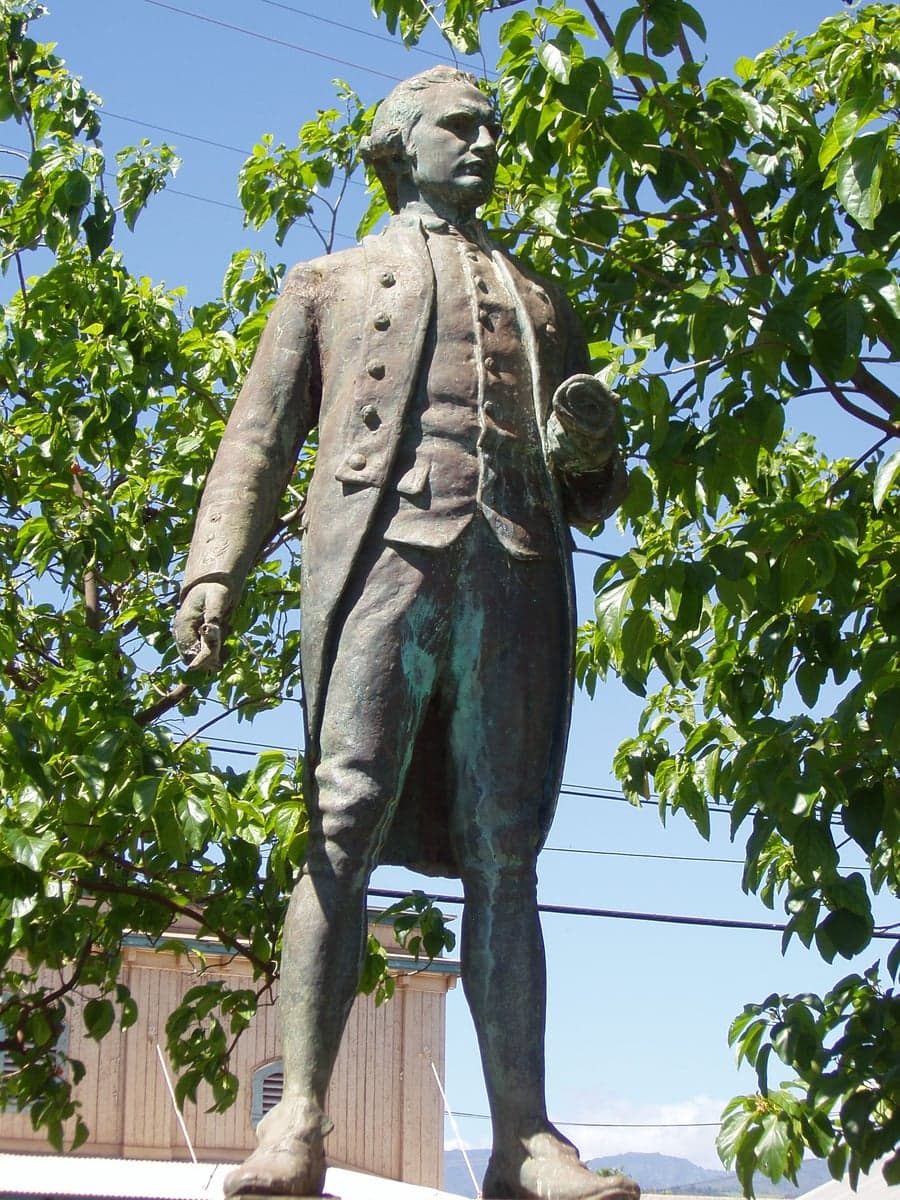
The first people of Kauai arrived by voyaging canoe from the Marquesas Islands around 500 AD, followed by later waves from Tahiti. These Polynesian settlers established a complex society of ahupuaʻa (land divisions) that stretched from the mountains to the sea, with major settlements at Waimea, Hanalei, and Wailua. The population was entirely Native Hawaiian until Western contact in 1778, when Captain James Cook first landed at Waimea Bay. Disease and social disruption reduced the Native population dramatically over the following decades.
The 19th century brought the first major demographic shift: the sugar plantation era. Starting in the 1830s, American and European missionaries and businessmen established sugar operations, most notably at Koloa, site of Hawaii’s first successful sugar plantation (1835). To supply labor, plantation owners imported contract workers from around the world. The first wave, beginning in the 1850s, brought Chinese laborers, who settled in plantation camps near Lihue and Kapaa. Japanese workers followed in large numbers from 1885 onward, becoming the largest ethnic group on the island by the early 1900s, with strong communities in Hanapepe and Waimea. Portuguese immigrants, mostly from Madeira and the Azores, arrived in the 1880s and concentrated in Kilauea and Kekaha, often working as luna (overseers). Puerto Ricans came after 1900, and Filipinos arrived in waves starting in 1906, settling heavily in Eleele and Kapaa. By 1920, Kauai’s population was a mosaic of Native Hawaiians, Chinese, Japanese, Portuguese, Puerto Ricans, and Filipinos, all living in plantation camps that were ethnically segregated but in close proximity.
The plantation system dominated until the 1940s. World War II brought a temporary military presence, but Kauai saw less direct impact than Oahu. After the war, the sugar industry began a slow decline, mechanization reduced labor needs, and the plantation camps dissolved. Many workers moved into towns like Lihue and Kapaa, and the population began to suburbanize along the island’s eastern coast. By 1960, Kauai’s population was roughly 28,000, still heavily agricultural and overwhelmingly local in character, with little mainland migration.
Modern era (post-1965)
The 1965 Hart-Cellar Act had a limited direct effect on Kauai compared to the mainland, as the island’s economy did not attract large new immigrant streams. However, the act’s liberalization of Asian immigration did lead to a modest increase in Filipino arrivals, who joined established communities in Kapaa and Lihue. The bigger post-1965 shift was domestic: the rise of tourism. Starting in the 1970s, the development of resorts along the Poipu coast and the Princeville area on the north shore drew mainland Americans—many from California, the Pacific Northwest, and the Northeast—seeking second homes, retirement, or lifestyle changes. This in-migration accelerated after the 1992 Hurricane Iniki, which destroyed many homes and led to a rebuilding boom that attracted construction workers and new residents.
The 1990s and 2000s saw a steady increase in the White population share, from roughly 25% in 1990 to 29.0% today, as mainland transplants bought property and moved into professional and service roles in tourism, healthcare, and real estate. The Hispanic population grew from a small base to 10.5%, driven by migration from the mainland and, to a lesser extent, direct immigration from Mexico and Central America, with clusters in Waimea and Hanapepe. The East and Southeast Asian population (29.0%) remained stable, composed largely of multi-generational Japanese, Filipino, and Chinese families who are deeply integrated into local culture. The Native Hawaiian population, while not separately counted in the provided data, remains a significant and culturally influential minority, concentrated in rural areas like Haena and Anahola. The Black population (0.6%) and Indian subcontinent population (0.1%) remain negligible, reflecting Kauai’s lack of the economic pull factors that draw these groups to larger mainland cities.
Suburbanization has been limited by geography; most growth has occurred along the eastern coast from Lihue north to Kapaa, where strip malls, subdivisions, and resort condominiums have replaced former cane fields. The north shore (Princeville, Hanalei) and south shore (Poipu, Koloa) have become enclaves of affluent mainland transplants and vacation homeowners, creating a cultural and economic divide with the older, more local towns of the west side (Waimea, Kekaha) and interior (Kilauea).
The future
Kauai’s population is projected to grow slowly, if at all, constrained by limited housing supply, high costs, and strict land-use regulations. The island is not homogenizing; instead, it is tribalizing into distinct enclaves: wealthy mainland transplants in Princeville and Poipu, multi-generational local families in Kapaa and Lihue, and Native Hawaiian communities in rural Anahola and Haena. The East and Southeast Asian population is plateauing, as younger generations leave for college and jobs on Oahu or the mainland, while the Filipino community continues to grow modestly through chain migration. The Hispanic population is likely to increase slowly, but will remain a small minority. The White population share may stabilize or decline slightly as housing costs push out all but the affluent.
The cultural identity of Kauai is being reshaped by in-migration, but not absorbed. The local “Kauai” culture—rooted in plantation-era mixing, pidgin English, and a strong sense of place—remains dominant in daily life, especially outside the resort zones. New arrivals who integrate into local networks are absorbed; those who remain in transplant enclaves often live parallel lives. The next 10-20 years will likely see continued tension between development pressures and preservationist sentiment, with the population aging and the Native Hawaiian and local Asian communities fighting to maintain their land and cultural foothold.
For someone moving in now, Kauai offers a stable, safe, and culturally rich environment, but one where newcomers must actively work to build community. The island is not a melting pot but a mosaic of distinct groups with deep roots, and the key to thriving here is understanding and respecting that local identity rather than expecting it to change to suit mainland norms.

* Values derived from national, state, county, city and local statistics and may differ in a specific area. Last updated: 2026-06-03T05:30:38.000Z
Narrative content on this page is AI-generated and may contain mistakes. Verify any details that matter before acting on them.
ReloMaps may earn a commission from affiliate links at no extra cost to you.

