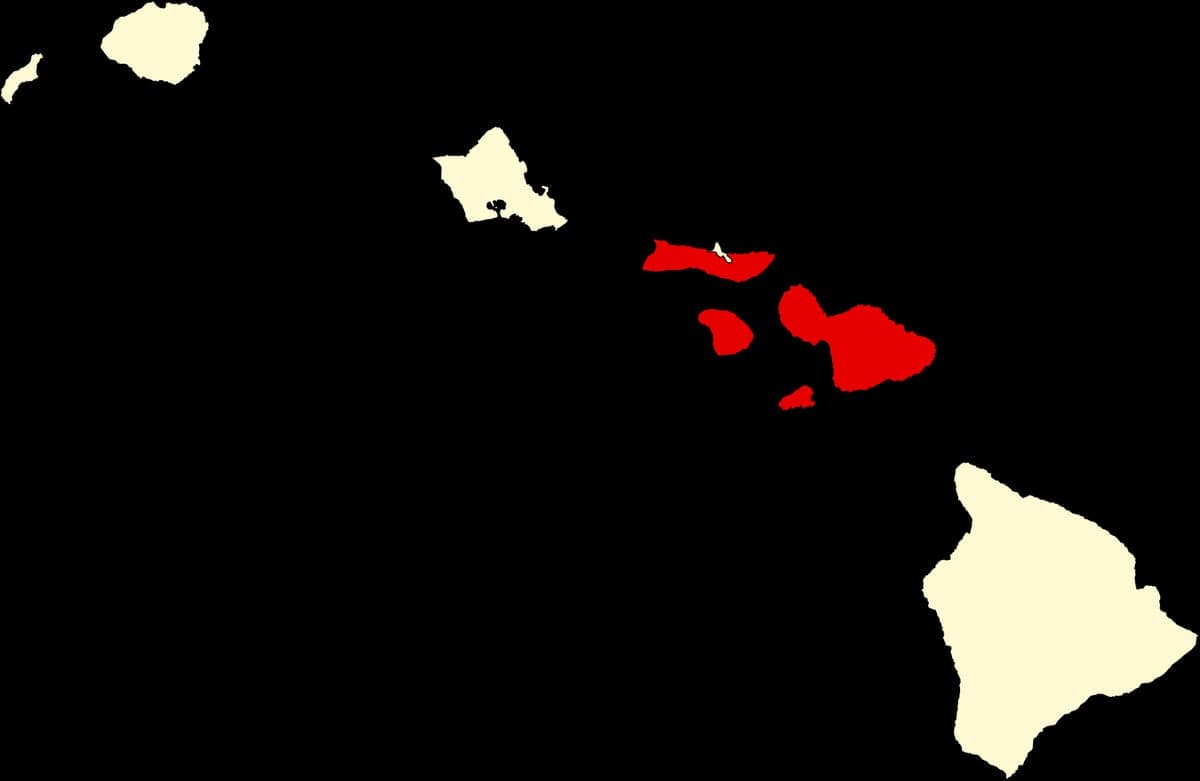
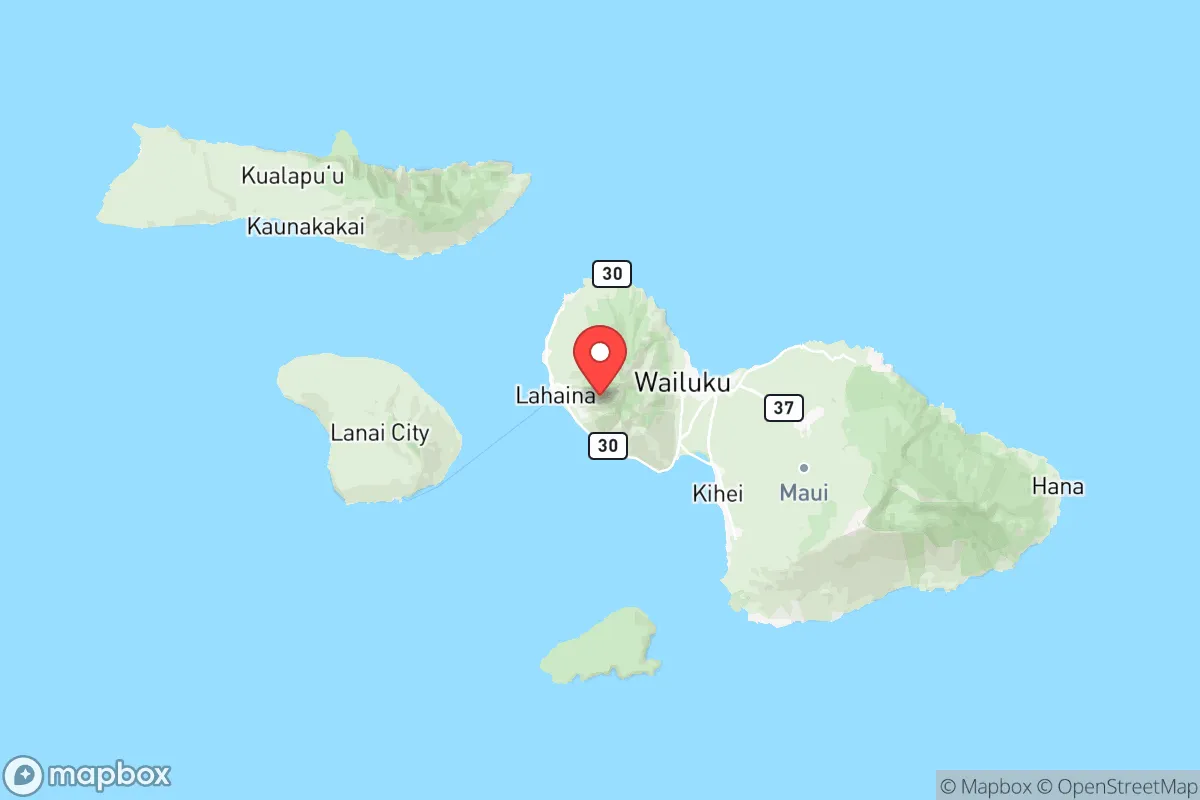
Photo: Wikipedia
Personal Sovereignty in Maui County
Moderate friction. Expect trade-offs in some aspect of personal liberty and independence.
What does Personal Sovereignty tell us?
Personal Sovereignty measures your capacity for self-reliance and independence with minimal government friction. Higher scores mean fewer barriers between you and the way you want to live... but it assumes you have the space you need and good neighbors.
What does this tell us?
Personal Sovereignty measures your capacity for self-reliance and independence with minimal government friction. Higher scores mean fewer barriers between you and the way you want to live... but it assumes you have the space you need and good neighbors.
State Policy
Energy independence: Importer (2% of energy produced in-state)
Personal Liberty
Homesteading

Personal Liberty Analysis
Maui County presents a deeply contradictory environment for personal sovereignty, where the natural abundance of the islands is offset by some of the most restrictive state-level governance in the nation. For the conservative-leaning individual or family prioritizing autonomy, the county offers stunning self-reliance potential in remote areas like Hana or Kaupo, but only if you can navigate a regulatory apparatus that rivals California in its reach. The fundamental tension here is between the physical freedom of island life and the legal constraints imposed by the Hawaii state government, which consistently ranks among the lowest in the nation for economic freedom and property rights.
Tax burden and regulatory posture for residents and property owners
Hawaii’s tax climate is aggressively unfriendly to wealth accumulation and property ownership, and Maui County is no exception. The state imposes a combined state and county general excise tax of roughly 4.5% on virtually all goods and services, including groceries and rent—a hidden sales tax that hits every transaction. Property taxes in Maui County are comparatively moderate for owner-occupied homes (around 0.35% of assessed value), but the state’s income tax brackets top out at 11%, among the highest in the country. For those considering homesteading, the regulatory posture is even more daunting: building permits in areas like Kihei or Lahaina can take 12-18 months, and the county’s strict shoreline setback rules and historic preservation reviews make any construction near the coast a legal minefield. The county’s General Plan and community plans impose dense zoning restrictions that limit what you can do on your own land, particularly in agricultural districts where dwelling sizes and uses are tightly controlled. This is not a jurisdiction where you can simply buy a lot and build a cabin without months of permitting and environmental review.
Self-defense rights and gun law specifics in Maui County
For the prepper or survivalist, Hawaii’s gun laws are among the most restrictive in the United States, and Maui County offers no local relief. The state requires a permit to acquire any firearm, a process that involves fingerprinting, a background check, and a 14-day waiting period—and that’s just for a single handgun. Open carry is effectively banned, and concealed carry permits are issued only on a “may-issue” basis, meaning the Maui County Police Department has near-total discretion to deny applications. In practice, very few civilians obtain carry permits outside of security professionals. Magazine capacity is limited to 10 rounds, and assault pistols are banned by name. For self-defense in the home, a shotgun or bolt-action rifle remains the most legally straightforward option, but even ammunition purchases require a permit and are tracked. The practical reality is that residents of remote areas like Hana or Upcountry Makawao often keep firearms for pig hunting or pest control, but the legal environment creates a chilling effect on defensive gun ownership. If personal firearms are a non-negotiable part of your sovereignty plan, Maui County will be a constant source of friction.
Self-reliance and homesteading viability across the county
The potential for self-reliance in Maui County is enormous, but the legal and practical barriers are equally significant. Agricultural land in areas like Kula, Haiku, or the remote east side near Hana offers fertile soil, ample rainfall, and the ability to grow food year-round. However, county zoning laws require a minimum lot size of 1-2 acres for agricultural dwellings, and the state’s land use commission strictly limits what structures can be built on conservation or agricultural land. Off-grid living is technically possible, but the county requires permits for rainwater catchment systems, solar panels, and composting toilets—and enforcement is active. In more populated areas like Kahului or Wailuku, off-grid living is essentially illegal due to building codes and utility connection requirements. The most viable path for a homesteader is to purchase a property in an agricultural district with an existing dwelling, then gradually expand your food production and water independence. Even then, the cost of land in Maui County is astronomical: raw agricultural lots in Haiku start at $200,000 per acre, and improved properties with water rights can exceed $1 million. For the budget-conscious prepper, the Big Island of Hawaii offers far more affordable and permissive homesteading opportunities than Maui.
Personal liberties: parental rights, medical autonomy, and property control
On issues of parental rights and medical autonomy, Maui County operates under Hawaii state law, which leans heavily toward government authority. The state mandates a robust vaccination schedule for school attendance, with only narrow medical exemptions—religious or philosophical exemptions are not recognized. During the COVID-19 pandemic, Hawaii had some of the longest-lasting mask mandates and travel restrictions in the country, and the state retains broad emergency powers that could be invoked again. Parental rights in education are limited: the state’s Department of Education controls curriculum, and while homeschooling is legal, it requires annual notification and proof of a “planned course of study.” Property rights are similarly constrained: the county’s historic preservation and environmental review processes can delay or block any significant alteration to your land, and the state’s public trust doctrine gives the government broad authority over water rights, which can affect wells and irrigation. In practical terms, this means that a family in Paia or Makawao has less control over their children’s education and medical decisions than a family in Texas or Idaho, and a landowner in Kipahulu has less freedom to develop or modify their property than one in Montana or Wyoming.
Overall, Maui County offers a uniquely beautiful but legally constrained environment for personal sovereignty. The natural resources for self-reliance are world-class—year-round growing seasons, abundant rainfall, and remote coastal areas—but the state and county regulatory apparatus creates a high-friction environment for anyone seeking to live independently. For the conservative prepper or survivalist, the trade-off is stark: you gain physical isolation and agricultural potential in places like Hana or Kaupo, but you lose the legal protections for self-defense, property rights, and parental autonomy that exist in states like Alaska, Idaho, or New Hampshire. If your priority is maximum personal sovereignty with minimal government interference, Maui County is likely a poor fit. But if you are willing to work within a dense regulatory framework in exchange for a stunning natural environment and a tight-knit rural community, the county’s remote districts offer a viable, if challenging, path to self-reliance.

* Values derived from national, state, county, city and local statistics and may differ in a specific area. Last updated: 2026-05-11T21:54:46.000Z
Narrative content on this page is AI-generated and may contain mistakes. Verify any details that matter before acting on them.
ReloMaps may earn a commission from affiliate links at no extra cost to you.

