Photo: Wikipedia
Political ClimatePolitical Climate in Maui County
Showing district-level results — no local-only data available.
Local Political AnalysisPolitical Analysis of Maui County
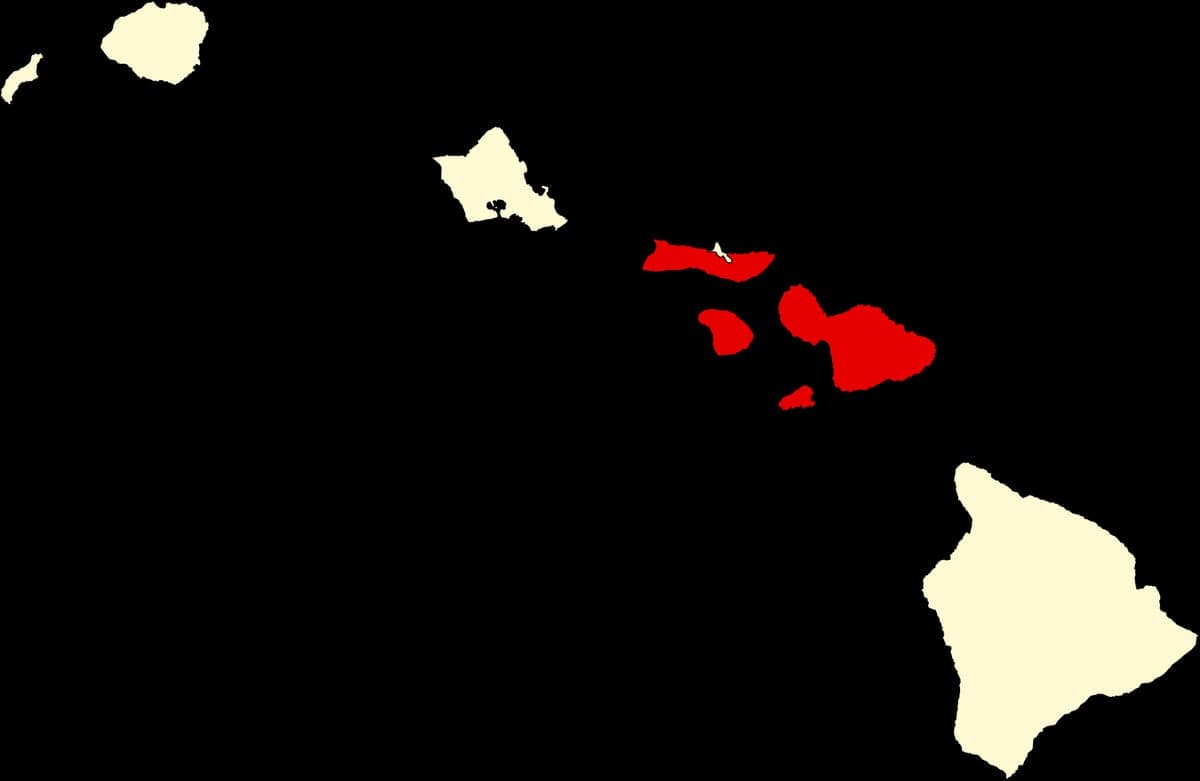
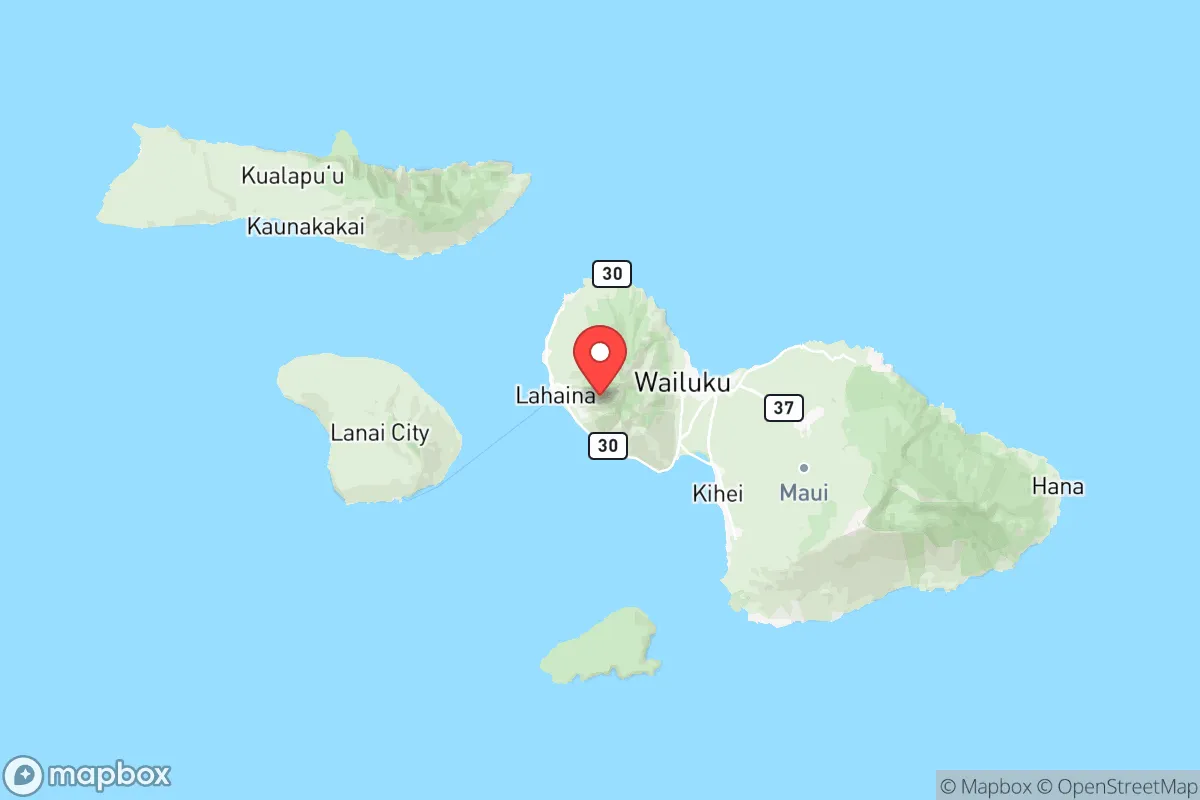
Maui County, with a Cook PVI of D+12, is a reliably Democratic area, but that label hides a lot of local tension. The county’s politics are split between the more progressive, tourist-heavy towns like Paia and Kihei, and the more conservative, agricultural communities like Hana and Makawao. Over the last decade, the shift has been toward a more activist, government-heavy approach, especially on housing and land use, which has rubbed a lot of us the wrong way. It’s not the same laid-back, live-and-let-live place it was twenty years ago.
How it compares
On paper, Maui County and the state of Hawaii both have a D+12 PVI, so they’re politically identical in the aggregate. But the feel is different. The state government in Honolulu is a whole different beast—more bureaucratic, more distant, and frankly more willing to impose top-down mandates on everything from vacation rentals to water rights. Here on Maui, the county council has been a battleground, with recent fights over short-term rental bans and agricultural land use that feel like a direct attack on property rights. In Lahaina, the post-fire rebuilding process has been a nightmare of red tape, with the county and state both stepping in to dictate what can be rebuilt and how, leaving many of us wondering if our own land is really ours anymore. Compared to the rest of the state, Maui’s politics are more personal and more polarized—you see it in the way Upcountry residents (around Kula and Pukalani) push back against the coastal towns’ progressive agenda.
What this means for residents
For those of us who value personal freedom, the trend is concerning. The county has been aggressive in regulating short-term rentals, which has hurt small property owners who rely on that income, while big hotel chains get a pass. There’s also a growing push for “affordable housing” mandates that sound good but often mean more government control over what you can do with your own property. The local school board and county council are increasingly filled with activists who see government as the solution to every problem, from beach access to parking. If you’re a conservative or even a moderate who just wants to be left alone, you’ll find yourself voting against a lot of ballot measures and candidates. The swing precincts are in places like Wailuku and Kahului, where working-class families are caught between the high cost of living and the progressive policies that make it harder to get ahead.
Culturally, Maui County still has a strong sense of community, but the policy direction is shifting. The county’s focus on “sustainability” and “equity” often translates to more fees, more permits, and more oversight. For example, the ban on certain sunscreens and the push for electric vehicle mandates feel like government overreach into personal choices. The long-term trajectory, if it keeps up, could make Maui a place where only the wealthy or those who toe the party line can thrive. It’s a beautiful island, but the political climate is getting harder to stomach for anyone who believes in limited government and personal responsibility.

State Political ClimatePolitical Climate in Hawaii
State Political AnalysisPolitical Environment in the State
Hawaii is a deep blue state with a Cook PVI of D+12, meaning it votes about 12 points more Democratic than the national average in presidential elections. The Democratic Party has held a supermajority in the state legislature for decades, and no Republican has won a statewide federal office since 2010. Over the last 10-20 years, the state has shifted further left, driven by a combination of union power, a large government workforce, and a cultural emphasis on collectivism that often clashes with individual liberty. For a conservative considering relocation, the political climate here is a significant headwind, but the story is more nuanced than the raw numbers suggest.
Urban vs. rural divide
The political map of Hawaii is starkly divided between the urban core of Honolulu on Oahu and the rest of the state. Honolulu, home to nearly 70% of the state’s population, is the engine of Democratic dominance. The city’s politics are heavily influenced by public-sector unions, the University of Hawaii system, and a large Asian American electorate that tends to favor government intervention on housing, healthcare, and education. Outside of Honolulu, the picture changes. The Big Island (Hawaii County) is a political battleground, with the eastern Puna and Hilo districts leaning progressive, while the western Kona and Kohala coasts, along with the ranching areas of Waimea and Kamuela, are more libertarian-leaning and occasionally elect Republicans to the county council. Maui County is similarly split: the tourist-heavy areas of Kihei and Lahaina are blue, while the upcountry towns of Kula and Makawao have a stronger independent and conservative streak. Kauai is the most uniformly blue of the neighbor islands, with few pockets of conservative resistance. The only reliably Republican precincts in the state are in the rural, agricultural areas of the Big Island and parts of central Oahu, like Mililani and Kapolei, where military families and private-sector workers push back against the dominant progressive tide.
Policy environment
Hawaii’s policy environment is a textbook example of progressive governance with heavy government involvement. The state has the highest combined tax burden in the nation, with a state income tax that tops out at 11% and a general excise tax (GET) of 4% that applies to nearly every transaction, including rent and groceries. Property taxes are relatively low, but the state’s regulatory posture is suffocating: building permits can take years, and the cost of housing is driven up by strict land-use laws and a powerful Office of Planning. Education policy is dominated by the Hawaii State Teachers Association, a union that has successfully resisted school choice and charter school expansion. The state has a single, centralized school district, meaning local control is virtually nonexistent. Healthcare is heavily regulated, with a state-run insurance exchange and a strong push toward a single-payer system. Election laws are among the most restrictive in the country: Hawaii has no voter ID requirement, but it also has no early in-person voting (only mail-in ballots), which critics argue reduces turnout among military and transient populations. The state also has a "sanctuary" policy that limits cooperation with federal immigration enforcement, a point of tension for conservatives who prioritize rule of law.
Trajectory & freedom
Over the past five years, Hawaii has moved decisively toward less personal freedom, particularly on issues of property rights, parental rights, and gun ownership. In 2022, the legislature passed Act 207, which significantly expanded the state’s gun control laws, including a ban on "ghost guns" and a requirement that gun owners report lost or stolen firearms within 24 hours. In 2023, the state passed Act 2, which created a "red flag" law allowing courts to temporarily seize firearms from individuals deemed a risk, without a criminal conviction or mental health adjudication. On parental rights, Hawaii was one of the first states to pass a law protecting access to gender-affirming care for minors, overriding parental objections in some cases. The state also passed a "safe harbor" law for minors seeking abortion without parental consent. On the economic freedom front, the state’s rent control measures and strict vacation rental bans (like Bill 89 on Maui) have limited property owners’ ability to use their land as they see fit. The only bright spot for conservatives has been the recent pushback against the state’s vaccine mandates, which were among the strictest in the nation during COVID-19. A 2024 lawsuit, Doe v. State of Hawaii, successfully challenged the state’s ability to fire unvaccinated public employees, but the legislature has not rolled back the underlying mandate.
Civil unrest & political movements
Hawaii has a long history of civil unrest, often centered on land rights and environmental activism. The most visible flashpoint in recent years was the 2023 Maui wildfires, which sparked protests over government mismanagement and the state’s failure to maintain emergency infrastructure. The "Maui Strong" movement, while ostensibly about disaster relief, quickly turned into a critique of the state’s centralized decision-making and the influence of outside developers. On the left, the "Protect Kahoʻolawe" and "Save Mauna Kea" movements have been powerful, with activists successfully blocking the construction of the Thirty Meter Telescope on the Big Island in 2019. These movements are often framed as indigenous rights struggles, but they also reflect a deep distrust of government and corporate power that resonates with some conservatives. On the right, the Hawaii Republican Party is small but active, with a focus on school choice, property rights, and opposition to the state’s vaccine mandates. The "Hawaii Sovereignty" movement, which advocates for native Hawaiian self-governance, is a wild card: it draws from both left-wing anti-colonialism and right-wing anti-federal sentiment. Election integrity has been a minor issue, with some conservatives questioning the state’s all-mail voting system, but no major fraud has been documented. Immigration politics are muted, as Hawaii’s geographic isolation limits illegal border crossings, but the state’s sanctuary policies have drawn criticism from federal officials.
Projection
Over the next 5-10 years, Hawaii is likely to become even more progressive, driven by demographic trends and in-migration patterns. The state’s population is aging and declining, with many native-born residents leaving for lower-cost states like Nevada and Texas. Those who move in tend to be retirees from California and the Pacific Northwest, who bring their progressive voting habits with them. The growing influence of the native Hawaiian sovereignty movement could also push the state further left, as it aligns with Democratic priorities on land redistribution and environmental regulation. The Republican Party is unlikely to break the Democratic supermajority in the legislature, but there is a small chance that a moderate Republican could win a county council seat on the Big Island or Maui if the housing crisis continues to drive frustration with the status quo. For a conservative moving in now, the expectation should be that the state’s tax burden will increase, gun rights will continue to erode, and parental rights will face further challenges. The only potential check on this trajectory is a federal lawsuit or a shift in the Supreme Court’s interpretation of the Second Amendment or the First Amendment’s religious liberty protections.
For a new resident, the bottom line is that Hawaii offers unmatched natural beauty and a unique cultural experience, but it comes with a political environment that is deeply hostile to conservative values. If you value low taxes, property rights, gun ownership, and parental control over your children’s education, you will find yourself swimming against a strong current. The best strategy is to focus on the neighbor islands, particularly the rural areas of the Big Island or upcountry Maui, where the political climate is less intense and community ties can provide a buffer against state overreach. But don’t expect the state to change for you—you’ll have to adapt to it, or plan your exit strategy from the start.
* Values derived from national, state, county, city and local statistics and may differ in a specific area. Last updated: 2026-05-11T21:54:46.000Z
Narrative content on this page is AI-generated and may contain mistakes. Verify any details that matter before acting on them.
ReloMaps may earn a commission from affiliate links at no extra cost to you.

