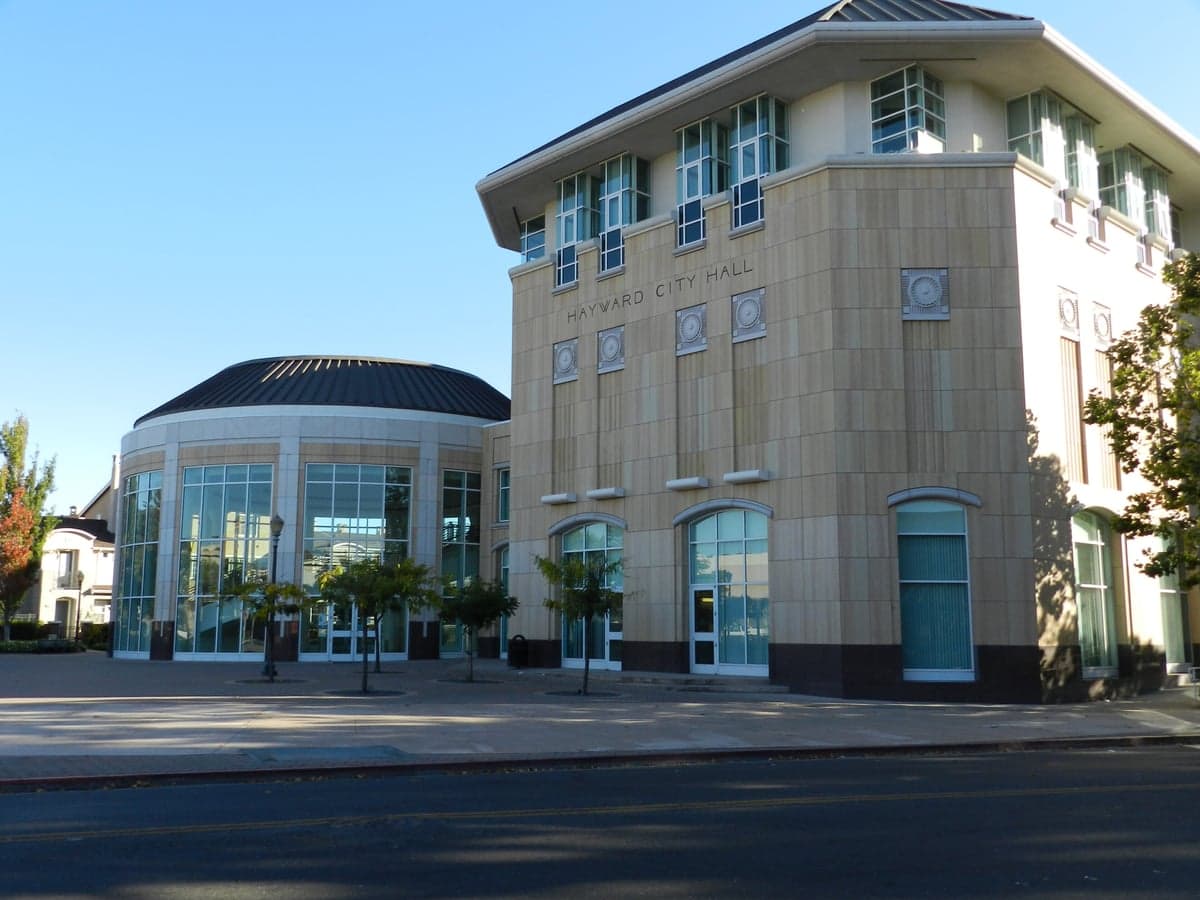
Photo: Wikipedia
Political ClimatePolitical Climate in Hayward, CA
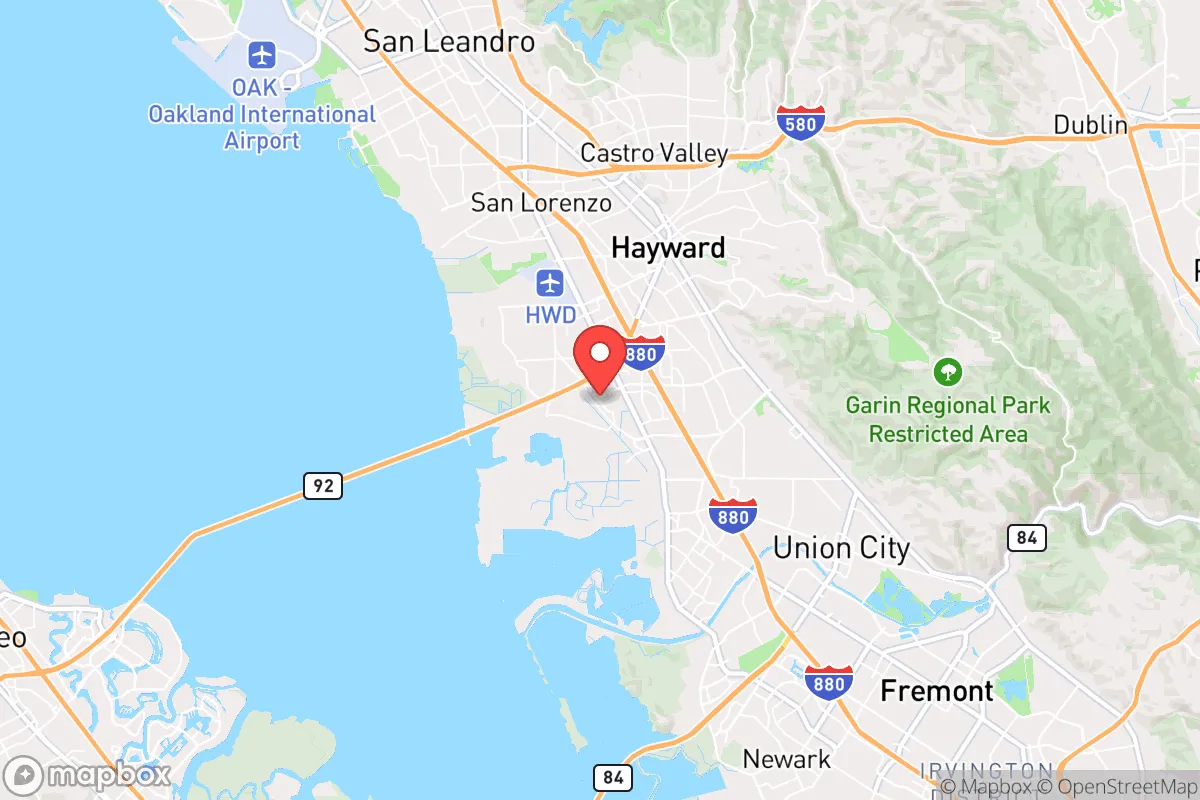
District shown is the primary district for this city’s centroid. Cities may span multiple districts.
Local Political AnalysisPolitical Analysis of Hayward, CA
Hayward’s political climate is overwhelmingly progressive, with a Cook PVI of D+20 that puts it among the most reliably blue cities in the East Bay. That wasn’t always the case—back in the 80s and 90s, this was a working-class, union-heavy town where a lot of folks leaned moderate or even conservative on fiscal issues. Over the last two decades, the shift has been dramatic. The city council and school board are now solidly controlled by progressive Democrats, and the local legislative delegation—folks like Assemblymember Liz Ortega and State Senator Aisha Wahab—votes in lockstep with Sacramento’s most ambitious policy agendas. If you’re looking for a place where the political winds are blowing hard left, this is it.
How it compares
Hayward’s D+20 rating puts it in a different universe from the surrounding suburbs. Drive 15 minutes south to Union City (D+12) or Fremont (D+14), and you’ll find slightly more moderate electorates—still blue, but with a stronger Asian-American and immigrant base that tends to be more pragmatic on housing and business regulation. Head east over the hills to Castro Valley (D+5) or Pleasanton (R+4), and the contrast is stark. Pleasanton voted for Trump in 2020, and its city council has pushed back on state mandates like density zoning. Even Livermore (D+2) feels like a different world. In Hayward, the political conversation is dominated by rent control expansions, sanctuary city policies, and public safety reforms that have left many longtime residents feeling like their voices don’t matter anymore. The city’s own police department has been under a consent decree since 2021, and the council has debated cutting its budget further—moves that would have been unthinkable here 30 years ago.
What this means for residents
For a family or individual who values personal freedoms—especially the freedom to run a small business, keep what you earn, or send your kids to a school that focuses on academics over activism—Hayward’s trajectory is concerning. The city has embraced California’s highest minimum wage ($16.50 as of 2024) and is considering a local wealth tax on commercial landlords. Property taxes are already high thanks to state-level policies, but Hayward adds its own parcel taxes and utility user taxes that can add hundreds to your annual bill. On the education front, the Hayward Unified School District has adopted ethnic studies requirements and gender identity policies that some parents feel prioritize ideology over reading and math scores—which, by the way, lag behind state averages. If you’re a gun owner, you’ll find the city council has supported every state-level restriction that’s come down the pike, from ammunition background checks to “sensitive places” bans that make it hard to carry even for self-defense.
One cultural distinction worth noting: Hayward has a strong, vocal activist community that organizes around issues like police abolition and defunding. The city’s “People’s Budget” process, launched in 2022, lets residents vote on how to spend a small slice of the municipal budget—but the options are heavily curated by progressive groups. For a conservative or libertarian-leaning resident, the long-term outlook is tough. The political machine here is entrenched, and the demographic trends—younger, more diverse, more rent-burdened—suggest the leftward shift will continue. If you’re considering a move, I’d recommend looking at the neighborhoods near the Hayward hills or the unincorporated areas just east of town, where you’ll find a few more like-minded folks and slightly less government overreach. But overall, this is a place where the political culture is set, and it’s not turning back anytime soon.

State Political ClimatePolitical Climate in California
State Political AnalysisPolitical Environment in the State
California is a one-party Democratic state where registered Democrats outnumber Republicans by nearly 2-to-1, and the state has voted for the Democratic presidential candidate by double digits in every election since 2008. The dominant coalition is a mix of coastal progressives, labor unions, and Silicon Valley money, with the state’s overall lean shifting sharply left over the past 20 years—a trend that accelerated after 2016. For a conservative considering a move here, the reality is that statewide politics are locked in, but the experience varies dramatically depending on whether you land in Los Angeles, Fresno, or a foothill town like Placerville.
Urban vs. rural divide
The political map of California is a tale of two states. The coastal metros—Los Angeles, San Francisco, San Diego, and San Jose—drive the state’s blue lean, with San Francisco County delivering 85% of its vote to Biden in 2020ched. These areas are dense, diverse, and heavily influenced by tech, entertainment, and public-sector unions. In contrast, the Central Valley and inland regions are redder: Bakersfield, Fresno, and Redding are reliably Republican, with Kern County voting +16 for Trump in 2020. The real story is in the suburbs that flipped blue in the Trump era—places like Orange County, once a GOP stronghold, now has a Democratic registration edge, and Ventura County swung left. Meanwhile, rural counties like Modoc and Lassen in the far north remain deep red, but their population is too small to offset the coastal vote. The divide isn’t just urban vs. rural—it’s coastal vs. inland, with the Bay Area and LA basin acting as the political engine room.
Policy environment
California’s policy environment is a case study in progressive governance, with high taxes, heavy regulation, and a safety-net-first approach. The state has the highest income tax rate in the nation (13.3% for top earners), a 7.25% sales tax floor, and some of the highest gas taxes in the country. Property taxes are capped by Prop 13, but that’s under constant attack from legislators. On education, California spends over $20,000 per student, yet test scores rank near the bottom nationally—a sign of bureaucratic bloat rather than classroom success. Healthcare is heavily regulated, with a state-run exchange (Covered California) and a push toward single-payer that hasn’t passed but looms. Election laws are among the most liberal: universal mail-in voting, same-day registration, and no voter ID requirement. For a conservative, the regulatory posture is suffocating—from strict environmental rules that drive up housing costs to labor laws that make hiring a nightmare. The state’s sanctuary state law (SB 54) limits local police cooperation with federal immigration enforcement, a flashpoint for many.
Trajectory & freedom
California is becoming less free by almost any measure, especially for conservatives. Recent legislation has expanded government control over personal choices: AB 5 (2019) reclassified gig workers as employees, crushing independent contracting; SB 9 (2021) effectively ended single-family zoning in many areas; and AB 2098 (2022) threatened doctors with discipline for spreading “misinformation.” On gun rights, California has the nation’s strictest laws—an assault weapons ban, a 10-day waiting period, and a “may issue” concealed carry regime that was recently loosened by the Supreme Court’s Bruen decision, but the state is fighting it. Parental rights took a hit with AB 1955 (2024), which prohibits schools from notifying parents if a child changes their gender identity. Medical autonomy is constrained by vaccine mandates that were among the strictest in the country during COVID. Property rights are eroded by rent control (AB 1482) and a hostile regulatory environment for new housing. The trajectory is clear: more mandates, more taxes, and less room for individual choice.
Civil unrest & political movements
California has been a hotbed of political activism, from the 2020 George Floyd protests that saw widespread looting in Los Angeles and San Francisco to the ongoing homelessness crisis that has turned parts of Oakland and San Francisco into open-air encampments. The left is organized through groups like the Democratic Socialists of America, which has won seats in local government, while the right has a smaller but vocal presence in places like Huntington Beach, which declared itself a “non-sanctuary city” and fought the state over mask mandates. Immigration politics are a constant flashpoint: the state’s sanctuary policies have led to confrontations with federal ICE agents, and the border crisis has spilled into interior cities like San Diego. Secession talk is real—the “Calexit” movement has fizzled, but rural counties have repeatedly floated secession from the state (e.g., the State of Jefferson movement in far northern counties like Modoc and Siskiyou). Election integrity is a live issue: the state’s universal mail-in voting system has been criticized for lax signature verification, though no major fraud has been proven. A new resident will notice the political tension in the air—especially in the Bay Area, where homeless encampments and property crime are daily reminders of policy failures.
Projection
Over the next 5-10 years, California will likely become more progressive as demographic trends favor the left. The state’s population has declined for three straight years (2020-2023), with net out-migration of over 700,000 people, many of them middle-class families and conservatives fleeing to Texas, Arizona, and Idaho. Those leaving are being replaced by younger, more diverse, and more left-leaning immigrants, both domestic and international. The state’s housing crisis will continue to push people out, but the political machine in Sacramento shows no sign of moderating—expect more tax hikes, more regulations, and more mandates. The one wildcard is the growing frustration with quality of life issues (homelessness, crime, cost of living) that could fuel a moderate backlash, but the GOP is so weak in the state that any shift would likely be toward a centrist Democrat, not a conservative. For someone moving in now, expect to live in a state where your vote for president or Senate is essentially meaningless, but local elections in red counties can still matter.
Bottom line for a new resident: If you’re a conservative moving to California, you’re choosing a state where your political views will be in the minority, your taxes will be high, and your freedoms will be constrained by state law. The best you can do is pick a red county like Kern or El Dorado, where local government pushes back, but you’ll still be subject to Sacramento’s overreach. It’s a beautiful state with a climate and geography unmatched anywhere, but the political climate is hostile to conservative values, and it’s only getting worse. If you value personal liberty, low taxes, and a government that stays out of your life, California is a tough sell—but if you’re willing to fight for your rights at the local level, there are pockets of freedom left.
* Values derived from national, state, county, city and local statistics and may differ in a specific area. Last updated: 2026-04-24T12:20:46.000Z
Narrative content on this page is AI-generated and may contain mistakes. Verify any details that matter before acting on them.
ReloMaps may earn a commission from affiliate links at no extra cost to you.

