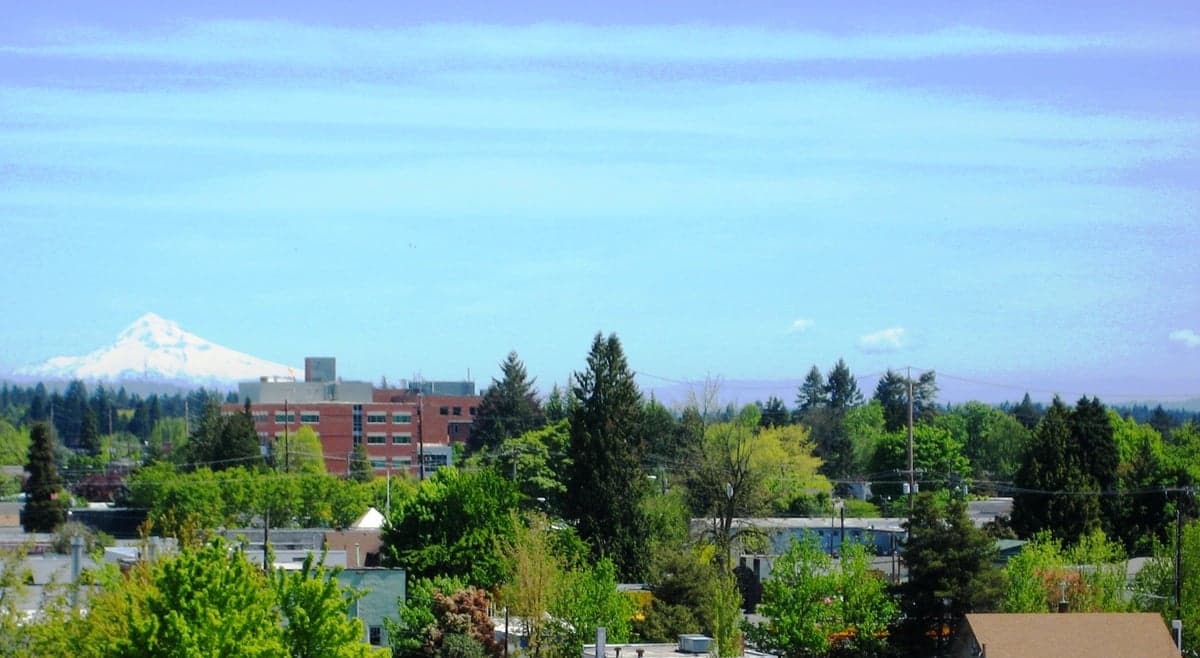
Photo: Wikipedia
Political ClimatePolitical Climate in Hillsboro, OR
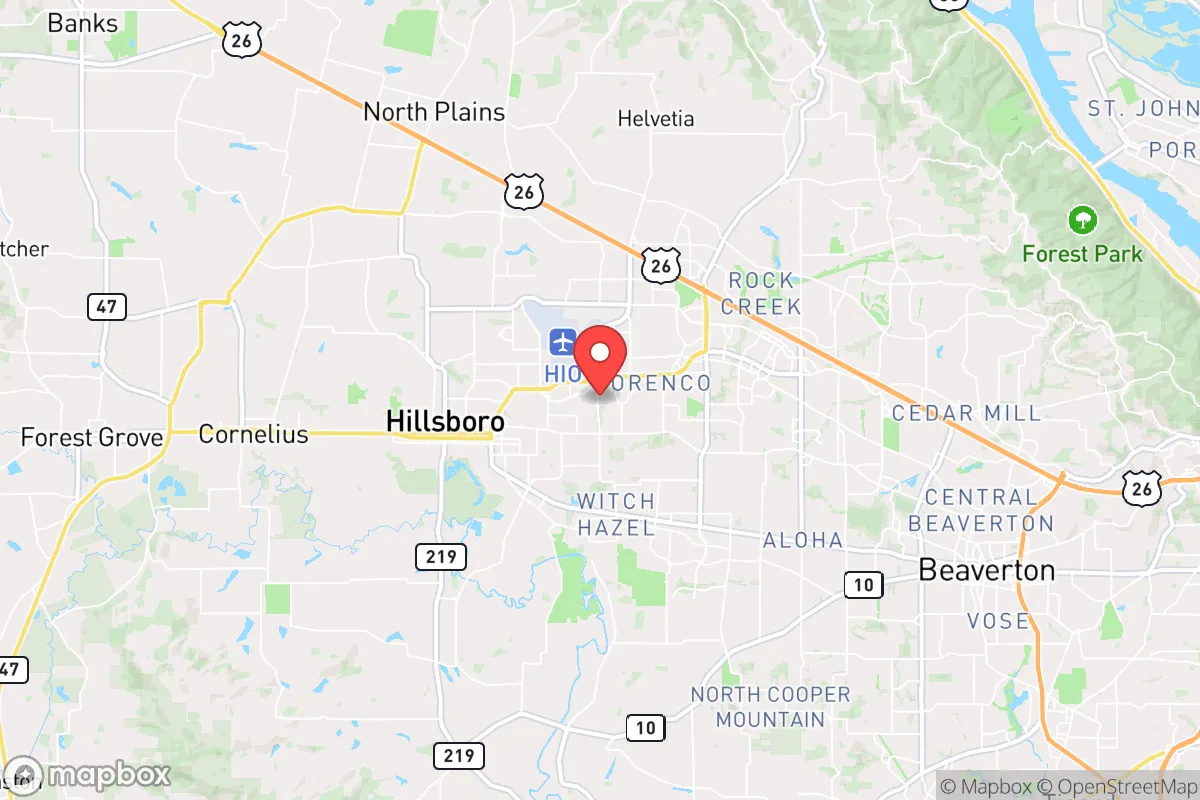
District shown is the primary district for this city’s centroid. Cities may span multiple districts.
Local Political AnalysisPolitical Analysis of Hillsboro, OR
Hillsboro’s political climate has shifted hard to the left over the past decade, and if you’ve lived here as long as I have, you’ve felt it. The Cook PVI sits at D+20, meaning the city is about 20 points more Democratic than the national average—and that’s not just a number, it’s a lived reality. In the 2024 presidential race, Washington County as a whole went for the Democratic candidate by a similar margin, and Hillsboro itself has become a stronghold for progressive policies. It wasn’t always this way; I remember when this town was a mix of farmers, tech workers, and retirees who just wanted to be left alone. Now, the local government seems to be racing to outdo Portland in everything from land-use restrictions to social programs, and it’s changing the character of the place fast.
How it compares
Drive 20 minutes south to Newberg or Sherwood, and you’ll find a completely different political world—those towns lean conservative, with Newberg’s city council even making national headlines for pushing back on critical race theory in schools. Head east into Portland proper, and you’re in a D+30 zone where the city council has effectively decriminalized homelessness and drug use. Hillsboro sits uncomfortably in the middle: it’s not as chaotic as Portland, but it’s far from the common-sense, small-government vibe of places like Cornelius or Forest Grove to the west. The contrast is stark when you look at local elections—Hillsboro’s city council and school board are now dominated by candidates backed by the Washington County Democrats, while neighboring towns still elect moderates who talk about fiscal responsibility and property rights. It’s like two different countries separated by a highway.
What this means for residents
For folks who value personal freedoms, the trend here is worrying. The city has embraced density-first zoning, which means more apartment complexes and fewer single-family homes—your property rights take a back seat to state-mandated housing targets. The school district has adopted comprehensive sex education and equity policies that some parents feel go too far, with less transparency than you’d expect. And if you run a small business, you’ve probably dealt with new regulations on everything from signage to employee scheduling, all justified as “progressive” but feeling like government overreach. The police department has also been defunded in practice—not in name—with budget cuts that have slowed response times in outlying areas. It’s not the Hillsboro I grew up in, where the attitude was “live and let live.” Now, it feels like the city is trying to engineer a certain kind of citizen, and if you don’t fit the mold, you’re on your own.
One cultural distinction that stands out is the city’s embrace of sanctuary policies. Hillsboro officially limits cooperation with federal immigration enforcement, which sounds noble but has created tension in a town where many residents work in agriculture or construction and just want to follow the law without fear. The local farmers’ market and downtown events have become more politicized too, with booths for activist groups that wouldn’t have been welcome a decade ago. Looking ahead, I’d expect the political drift to continue—new housing developments are bringing in younger, more liberal transplants from California and Seattle, while longtime families move to Yamhill County or Banks to escape the rising taxes and regulations. If you’re considering a move here, know that the politics are baked into the cost of living: you’ll pay for it in higher property taxes and a government that’s increasingly comfortable telling you how to live. It’s a trade-off, and for some of us, it’s getting harder to justify.

State Political ClimatePolitical Climate in Oregon
State Political AnalysisPolitical Environment in the State
Oregon has shifted from a purple swing state to a solidly blue stronghold over the past two decades, with Democrats controlling every statewide office and both legislative chambers since 2012. The state’s overall partisan lean is now roughly D+10 in presidential elections, but that number masks a deep and growing chasm between the liberal Willamette Valley and the rest of the state. For a conservative considering relocation, the trajectory is concerning: the state has moved leftward in every election cycle since 2000, driven by massive in-migration to Portland, Bend, and the Portland suburbs.
Urban vs. rural divide
The political map of Oregon is essentially a tale of two states. The I-5 corridor from Portland through Salem to Eugene is the Democratic engine room, with Multnomah County (Portland) delivering a staggering 75% of its vote to Joe Biden in 2020. Washington County, home to the tech-heavy Silicon Forest and suburbs like Beaverton and Hillsboro, has flipped from competitive to reliably blue over the past decade. Meanwhile, the rest of Oregon votes overwhelmingly Republican. Lake County in the south-central high desert gave Trump 78% of its vote, and Harney County in the southeast hit 80%. The real story is the suburbs: Clackamas County, once a swing county, has trended left as Portland exurbs like Oregon City and Happy Valley fill with California transplants. Bend’s Deschutes County flipped from red to blue in 2020, a seismic shift driven by remote workers and retirees from the West Coast. The only reliably red metro area left is Medford in Jackson County, which still leans Republican but is being diluted by retirees from California.
Policy environment
Oregon’s policy environment is a case study in progressive governance. The state has no sales tax, but makes up for it with the nation’s 5th highest income tax rate (top bracket 9.9%) and high property taxes. The regulatory posture is aggressive: Oregon has some of the strictest land-use laws in the country, with urban growth boundaries that artificially inflate housing costs. Education policy is dominated by the teachers’ unions, with Portland Public Schools spending over $20,000 per student but producing mediocre outcomes. Healthcare is heavily regulated, with a state-run insurance exchange and Medicaid expansion that covers nearly 30% of residents. Election laws are among the most liberal: Oregon was the first state to vote entirely by mail, and in 2021 it became the first to automatically register voters when they get a driver’s license. There is no voter ID requirement, which conservatives view as a vulnerability. The state also has a “sanctuary” law (ORS 181A.820) that prohibits state and local law enforcement from using resources to enforce federal immigration law, a policy that has been in place since 1987.
Trajectory & freedom
Oregon is becoming less free by any conservative measure. The most alarming recent trend is the erosion of property rights: Measure 37 (2004) and Measure 49 (2007) created a confusing patchwork of land-use regulations that make it nearly impossible to build on rural land. In 2023, the legislature passed HB 2001, which effectively eliminated single-family zoning in most cities, allowing duplexes and triplexes in residential neighborhoods—a move that conservatives argue reduces property values and neighborhood character. On gun rights, Oregon passed Measure 114 in 2022, which requires a permit to purchase a firearm, bans magazines over 10 rounds, and mandates a waiting period. The law is currently tied up in court, but it represents the most aggressive gun control in the state’s history. On parental rights, the 2023 legislative session saw the passage of HB 2002, which allows minors 15 and older to access gender-affirming care without parental consent—a major flashpoint for conservative families. Medical autonomy took a hit with the state’s strict COVID-19 vaccine mandates, which remain in effect for healthcare workers. The state also legalized assisted suicide in 1994, but conservatives view the lack of conscience protections for medical providers as a freedom issue.
Civil unrest & political movements
Oregon has a long history of political activism, but the last five years have been particularly volatile. The 2020 Portland protests, which lasted for months and involved nightly clashes between Antifa-aligned groups and federal law enforcement, were a national flashpoint. The city saw over 100 consecutive nights of demonstrations, with the federal courthouse becoming a battleground. The state’s sanctuary policy has made Oregon a destination for illegal immigration, though the numbers are smaller than in border states. There is a growing secessionist movement in rural Oregon: the “Greater Idaho” movement, which seeks to move 13 eastern Oregon counties into Idaho, has gained traction, with Union County and Jefferson County passing ballot measures in favor of exploring the idea. Election integrity remains a concern for conservatives, given the state’s all-mail voting system and lack of voter ID. The 2020 election saw no major scandals, but the system’s opacity continues to fuel distrust. The most visible flashpoint for a new resident would be the homelessness crisis in Portland, which is both a social and political issue, with the city’s progressive policies on camping and drug decriminalization (Measure 110, passed in 2020) drawing national criticism.
Projection
Over the next 5-10 years, Oregon will likely continue its leftward drift, driven by demographic trends. The state is growing fastest in the Portland metro area and Bend, both of which attract young, college-educated, and liberal-leaning newcomers. Rural counties are losing population, which means their political influence will continue to wane. The state legislature is likely to pass further gun control, expand rent control, and tighten environmental regulations. The “Greater Idaho” movement will remain a symbolic protest but is unlikely to succeed, as it would require approval from both state legislatures and Congress. For a conservative moving in now, the realistic expectation is that Oregon will become more like California: high taxes, heavy regulation, and a culture that is increasingly hostile to traditional values. The best bet for a conservative is to target the remaining red enclaves like Medford or the rural counties east of the Cascades, but even those areas are being diluted by in-migration.
Bottom line for a new resident: If you value low taxes, property rights, gun rights, and parental autonomy, Oregon is a tough sell. The state’s political trajectory is firmly blue, and the policy environment is becoming more restrictive every year. The best you can hope for is to find a conservative pocket in a red county and accept that you’ll be fighting an uphill battle at the state level. If you’re willing to trade political alignment for natural beauty and a mild climate, Oregon still offers that—but the trade-offs are getting steeper every election cycle.
* Values derived from national, state, county, city and local statistics and may differ in a specific area. Last updated: 2026-04-24T19:58:36.000Z
Narrative content on this page is AI-generated and may contain mistakes. Verify any details that matter before acting on them.
ReloMaps may earn a commission from affiliate links at no extra cost to you.

