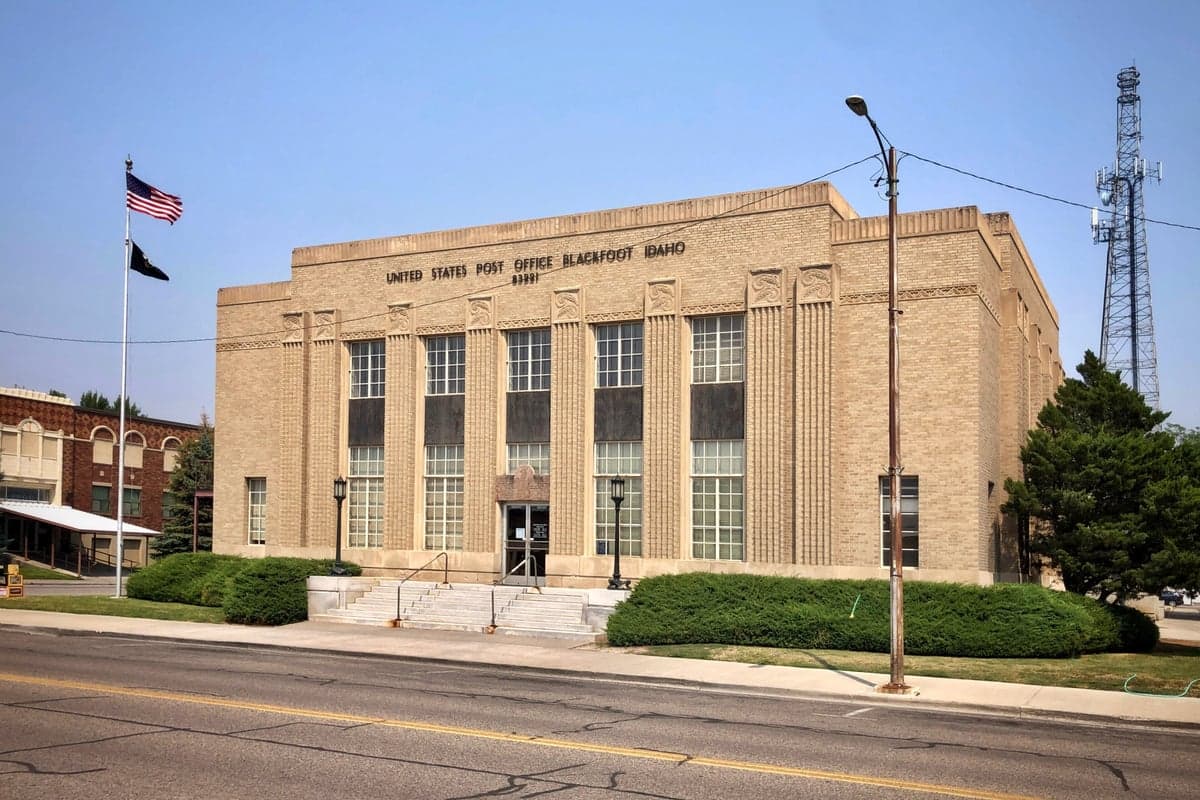
Photo: Wikipedia
Personal Sovereignty in Bingham County
Moderate friction. Expect trade-offs in some aspect of personal liberty and independence.
What does Personal Sovereignty tell us?
Personal Sovereignty measures your capacity for self-reliance and independence with minimal government friction. Higher scores mean fewer barriers between you and the way you want to live... but it assumes you have the space you need and good neighbors.
What does this tell us?
Personal Sovereignty measures your capacity for self-reliance and independence with minimal government friction. Higher scores mean fewer barriers between you and the way you want to live... but it assumes you have the space you need and good neighbors.
State Policy
Energy independence: Importer (25% of energy produced in-state)
Personal Liberty
Homesteading

Personal Liberty Analysis
Bingham County, Idaho, offers a notably high degree of personal sovereignty, particularly for those seeking to minimize government overreach in daily life. The county’s regulatory environment is light, tax burdens are low, and the prevailing culture strongly emphasizes self-reliance and individual rights. For single individuals and parents who view the expanding scope of federal and state authority with concern, this area presents a strategic alternative to the more restrictive climates found in the Pacific Northwest or the Front Range of Colorado. The key is understanding how local conditions in specific towns like Blackfoot, Shelley, and Firth translate into real autonomy.
Tax burden and regulatory posture in Bingham County
Bingham County operates under Idaho’s generally low-tax framework, which is a significant draw for those prioritizing financial sovereignty. There is no state inheritance tax, estate tax, or gift tax, and the state’s income tax is a flat 5.8% as of 2025. Property taxes in the county are moderate, with the average effective rate hovering around 0.7% of assessed value, though this can vary slightly between the unincorporated areas and towns like Blackfoot or Shelley. More important than the raw numbers is the regulatory posture: the county commission and local planning boards consistently resist adopting state or federal mandates that would infringe on land use or business operations. For example, building permit requirements are minimal in unincorporated zones, and there is no county-wide zoning overlay that dictates what you can do on your own acreage. This stands in stark contrast to areas like Ada County (Boise) or Kootenai County (Coeur d’Alene), where growth has brought stricter codes. In Bingham County, the default assumption is that you have the right to use your property as you see fit, provided you are not creating a public nuisance.
Self-defense and gun law specifics in Bingham County
Idaho is a constitutional carry state, meaning no permit is required to carry a concealed firearm for anyone legally allowed to possess one. Bingham County fully embraces this, with local law enforcement in Blackfoot, Shelley, and Aberdeen taking a non-intrusive stance on lawful gun ownership. There are no county-level restrictions on magazine capacity, firearm types, or storage requirements. The state preempts local gun ordinances, so you will not encounter the patchwork of bans seen in places like Washington or Oregon. For parents, this means the legal environment supports training children in firearm safety and marksmanship without bureaucratic hurdles. The county also has a robust network of private shooting ranges and public land access for hunting, particularly in the Caribou-Targhee National Forest to the east. The sheriff’s office in Bingham County is known for a pro-Second Amendment culture, and there is no history of local officials attempting to enforce federal overreach on firearms. This is a place where the right to self-defense is treated as a fundamental, non-negotiable liberty.
Self-reliance and homesteading viability in Bingham County
For those serious about self-reliance, Bingham County offers some of the most favorable conditions in the Intermountain West. Unincorporated areas, particularly around the towns of Firth, Basalt, and Springfield, allow for substantial homesteading activities without excessive permitting. Lot sizes in these rural zones typically start at 2.5 acres, but 5- to 20-acre parcels are common and affordable, often priced under $5,000 per acre. Off-grid living is legally feasible: there are no county mandates requiring connection to municipal water or sewer systems, and solar panel installations do not require special permits. Rainwater collection is unrestricted, and private wells are straightforward to drill, with water tables generally accessible at 100-200 feet. The county does not impose building codes on agricultural structures or owner-built homes in unincorporated areas, though a basic septic system permit is required. This is a stark contrast to the restrictive building codes and HOAs that dominate suburban developments in places like Ammon or Idaho Falls. In Bingham County, the ability to produce your own food, harvest your own water, and generate your own power is not just tolerated—it is the norm.
Personal liberties in Bingham County: parental rights, medical autonomy, speech, and property
Bingham County’s culture strongly supports parental rights in education and healthcare. The local school districts in Blackfoot, Shelley, and Firth have not adopted controversial curriculum mandates, and there is active community resistance to federal or state overreach in classroom content. Medical autonomy is respected, with no county-level vaccine mandates and a general skepticism toward public health edicts that infringe on individual choice. Freedom of speech is robust, with local government meetings and public forums in Blackfoot and Shelley reflecting a community that is unafraid to voice dissenting opinions. Property rights are the bedrock of the county’s legal framework: eminent domain is rarely used, and there are no county-level rent control or land use restrictions that would limit what you can build or how you can use your land. For parents, this means you can homeschool without excessive state oversight, choose alternative medical treatments for your children without fear of state intervention, and speak your mind on local issues without retribution. The county’s political leadership consistently votes against measures that would expand government authority into these personal spheres.
Overall, Bingham County ranks among the top areas in the nation for personal sovereignty, especially when compared to the increasingly restrictive environments in states like California, New York, or even parts of Colorado and Washington. The combination of low taxes, minimal regulation, strong gun rights, and a culture of self-reliance creates a buffer against the creeping government overreach that many conservatives and preppers find alarming. While no place is perfect—winter weather and distance from major medical centers are real considerations—the county offers a strategic base for those who prioritize freedom over convenience. For single individuals and parents looking to secure their autonomy in an uncertain world, Bingham County, Idaho, is a serious contender.

* Values derived from national, state, county, city and local statistics and may differ in a specific area. Last updated: 2026-05-28T09:33:10.000Z
Narrative content on this page is AI-generated and may contain mistakes. Verify any details that matter before acting on them.
ReloMaps may earn a commission from affiliate links at no extra cost to you.

