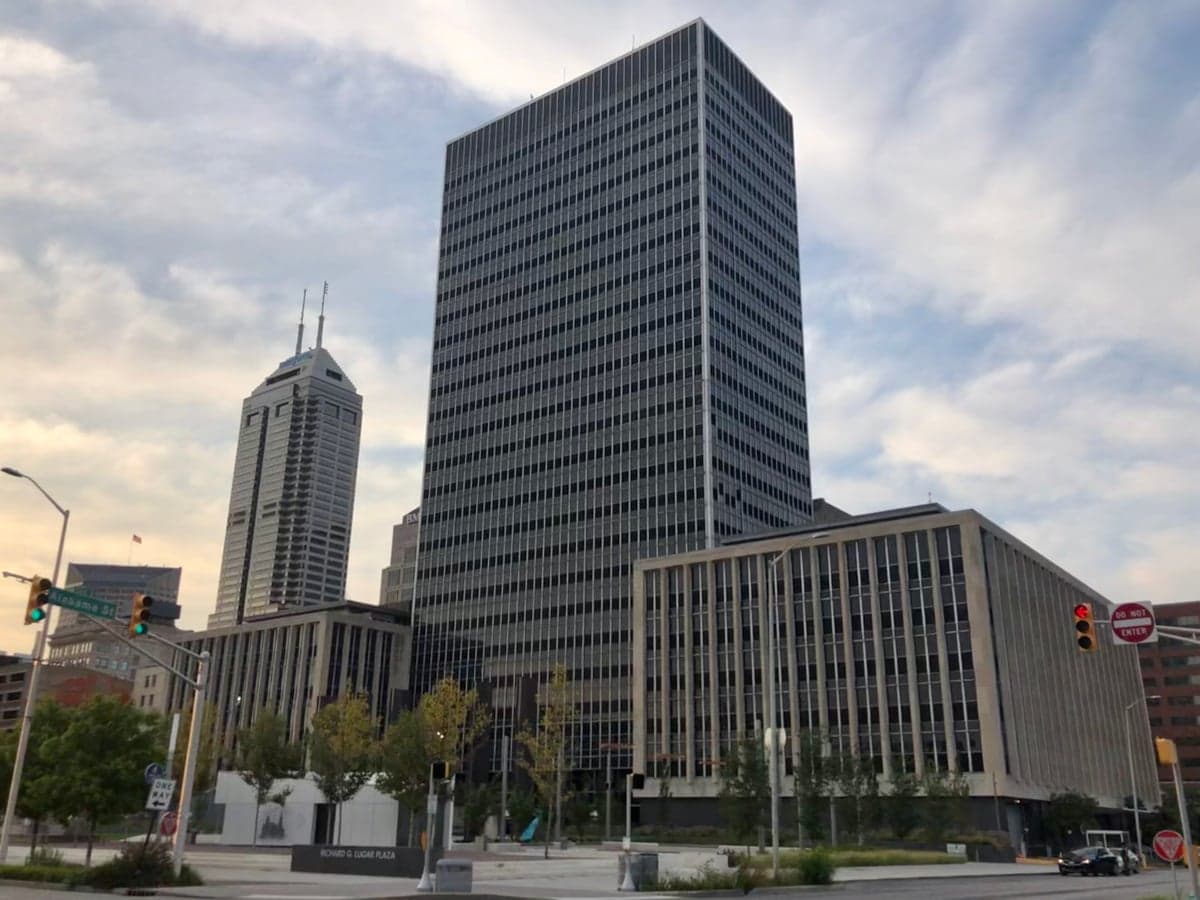
Photo: Wikipedia
Political ClimatePolitical Climate in Marion County
Showing district-level results — no local-only data available.
Local Political AnalysisPolitical Analysis of Marion County
Marion County, Indiana, is a deep blue island in a red state, carrying a Cook PVI of D+21 compared to Indiana’s overall R+9. That’s a 30-point gap, and it’s been widening for years. If you’re looking at this from a conservative perspective, it’s a place where the political culture has shifted hard and fast—especially since the mid-2010s—and not in a direction that respects traditional freedoms or local control. The county’s Democratic machine is strong, and it shows in everything from property taxes to how schools handle curriculum.
How it compares
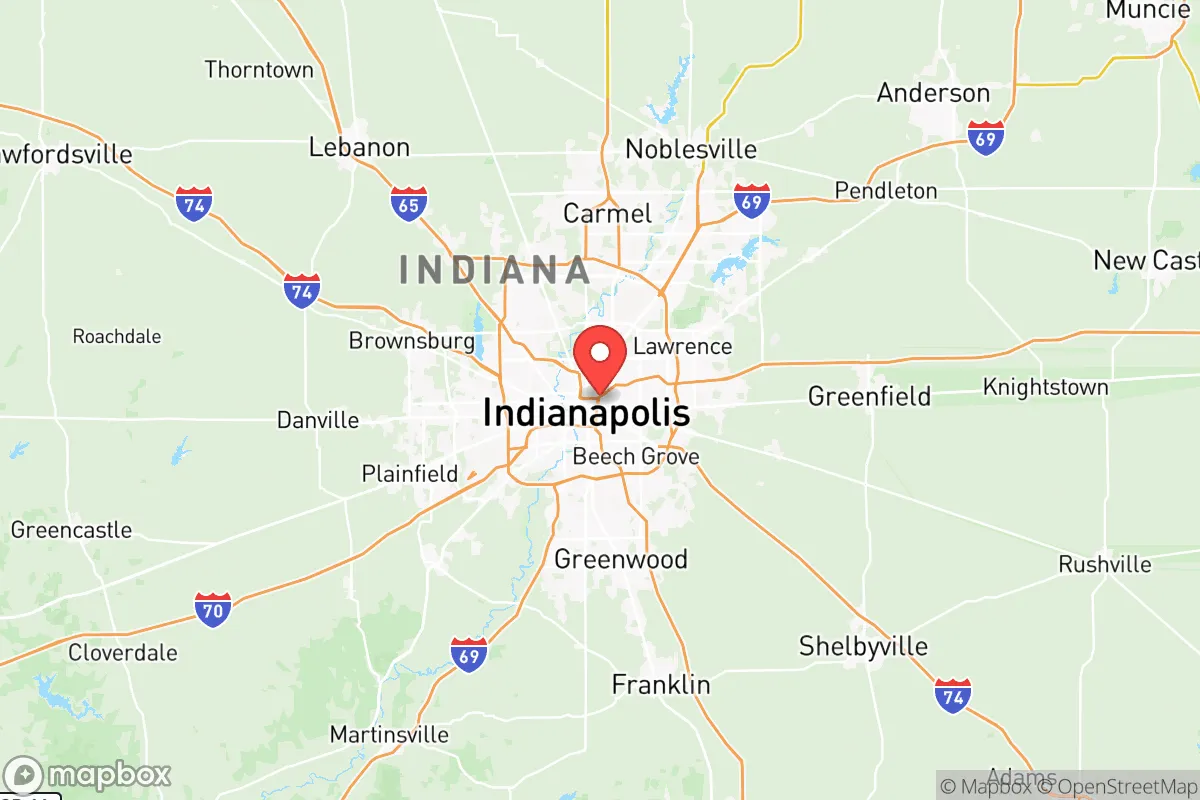
Drive ten miles outside the county line, and you’re in a different world. Suburbs like Carmel, Fishers, and Noblesville in surrounding Hamilton County lean heavily red, with many precincts voting 60-70% Republican. But inside Marion County, the story flips. Center Township (downtown Indy) is the bluest core, often going 80%+ Democrat. Washington Township (Broad Ripple, Butler-Tarkington) is solidly blue, driven by younger, college-educated voters. The swing precincts—the ones that actually decide local races—are in Franklin Township and parts of Decatur Township, where working-class families and older homeowners still lean conservative but are being outnumbered by transplants and apartment dwellers. Lawrence and Beech Grove used to be reliable red pockets; now they’re trending purple, with school board races and city council seats flipping to progressive candidates who push higher spending and more regulations.
What this means for residents
For a conservative, the biggest red flag is the erosion of personal freedoms under the guise of “progress.” Marion County’s government has been aggressive on gun control—passing local ordinances that go beyond state law, like red flag orders and restrictions on carrying in parks. Property taxes have climbed steadily, with the county council approving multiple levies for transit, libraries, and affordable housing programs that many residents never voted for. The school system (Indianapolis Public Schools) has embraced critical race theory and gender ideology curricula, and parents who object are often dismissed as “extremists.” Meanwhile, the county’s COVID-era mandates were among the strictest in the state, with mask and vaccine requirements that lasted long after neighboring counties dropped them. It feels like the government here sees itself as your parent, not your servant.
Cultural and policy distinctions
One thing that stands out is the lack of local accountability. Marion County has a consolidated city-county government (Unigov), which means the mayor and city-county council have enormous power over unincorporated areas. There’s no township trustee system like in most Indiana counties, so if you live in a rural pocket like Clermont or Wanamaker, you still answer to downtown Indianapolis for zoning, police, and schools. The police department (IMPD) has been defunded in practice—budget cuts, slower response times, and a soft-on-crime approach that has made property crime a real headache. On the plus side, the county has a vibrant arts scene and diverse food options, but if you value low taxes, gun rights, and school choice, you’ll find yourself fighting an uphill battle. I’ve seen friends move to Greenwood or Avon just to get their kids into a district that doesn’t push an agenda. Marion County is a place where the political pendulum has swung hard left, and it doesn’t look like it’s coming back anytime soon.

State Political ClimatePolitical Climate in Indiana
State Political AnalysisPolitical Environment in the State
Indiana is a solidly Republican state with a Cook PVI of R+9, meaning it votes about nine points more conservative than the national average. The dominant coalition is a mix of rural conservatives, suburban moderates, and a growing bloc of movers from the Chicago and Detroit metros who often shift the balance further rightward as they settle into places like Hamilton County and Johnson County. Over the last 15 years, the state has hardened its Republican lean — in 2008 it went for Obama by a point, but by 2024 Trump carried it by nearly 20 points. The shift is driven not just by national trends but by deliberate state policy: Indiana has become a laboratory for conservative governance under governors like Eric Holcomb and, before him, Mike Pence.
Urban vs. rural divide
The political map is textbook: Indianapolis (Marion County) remains a blue island, voting about 60% Democratic in recent cycles, but it’s surrounded by a fortress of ruby-red suburbs like Carmel, Fishers, and Noblesville. Bloomington, home to Indiana University, is the other notable liberal pocket — the only county outside of Lake County (Gary) that went blue in 2024. Downstate, cities like Evansville, Fort Wayne, and Columbus are reliably Republican, while deep rural counties along the Ohio River and in the north — think Kosciusko County or Vanderburgh County — vote 70-80% GOP. The divide is stark: if you live in a metro area with a university or legacy industry, you’ll see more progressive energy; anywhere else, the cultural attitude is overwhelmingly traditional and pro-gun, pro-life, and low-tax.
Tax cuts, school choice, and a no-nonsense regulatory climate
Indiana’s policy environment is one of the most business-friendly in the Midwest. The state income tax is a flat 3.05% and was already under a 3% floor by 2027. Property taxes are among the lowest in the region, thanks to constitutional caps passed in 2010. There’s no estate tax, no corporate income tax on pass-throughs, and right-to-work laws remain in place. On education, the state has one of the most expansive school choice programs in the country — vouchers and education savings accounts cover nearly any family, not just low-income ones. That’s a huge draw for conservative parents escaping failing districts. Healthcare policy is more mixed: the state expanded Medicaid under Pence via a conservative waiver with work requirements, but the 2022 abortion ban (HB 1577) prohibits the procedure in nearly all circumstances, with limited rape/incest exceptions. Election laws are solid: strict voter ID, no same-day registration, and a push to eliminate no-excuse absentee mail voting after 2020. There are no sanctuary cities — Indiana statute explicitly prohibits them. For a family or individual looking to escape high-tax, high-regulation states like Illinois or California, Indiana feels like a breath of fresh air.
Trajectory & freedom: gaining ground, but watch the edges
On the freedom front, Indiana has moved steadily in the conservative direction. Permitless carry of handguns became law in 2022 (SB 209), making Indiana a constitutional carry state. Parental rights advanced with the 2022 “Parental Bill of Rights” (HB 1134), requiring schools to notify parents of any material changes in a child’s health or well-being — including gender-related discussions. The state also banned vaccine passports and government mask mandates during COVID. But there are cracks: the 2024 legislative session saw a failed attempt to preempt local plastic bag bans, and some conservative activists worry about Indianapolis’s zoning reforms that could increase density and potentially shift the city’s character. Still, the dominant direction is more freedom under the Gold Dome — property rights are strong, eminent domain is rarely abused, and the Second Amendment Preservation Act language is in committee. Compared to a state like Colorado or Virginia, Indiana is clearly expanding personal and economic liberty.
Low-key unrest, some cultural flashpoints
Indiana doesn’t see nightly protests in the way Portland or New York does, but there have been notable flashpoints. The 2020 Black Lives Matter protests in Indianapolis turned violent with looting and arson downtown, leading to a lasting distrust between the mayor’s office and conservative neighborhoods. Activist groups on the left, like the Indiana Democratic Socialists of America, have a small but vocal presence in Bloomington and Indy. On the right, Moms for Liberty is organized and influential — they helped flip school board seats in Hamilton County and Allen County (Fort Wayne) in 2022. Immigration politics are relatively quiet, but tensions flared in 2022 when a proposal to limit refugee resettlement to certain counties failed. Election integrity was a big topic after 2020: Indiana didn’t have any major fraud scandals, but the legislature tightened absentee ballot rules and created the Election Integrity Commission. A new resident would notice the lack of visible political graffiti or encampments — most political arguments happen in church basements and town halls, not in the streets.
Projection: staying red, but with a rising suburban battle
Over the next five to ten years, Indiana is likely to remain a solidly Republican state, but the character of that conservatism may shift. In-migration from blue states — especially the Chicago suburbs into northwest Indiana counties like Lake and Porter — is suburbanizing some areas. Those newcomers often bring moderate-to-conservative fiscal views but may be softer on social issues, potentially threatening the cultural consensus around school policy and gun rights. The real pressure point will be Hamilton County: as the fastest-growing county in the state, it’s absorbing high-income transplants who want low taxes but may reject further restrictions on abortion or curriculum transparency. Meanwhile, the rural base is shrinking but remains fiercely loyal to the old guard. A conservative moving in now should expect that the state’s trajectory will depend on whether the legislature can keep the suburbanites from pushing the state toward a more pragmatic, less culturally conservative center. For now, the legislative supermajority and governor’s office are in solid GOP hands, and reapportionment in 2030 will likely keep it that way.
Bottom line for the new resident: If you’re moving to Indiana to escape overreach in blue states, you’ll find a low-tax, high-freedom environment that respects gun rights, school choice, and parental authority. Just don’t expect a carbon copy of Texas or Florida — Indiana is quieter, slower to change, and politically stable. Stick to the suburban and rural counties, and you’ll feel right at home. Avoid the urban islands unless you’re ready for a fight on local policy. It’s a good place to raise a family, start a business, and live without government breathing down your neck — but like anywhere, it rewards involvement. Show up, vote in the primary, and you’ll have as much say as anyone in shaping what comes next.
* Values derived from national, state, county, city and local statistics and may differ in a specific area. Last updated: 2026-06-01T13:06:35.000Z
Narrative content on this page is AI-generated and may contain mistakes. Verify any details that matter before acting on them.
ReloMaps may earn a commission from affiliate links at no extra cost to you.

