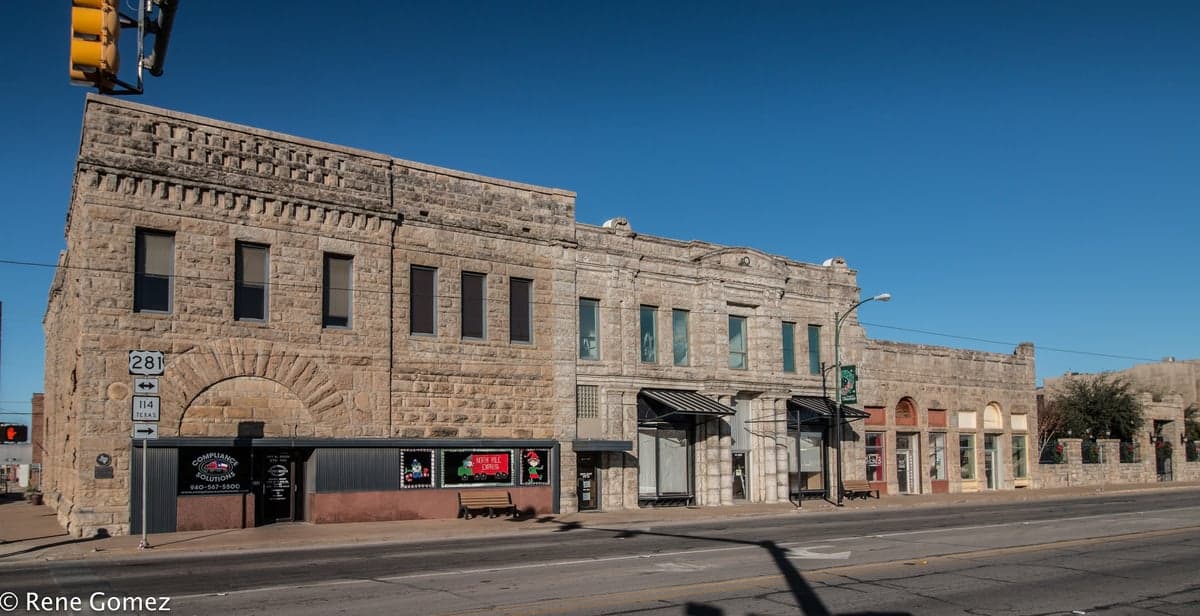
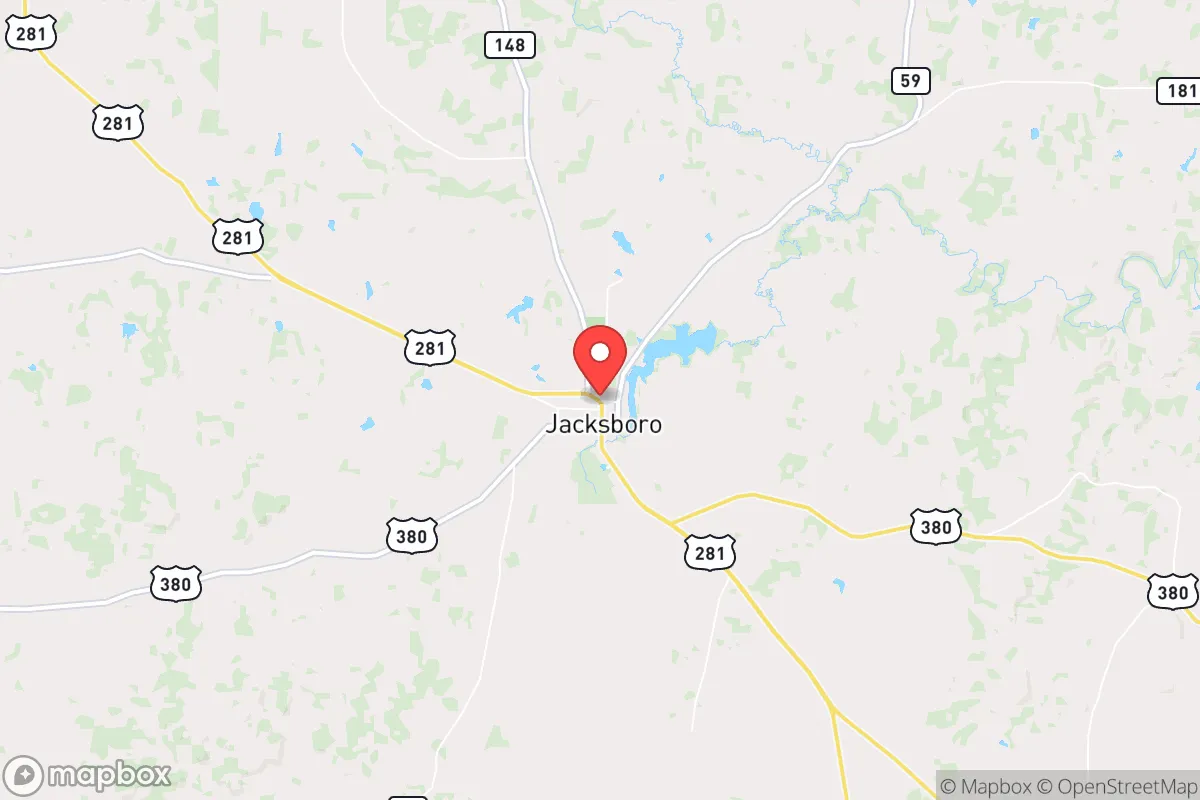
Photo: Wikipedia
Political ClimatePolitical Climate in Jacksboro, TX
District shown is the primary district for this city’s centroid. Cities may span multiple districts.
Local Political AnalysisPolitical Analysis of Jacksboro, TX
Jacksboro, Texas, is about as reliably conservative as small-town North Texas gets, and it’s been that way for as long as anyone around here can remember. The Cook Partisan Voting Index (PVI) for the area sits at R+18, which is a solid 14 points more Republican than the state of Texas as a whole, which clocks in at R+4. That gap isn’t just a number on a map—it reflects a community that has consistently pushed back against the kind of progressive shifts you see creeping into places like Fort Worth or even Wichita Falls. If you’re looking for a place where the old-school values of personal responsibility and limited government still hold sway, Jacksboro is it.
How it compares
When you stack Jacksboro up against the rest of Texas, the difference is stark. The state’s R+4 PVI already leans Republican, but that number is pulled left by the massive urban and suburban counties—Harris, Dallas, Travis, Bexar—where progressive policies on everything from property taxes to school curriculum have taken root. Jacksboro, by contrast, sits in Jack County, a rural area that votes red by margins that would make a Houston politico blush. Neighboring towns like Graham (R+22) and Bowie (R+20) are cut from the same cloth, but drive an hour south to Mineral Wells, and you’ll start to feel the influence of the Dallas-Fort Worth metroplex bleeding in. That’s where you see the first hints of government overreach—higher tax rates, more zoning restrictions, and a general acceptance of “we know what’s best for you” from local officials. Jacksboro hasn’t gone down that road, and the locals intend to keep it that way.
What this means for residents
For folks living here, the political climate translates directly into daily life. You don’t have to worry about the city council imposing mask mandates or business closures on a whim—those kinds of overreaches get shut down fast. Property taxes are still a pain, but they’re lower than in the big cities, and there’s no talk of adopting the kind of progressive land-use policies that drive up housing costs elsewhere. The school board stays focused on teaching the basics, not pushing social agendas. And when it comes to the Second Amendment, there’s no debate—it’s respected without question. That’s the kind of freedom that’s getting harder to find in Texas, especially as the state’s R+4 PVI masks the fact that blue votes are piling up in the suburbs. If you’re tired of feeling like your voice doesn’t matter in a county that’s trending left, Jacksboro is a breath of fresh air.
One thing that sets Jacksboro apart is its cultural stubbornness. You won’t find a Whole Foods or a craft brewery pushing organic, woke messaging here—it’s still a place where the local diner serves chicken-fried steak and the biggest news is the high school football game. The policy differences are subtle but real: no sanctuary city nonsense, no talk of defunding the police, and a general attitude that the government should stay out of your business. That’s not to say everything’s perfect—the economy relies heavily on oil and gas, which can be boom-or-bust, and the nearest major hospital is a 45-minute drive. But for anyone who values personal freedom over the latest progressive fad, Jacksboro offers a stable, no-nonsense alternative to the direction Texas is heading. The long-term outlook? As long as the rural vote holds strong, this area will remain a redoubt against the tide.

State Political ClimatePolitical Climate in Texas
State Political AnalysisPolitical Environment in the State
Texas has been a reliably Republican state for decades, with a Cook PVI of R+4, but the political landscape is far more complex than a simple red-state label suggests. The dominant coalition is a mix of rural conservatives, suburban moderates, and a growing number of libertarian-leaning transplants, but the state is also seeing a steady influx of voters from blue states who are shifting the balance in key metro areas. Over the last 10-20 years, the GOP’s grip has tightened in rural and exurban areas while Democrats have consolidated power in the major cities, creating a state that is both deeply conservative and increasingly contested at the margins.
Urban vs. rural divide
The political map of Texas is a study in stark contrasts. The major metros—Houston, Dallas-Fort Worth, San Antonio, and Austin—are the engines of Democratic growth, with Harris County (Houston) and Travis County (Austin) routinely delivering massive margins for Democrats. In 2024, Harris County voted +15 for Biden, while Travis County hit +50. Meanwhile, the vast rural and exurban areas—places like Lubbock, Midland, and the Panhandle—are deeply Republican, often voting +60 or more for GOP candidates. The real battleground is the suburbs: Collin County (north of Dallas) and Fort Bend County (southwest of Houston) have been trending purple, with Collin County shifting from +30 R in 2012 to +10 R in 2024. This urban-rural split means that statewide elections are increasingly decided by turnout in the suburbs, not just the cities or the countryside.
Policy environment
Texas’s policy environment is defined by a low-tax, low-regulation posture that appeals to conservatives. There is no state income tax, and property taxes are high but capped at 10% annual growth for homesteads. The regulatory climate is business-friendly, with minimal zoning in many areas and a right-to-work law that weakens union power. On education, the state has expanded school choice through the Texas Education Savings Account program (passed in 2023), allowing parents to use public funds for private or homeschool expenses. Healthcare is a mixed bag: Texas has not expanded Medicaid, and the state has some of the strictest abortion laws in the nation (the 2021 Heartbeat Act, effectively banning abortion after six weeks). Election laws were tightened in 2021 with SB 1, which restricted mail-in voting, added ID requirements, and banned drive-through voting—a move that drew national attention but was popular with conservatives who saw it as protecting election integrity.
Trajectory & freedom
On the freedom front, Texas has been a mixed bag in recent years. On the positive side for conservatives, the state expanded gun rights with constitutional carry (HB 1927) in 2021, allowing permitless carry of handguns. Parental rights were strengthened with the Parental Bill of Rights (HB 5) in 2023, giving parents more say in curriculum and medical decisions. Property rights got a boost with the Texas Property Tax Reform Act (SB 2) in 2023, which tightened appraisal caps and increased the homestead exemption. However, there are concerning trends: the state has seen a rise in local government overreach, particularly in blue cities like Austin and Dallas, where city councils have imposed mask mandates, vaccine requirements, and zoning restrictions that conflict with state law. The state legislature has pushed back with preemption bills, but the tension between local and state authority is a growing issue. Medical autonomy took a hit with the state’s aggressive enforcement of abortion bans, which some libertarians see as government overreach into personal decisions.
Civil unrest & political movements
Texas has seen its share of political flashpoints. The 2020 Black Lives Matter protests in Austin, Dallas, and Houston were large and sometimes violent, leading to property damage and a lasting sense of unease among conservatives. The “Defund the Police” movement gained traction in Austin, where the city council cut the police budget by $150 million in 2020, only to reverse course after a spike in violent crime. Immigration politics are a constant flashpoint: the state has sued the Biden administration over border policies, and Governor Abbott’s Operation Lone Star has deployed state troopers and National Guard to the border, leading to clashes with federal authorities. The “Texas Independence” movement, while fringe, has gained some traction online, with a small but vocal group pushing for secession. Election integrity remains a hot-button issue: after the 2020 election, Texas passed SB 1, but Democrats and voting rights groups continue to challenge it in court, and the issue is likely to remain a source of tension.
Projection
Over the next 5-10 years, Texas is likely to become more politically competitive, but not necessarily more liberal. The key demographic shift is the influx of transplants from California, New York, and Illinois—many of whom are fleeing high taxes and crime but bring moderate-to-liberal voting habits. This is already turning suburbs like Collin County and Williamson County (north of Austin) into swing areas. At the same time, rural and exurban areas are becoming more conservative, as the state’s population growth is concentrated in the cities. The net effect is that statewide races will tighten: the 2024 Senate race was decided by less than 2 points, and the 2026 gubernatorial race could be even closer. However, the state legislature is likely to remain Republican-controlled due to gerrymandering, meaning that conservative policies on taxes, guns, and education will persist. A new resident should expect a state that is still conservative overall, but with more political friction and a growing progressive presence in the cities.
For a new resident, the bottom line is this: Texas offers a low-tax, business-friendly environment with strong protections for gun rights and parental choice, but you’ll need to be strategic about where you live. If you want a reliably conservative community, look to the suburbs of Fort Worth or San Antonio, or the smaller cities like Lubbock and Midland. If you move to Austin or Dallas, expect a more progressive local government that may clash with state law on issues like policing, zoning, and public health. The state is not becoming a blue state, but it is becoming a more contested one—and that means the political battles you see on the news will increasingly play out in your own backyard.
* Values derived from national, state, county, city and local statistics and may differ in a specific area. Last updated: 2026-05-23T03:37:43.000Z
Narrative content on this page is AI-generated and may contain mistakes. Verify any details that matter before acting on them.
ReloMaps may earn a commission from affiliate links at no extra cost to you.

