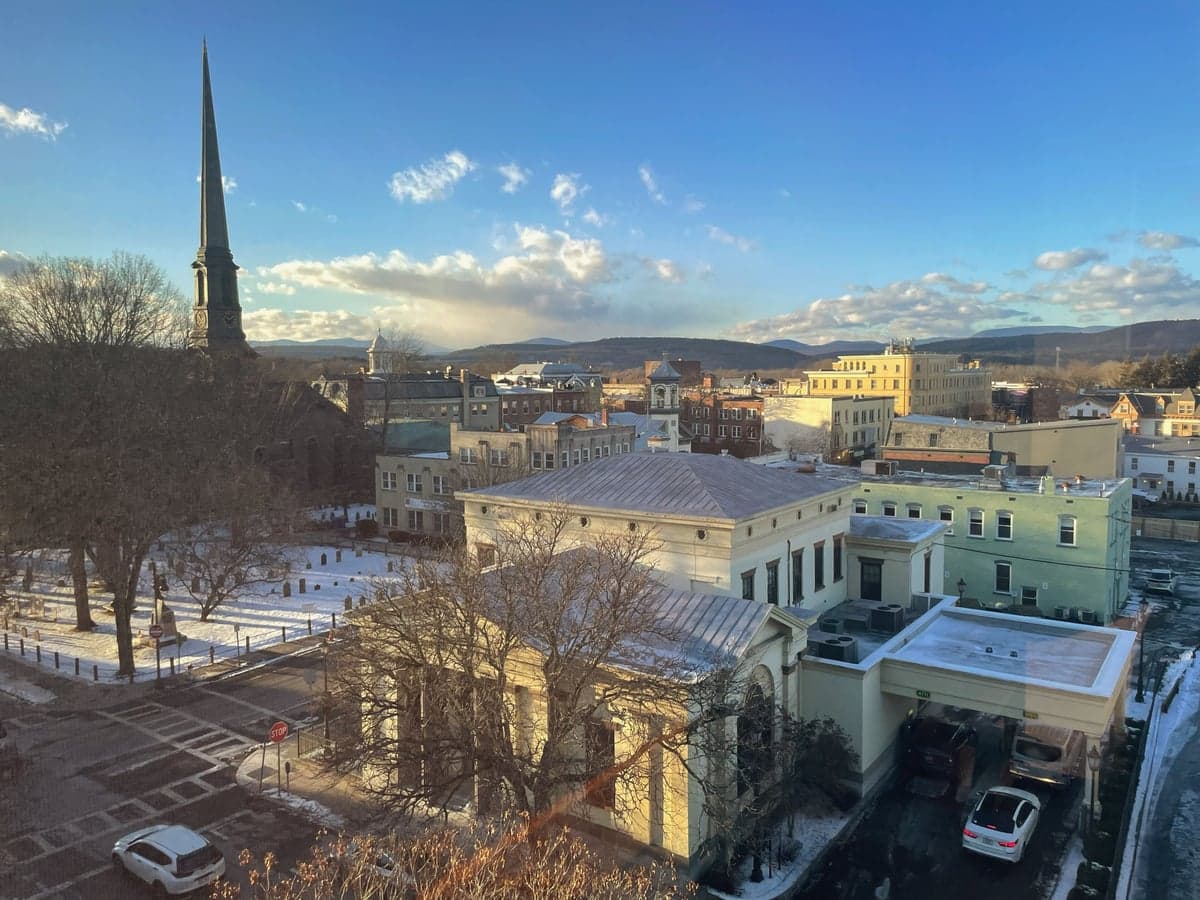
Photo: Wikipedia
Political ClimatePolitical Climate in Kingston, NY
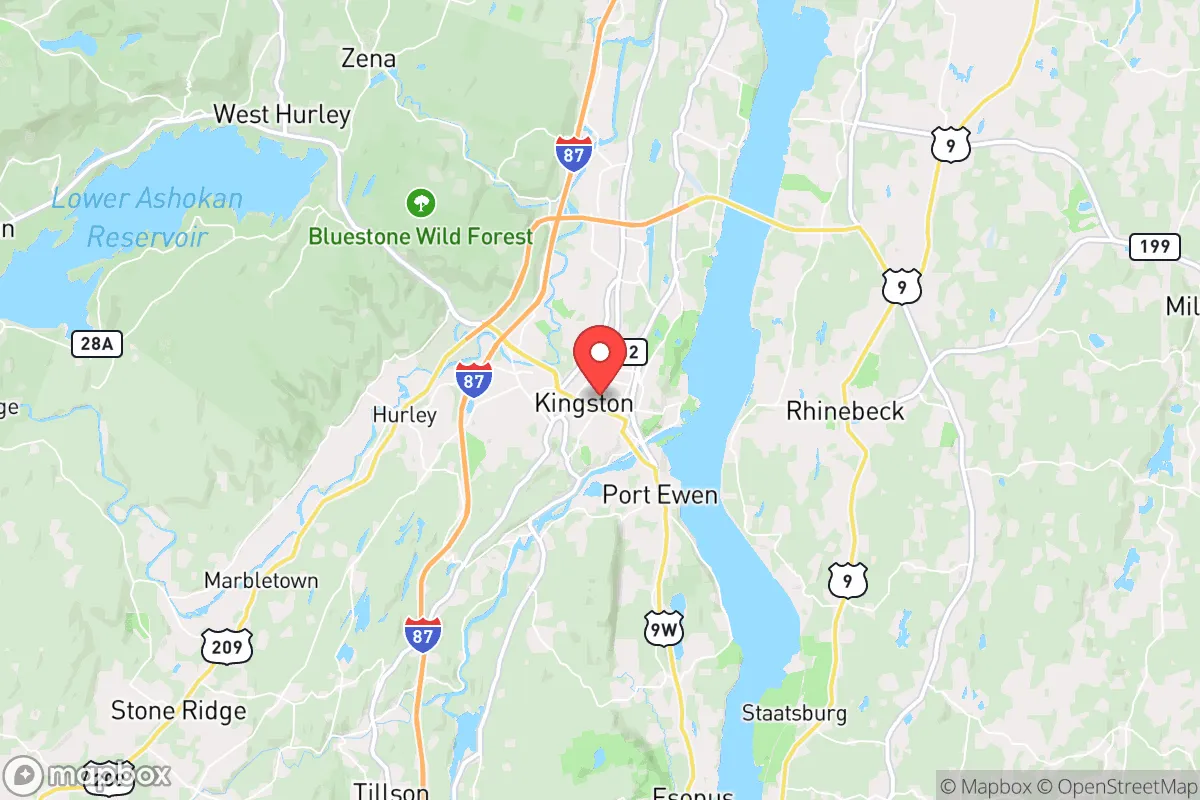
District shown is the primary district for this city’s centroid. Cities may span multiple districts.
Local Political AnalysisPolitical Analysis of Kingston, NY
Kingston, New York, has a Cook PVI of D+2, which means it leans slightly Democratic, but that number doesn't tell the whole story if you've lived here long enough. The city itself has been shifting left for a while now, especially since the early 2000s, but you still see a real split between the old-school Ulster County families and the newer crowd coming up from the city. The surrounding towns—like Saugerties, Woodstock, and Hurley—are a mixed bag, with some staying pretty conservative and others going full progressive, so the local politics can feel like a tug-of-war depending on which block you're standing on.
How it compares
Compared to nearby places like Poughkeepsie (D+8) or New Paltz (which is basically a college town with a very progressive vibe), Kingston is still relatively moderate. You drive 20 minutes west into the Catskills, and towns like Margaretville or Delhi are solidly red, with folks who don't appreciate Albany telling them how to run their farms or their schools. The contrast is stark: Kingston's city council has been pushing things like rent control and sanctuary city policies, while just over the hill in Rosendale, they're still fighting over zoning laws that let people keep chickens in their backyards. That D+2 rating feels about right—it's not a deep-blue stronghold, but the trend line is heading that way, and it's worrying for anyone who values local control over their own lives.
What this means for residents
For a long-time resident, the biggest red flag is how fast the local government has started reaching into everyday decisions. The push for "equity" initiatives in the school district and the city's aggressive climate action plan sound good on paper, but they come with mandates that can feel like overreach—like telling small business owners what kind of lightbulbs they have to use or forcing landlords to accept Section 8 vouchers even if the property isn't set up for it. Property taxes are already high in Ulster County, and every new progressive policy seems to come with a new fee or regulation that hits homeowners and small businesses hardest. The younger transplants don't seem to mind, but those of us who remember when Kingston was a quiet, affordable place worry that these changes are pushing out the very people who kept the town running for decades.
On the cultural side, Kingston still has a strong independent streak—you see it in the local gun shows, the volunteer fire departments, and the number of people who heat with wood because they don't trust the grid. But the city's arts scene and the influx of remote workers from New York City are slowly drowning that out. The local paper, the Daily Freeman, has gotten noticeably more progressive in its editorial stance, and the city council meetings are now dominated by activists pushing for things like defunding the police or banning natural gas hookups in new construction. If you value personal freedom—the right to live your life without a government committee deciding what's best for you—Kingston is still okay, but you can feel the ground shifting under your feet. The next few election cycles will tell us whether this place stays a live-and-let-live community or becomes another Hudson Valley town where the government thinks it knows better than you do.

State Political ClimatePolitical Climate in New York
State Political AnalysisPolitical Environment in the State
New York State has shifted from a classic swing state to a solidly Democratic stronghold over the past 20 years, with Democrats now holding every statewide office and supermajorities in both legislative chambers. The state hasn't voted for a Republican presidential candidate since 1984, and the partisan lean has deepened significantly since 2016, driven by massive turnout in New York City and its inner suburbs. For a conservative-leaning individual or family, the state presents a stark reality: your vote in statewide races is effectively meaningless, but your local community—whether in Staten Island, Orange County, or Chautauqua County—may still reflect your values.
Urban vs. rural divide
The political map of New York is a tale of two states. New York City alone accounts for roughly 40% of the state's vote, and its five boroughs—especially Manhattan and Brooklyn—are among the most progressive jurisdictions in America. The immediate suburbs, like Westchester County and Nassau County on Long Island, have been trending blue for a decade, though Nassau still elects a few Republican county officials. The real conservative strongholds are upstate: Erie County (Buffalo) is a blue island in a red region, while Monroe County (Rochester) is purple trending blue. The truly red counties are rural and exurban: Allegany, Cattaraugus, Livingston, Orleans, Wyoming counties in western New York, and Clinton, Essex, Franklin counties in the North Country. Staten Island remains the only NYC borough that consistently votes Republican in local races, and Suffolk County on eastern Long Island still elects a Republican county executive. The divide isn't just geographic—it's cultural. Upstate residents often feel governed by a downstate legislature that doesn't understand their way of life, from gun ownership to school funding to energy policy.
Policy environment
New York's policy environment is aggressively progressive and heavily regulated. The state has the highest combined state and local tax burden in the nation, with income tax rates topping 10.9% for high earners and property taxes among the highest in the country. The 2019 bail reform law eliminated cash bail for most misdemeanors and non-violent felonies, leading to a surge in repeat offending that has become a major political flashpoint. The Green New Deal for New York (Climate Leadership and Community Protection Act) mandates a 100% zero-emission electricity grid by 2040, driving up energy costs and forcing the closure of natural gas plants. Education policy is dominated by teachers' unions, with school choice virtually nonexistent—charter schools are capped, and there's no voucher program. Healthcare is heavily regulated, with the state expanding Medicaid and implementing a public option. Election laws are among the most liberal: no-excuse absentee voting, early voting, automatic voter registration, and same-day registration. The state also passed the Reproductive Health Act in 2019, codifying abortion rights into law, and the Gender Expression Non-Discrimination Act (GENDA). For a conservative, the policy environment feels like a one-party state where your voice is drowned out by New York City's priorities.
Trajectory & freedom
New York is becoming less free by almost any measure, especially for conservatives. The SAFE Act of 2013 was one of the strictest gun control laws in the nation, banning "assault weapons" and limiting magazine capacity to seven rounds. In 2022, the state passed the Concealed Carry Improvement Act (CCIA) after the Bruen Supreme Court decision, which created "sensitive locations" where guns are banned—including places of worship, public parks, and Times Square—and required applicants to prove "good moral character." Parental rights have been eroded: the state's Dignity for All Students Act mandates LGBTQ-inclusive curriculum, and the Education Department has pushed gender identity policies that allow students to change their names and pronouns without parental consent. Medical autonomy took a hit with the state's strict COVID-19 mandates, which included a vaccine mandate for healthcare workers that was only recently lifted. Property rights are under pressure from rent control laws in New York City and the Housing Stability and Tenant Protection Act of 2019, which made it harder for landlords to evict non-paying tenants. The New York Health Act, a single-payer bill, is repeatedly introduced but hasn't passed—yet. The trajectory is clear: more regulation, higher taxes, and less individual freedom, especially for gun owners, parents, and small business owners.
Civil unrest & political movements
New York has been a flashpoint for political activism on both sides. The Black Lives Matter protests in summer 2020 were massive, especially in New York City, Buffalo, and Rochester, with some turning violent—looting in Manhattan's SoHo and Midtown, and property damage in Buffalo. The state's sanctuary city policies limit cooperation between local law enforcement and federal immigration authorities, making New York a magnet for undocumented immigrants. In 2022, the state saw a surge in migrant arrivals bused from Texas, overwhelming shelters in New York City and sparking a political crisis. On the right, the New York State Rifle & Pistol Association has been the lead plaintiff in major Second Amendment lawsuits, including the Bruen case. The Working Families Party is a powerful left-wing force that often pulls Democrats further left. Election integrity has been a hot topic: the state's use of universal mail-in ballots during COVID led to allegations of fraud, though no widespread issues were proven. The New York City Council has seen internal fights over defunding the police, with some members pushing to cut the NYPD budget. A new resident from a red state would notice the constant political tension, especially in the city, where protests and counter-protests are common.
Projection
Over the next 5-10 years, New York will likely become more progressive and more expensive. Demographic trends are not kind to conservatives: the state is losing population to Florida, Texas, and the Carolinas, and those leaving are disproportionately upstate and middle-class families. The remaining population is increasingly concentrated in New York City and its immediate suburbs, which will only amplify the state's blue tilt. The 2020 census cost New York two congressional seats, and it's likely to lose another after 2030. The state's fiscal situation is precarious: the Empire State Development agency has handed out billions in corporate subsidies, but the tax base is shrinking. Expect more tax hikes, more mandates on businesses, and more progressive social policies. The New York Health Act may pass if Democrats gain a supermajority in the state senate. For a conservative, the realistic outlook is that New York will continue to feel like a foreign country—one where your values are not just ignored but actively opposed. The best you can hope for is to find a red enclave like Staten Island or Orange County and live a quiet life, but you'll still pay the state's high taxes and abide by its laws.
For a conservative moving to New York, the bottom line is this: you are moving into a one-party state where your vote for statewide office is symbolic, your taxes will be among the highest in the nation, and your personal freedoms—especially regarding guns, education, and medical choices—will be restricted. Your best bet is to target a red county like Allegany or Livingston in western New York, or a purple suburb like Suffolk County on Long Island, where local government may still reflect your values. But understand that state-level politics will always work against you, and the trend is not your friend. If you value low taxes, school choice, gun rights, and local control, New York is a tough sell—but if you have family or job ties that keep you here, you can carve out a decent life by focusing on your community and ignoring Albany as much as possible.
* Values derived from national, state, county, city and local statistics and may differ in a specific area. Last updated: 2026-05-01T23:59:33.000Z
Narrative content on this page is AI-generated and may contain mistakes. Verify any details that matter before acting on them.
ReloMaps may earn a commission from affiliate links at no extra cost to you.

