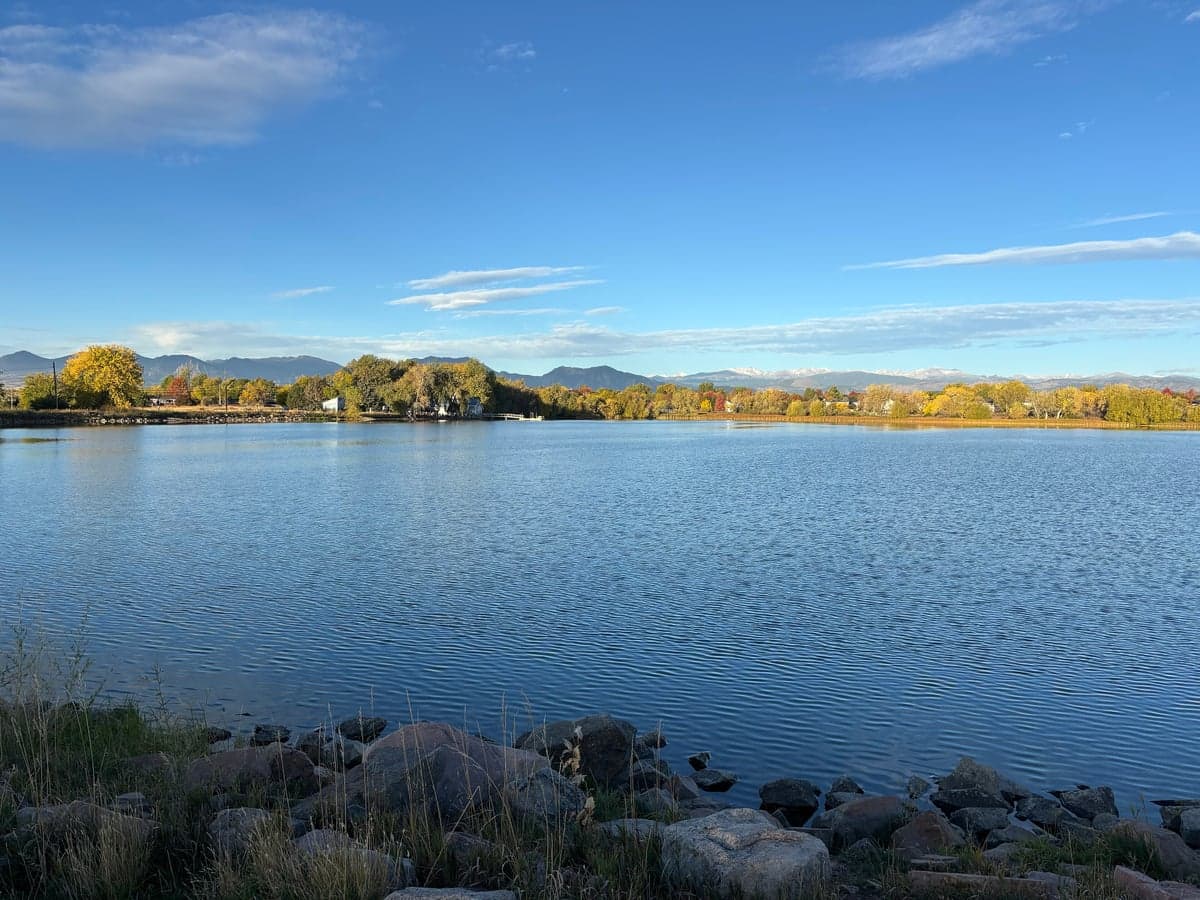
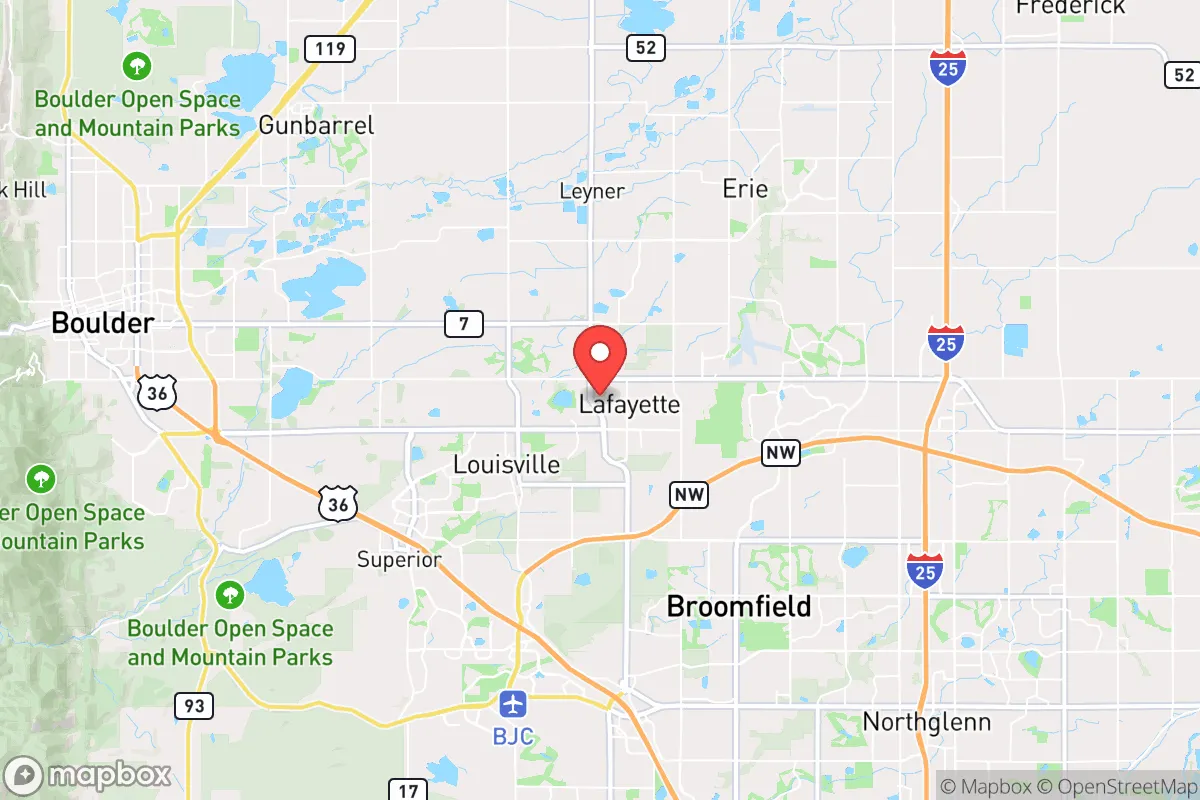
Photo: Wikipedia
Demographics of Lafayette, CO
Affluence Level in Lafayette, CO
An upper-middle-class area. Household wealth, education levels, and homeownership run ahead of national benchmarks.
People of Lafayette, CO
Lafayette, Colorado, is a city of roughly 30,500 residents that blends a historic small-town feel with modern suburban growth. It is notably more educated than the state average, with 65.6% of adults holding a college degree, and remains predominantly white (73.0%) with a significant Hispanic minority (16.2%). The city’s character is defined by its historic downtown, a strong sense of community, and a population that is increasingly affluent and professional, though it retains a working-class thread from its coal-mining and agricultural past.
How the city was settled and grew
Lafayette was founded in the 1880s as a coal-mining camp, named after Mary Miller, the wife of a railroad official. The discovery of coal drew a wave of immigrants from Southern and Eastern Europe—primarily Italian, Slavic, and Irish miners—who settled in the Old Town area, building modest homes near the mines along what is now South Public Road. The town incorporated in 1890 and grew slowly as a company town dominated by the Rocky Mountain Fuel Company. By the early 20th century, a small but distinct Hispanic community had also formed, with families working in the mines and on nearby sugar beet farms, settling in the Centennial Park neighborhood south of the railroad tracks. The original European immigrant groups established churches and social halls in Old Town, many of which still stand.
Modern era (post-1965)
The post-1965 era brought dramatic change. The coal mines closed by the 1950s, and Lafayette began a slow transition to a Denver-Boulder bedroom community. The 1970s and 1980s saw an influx of white-collar professionals and families drawn by affordable housing and proximity to Boulder and Denver. These newcomers settled in new subdivisions like Indian Peaks (built in the 1990s and 2000s) and South Lafayette, which feature larger single-family homes and higher property values. The Hispanic population, which had been a small but stable presence, grew significantly during the 1990s and 2000s as immigrant families from Mexico and Central America arrived for construction and service jobs. This wave concentrated in the Baseline area and the older housing stock around Simla Street, where a cluster of Hispanic-owned businesses and a Catholic parish now anchor the community. The East/Southeast Asian population (2.6%) and Indian-subcontinent population (1.2%) are smaller but growing, with many professionals working in Boulder’s tech sector and settling in newer developments like Greenbriar and the Lafayette Crossing area. The city’s foreign-born share is 5.3%, lower than the state average, reflecting a population that is largely native-born and English-dominant.
The future
Lafayette’s population is trending older, more educated, and more expensive. The city is not homogenizing into a single culture; rather, it is developing distinct enclaves. Old Town remains a mix of long-time working-class families and new professionals renovating historic homes, while Indian Peaks and Greenbriar are solidly upper-middle-class and predominantly white. The Hispanic community around Simla Street and Baseline is stable but not expanding rapidly, as rising housing costs push lower-income families to Longmont or Greeley. The East/Southeast Asian and Indian populations are likely to grow modestly as tech employment in Boulder County continues to draw skilled immigrants, but Lafayette lacks the ethnic infrastructure—specialty grocery stores, cultural centers—that would attract a large enclave. The city’s future is one of continued gentrification: the college-educated share is already high and will rise further, while the working-class and immigrant populations will likely shrink or shift to more affordable neighboring towns. For a conservative-leaning newcomer, Lafayette offers a stable, safe, and highly educated environment, but it is becoming less economically diverse and more culturally homogeneous in its newer neighborhoods.
Lafayette is becoming a prosperous, well-educated suburb where historic diversity is giving way to a more uniform professional-class character. For someone moving in now, the city offers excellent schools, low crime, and a strong sense of place, but the cost of entry is high and the demographic trends point toward continued affluence and cultural consolidation rather than new waves of immigration.

* Values derived from national, state, county, city and local statistics and may differ in a specific area. Last updated: 2026-04-22T23:26:31.000Z
Narrative content on this page is AI-generated and may contain mistakes. Verify any details that matter before acting on them.
ReloMaps may earn a commission from affiliate links at no extra cost to you.

