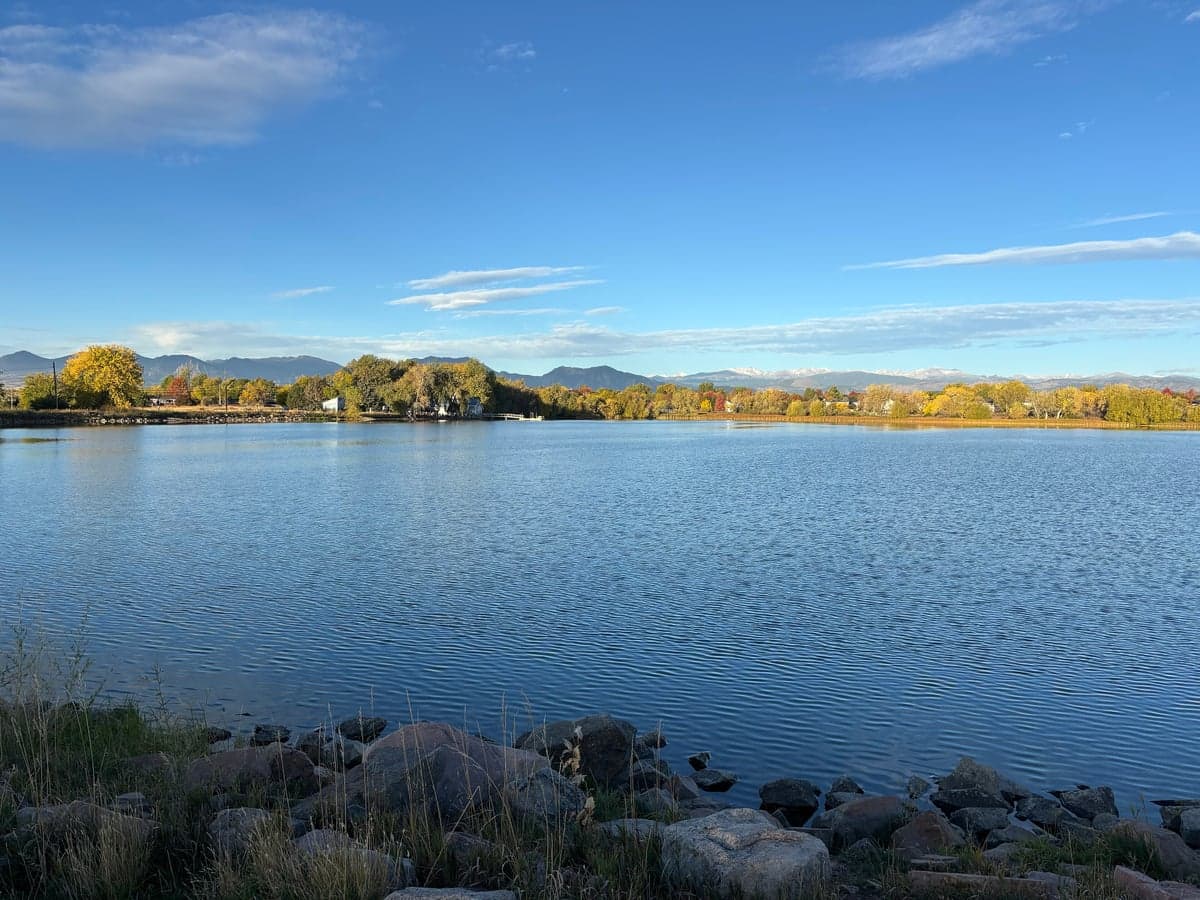
Photo: Wikipedia
Political ClimatePolitical Climate in Lafayette, CO
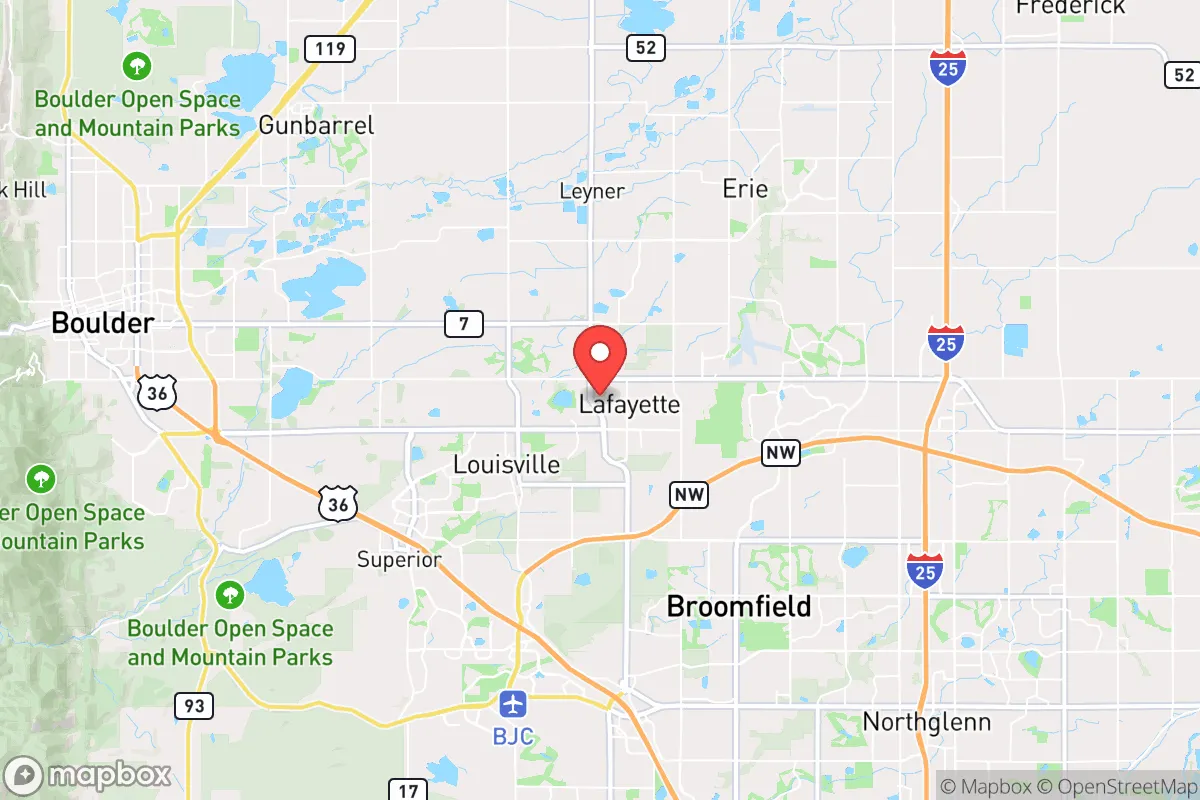
District shown is the primary district for this city’s centroid. Cities may span multiple districts.
Local Political AnalysisPolitical Analysis of Lafayette, CO
Lafayette, Colorado, leans heavily to the left, with a Cook PVI of D+20 that puts it among the most progressive enclaves in Boulder County. This wasn’t always the case—I remember when this was a quiet coal-mining town where folks kept to themselves and the biggest political debate was over the annual Peach Festival parade route. Over the last decade, though, the influx of Denver and Boulder transplants has flipped the script, and now the city council and school board are dominated by activists pushing a fast-track progressive agenda. If you value personal freedoms and limited government, this shift is something to watch closely.
How it compares
Drive ten minutes east to Erie or fifteen minutes north to Longmont, and you’ll feel a different political breeze. Erie, especially in Weld County, still leans conservative, with a mix of ranching families and newer residents who moved there specifically to escape Boulder County’s tax-and-regulate culture. Longmont is more purple, with a libertarian streak that keeps city hall from going full progressive. Lafayette, by contrast, is surrounded by Boulder’s orbit—think of it as the leftmost spoke on a wheel where the hub is the University of Colorado. The contrast is stark: while Erie’s city council debates water rights and road maintenance, Lafayette’s spends time on symbolic resolutions and climate emergency declarations. If you’re looking for a place where your property rights and Second Amendment preferences are respected, Lafayette is increasingly an island of blue in a sea of red and purple neighbors.
What this means for residents
For the average family, the political tilt translates into real-world consequences. Property taxes here are among the highest in the region, driven by voter-approved bond measures for schools and open space purchases that sound good on paper but hit your wallet hard. The city has also embraced “Vision Zero” traffic policies that prioritize bike lanes and pedestrian plazas over car access—great if you commute by e-bike, frustrating if you need to haul kids or groceries. Rental regulations are getting tighter, with talk of rent control and tenant “bill of rights” ordinances that make it harder for small landlords to operate. And the school board has pushed critical race theory and gender-identity curricula into elementary classrooms, which has driven some families to homeschool or move to Erie. The long-term trend is clear: more regulations, higher costs, and a cultural environment that can feel hostile to traditional values.
On the cultural front, Lafayette has become a laboratory for progressive policy experiments. The city was an early adopter of a “sanctuary” ordinance limiting cooperation with federal immigration enforcement, and it recently banned natural gas hookups in new construction—a move that raises energy costs for future homeowners. The city council has also floated a “social housing” program that would use taxpayer money to build government-owned apartments, competing with private developers. These aren’t just abstract ideas; they’re laws that affect your daily life. If you’re a small business owner, expect more paperwork and fewer parking spots. If you’re a parent, expect your kids to come home with questions you didn’t ask for. Lafayette is a beautiful town with great trails and a strong sense of community, but the political direction is unmistakable. For those who value personal freedom and fiscal restraint, it’s worth asking how much longer that community will feel like home.

State Political ClimatePolitical Climate in Colorado
State Political AnalysisPolitical Environment in the State
Colorado has shifted from a classic purple swing state to a solidly blue-leaning state over the past two decades, with Democrats now controlling the governorship, both U.S. Senate seats, and both chambers of the state legislature. The state voted for Hillary Clinton by 5 points in 2016, Joe Biden by 13 points in 2020, and Kamala Harris by roughly 11 points in 2024, reflecting a durable Democratic advantage driven by explosive growth in the Denver metro area and the Front Range. For a conservative considering relocation, the state’s political trajectory is a cautionary tale of how rapid in-migration and demographic change can transform a once-balanced state into a one-party progressive stronghold.
Urban vs. rural divide
The political map of Colorado is a stark study in contrasts. The Denver-Aurora-Lakewood metro area, home to nearly 60% of the state’s population, is the engine of Democratic dominance — Denver County routinely votes 80%+ Democratic, while surrounding suburban counties like Jefferson, Arapahoe, and Boulder are also reliably blue. Boulder County is arguably the most left-leaning jurisdiction in the Rocky Mountain region, with a political culture that rivals Berkeley or Portland. The I-25 corridor from Fort Collins down to Colorado Springs is a mixed bag: Larimer County (Fort Collins) leans Democratic, while El Paso County (Colorado Springs) remains a conservative stronghold, voting +15 R in 2024 and serving as a rare urban redoubt. Rural Colorado — the Eastern Plains, the Western Slope, and the San Luis Valley — votes heavily Republican, but these areas lack the population to counterbalance the Front Range. Counties like Weld (Greeley), Mesa (Grand Junction), and Douglas (south of Denver) have become battlegrounds: Douglas County was once reliably red but has shifted purple as Denver exurbs fill with moderate professionals. The 2022 gubernatorial race saw Republican Heidi Ganahl win only 25 of 64 counties, yet lose the popular vote by 20 points — a textbook illustration of the urban-rural disconnect.
Policy environment
Colorado’s policy landscape has moved aggressively leftward in the last decade. The state income tax rate was cut from 4.63% to 4.4% under the Taxpayer’s Bill of Rights (TABOR) framework, but Democrats have found workarounds — including a 2021 law that eliminated the state’s flat tax in favor of a progressive structure, though voters rejected a further graduated income tax in 2024. Property taxes are relatively low, but a 2023 law (SB23-213) allowed local governments to bypass TABOR revenue caps for affordable housing projects, eroding the state’s historic taxpayer protections. On education, Colorado adopted the controversial “Comprehensive Health Education” standards in 2020, which mandate LGBTQ+ inclusive sex ed in public schools — a flashpoint for parents concerned about age-appropriate content. The state also passed the “Family Leave Insurance” program (2023), funded by a payroll tax, which conservatives view as an unfunded mandate on employers. Healthcare is dominated by the state-run Connect for Health Colorado exchange, and a 2022 law created a public option insurance plan, though it has seen low enrollment. Election laws have been a major concern: Colorado is one of the few states with universal mail-in voting (since 2013), automatic voter registration, and same-day registration — policies that conservatives argue reduce ballot security. The state’s independent redistricting commission, created in 2018, has produced maps that favor Democrats in congressional races.
Trajectory & freedom
Colorado’s trajectory on personal freedom is decidedly mixed, with notable expansions of government control in several areas. On gun rights, the state has become a national leader in restrictions: a 2013 law limited magazine capacity to 15 rounds, a 2023 law (HB23-1219) raised the purchase age to 21 for all firearms, and a 2024 law (SB24-131) banned so-called “assault weapons” — a direct challenge to the Second Amendment that is currently being litigated. The state also passed a “red flag” law in 2019, allowing courts to temporarily seize firearms from individuals deemed a risk. On parental rights, Colorado enacted the “Protecting Opportunities for Youth” Act in 2023, which prohibits schools from notifying parents if a student changes their gender identity or pronouns — a major concern for conservative families. Medical freedom took a hit with the 2021 passage of a strict vaccine mandate for healthcare workers, though it was later partially rolled back. Property rights have been eroded by a 2022 law (SB22-115) that allows local governments to impose rent control on mobile home parks, and by the aforementioned TABOR workarounds. On the positive side for conservatives, Colorado has no state-level occupational licensing for many trades, and the state’s energy sector — particularly oil and gas in Weld County — remains a major economic driver, though new drilling permits have been restricted by a 2019 law (SB19-181) that prioritized environmental review over mineral rights.
Civil unrest & political movements
Colorado has seen its share of political flashpoints. The 2020 George Floyd protests in Denver turned violent, with property damage and clashes between demonstrators and police, leading to a $14 million settlement for injured officers. The state’s sanctuary policies are among the strongest in the nation: a 2019 law (HB19-1124) limits local law enforcement cooperation with ICE, and Denver has been a “welcoming city” since 2017, refusing to detain immigrants for federal authorities. This has created tension with rural counties, with some — like Weld and El Paso — declaring themselves “Second Amendment sanctuaries” in protest of state gun laws. The 2020 election integrity debate was particularly heated in Colorado, where the universal mail-in system was challenged by conservative groups, though no widespread fraud was proven. The “Colorado Project” — a left-wing organizing effort funded by national donors — has been credited with flipping the state legislature in 2018 and has been a model for progressive infrastructure. On the right, the “Colorado Rising” movement has focused on parental rights and school board elections, with some success in Douglas County and Colorado Springs. The 2022 recall effort against Denver District Attorney Beth McCann, who was seen as soft on crime, failed but highlighted growing frustration with progressive criminal justice policies.
Projection
Over the next 5-10 years, Colorado is likely to become more Democratic and more progressive, driven by continued in-migration from blue states like California, New York, and Illinois. The Denver metro area is projected to add another 500,000 residents by 2035, and these newcomers tend to be younger, more diverse, and more left-leaning. The rural-urban divide will deepen, with rural counties losing political relevance as the Front Range consolidates power. The state’s tax burden will likely increase as Democrats find new ways to circumvent TABOR, and gun restrictions will probably tighten further — a 2025 bill to require liability insurance for gun owners is already being discussed. Parental rights battles will intensify, especially around school curriculum and gender policies. The one wild card is the state’s housing crisis: if affordability continues to deteriorate, it could slow in-migration and potentially shift the political calculus. For now, a conservative moving to Colorado should expect to live in a state where their values are increasingly at odds with state law, and where local political engagement — particularly in suburban school boards and county commissions — is the only realistic path to influence.
Bottom line for a new resident: Colorado offers stunning natural beauty, a strong economy, and a relatively low tax burden compared to other blue states, but the political climate is hostile to conservative values on guns, parental rights, and limited government. If you’re moving here, choose your county carefully — El Paso County (Colorado Springs) and Weld County (Greeley) offer the most conservative environments, while Douglas County is a purple battleground worth watching. Be prepared to fight for your freedoms at the local level, because the state government is not on your side.
* Values derived from national, state, county, city and local statistics and may differ in a specific area. Last updated: 2026-04-22T23:26:31.000Z
Narrative content on this page is AI-generated and may contain mistakes. Verify any details that matter before acting on them.
ReloMaps may earn a commission from affiliate links at no extra cost to you.

