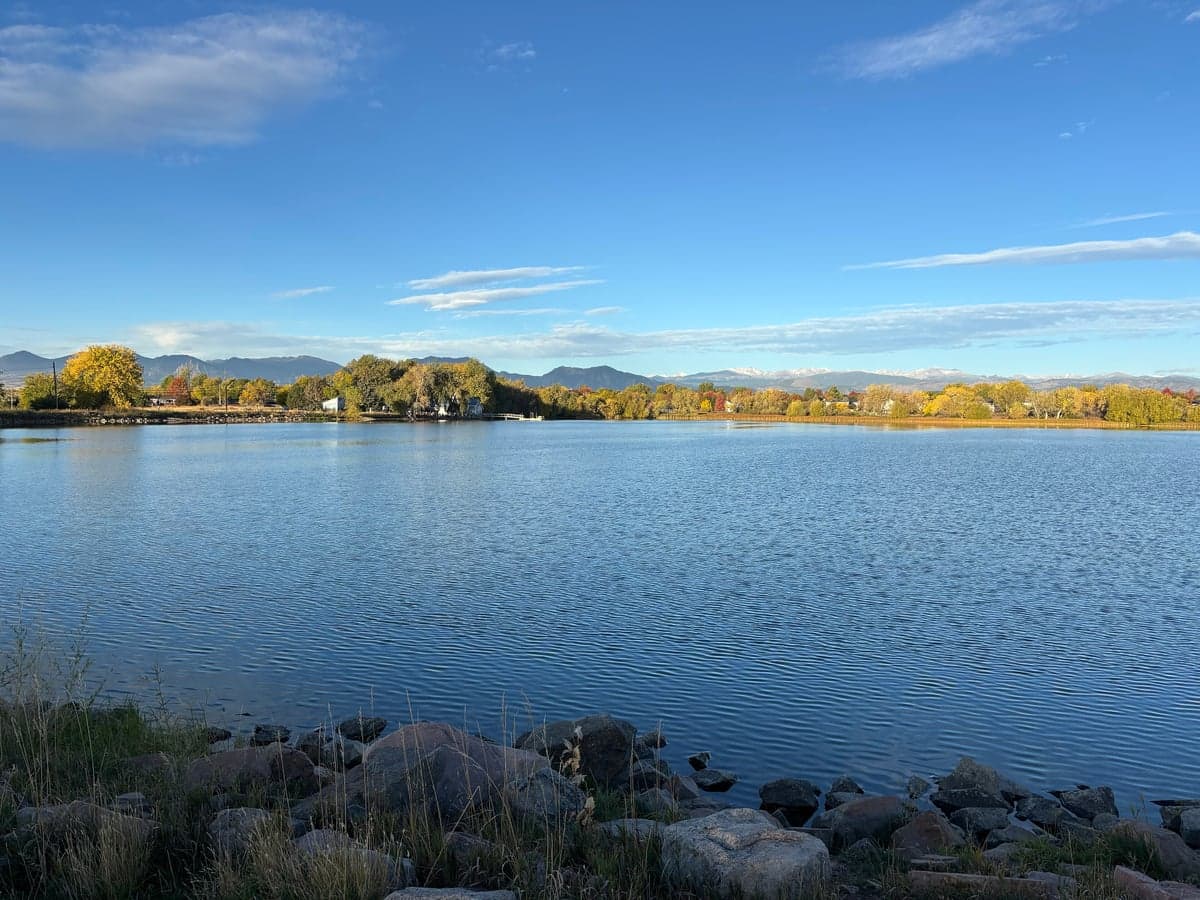
Photo: Wikipedia
Personal Sovereignty in Lafayette, CO
Viable for self-reliance. Generally workable, though some barriers may limit total independence.
What does Personal Sovereignty tell us?
Personal Sovereignty measures your capacity for self-reliance and independence with minimal government friction. Higher scores mean fewer barriers between you and the way you want to live... but it assumes you have the space you need and good neighbors.
What does this tell us?
Personal Sovereignty measures your capacity for self-reliance and independence with minimal government friction. Higher scores mean fewer barriers between you and the way you want to live... but it assumes you have the space you need and good neighbors.
State Policy
Energy independence: Net exporter (110% of energy produced in-state)
Personal Liberty
Homesteading

Personal Liberty Analysis
Lafayette, Colorado, presents a mixed picture for those prioritizing personal sovereignty. While the city itself leans left politically, its location in Boulder County places it under some of the most progressive governance in the state, which directly impacts individual autonomy. For the survivalist or prepper mindset, the key takeaway is that Lafayette offers a relatively high degree of personal freedom in daily life, but faces significant headwinds from state and county policies on taxation, self-defense, and property rights. The overall environment is one where you can live your life largely undisturbed, but you must remain vigilant against creeping government overreach at multiple levels.
Tax burden and regulatory posture: How Colorado’s fiscal policies affect your autonomy
Colorado’s tax structure is a double-edged sword for the sovereignty-minded. The state income tax is a flat 4.4% as of 2025, which is moderate but not negligible. However, Lafayette adds its own city sales tax of 3.53% on top of the state’s 2.9% and Boulder County’s 0.985%, bringing the total in some areas to over 8.4%. This is a direct hit on your purchasing power and savings. Property taxes in Boulder County are relatively low by national standards, averaging around 0.55% of assessed value, but assessed values have skyrocketed, meaning your tax bill can still be substantial. The regulatory posture is more concerning. Colorado’s strict land-use laws, particularly the 2019 oil and gas reform (SB19-181), gave local governments broad authority to restrict energy development, which can limit your ability to be self-sufficient on your property. Additionally, the state’s 2021 “Clean Energy” plan mandates aggressive emissions reductions, which translates into higher energy costs and potential restrictions on personal energy generation or fuel storage. For a prepper, this means you’ll pay more to live here, and the state is actively shaping how you can use your land and resources.
Self-defense and gun law specifics: What the Second Amendment landscape looks like in Lafayette
This is the most critical area where Lafayette falls short for the sovereignty-minded. Colorado has a patchwork of gun laws, and Boulder County is among the most restrictive. The state passed a red flag law (HB19-1177) in 2019, allowing courts to temporarily confiscate firearms from individuals deemed a risk to themselves or others, based on a petition from family or law enforcement. This is a direct threat to due process and personal property rights. Furthermore, in 2023, Colorado enacted a three-day waiting period for all firearm purchases (HB23-1219), and in 2024, a law banning the sale of “assault weapons” (defined broadly) was passed, though it is currently facing legal challenges. Boulder County itself has a local ordinance requiring a permit to purchase any firearm, adding another layer of bureaucracy. For the prepper, this means building a personal armory is legally difficult and subject to sudden changes. Concealed carry is permitted with a permit, but the process is not shall-issue in practice due to local sheriff discretion. Self-defense in the home is generally protected under Colorado’s “Make My Day” law, which provides a legal presumption of reasonable fear of death or great bodily harm when using force against an intruder. However, the broader legal climate is hostile to gun ownership, and any defensive use of a firearm will face intense scrutiny from the Boulder County District Attorney’s office, which is known for progressive prosecution policies.
Self-reliance and homesteading viability: Lot sizes, zoning, and off-grid feasibility
Lafayette’s zoning is predominantly suburban, with most residential lots ranging from 6,000 to 10,000 square feet. This severely limits homesteading potential. Raising chickens is allowed with a permit, but livestock like goats or pigs are generally prohibited within city limits. The city’s zoning code explicitly restricts “agricultural uses” to properties zoned for it, which are rare. Off-grid living is essentially illegal. The city requires connection to municipal water and sewer systems, and building codes mandate grid-tied electrical connections. Solar panels are allowed, but net metering policies are controlled by Xcel Energy, the dominant utility, which has been reducing compensation for excess power. Rainwater collection is legal in Colorado since 2016, but only for outdoor use and with strict limits on storage capacity (typically 110 gallons per property). For a prepper seeking true self-reliance, Lafayette is not the place. You would need to look to unincorporated Boulder County or neighboring Weld County for larger lots and fewer restrictions. The city’s 2020 Comprehensive Plan emphasizes density and transit-oriented development, signaling that the trend is toward less, not more, personal land autonomy.
Personal liberties: Parental rights, medical autonomy, speech, and property
Parental rights are a battleground in Colorado. The state passed a law in 2023 (HB23-1069) that allows minors as young as 12 to consent to mental health treatment without parental knowledge, and another (SB23-188) that protects access to gender-affirming care for minors, overriding parental consent in some cases. This is a direct erosion of family sovereignty. The Boulder Valley School District, which serves Lafayette, has implemented policies on social-emotional learning and diversity that some parents view as ideological indoctrination. Medical autonomy is also constrained. Colorado has a vaccine mandate for school attendance, though religious and medical exemptions exist. The state’s “Right to Try” law for terminally ill patients is on the books, but it’s limited. On speech, Colorado is generally protective, but local governments can restrict public assembly and protest through permitting requirements. Property rights are the most concerning. Colorado’s “Proposition 115” (a 2020 ballot measure that would have banned late-term abortions) was defeated, but the state has since passed laws that protect abortion access, which some see as a federalism issue. More directly, the state’s 2021 “Environmental Justice” law gives communities more power to block development, which can be used to restrict your ability to build or modify your property. The overall message is clear: your rights as a parent, patient, and property owner are subject to the whims of the state legislature and local progressive activists.
In the broader context of Colorado and the Mountain West, Lafayette offers a relatively comfortable lifestyle but a poor strategic position for those prioritizing maximum personal sovereignty. Compared to rural areas in Weld or Elbert counties, you face higher taxes, more restrictive gun laws, and a more intrusive regulatory environment. Compared to cities like Denver or Boulder, Lafayette is slightly more moderate, but the trend lines are all moving in the same direction: toward greater government control over your choices. For the survivalist or prepper, Lafayette is a place to live if you must be near Front Range employment, but it is not a place to dig in for the long haul. Your best bet is to view it as a temporary base while you secure property in a more liberty-friendly jurisdiction, such as Weld County (Greeley, Firestone) or El Paso County (Colorado Springs), where tax burdens are lower, gun laws are more permissive, and local governance is more aligned with individual autonomy.

* Values derived from national, state, county, city and local statistics and may differ in a specific area. Last updated: 2026-04-22T23:26:31.000Z
Narrative content on this page is AI-generated and may contain mistakes. Verify any details that matter before acting on them.
ReloMaps may earn a commission from affiliate links at no extra cost to you.

