Photo: Wikipedia
Demographics of Makaha, HI
Affluence Level in Makaha, HI
A middle-class area roughly in line with national averages across income, home values, education, and employment.
People of Makaha, HI
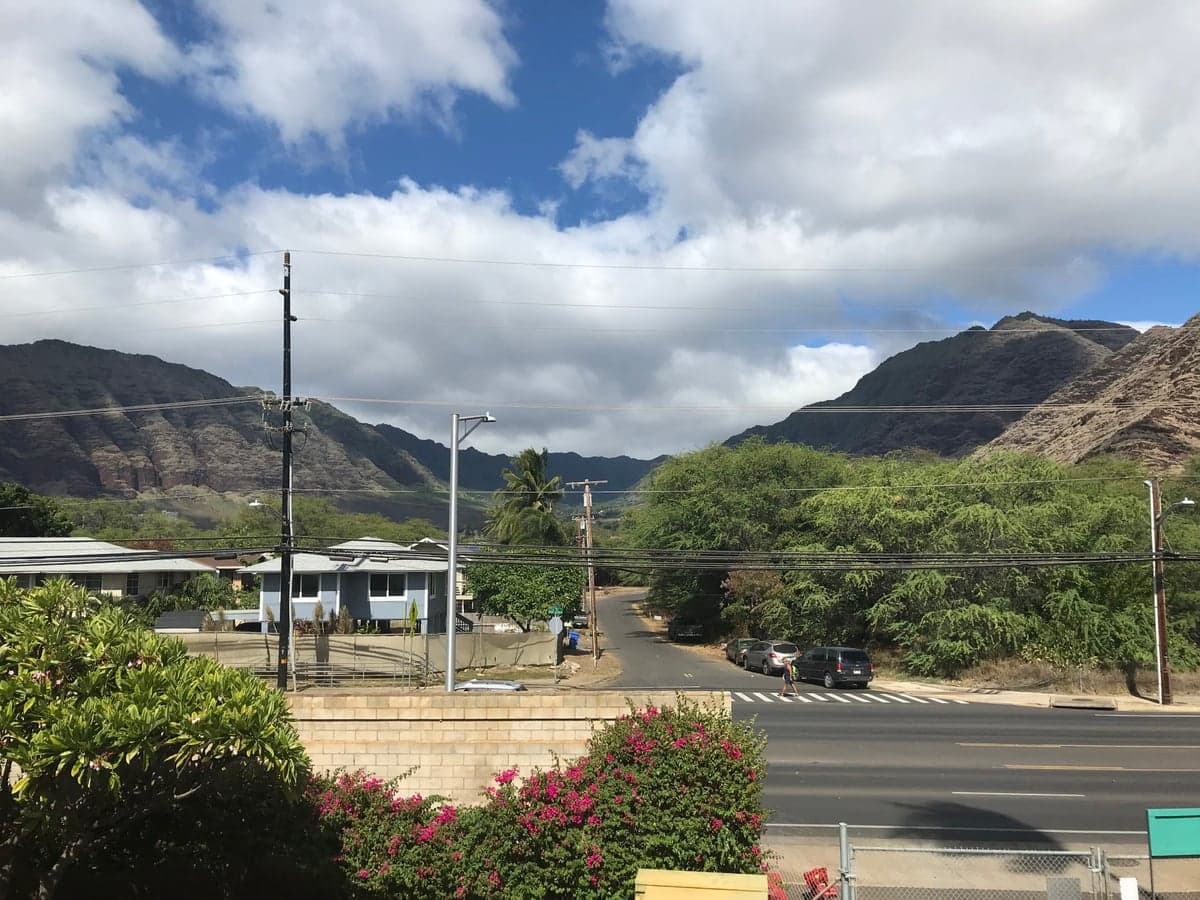
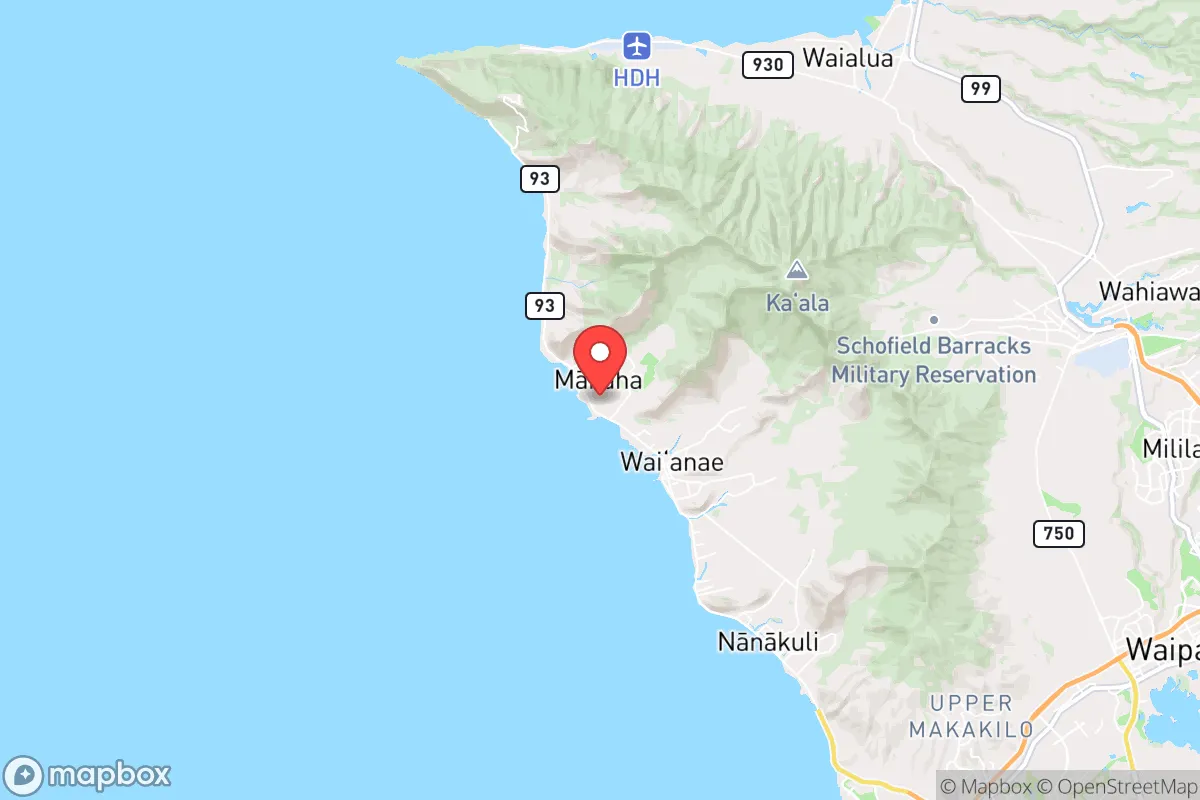
Makaha, Hawaii, is a small, close-knit community of roughly 9,898 residents on Oahu's leeward coast, defined by its strong Native Hawaiian and local identity, a slower pace of life, and a deep connection to the ocean and valley. The population is notably diverse, with a White population of 20.5%, a significant East/Southeast Asian community at 9.9%, a Hispanic population of 14.4%, and a Black population of 3.9%, while the foreign-born share stands at 9.3%. What sets Makaha apart is its high proportion of Native Hawaiian and part-Hawaiian residents—a legacy of its history as a rural, ocean-oriented settlement—and a lower college attainment rate of 19.2%, reflecting a working-class, family-oriented character. Today, the area feels more like a traditional Hawaiian village than a tourist hub, with a reputation for being both culturally rich and economically modest.
How the city was settled and grew
Makaha's human history begins with Native Hawaiians, who established coastal fishing villages and inland farming communities along the Makaha Valley and its streams long before Western contact. The name "Makaha" means "fierce" or "savage," likely referencing the powerful surf and currents. In the 19th and early 20th centuries, the area remained sparsely populated, with small clusters of Hawaiian families living in what are now the Makaha Beach and Makaha Valley neighborhoods, sustaining themselves through fishing, taro cultivation, and later, small-scale ranching. The first major non-Hawaiian arrivals were Portuguese and Japanese plantation workers who came to Oahu in the late 1800s, though Makaha itself never saw large-scale sugar or pineapple plantations due to its arid climate. Instead, the area remained a rural retreat for Honolulu families and a home for Native Hawaiians who preferred to stay outside the urbanizing core of the island. By the 1940s, the population was still tiny, with most residents living in scattered homes along Farrington Highway and in the valley, forming the foundation of the Makaha Valley and Maili (adjacent) communities.
Modern era (post-1965)
The post-1965 period brought significant demographic change, driven by the 1965 Immigration and Nationality Act and the broader suburbanization of Oahu's leeward coast. The construction of the H-1 freeway in the 1970s made Makaha more accessible from Honolulu, spurring modest residential development. This era saw an influx of East/Southeast Asian families—primarily Filipino and Japanese—who moved into newer subdivisions like Makaha Ridge and Makaha Surfside, seeking affordable homes and a quieter lifestyle away from the city. At the same time, a wave of White mainlanders, many drawn by the surf culture and lower property prices, settled in the Makaha Beach area and along the coast. The Hispanic population, now 14.4%, began growing in the 1980s and 1990s, with many families from Mexico and Central America moving into the Maili and Makaha Valley neighborhoods for work in construction, hospitality, and landscaping. The Black population, at 3.9%, is smaller but includes military families stationed at nearby Schofield Barracks and Kaneohe Bay, as well as professionals in Honolulu who chose Makaha for its lower cost of living. Despite these shifts, the Native Hawaiian and part-Hawaiian population remains the largest single ethnic group, concentrated in the older, more established neighborhoods of Makaha Valley and Maili, where multi-generational homes and community ties are strongest.
The future
Makaha's population is likely to continue its slow, organic growth, but the character of that growth is shifting. The area is not homogenizing; rather, it is becoming more ethnically layered, with distinct enclaves forming along economic and cultural lines. The Makaha Ridge and Makaha Surfside subdivisions are attracting more White and Asian professionals who work remotely or commute to Honolulu, while the Makaha Valley and Maili neighborhoods remain strongholds for Native Hawaiian and Hispanic families. The East/Southeast Asian community, now 9.9%, is plateauing as younger generations move to more urban areas for education and jobs, while the Hispanic population, at 14.4%, is growing steadily through both births and new arrivals, particularly in the Maili area. The foreign-born share of 9.3% is modest but stable, with most immigrants coming from the Philippines and Mexico. Over the next 10–20 years, Makaha is likely to remain a working-class, family-oriented community with a strong local identity, though rising housing costs may push out some long-time residents. The area's appeal to mainland transplants seeking a "authentic" Hawaii experience will continue, but the core population will remain rooted in its Native Hawaiian and local Asian and Hispanic heritage.
For someone moving to Makaha today, the area offers a genuine, unpolished slice of local Hawaii life—a place where community ties run deep, the pace is slow, and the ocean is central. It is not a wealthy or highly educated enclave, but it is culturally rich and welcoming to those who respect its traditions. The population is diversifying slowly, but the Native Hawaiian and local identity remains the anchor, making Makaha a distinct and enduring community on Oahu's leeward coast.

* Values derived from national, state, county, city and local statistics and may differ in a specific area. Last updated: 2026-05-03T08:47:46.000Z
Narrative content on this page is AI-generated and may contain mistakes. Verify any details that matter before acting on them.
ReloMaps may earn a commission from affiliate links at no extra cost to you.

