Photo: Wikipedia
Strategic Assessment of Makaha, HI
Workable tactical position. Some exposure to population density or targets, but generally defensible in a crisis.
What does the Strategic Assessment tell us?
Our Strategic Assessment grades tactical survivability of an area. Major population centers, military targets, fallout zones, natural disasters, and border exposure all drive risk — lower exposure means a more defensible position in a crisis.
This is heavily inspired by Joel Skousen's Strategic Relocation book. Highly recommended you checkout the book ($)What does this tell us?
Our Strategic Assessment grades tactical survivability of an area. Major population centers, military targets, fallout zones, natural disasters, and border exposure all drive risk — lower exposure means a more defensible position in a crisis.
This is heavily inspired by Joel Skousen's Strategic Relocation book. Highly recommended you checkout the book ($)Strategic Pillars

Key Distances
Regional Safe Places
Below is our recommended "safe zones" in Hawaii and the surrounding area based on our strategic heuristics. For most people, it's unrealistic to live in a “safe zone” full-time due to work, family or other personal reasons. They tend to be more rural. However, many of these areas are perfect for second homes and retreat properties that double as a vacation home or even a short-term rental.

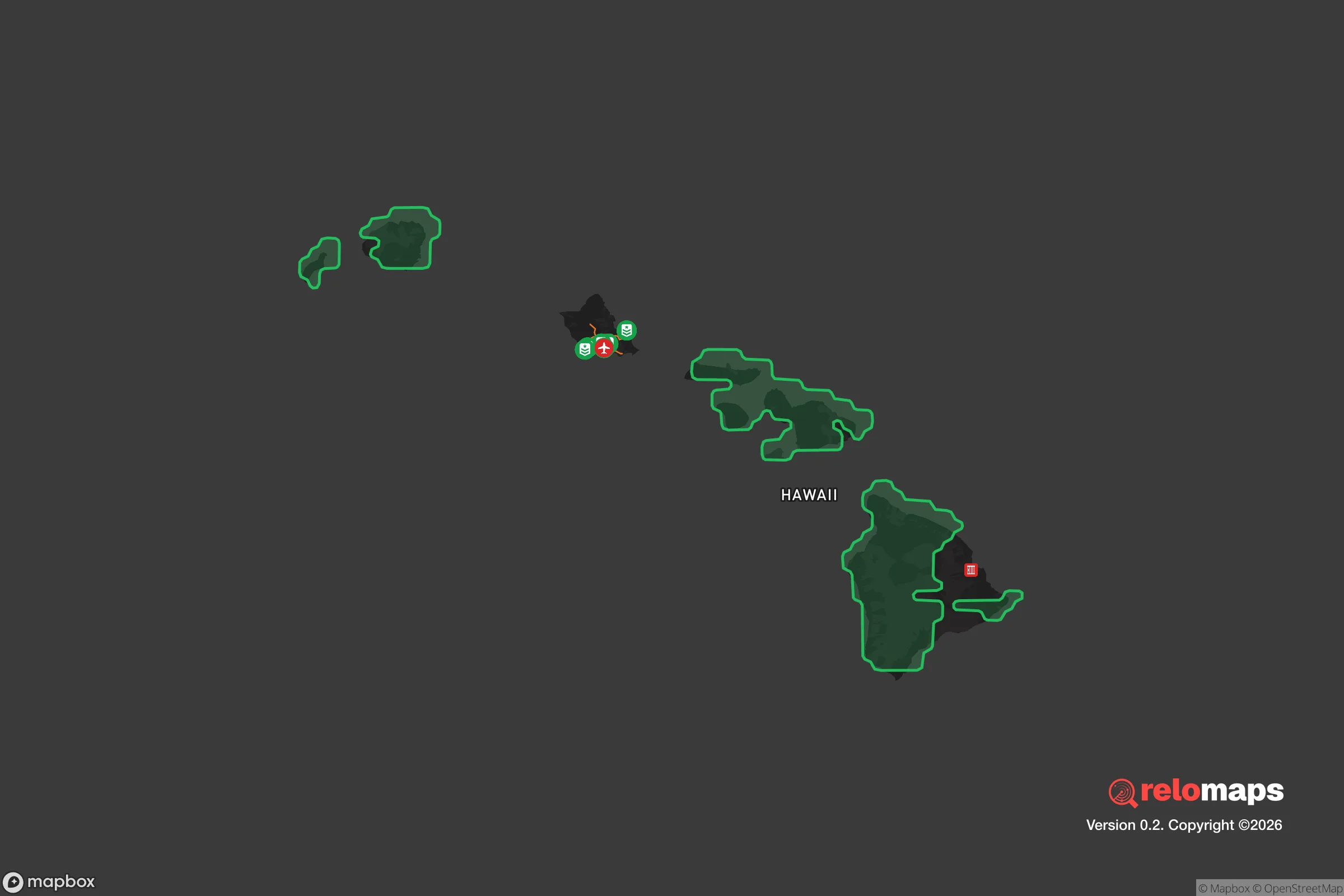


Important Note: For informational purposes only. This does not mean nothing bad ever happens in the green zones. Please use common sense. This is based on public data and modeled with AI. We tried to take a conservative approach but mistakes happen. We update this regularly as new information becomes available.
Solar Generator Recommendations
Backup power matters more here than in safer locations. We've picked three solar generators across budgets and capacity tiers — start with the budget unit if you only need a few essentials, or step up if you want to run a fridge and HVAC for days at a time.

Jackery Portable Power Station Explorer 300
Budget OptionPower on the Go: Weighing only 11 lbs, it's convenient to set up and store with book-sized foldable solar panels

BLUETTI Portable Power Station AC180
Designed for both indoor and outdoor scenarios, AC180 is highly capable as it has a robost capacity and continuous output power.

EF ECOFLOW DELTA Pro Ultra Power Station
Upgraded PickEcoFlow DELTA Pro Ultra is a whole-home energy system designed to grow with your family. Integrated with the Smart Home Panel 2, it scales to meet your evolving energy needs — keeping your home powered, intelligent, and secure through every stage of life.
We earn a commission, at no additional cost to you.
Strategic Assessment Analysis
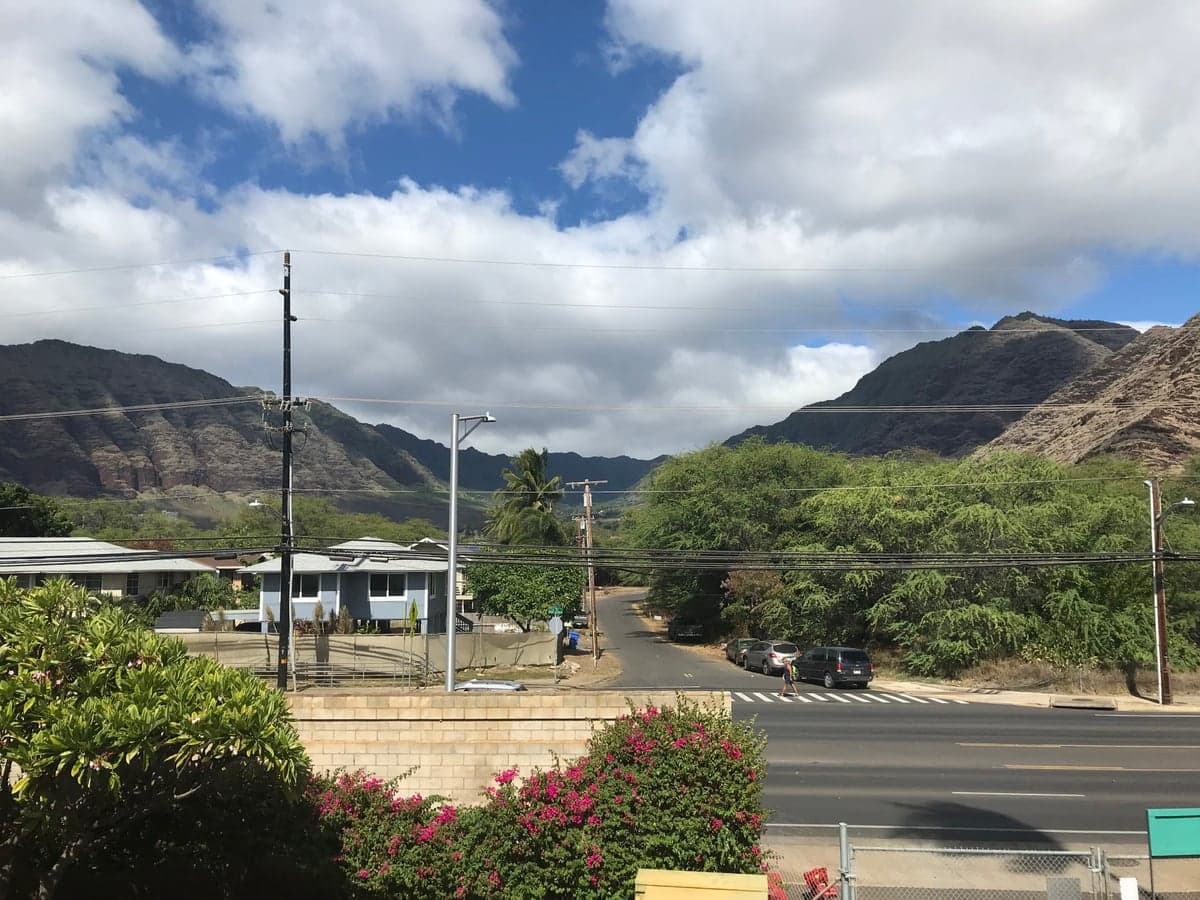
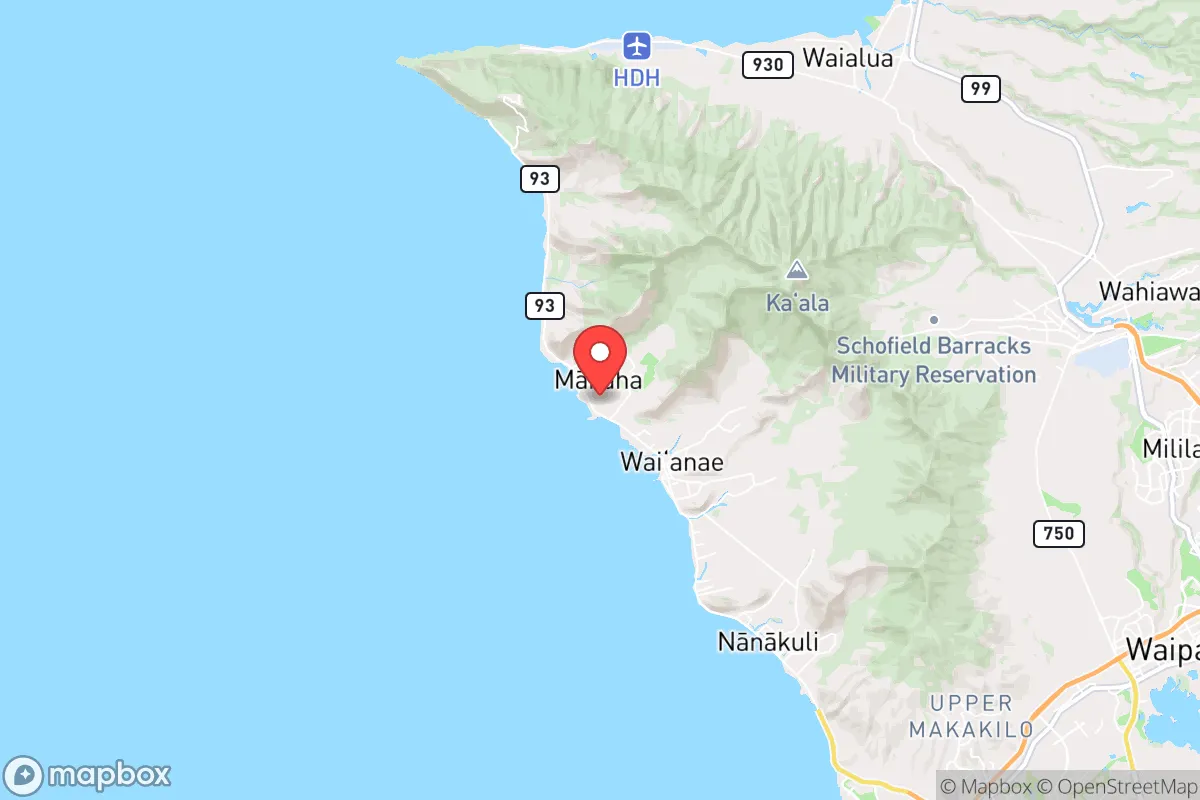
Makaha, on Oahu's leeward west coast, offers a strategic combination of geographic isolation from Honolulu's urban core and access to the Pacific's vast resources, making it a serious contender for those prioritizing resilience and self-sufficiency. Located roughly 35 miles from downtown Honolulu via Farrington Highway, this rural valley community sits at the base of the Waianae Mountain Range, providing a natural buffer against the congestion and potential civil unrest of the state capital. For a relocator with a prepper mindset, Makaha's position represents a calculated trade-off: proximity to essential island infrastructure without the vulnerability of being embedded in a high-density target zone.
Geographic isolation and natural defensive advantages
Makaha's primary strategic asset is its location at the end of the road. Farrington Highway dead-ends at Kaena Point State Park, meaning the community is not a through route for anyone traveling between major population centers. This cul-de-sac geography creates a natural chokepoint—anyone approaching Makaha from the east must pass through the narrow corridor of Waianae and Maili, which can be monitored or controlled in a crisis. The Waianae Range rises sharply behind the valley, offering elevated observation points and potential retreat areas into the forest reserve. The coastline here is rugged, with few safe landing zones for unauthorized watercraft, reducing the risk of maritime infiltration. For a conservative-leaning relocator concerned with maintaining order and security, this natural defensibility is a significant advantage over more accessible coastal towns like Kailua or Haleiwa.
Risks, exposures, and proximity to fallout-relevant landmarks
No location in Hawaii is without exposure, and Makaha has specific vulnerabilities that must be weighed. The most immediate risk is the proximity to the Waianae Coast's socioeconomic challenges—poverty rates in Waianae and Maili are among the highest in the state, and property crime rates are elevated compared to windward Oahu. In a prolonged crisis, this could translate to resource competition from less-prepared populations. More critically, Makaha sits within 20 miles of Pearl Harbor and Joint Base Pearl Harbor-Hickam, a primary strategic target in any major conflict involving the United States. While prevailing trade winds blow from the northeast, carrying fallout away from the leeward coast, a nuclear detonation at Pearl Harbor could still produce ground-level contamination depending on yield and wind patterns. The Waianae Range provides some shielding from blast effects, but the community is not in a safe zone. Additionally, the area is exposed to Pacific tsunami threats—while the deep offshore waters reduce wave height compared to Hilo, a distant-source tsunami could still flood low-lying coastal areas. The 2011 Tohoku tsunami caused minor damage here, but the risk is real.
Practical resilience for a relocator: food, water, energy, and defensibility
Makaha's practical resilience hinges on its access to natural resources and the ability to operate off-grid. The valley has a reliable aquifer, and many older homes have catchment systems or private wells—critical for water independence when municipal supply is disrupted. The year-round growing season allows for subsistence agriculture; the Makaha Valley is fertile enough for taro, sweet potato, and tropical fruit trees, and the coastline offers fishing for ulua, papio, and octopus. However, soil quality is rocky in many areas, requiring raised beds or imported topsoil for serious gardening. Solar potential is excellent—the leeward coast receives more sun than windward Oahu—and many residents already use photovoltaic systems, though battery storage is essential for nighttime and cloudy periods. Defensibility is mixed: the community is tight-knit, with many multi-generational families who know each other, which can foster mutual aid but also create insular dynamics for newcomers. The single road in and out is a double-edged sword—easy to block, but also easy to get trapped. Stockpiling fuel, ammunition, and medical supplies is prudent, as resupply from Honolulu could be cut off for weeks in a major event.
Overall strategic picture for the conservative relocator
Makaha presents a viable but not ideal option for the survivalist-minded relocator. Its strengths are real: geographic isolation, natural defensibility, access to ocean and mountain resources, and a community that values self-reliance. Its weaknesses are equally real: proximity to a primary military target, socioeconomic pressures from neighboring areas, and a single-point-of-failure road network. For a single individual or family willing to invest in off-grid infrastructure—solar, water storage, food production, and security measures—Makaha offers a base from which to weather short-term disruptions and potentially longer-term societal collapse. However, it is not a retreat in the sense of a remote mainland property; it is a semi-rural enclave within a densely populated island state. The conservative relocator should view Makaha as a strategic outpost rather than a final redoubt—a place to build community and resources while maintaining awareness that the entire island chain is vulnerable to geopolitical shocks. If the goal is to be prepared without leaving civilization entirely, Makaha warrants serious consideration. If the goal is absolute isolation from all risks, the mainland's interior remains the better bet.

* Values derived from national, state, county, city and local statistics and may differ in a specific area. Last updated: 2026-05-03T08:47:46.000Z
Narrative content on this page is AI-generated and may contain mistakes. Verify any details that matter before acting on them.
ReloMaps may earn a commission from affiliate links at no extra cost to you.

