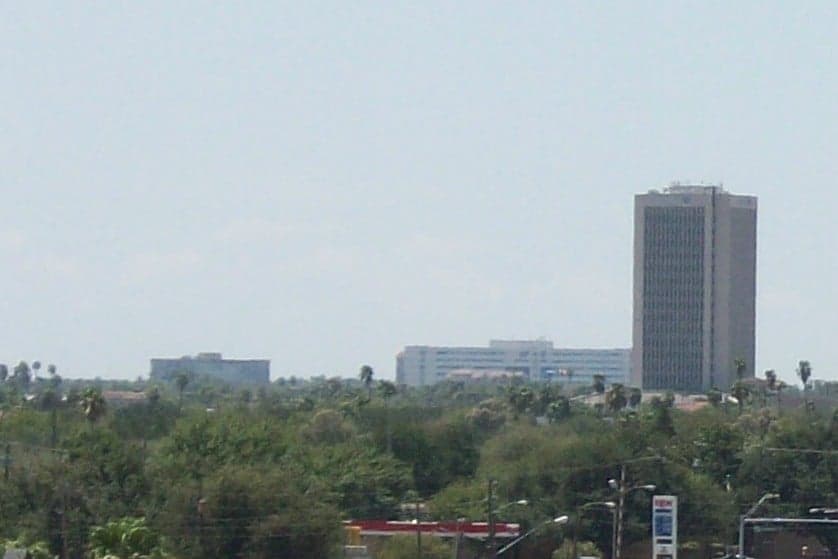
Photo: Wikipedia
Political ClimatePolitical Climate in McAllen, TX
District shown is the primary district for this city’s centroid. Cities may span multiple districts.
Local Political AnalysisPolitical Analysis of McAllen, TX
McAllen sits in deep South Texas, and for a long time, this area was reliably conservative—not in a flashy, suburban way, but in a quiet, family-first, stay-out-of-my-business kind of way. The Cook PVI of R+7 tells you the district leans Republican, but if you’ve lived here a while, you know that number doesn’t capture the whole story. The political climate has been shifting under the surface, and honestly, it’s something to keep an eye on. The old-school values of personal responsibility and limited government are still the backbone of most conversations here, but you’re starting to see more noise from progressive activists, especially in the city limits, that feels like it’s creeping into local policy.
How it compares
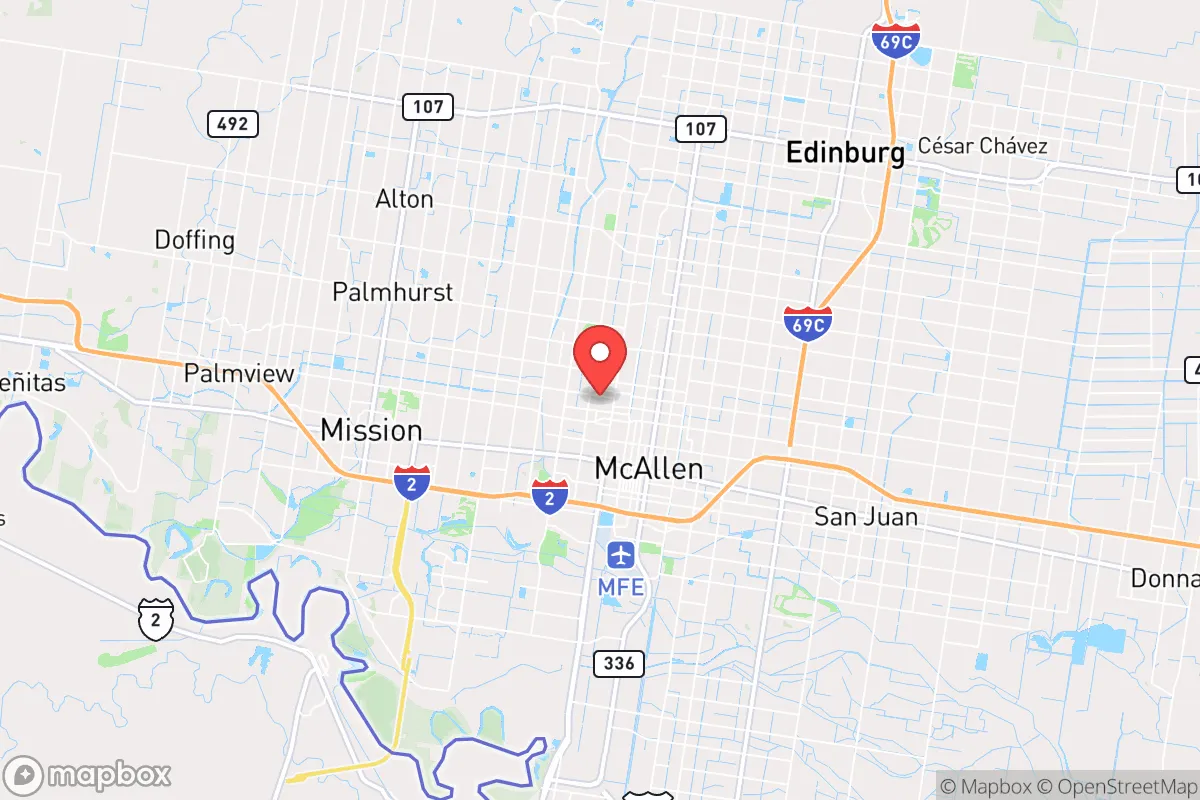
Drive twenty minutes north to Edinburg or Mission, and you’ll find a more traditional, conservative vibe—folks who vote on pocketbook issues and aren’t shy about pushing back on new regulations. McAllen, by contrast, has become a bit of a regional outlier. The city council and school board have seen more turnover from candidates who talk about “equity” and “inclusivity” in ways that sound an awful lot like government overreach. Compare that to Pharr or Alamo, where the focus stays on low taxes and keeping the bureaucracy out of your life. Even Brownsville, about an hour east, feels more grounded in its conservative roots. McAllen’s political scene is starting to feel like a microcosm of a bigger national trend—where the local government gets tempted to solve every problem with a new ordinance or a task force, instead of trusting families and businesses to handle their own affairs.
What this means for residents
For the average person living here, the biggest concern is that the government is slowly getting more involved in things it shouldn’t be. You see it in zoning fights, in debates over public spending, and in the push for “diversity” training in city departments—stuff that sounds nice on paper but often comes with a hidden price tag and a loss of personal freedom. The property tax burden is already a sore spot, and when the city starts chasing progressive pet projects, that money has to come from somewhere. Long-term, if McAllen keeps drifting left, you could see more red tape for small businesses, more restrictions on how you use your own land, and a general attitude that the government knows better than you do. That’s not the McAllen most of us grew up in, and it’s a real worry for anyone who values their rights.
Culturally, McAllen still has a strong sense of community—you’ll see it at the McAllen Farmers Market or during Charro Days—but there’s a growing divide between the old guard and the newcomers who want to remake the city in a more progressive image. The policy distinctions are subtle now, but they’re there: a push for more public art that leans into political messaging, a school board that’s more focused on social-emotional learning than on academics, and a city council that sometimes seems more interested in national talking points than in fixing potholes. If you’re a conservative who values your freedoms, McAllen is still a decent place to live, but you’ll want to stay engaged and vote in every local election. The direction it’s heading isn’t set in stone, but it’s definitely worth watching.

State Political ClimatePolitical Climate in Texas
State Political AnalysisPolitical Environment in the State
Texas has been a reliably Republican state for the past three decades, with the GOP holding every statewide office and both chambers of the legislature since the mid-1990s. The dominant coalition is a mix of suburban conservatives, rural traditionalists, and a growing number of Hispanic voters who have shifted rightward on economic and cultural issues. However, the 10-20 year arc shows a slow but steady tightening: Donald Trump won Texas by 9 points in 2016, 5.6 points in 2020, and roughly 5 points in 2024, driven by explosive growth in the blue-leaning suburbs of Dallas-Fort Worth, Houston, Austin, and San Antonio. The state is not flipping blue anytime soon, but the margin is narrowing as transplants from California and New York bring their voting habits with them.
Urban vs. rural divide
The political map of Texas is a stark checkerboard. The big four metros — Houston, Dallas-Fort Worth, San Antonio, and Austin — are the Democratic strongholds, with Harris County (Houston) and Dallas County delivering margins of 15-20 points for Democrats in recent cycles. Austin’s Travis County is the bluest large county in the state, routinely voting 70%+ Democratic. Meanwhile, rural West Texas, the Panhandle, and East Texas are deeply red: Lubbock, Midland, and Tyler routinely vote 70-80% Republican. The real battleground is the suburban ring counties — Collin, Denton, Fort Bend, and Williamson — which were reliably red a decade ago but have shifted purple as new residents arrive. In 2024, Collin County (north of Dallas) voted for Trump by only 8 points, down from 17 points in 2016. The urban-rural divide is widening, and the suburbs are the front line.
Policy environment
Texas remains a low-tax, low-regulation state by design. There is no state income tax, and property taxes are high (around 1.6-2.2% of assessed value) to compensate, but the overall tax burden is among the lowest in the country. The regulatory posture is business-friendly: no state-level minimum wage above the federal $7.25, no state-level paid leave mandate, and a right-to-work law that keeps unions weak. On education, the state passed a universal school voucher-like program in 2025 (the Texas Parental Empowerment Act), allowing families to use state funds for private or homeschool expenses. Healthcare policy is limited: Texas did not expand Medicaid under the ACA, and the state has some of the strictest abortion laws in the nation (the Texas Heartbeat Act, SB 8, effectively bans abortion after six weeks, and a near-total ban took effect in 2022). Election laws tightened after 2020: SB 1 (2021) restricted mail-in voting, added ID requirements, and banned 24-hour and drive-through voting. For a conservative-leaning resident, the policy environment is broadly aligned with limited government principles, though property taxes and rising local regulations in blue cities are a growing concern.
Trajectory & freedom
On personal liberty, Texas has moved in two directions simultaneously. On gun rights, the state expanded freedom: permitless carry (HB 1927, 2021) allows any law-abiding adult to carry a handgun without a license. On parental rights, the state passed the Save Women’s Sports Act (2021) banning biological males from female school sports, and the 2023 law banning gender-transition procedures for minors (SB 14). On medical autonomy, Texas restricted COVID-19 vaccine mandates in 2023 and banned local mask mandates. On property rights, the state strengthened eminent domain protections for landowners. However, there are concerning expansions of government power: the 2023 law criminalizing illegal entry into Texas (SB 4) gives state law enforcement broad arrest powers, which some see as federal overreach. The state also passed a social media censorship law (HB 20) requiring platforms to moderate content neutrally — a free-speech win, but one that invites litigation. Overall, Texas is trending more free on cultural and economic issues, but the state government is also asserting more authority on immigration enforcement and local preemption, which cuts both ways for a limited-government conservative.
Civil unrest & political movements
Texas has seen significant political activism on both sides. The 2020-2021 period saw large Black Lives Matter protests in Austin, Houston, and Dallas, with some property damage and clashes with police. The 2021 power grid collapse during Winter Storm Uri sparked protests against ERCOT and state leadership, though it didn’t shift electoral outcomes. On the right, the “Texas Nationalist Movement” (Texit) has gained some traction, with a 2022 poll showing 18% support for secession, though it remains fringe. Immigration politics are a constant flashpoint: Governor Abbott’s Operation Lone Star (2021-present) deployed state troopers and National Guard to the border, bused migrants to blue cities, and installed razor wire and buoys in the Rio Grande — all of which drew federal lawsuits and media attention. In 2024, the state’s SB 4 law (allowing state police to arrest illegal border crossers) was temporarily blocked by courts but remains a live controversy. Election integrity remains a hot-button issue: the 2020 election in Texas was smooth, but activists on the right continue to push for stricter voter ID and ballot security measures. A new resident will notice the heavy law enforcement presence along the border and the constant political ads on TV about immigration and parental rights.
Projection
Over the next 5-10 years, Texas will likely remain Republican-controlled at the state level, but the margin will continue to shrink. In-migration from blue states — roughly 1,000 people move to Texas per day — is slowly shifting the suburbs of Dallas, Houston, and Austin toward purple. The Hispanic vote, which is about 40% of the population, is not monolithic: younger Hispanic voters lean left, but older and more religious Hispanic voters are trending right, especially on social issues. The state’s fast-growing cities — San Antonio, Fort Worth, and the Rio Grande Valley — will be the key battlegrounds. If Democrats can turn out their base in the big metros and make gains in the suburbs, they could flip a statewide seat (like the Railroad Commission or a Senate seat) by 2030. However, the legislature’s aggressive gerrymandering and voter ID laws make that an uphill climb. For a conservative moving in now, expect the state to remain a red fortress for at least another decade, but with increasingly competitive elections and a growing cultural divide between the blue cities and red rural areas.
Bottom line for a new resident: Texas offers a low-tax, business-friendly environment with strong protections for gun rights, parental rights, and religious liberty. The state government is firmly conservative and likely to stay that way for the foreseeable future. However, the cities are becoming more progressive, and the political climate is increasingly polarized — you’ll see it in local elections, school board battles, and the constant debate over immigration enforcement. If you’re looking for a place where your vote counts and your values are reflected in state law, Texas is still one of the best bets in the country. Just be prepared for the property taxes and the summer heat.
* Values derived from national, state, county, city and local statistics and may differ in a specific area. Last updated: 2026-04-26T21:00:21.000Z
Narrative content on this page is AI-generated and may contain mistakes. Verify any details that matter before acting on them.
ReloMaps may earn a commission from affiliate links at no extra cost to you.

