Photo: Wikipedia
Political ClimatePolitical Climate in Mineral Wells, TX
District shown is the primary district for this city’s centroid. Cities may span multiple districts.
Local Political AnalysisPolitical Analysis of Mineral Wells, TX
Mineral Wells is about as solidly conservative as it gets in Texas, with a Cook PVI of R+18 that tells you pretty much everything you need to know about how folks around here vote. That number means the district leans 18 points more Republican than the national average, and it’s not just a fluke—it’s been that way for as long as anyone can remember. You don’t see a lot of political hand-wringing here; people tend to vote their values, and those values are rooted in limited government, personal responsibility, and a healthy skepticism of anyone who wants to tell you how to live your life. The trajectory has been steady, though you can feel a bit of unease creeping in as some of the bigger cities nearby start pushing progressive policies that don’t sit well with locals.
How it compares
Drive thirty minutes east to Weatherford, and you’ll find a similar conservative vibe, but it’s a little more polished—more suburban, more transplants from Dallas who might be a touch less hardline on taxes. Head south to Stephenville, and you’re in even deeper red territory, with a strong ranching culture that makes Mineral Wells look almost moderate by comparison. The real contrast is west to Abilene or north to Wichita Falls, both of which are conservative but have their own local quirks. What sets Mineral Wells apart is its small-town independence—there’s no major university or big employer pushing a progressive agenda, so the politics stay grounded in what works for working families. You won’t find the kind of ideological drift you see in places like Austin or even Fort Worth, where the city council sometimes seems more interested in social experiments than in keeping the streets paved.
What this means for residents
For the people who live here, the conservative tilt means a government that mostly stays out of your business. Property taxes are still a sore spot—Texas doesn’t have a state income tax, so local governments lean hard on property assessments—but there’s a general understanding that you get to keep more of what you earn compared to states with heavy income taxes. The school board and city council elections tend to be low-key affairs, with candidates who talk about fiscal restraint and local control rather than national culture wars. That said, there’s a growing concern among longtime residents that outside money and influence could start pushing Mineral Wells toward the kind of overreach you see in places like Dallas or Houston—zoning changes that limit what you can do with your own land, or mandates that feel like they came from a state capitol that doesn’t understand rural life. So far, the community has held the line, but it takes vigilance.
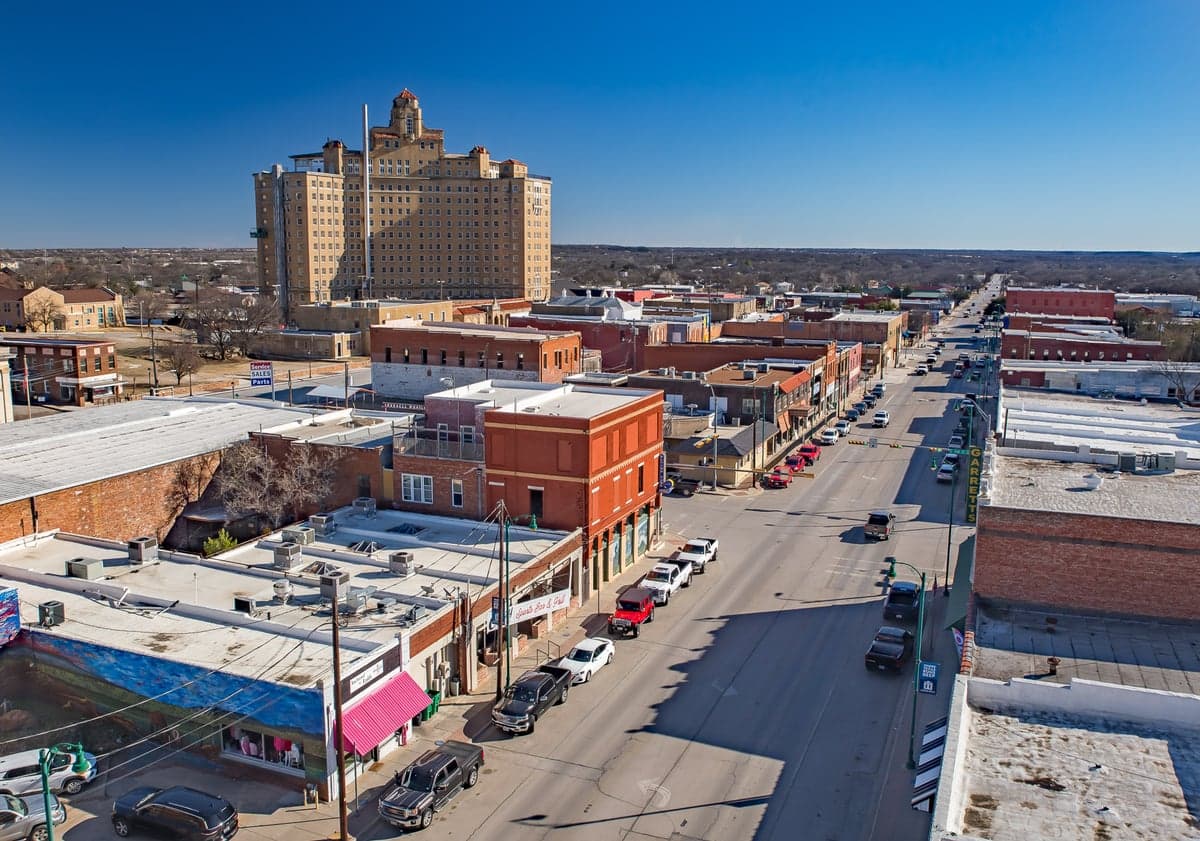
One thing that really sets Mineral Wells apart is the cultural memory of the old Crazy Water Hotel and the mineral baths—there’s a libertarian streak here that says if you want to sell a bottle of mineral water or run a small business out of your garage, that’s your right, and the city shouldn’t get in the way. You see it in the local gun culture too: open carry is common, and there’s no appetite for the kind of restrictions you hear debated in Austin. The biggest policy fights lately have been over water rights and development, with residents pushing back hard against any plan that feels like it’s coming from outside the community. If you’re looking for a place where your vote actually counts and the government remembers it works for you, not the other way around, Mineral Wells is still that kind of town—but you’ve got to keep an eye on the horizon, because the winds of change are always blowing, and not all of them are good.

State Political ClimatePolitical Climate in Texas
State Political AnalysisPolitical Environment in the State
Texas remains a solidly Republican state, but the margins have tightened noticeably over the past decade. In 2024, Donald Trump carried Texas by roughly 9 points, down from 11 points in 2020 and 16 points in 2016. The dominant coalition is still anchored by rural and exurban conservatives, but explosive growth in the urban cores of Dallas-Fort Worth, Houston, San Antonio, and especially Austin has injected a steady blue shift into the state’s political complexion. The 10-20 year arc shows a state that is still red, but with a deepening purple streak in its most populous counties.
Urban vs. rural divide
The political map of Texas is a stark checkerboard. The rural Panhandle, West Texas, and East Texas piney woods are deeply Republican — counties like Lubbock (home to Texas Tech) and Amarillo routinely vote 70-80% Republican. The suburban rings around major metros are the real battlegrounds. Collin County (north of Dallas) and Denton County were once reliably red but have shifted to lean Republican, while Fort Bend County (southwest of Houston) flipped to Biden in 2020 and stayed blue in 2024. The urban cores are now Democratic strongholds: Harris County (Houston) went for Biden by 13 points, Dallas County by 17, and Travis County (Austin) by a staggering 45 points. The Rio Grande Valley, once a Democratic bastion, has swung sharply right — Zapata County flipped from +33 Clinton in 2016 to +12 Trump in 2024, a 45-point shift. This urban-rural chasm is the defining feature of Texas politics today.
Policy environment
Texas has no state income tax, a major draw for conservatives and businesses alike. Property taxes are high — the effective rate is about 1.6%, among the highest in the nation — but the legislature has passed periodic compression measures using budget surpluses. The regulatory posture is famously business-friendly: no state-level minimum wage above the federal $7.25, weak union laws, and a right-to-work statute. On education, the state funds public schools through a Robin Hood system that redistributes property tax revenue from wealthy districts to poor ones, a perennial source of friction. School choice (vouchers) has been a hot-button issue; Governor Greg Abbott pushed hard for a universal ESA program in 2023, but it failed in the House due to rural Republican opposition. Healthcare policy is a mixed bag: Texas refused Medicaid expansion under the ACA, leaving roughly 18% of residents uninsured, the highest rate in the nation. Election laws tightened after 2020 with SB 1 (2021), which added ID requirements for mail ballots, limited drive-through voting, and banned 24-hour polling places. The state also enacted a near-total abortion ban (SB 8, 2021) and a trigger law that took effect after Dobbs, with no exceptions for rape or incest.
Trajectory & freedom
On personal liberty, Texas has moved in two directions simultaneously. On the conservative side, the state expanded gun rights significantly: permitless carry (HB 1927, 2021) allows any law-abiding adult to carry a handgun without a license. Parental rights were bolstered by the 2023 law banning gender-transition procedures for minors (SB 14) and requiring school libraries to remove books deemed “sexually explicit.” Property rights saw a win with the 2023 law limiting eminent domain for private toll roads (HB 1930). On the concerning side, the state has expanded government power in ways that worry liberty-minded residents. The 2021 election integrity law (SB 1) added bureaucratic hurdles that some argue suppress turnout. The state’s aggressive prosecution of border-related crimes under Operation Lone Star has led to thousands of arrests and strained local resources. Medical autonomy took a hit with the 2023 ban on gender-affirming care for minors, which some see as government overreach into family medical decisions. The overall trajectory is one of expanding freedom on traditional conservative issues (guns, parents, property) while tightening control on social and medical matters.
Civil unrest & political movements
Texas has seen its share of political flashpoints. The 2020 Black Lives Matter protests in Austin and Houston were large and occasionally violent, leading to property damage and a lasting rift between city leaders and state officials. The “Defund the Police” movement gained traction in Austin, where the city council cut the police budget by $150 million in 2020, only to reverse course after a surge in violent crime. On the right, the “Texas Nationalist Movement” (Texit) has gained a small but vocal following, though polling shows secession support remains below 20%. Immigration politics are the most visible daily flashpoint. Governor Abbott’s busing of migrants to New York City, Chicago, and Denver has been a national story, and the state’s border security operation (Operation Lone Star) has deployed thousands of National Guard troops and state troopers to the Rio Grande. Sanctuary city bans (SB 4, 2017) remain in effect, and the state has sued the Biden administration repeatedly over border policies. Election integrity remains a live issue: the 2022 primary saw a few county-level disputes over ballot drop boxes, but no widespread fraud was proven. New residents should expect to see border politics dominate local news, especially in border communities like El Paso and Laredo.
Projection
Over the next 5-10 years, Texas will likely continue its slow drift toward competitiveness. In-migration from blue states — roughly 300,000 new residents per year — is concentrated in the suburbs of Dallas, Austin, and Houston, and these newcomers tend to be more moderate or liberal. The Hispanic vote, long assumed to be a Democratic lock, is fracturing: younger Hispanic men in particular are trending Republican, which could offset some urban gains. The state’s Republican majority in the legislature is safe for now, but the margin in statewide races will likely shrink to 5-7 points by 2030. The biggest wildcard is the border: if federal policy shifts dramatically, it could either energize the GOP base or alienate moderate suburbanites. A new resident moving in now should expect a state that remains conservative on taxes, guns, and regulation, but where cultural battles over education, medical freedom, and immigration will intensify. The Texas of 2035 will be more diverse, more urban, and more politically contested — but still recognizably conservative at the state level.
For a conservative-leaning individual or family considering relocation, Texas offers a strong baseline of low taxes, limited regulation, and a government that generally respects gun rights and parental authority. The trade-offs are high property taxes, a strained healthcare system, and a political environment that is increasingly polarized between urban and rural areas. If you value personal freedom on economic and Second Amendment issues, Texas is still one of the best bets in the country — but you’ll need to pick your county carefully. The suburbs of Fort Worth or San Antonio offer a more stable conservative environment than the increasingly progressive cores of Austin or Houston. Bottom line: Texas is still a red state, but it’s not the same red state it was 20 years ago. Come for the no income tax and the gun laws, but be ready for a fight over the direction of your local school board and county government.
* Values derived from national, state, county, city and local statistics and may differ in a specific area. Last updated: 2026-10-10T16:28:27.000Z
Narrative content on this page is AI-generated and may contain mistakes. Verify any details that matter before acting on them.
ReloMaps may earn a commission from affiliate links at no extra cost to you.

