
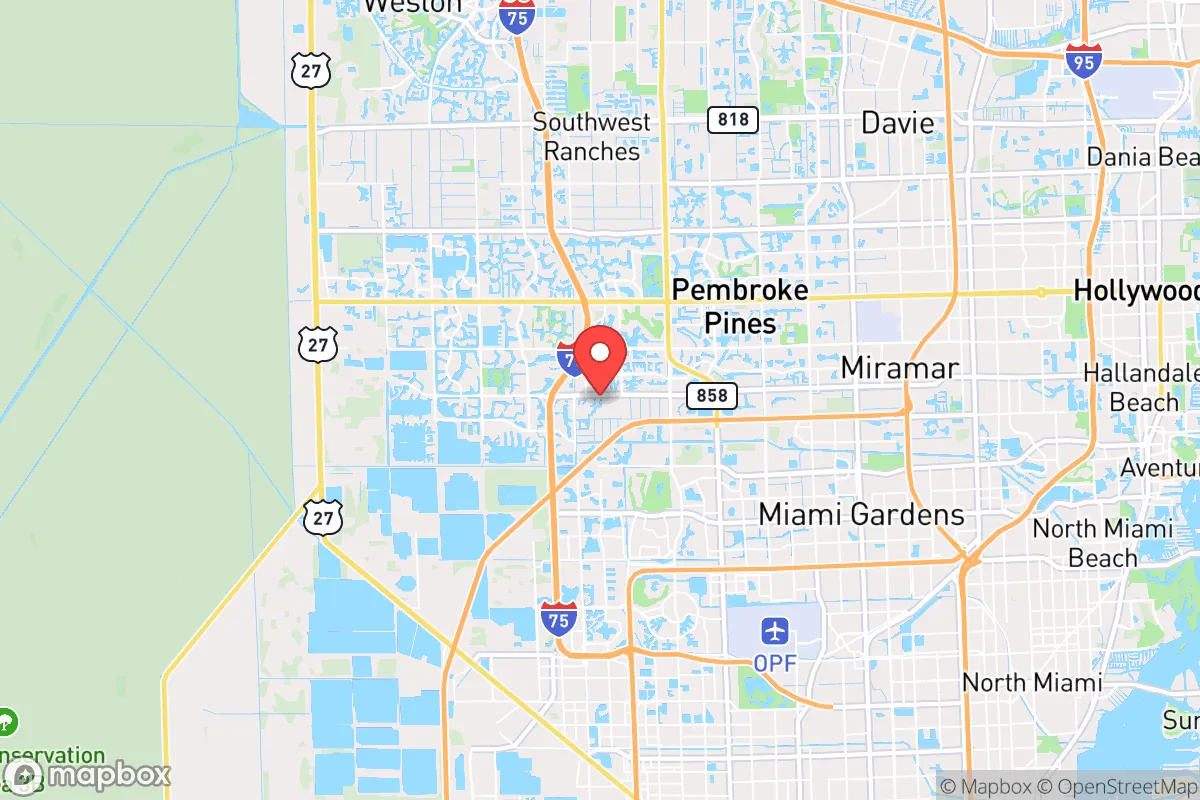
Quality of Life in Miramar, FL
A high quality of life with strong walkability, manageable living costs, healthy neighborhood signals, and solid amenity access.
What does Quality of Life tell us?
Quality of Life blends cost of living, nearby amenities, socioeconomic signals, and neighborhood character. City-level scores represent the whole municipality; individual neighborhoods can differ.
What does this tell us?
Quality of Life blends cost of living, nearby amenities, socioeconomic signals, and neighborhood character. City-level scores represent the whole municipality; individual neighborhoods can differ.
Cost of Living
60% above national average
The Real Cost of Living in Miramar, FL for 2026
| Tier | Individual | Family (4) |
|---|---|---|
| Survival | $31k | $59k |
| Comfortable | $82k | $120k |
| Luxury | $142k+ | $221k+ |
| Elite (Top 5%) | $167k+ | $259k+ |
72%
The Area Signal
A metric tracking the socioeconomic signals of the area.
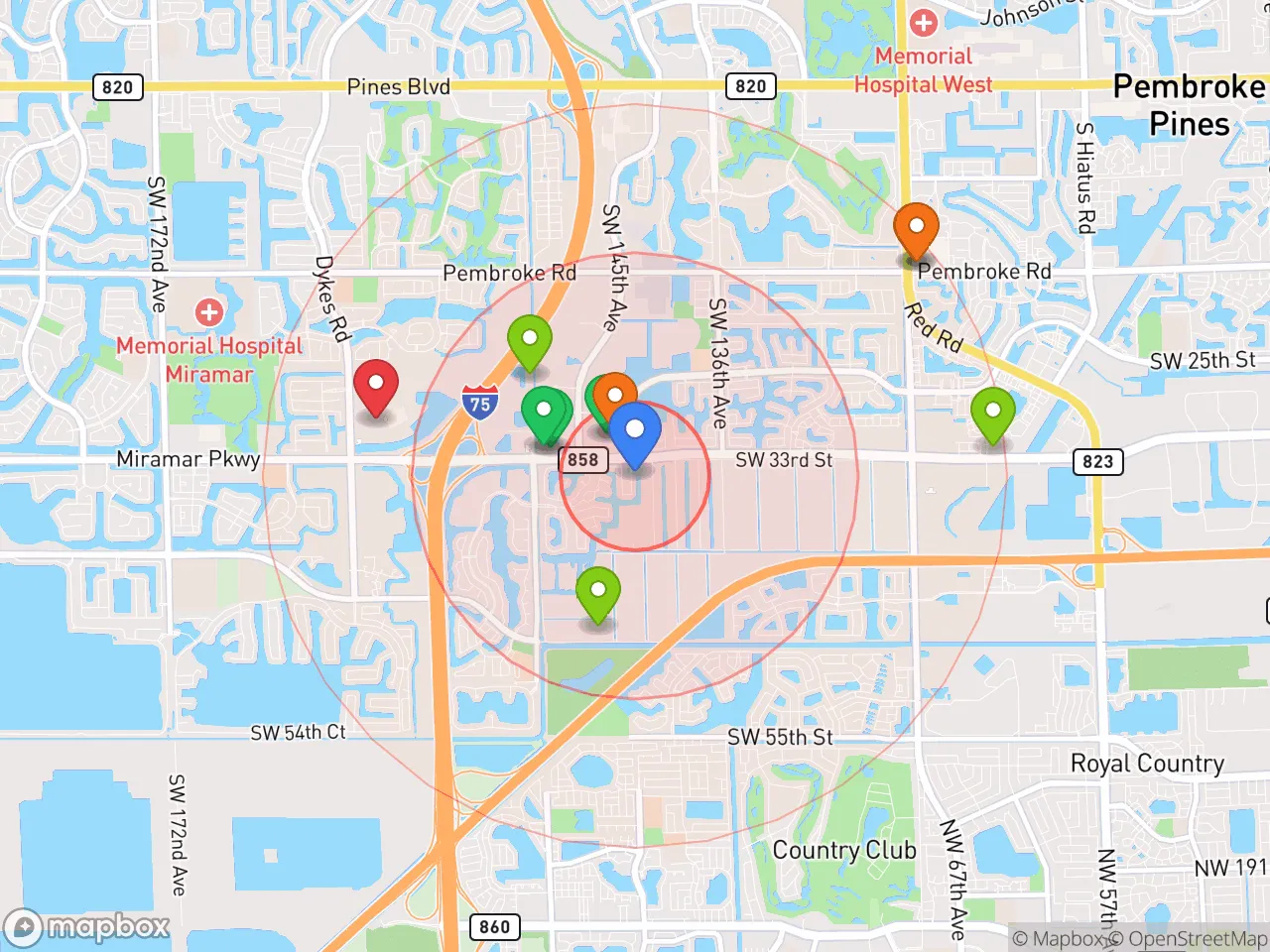
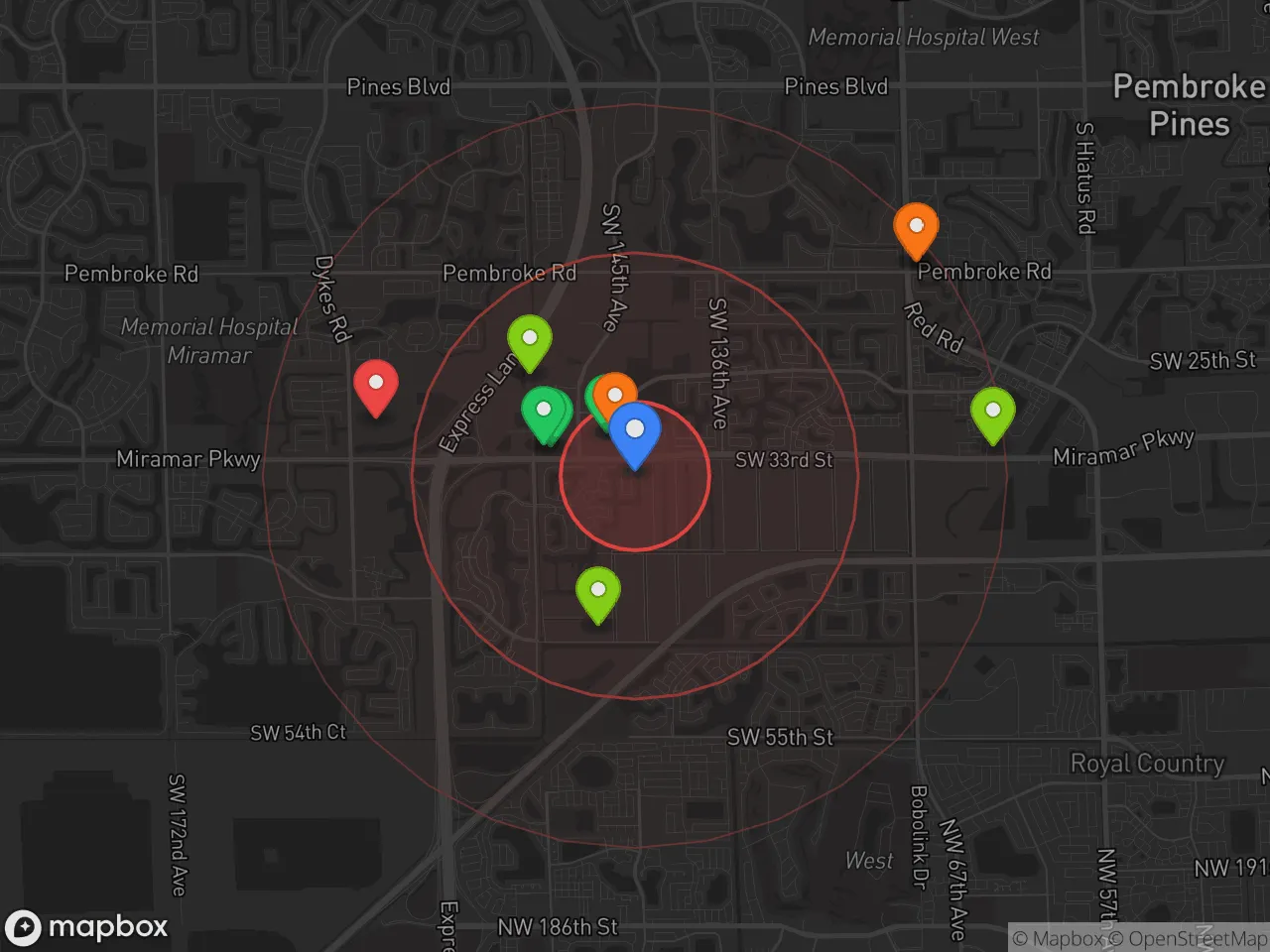
Hobbies
Explore the areaGroceries
7 within 10 miles
Gas
20 within 10 miles
Hospital
20 within 20 miles
Airport
MIA — Miami International
Post Office
USPS — Pembroke Pines, FL
Critical Amenities
Quality-of-Life Analysis
Miramar, Florida, is an affluent, fast-growing suburb of Fort Lauderdale and Miami, home to a diverse population of professionals, families, and retirees drawn by its strong schools, low crime rates, and suburban tranquility. With a cost-of-living index of 160—60% above the national average—the city commands a premium for its quality of life, yet remains more affordable than coastal Broward and Miami-Dade counterparts. The median home value of $420,300 and median rent of $1,954 reflect a market that balances high desirability with relative value compared to neighboring cities like Weston or Pembroke Pines.
Cost of living and housing affordability compared to nearby cities
Miramar’s cost of living is significantly higher than the U.S. average, driven primarily by housing costs that are roughly 80% above the national norm. The median home value of $420,300 is about 30% lower than in Weston ($600,000+) and 20% lower than in Parkland, but notably higher than in Pembroke Pines ($390,000) or Hollywood ($380,000). Renters face a median of $1,954 per month, which is competitive with Fort Lauderdale ($2,100) and well below Miami Beach ($2,800). Property taxes in Broward County average around 1.1% of assessed value, slightly lower than Miami-Dade’s 1.3%, offering a modest tax advantage. For buyers, the trade-off is clear: Miramar provides newer housing stock—much built after 2000—and larger lot sizes than older coastal neighborhoods, making it a strong value for those willing to commute 20–30 minutes to downtown Miami or Fort Lauderdale.
Schools, parks, and daily life for families and professionals
Miramar’s quality of life is anchored by its top-rated public schools, including Silver Lakes Elementary (A-rated) and Everglades High School (A-rated), both part of the Broward County Public Schools system. The city also hosts several charter schools and is within 15 minutes of private options like University School of Nova Southeastern. Daily life revolves around Miramar Regional Park, a 172-acre facility with sports fields, a water park, and walking trails, and the nearby Miramar Cultural Center, which hosts concerts and art exhibits. Commuting is eased by proximity to I-75, the Florida Turnpike, and the Miramar Tri-Rail station, which connects to Fort Lauderdale and Miami. The city’s crime rate is 40% lower than the Florida average, with violent crime particularly rare, making it a safe environment for raising children. Retail and dining cluster along Miramar Parkway and at the Shops at Pembroke Gardens, offering chain and local options without the congestion of Miami’s core.
Miramar is best suited for families seeking top-tier public schools and a safe, suburban atmosphere within commuting distance of South Florida’s job hubs. Professionals working in healthcare (Memorial Hospital Miramar), aviation (Fort Lauderdale-Hollywood International Airport), or corporate roles in Sunrise or Miami will find the commute manageable and the housing value compelling. Retirees on a fixed income may find the cost-of-living index of 160 challenging, but those with equity from a previous home sale can enjoy the city’s quiet neighborhoods and access to cultural amenities. The city’s demographic mix—roughly 40% Hispanic, 30% Black, and 20% White—creates a culturally rich environment that appeals to a broad range of residents. For anyone prioritizing safety, school quality, and space over nightlife or walkability, Miramar delivers a consistently high quality of life at a price that, while steep, remains a relative bargain in the South Florida market.

Crime in Miramar, FL
Lower crime rates than 81% of comparable U.S. locations.
Violent CrimeViolent Crime Analysis
Property CrimeProperty Crime Analysis
Crime Analysis
Miramar, Florida, reports a violent crime rate of 121.2 per 100,000 residents and a property crime rate of 577.6 per 100,000, figures that place it among the safer large suburbs in the Miami metropolitan area. However, these statistics must be weighed against the broader context of Broward County’s criminal justice system, where progressive prosecutors and lenient sentencing policies have raised concerns about recidivism and public safety. While Miramar’s numbers are lower than many neighboring cities, the county-wide trend toward reduced incarceration and alternative sentencing means that offenders arrested in Miramar may face minimal consequences, potentially increasing the risk of repeat crimes in the area.
Crime in context
Miramar’s violent crime rate is roughly 68% lower than the national average of approximately 380 per 100,000, and its property crime rate is about 40% below the national figure of roughly 1,950 per 100,000. Compared to the state of Florida, which averages around 380 violent crimes and 2,200 property crimes per 100,000, Miramar performs significantly better. However, these comparisons can be misleading because Broward County’s State Attorney’s Office has adopted policies that de-prioritize prosecution for certain non-violent offenses and emphasize diversion programs. This means that while reported crime rates appear low, the actual number of crimes committed may be understated, as some incidents are reclassified or not formally charged. Residents should view the raw statistics with caution, as the county’s progressive judicial philosophy can create a revolving door for property criminals and low-level offenders.
What residents experience
Daily life in Miramar is generally quiet, with most crime concentrated in commercial corridors like Miramar Parkway and along the I-75 and Florida Turnpike interchanges. Property crime—particularly vehicle burglaries and package thefts—is the most common issue, though rates are lower than in nearby Pembroke Pines or Hollywood. Violent crime is rare but not absent; incidents typically involve domestic disputes or isolated robberies rather than random street violence. A key concern for residents is the lack of deterrence: Broward County’s progressive bail reform and early release programs mean that even those arrested for theft or drug offenses are often back on the street within hours. This has led to frustration among homeowners who report the same suspects burglarizing cars repeatedly. Neighborhood watch programs and private security patrols are increasingly common in subdivisions like Silver Lakes and Sunset Lakes, where residents take proactive measures to compensate for what they perceive as a lenient justice system.
Neighborhood-level variation is notable. Gated communities and newer developments west of I-75, such as those in the 33027 zip code, experience virtually no violent crime and property crime rates below 300 per 100,000. In contrast, older apartment complexes near Miramar Boulevard and along University Drive see higher rates of theft and occasional aggravated assaults. The city’s police department maintains a visible presence, but its effectiveness is undercut by county-level policies that prioritize offender rehabilitation over punishment. For families and professionals considering a move, Miramar offers a relatively safe environment compared to Miami or Fort Lauderdale, but the progressive criminal justice climate in Broward County remains a legitimate concern for those who prioritize strict law enforcement and victim-centered justice.
* Values derived from national, state, county, city and local statistics and may differ in a specific area. Last updated: 2026-04-21T12:30:37.000Z
Narrative content on this page is AI-generated and may contain mistakes. Verify any details that matter before acting on them.
ReloMaps may earn a commission from affiliate links at no extra cost to you.

