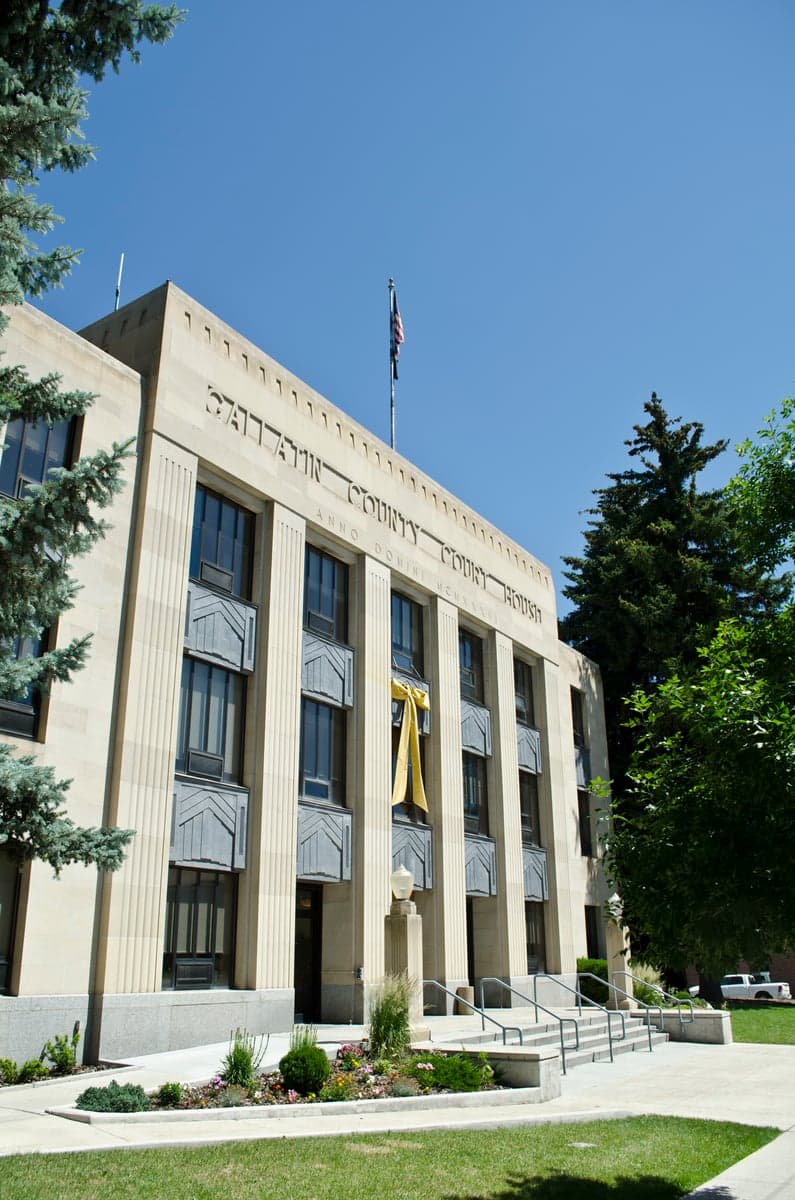
Photo: Wikipedia
Demographics of Gallatin County
Affluence Level in Gallatin County
An upper-middle-class area. Household wealth, education levels, and homeownership run ahead of national benchmarks.
People of Gallatin County
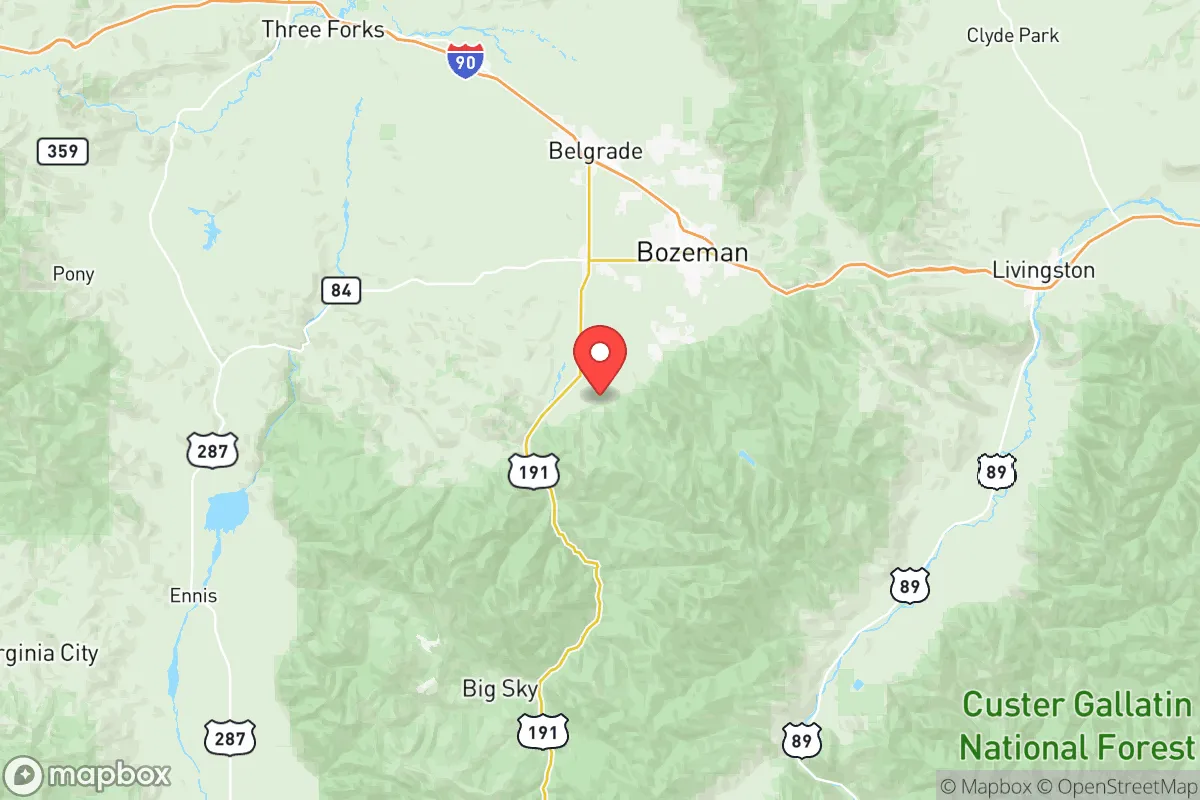
Gallatin County, Montana, is home to 122,194 residents, making it the state’s third-most populous county, yet it retains a distinctly Western character defined by its rugged landscape and a population that is 88.3% white and 53.1% college-educated. The county’s people are concentrated in the Bozeman urban area, with smaller clusters in historic towns like Belgrade, Manhattan, and Three Forks, and are shaped by a recent influx of out-of-state professionals and remote workers drawn to the region’s outdoor amenities and Montana State University. Despite rapid growth, the foreign-born population remains low at just 2.0%, and the county is notably less diverse than the national average, with Hispanic residents making up 5.1% and East/Southeast Asian communities 1.1%. The dominant cultural identity is a blend of old ranching and mining roots with a new, affluent, and highly educated transplant population, creating a dynamic but increasingly expensive place to live.
Settlement & growth (pre-1960)
Long before European settlement, the Gallatin Valley was home to several Native American nations, including the Crow, Blackfeet, and Shoshone, who used the area for hunting bison and seasonal camps. The first recorded European presence came with the Lewis and Clark Expedition in 1805, which named the Gallatin River after then-Treasury Secretary Albert Gallatin, but sustained American settlement did not begin until the 1860s. The discovery of gold in nearby Alder Gulch in 1863 and the subsequent Montana gold rush drew prospectors and merchants to the region, with the town of Bozeman founded in 1864 as a gateway to the Yellowstone Valley and a supply hub for miners. The Bozeman Trail, a shortcut through the Powder River country, brought a wave of settlers—primarily Anglo-American farmers and ranchers from the Midwest and Upper South—who established homesteads in the valley, with Belgrade (founded 1887) and Manhattan (originally named Hamilton, 1883) emerging as agricultural service centers.
The arrival of the Northern Pacific Railway in 1883 transformed the Gallatin Valley from a remote frontier into a commercial farming region, attracting Scandinavian immigrants—particularly Norwegians and Swedes—who settled in Three Forks and the surrounding rural areas to work the fertile soil for wheat and barley. These Scandinavian families, along with a smaller number of German and Irish immigrants, formed the backbone of the county’s agricultural economy through the early 20th century. The establishment of Montana State University (then Montana State College) in Bozeman in 1893 brought a steady stream of faculty and students, but the county’s population remained modest—just 14,000 in 1910—and overwhelmingly rural and white. The Dust Bowl and Great Depression of the 1930s pushed some displaced farmers from the Great Plains into Gallatin County, but the region’s growth was slow until the post-World War II era, when the GI Bill and the expansion of Montana State University began to attract a more educated population. By 1960, the county’s population had reached 26,045, still predominantly Anglo-American and Scandinavian, with Bozeman as the only significant town.
Modern era (post-1965)
The 1965 Hart-Cellar Act had minimal direct impact on Gallatin County, as the region’s foreign-born population remained below 2% through the 2020s, but the post-1965 era brought profound domestic demographic shifts. The most significant change was the rise of Bozeman as a destination for out-of-state migrants, driven by the growth of Montana State University (which enrolled over 16,000 students by 2020) and the emergence of the outdoor recreation economy. Beginning in the 1970s and accelerating after 2000, a wave of college-educated professionals from California, Colorado, and the Pacific Northwest moved to the county, drawn by skiing at Bridger Bowl and Big Sky, fly-fishing on the Gallatin and Madison rivers, and a perceived high quality of life. This influx transformed Bozeman from a quiet college town into a rapidly growing city, with its population rising from 18,670 in 1990 to over 50,000 by 2020, and pushed housing prices to among the highest in Montana.
Suburbanization followed, with Belgrade (population 10,000 in 2020) and Four Corners (an unincorporated area south of Bozeman) absorbing much of the spillover growth, as new subdivisions replaced agricultural land. The county’s Hispanic population grew from under 1% in 1990 to 5.1% by 2024, driven largely by Mexican and Central American immigrants working in construction, hospitality, and agriculture, with a small but visible community in Bozeman’s southwest side and in the Gallatin Valley’s farm labor force. East/Southeast Asian communities, primarily Chinese and Korean, have grown modestly to 1.1%, concentrated among graduate students and faculty at Montana State University. The Indian subcontinent population remains tiny at 0.2%, mostly tied to tech and academic roles. The county’s Black population, at 0.5%, is similarly small and scattered, with no distinct enclave. The dominant trend, however, has been the replacement of longtime local families with affluent white transplants, making Gallatin County one of the fastest-growing and least diverse counties in the Mountain West.
The future
Gallatin County’s population is projected to continue growing at a rapid pace—potentially exceeding 150,000 by 2040—driven by domestic migration from high-cost states and the expansion of remote work. The county is becoming slightly more diverse, with the Hispanic share expected to rise to 8-10% over the next two decades, as new arrivals fill service-sector jobs, and the East/Southeast Asian population may grow to 2-3% as Montana State University recruits internationally. However, the county’s overall racial and ethnic composition will remain overwhelmingly white, as the primary source of growth is still domestic migration from other predominantly white regions. New communities are concentrating in Belgrade and the Gallatin Gateway area south of Bozeman, where land is cheaper and new subdivisions are being built, while Manhattan and Three Forks are seeing slower growth due to their distance from Bozeman’s job center. The cultural identity is evolving from a ranching and mining heritage toward a more homogenized, affluent outdoor-recreation lifestyle, which may create tension between longtime residents and newcomers over issues like water rights, land use, and housing affordability.
For someone moving in now, Gallatin County is a place of opportunity and trade-offs: it offers world-class outdoor recreation, a strong university presence, and a highly educated community, but it is also increasingly expensive, culturally homogenous, and shaped by the priorities of wealthy transplants. The county’s future will likely see continued growth in Bozeman and its suburbs, with a slow but steady increase in diversity, while the rural areas remain sparsely populated and agriculturally focused. The bottom line is that Gallatin County is becoming a more exclusive, amenity-driven destination, where the old Montana of wide-open spaces and low costs is giving way to a new reality of high prices and a competitive housing market.

* Values derived from national, state, county, city and local statistics and may differ in a specific area. Last updated: 2026-08-23T09:03:22.000Z
Narrative content on this page is AI-generated and may contain mistakes. Verify any details that matter before acting on them.
ReloMaps may earn a commission from affiliate links at no extra cost to you.

