Photo: Wikipedia
Quality of Life in Gallatin County
A livable area that tracks near national norms for affordability, walkability, and neighborhood health.
What does Quality of Life tell us?
Quality of Life measures an area by evaluating factors like cost of living, nearby amenities, country club access, airport proximity, socioeconomic signals and neighborhood character. For large states, this is a general average — quality of life can vary dramatically between metro areas, suburbs, and rural communities within the same state.
What does this tell us?
Quality of Life measures an area by evaluating factors like cost of living, nearby amenities, country club access, airport proximity, socioeconomic signals and neighborhood character. For large states, this is a general average — quality of life can vary dramatically between metro areas, suburbs, and rural communities within the same state.
Cost of Living
67% above national average
51%
The Real Cost of Living in Gallatin County for 2026
| Tier | Individual | Family (4) |
|---|---|---|
| Survival | $25k | $47k |
| Comfortable | $118k | $173k |
| Luxury | $158k+ | $245k+ |
| Elite (Top 5%) | $207k+ | $321k+ |
Quality-of-Life Analysis
Gallatin County, Montana, offers a spectrum of quality-of-life options that range from the bustling, amenity-rich college town of Bozeman to quiet, unincorporated agricultural valleys and mountain hamlets. The county draws a diverse mix of residents: outdoor recreationists and remote workers gravitate to Bozeman for its infrastructure and access to world-class skiing and fly fishing, while families and ranchers seeking lower density and land settle in smaller communities like Belgrade, Manhattan, and the Gallatin Valley’s rural pockets. This diversity in lifestyle is reflected in a countywide cost-of-living index of 167 (100 = U.S. average), with a median home value of $604,900 and a median rent of $1,574, though these figures vary significantly depending on location within the county.
Largest town(s) & population centers
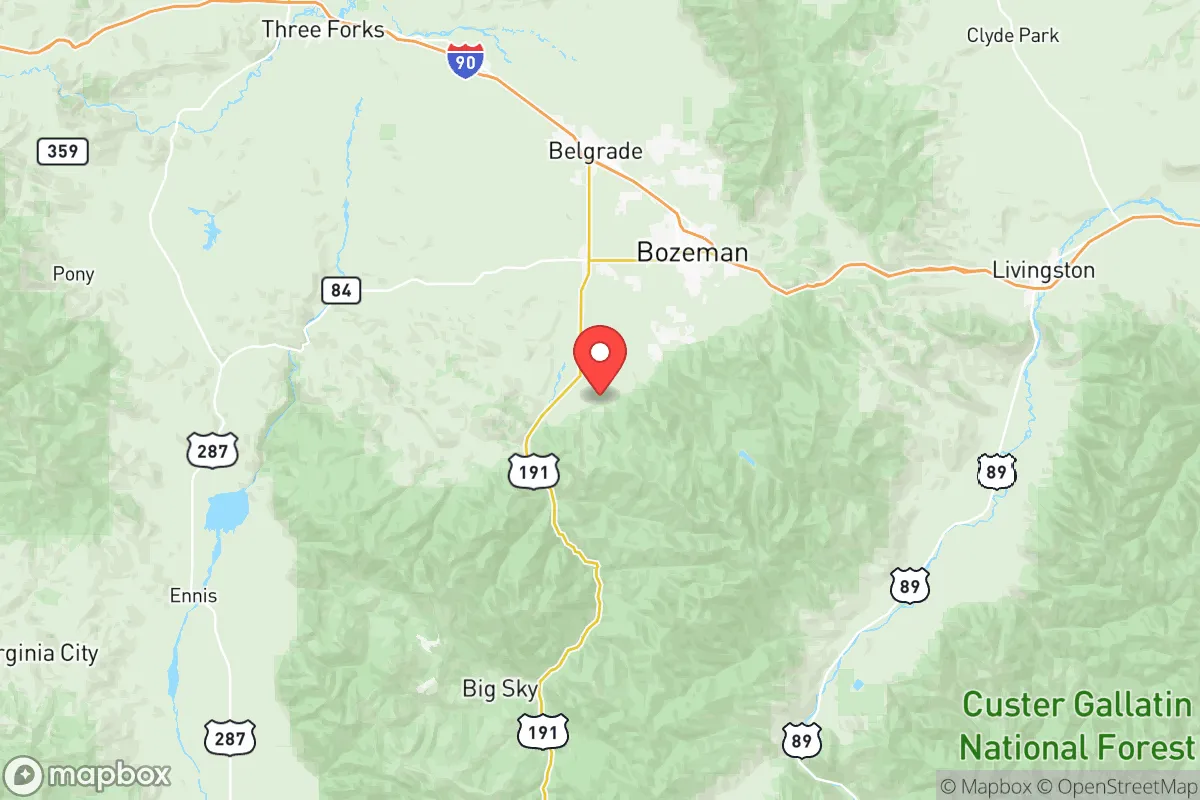
Bozeman is the county’s undisputed hub, home to Montana State University and a population exceeding 55,000. Daily life here is defined by a dense mix of craft breweries, farm-to-table restaurants, and outdoor gear shops along Main Street, with a commute averaging 18.8 minutes. The city’s economy is anchored by the university, high-tech firms like Zoot Enterprises, and a thriving tourism sector tied to Bridger Bowl and Big Sky Resort. Just 10 miles west, Belgrade (population ~10,000) offers a more affordable, family-oriented alternative with a growing retail corridor along Jackrabbit Lane and a quieter downtown. Four Corners, an unincorporated area at the junction of Highways 84 and 191, functions as a bedroom community with strip malls and quick access to both Bozeman and Big Sky, but lacks a traditional town center.
Smaller towns & rural pockets
Manhattan (population ~2,000) sits 15 miles west of Bozeman along the I-90 corridor and retains a distinct agricultural character, with a historic grain elevator and a handful of local eateries. It is popular with horse owners and those seeking a slower pace while still commuting to Bozeman. Three Forks (population ~2,000), at the confluence of the Jefferson, Madison, and Gallatin Rivers, is a gateway to Missouri Headwaters State Park and draws anglers and history buffs; its small downtown includes a brewery and a historic hotel. West Yellowstone (population ~1,300), located at the west entrance to Yellowstone National Park, is a seasonal tourism town where winter snowmobile traffic and summer park visitors dominate the economy, and year-round housing is scarce and expensive. Rural pockets like the Gallatin Canyon (along Highway 191 south of Bozeman) and the Hyalite Canyon area offer isolated mountain living with limited services, appealing to those who prioritize solitude and backcountry access over convenience.
Cost & lifestyle range
The cost-of-living spread across Gallatin County is stark. At the high end, Bozeman’s desirable neighborhoods near Main Street or the university command median home values well above the county’s $604,900 average, with some properties exceeding $1 million. Rent in Bozeman for a one-bedroom apartment often surpasses $1,800, pushing the countywide median rent of $1,574 upward. At the lower end, Manhattan and Three Forks offer median home values closer to $450,000–$500,000, though inventory is limited. West Yellowstone presents a unique case: home values are high due to vacation rentals, but year-round rental availability is extremely tight. Rural properties in the Gallatin Valley’s agricultural zones (e.g., along Springhill Road or in the Amsterdam area) can be found for under $500,000 for a fixer-upper, but buyers face well costs, septic systems, and longer drives to grocery stores. The average commute of 18.8 minutes masks a wide range: a resident of rural Churchill might drive 25 minutes to Bozeman, while someone living in downtown Bozeman may walk to work.
Who thrives in Gallatin County? The county best suits individuals and families who prioritize outdoor recreation and can absorb its high housing costs, or who are willing to trade urban amenities for space and quiet in its smaller towns. Remote workers with flexible incomes, retirees drawn to the Gallatin River’s fly-fishing, and young professionals employed by Montana State University or the tech sector find the most balance. Those on fixed incomes or seeking a low cost of living will struggle, as even the county’s most affordable pockets—Manhattan, Three Forks, and rural agricultural zones—still carry a cost-of-living index well above the national average. The county’s rapid growth (population up ~20% since 2020) means newcomers should expect competition for housing and services, but the reward is access to some of the most dramatic mountain scenery and outdoor recreation in the Lower 48.

Crime in Gallatin County
Generally safer than 57% of comparable U.S. locations.
Violent CrimeViolent Crime Analysis
Property CrimeProperty Crime Analysis
Crime Analysis
Gallatin County, Montana, reports a violent crime rate of 422 incidents per 100,000 residents and a property crime rate of 1,467.6 per 100,000, placing it above both the state and national averages for these offenses. The county’s overall safety picture is heavily influenced by the dynamics of its largest city, Bozeman, which concentrates a significant share of reported crime, while smaller communities like Belgrade, Manhattan, and Three Forks generally experience lower incident rates. Residents and prospective movers should weigh these figures against the county’s rapid population growth and the progressive judicial philosophy prevalent in its district courts, which can affect how offenders are processed and sentenced.
Crime in context
Gallatin County’s violent crime rate of 422 per 100,000 is notably higher than Montana’s state average of roughly 310 per 100,000 and the national average of approximately 380 per 100,000. Property crime, at 1,467.6 per 100,000, also exceeds the state average of about 1,200 per 100,000 and the national figure of roughly 1,950 per 100,000. The county’s crime statistics are driven largely by incidents in Bozeman, where thefts, burglaries, and assaults are more frequent due to its larger population and transient student and tourist populations. In contrast, smaller towns like Belgrade and Manhattan report significantly lower crime rates, often falling below 200 violent crimes per 100,000, making them comparatively safer options for families and retirees. The disparity between Bozeman and its surrounding communities underscores the importance of choosing a specific location within the county.
What residents experience
Residents in Gallatin County most commonly encounter property crimes such as vehicle break-ins, bicycle thefts, and package thefts, particularly in Bozeman’s downtown and near the Montana State University campus. Violent crime, while less frequent, includes aggravated assaults and robberies, often concentrated in areas with higher population density and nightlife activity. The county’s judicial system, overseen by the 18th Judicial District, has been characterized by some local observers as leaning progressive, with district attorneys and judges in Bozeman often emphasizing rehabilitation and diversion programs over incarceration. This approach, while intended to reduce recidivism, can result in lighter sentences for repeat offenders, potentially increasing the risk to victims and the public. For example, property crime offenders in Bozeman may receive deferred prosecution or short jail terms, leading to a perception among residents that the justice system is lenient. In contrast, smaller towns like Three Forks and West Yellowstone, which have their own municipal courts and less progressive judicial oversight, tend to see swifter and more punitive outcomes for similar offenses.
Neighborhood-level variation is pronounced in Gallatin County. Bozeman’s central districts, including the historic downtown and areas near the university, report the highest crime densities, while suburban neighborhoods like Baxter Meadows and the Bridger Creek area experience fewer incidents. Belgrade, located just west of Bozeman, offers a quieter environment with a property crime rate roughly 30% lower than Bozeman’s, and Manhattan and Three Forks, further south, report even lower rates. For those seeking the safest environments, the rural areas of the county—such as the Gallatin Gateway and the communities along the Madison River—have minimal crime, though they lack the amenities of larger towns. Prospective residents should prioritize location within the county, as the difference in safety between Bozeman and its smaller neighbors is substantial and directly tied to the progressive judicial policies in the county seat.
* Values derived from national, state, county, city and local statistics and may differ in a specific area. Last updated: 2026-08-23T09:03:22.000Z
Narrative content on this page is AI-generated and may contain mistakes. Verify any details that matter before acting on them.
ReloMaps may earn a commission from affiliate links at no extra cost to you.

