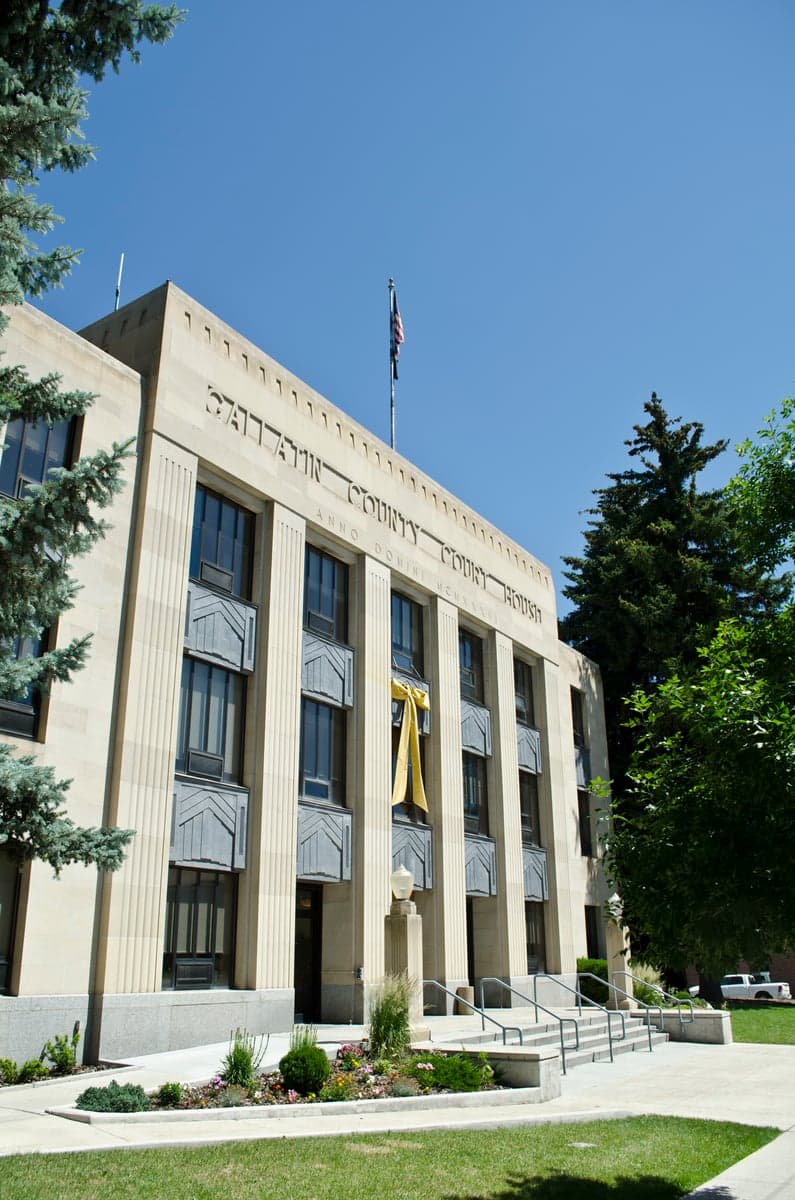
Photo: Wikipedia
Personal Sovereignty in Gallatin County
Viable for self-reliance. Generally workable, though some barriers may limit total independence.
What does Personal Sovereignty tell us?
Personal Sovereignty measures your capacity for self-reliance and independence with minimal government friction. Higher scores mean fewer barriers between you and the way you want to live... but it assumes you have the space you need and good neighbors.
What does this tell us?
Personal Sovereignty measures your capacity for self-reliance and independence with minimal government friction. Higher scores mean fewer barriers between you and the way you want to live... but it assumes you have the space you need and good neighbors.
State Policy
Energy independence: Net exporter (120% of energy produced in-state)
Personal Liberty
Homesteading

Personal Liberty Analysis
Gallatin County, Montana, offers a robust environment for personal sovereignty, blending a strong tradition of individual liberty with a regulatory posture that generally favors autonomy over oversight. The county’s ethos is shaped by its rural roots and a growing population that values self-reliance, though the dynamic between the more developed Bozeman area and the outlying towns creates meaningful variation in how freedoms are exercised. For a conservative-leaning individual or family, the area provides a solid foundation for self-directed living, with tax policies, gun laws, and land-use regulations that largely support personal choice.
Tax burden and regulatory posture: How light is the government touch?
Montana’s state-level tax structure is a clear draw for sovereignty-minded residents. There is no state sales tax, which keeps the cost of daily purchases low and avoids the regressive bite of consumption taxes. Property taxes in Gallatin County are moderate, with the effective rate hovering around 0.83% of assessed value in 2025, slightly above the national average but reasonable given the lack of income tax on most earnings—Montana’s top marginal income tax rate is a flat 5.9% as of 2026. The regulatory environment at the county level is generally permissive, but it varies significantly by location. In Bozeman, the county seat and largest city, zoning and building codes are more stringent, especially within city limits, where growth management has led to tighter restrictions on short-term rentals and new subdivisions. In contrast, Belgrade and Manhattan maintain a lighter touch, with fewer permitting hurdles for home-based businesses and agricultural structures. The county’s planning department is known for a practical approach, but residents in unincorporated areas like Gallatin Gateway or Amsterdam enjoy the most freedom, with minimal interference on land use beyond basic health and safety codes. Overall, the tax burden is low compared to coastal states, and the regulatory posture is best described as “hands-off until a problem arises,” which appeals to those who prefer to govern their own affairs.
Self-defense and gun law specifics: What the Second Amendment looks like here
Montana is a constitutional carry state, meaning no permit is required to carry a concealed firearm for anyone legally allowed to possess one. This law, in effect since 2021, is fully embraced in Gallatin County, where gun ownership is widespread and culturally normalized. The county sheriff’s office in Bozeman processes permits for those who still want a concealed carry license for reciprocity with other states, but the process is straightforward and typically takes under 30 days. Open carry is legal without a permit, and there are no state-level magazine capacity restrictions or assault weapon bans. In Four Corners and Three Forks, gun ranges and private shooting land are common, and local gun shops report steady business from both residents and visitors. The legal environment strongly favors self-defense: Montana’s “stand your ground” law, codified in 2009, allows the use of deadly force without a duty to retreat if a person reasonably believes it is necessary to prevent imminent death or great bodily harm. Castle doctrine protections extend to vehicles and occupied structures. For a family moving to the area, the gun culture is practical rather than performative—hunting, sport shooting, and personal protection are all accepted as normal parts of life. The only notable restriction is that firearms are prohibited in certain government buildings and schools, but these are clearly posted and rarely an issue for law-abiding residents.
Self-reliance and homesteading viability: Lot sizes, zoning, and off-grid feasibility
Gallatin County offers strong potential for self-reliant living, especially outside the Bozeman urban core. In unincorporated areas, minimum lot sizes for residential development are typically 1 to 5 acres, depending on the zoning district, which allows for substantial gardening, small livestock, and even limited farming. In Willow Creek and Churchill, properties of 10 to 40 acres are common, and many residents keep chickens, goats, or horses without needing special permits. Off-grid living is legally feasible: Montana has no state law requiring connection to a public utility grid, and many homes in rural Gallatin County rely on solar panels, propane, and well water. The county does require a septic system permit for wastewater, but the process is straightforward for standard gravity-fed systems. Zoning in the county’s agricultural districts (AG-20 and AG-40) explicitly allows for “farm and ranch uses,” including the sale of produce and value-added products like jams or wool. However, in Bozeman’s city limits, urban agriculture is more restricted—backyard chickens are allowed with a permit, but beekeeping and larger livestock are not. The county’s building code does not mandate energy efficiency standards beyond the 2018 International Residential Code, giving homeowners flexibility in construction methods. For those seeking true self-sufficiency, the areas around Gallatin River and Bridger Canyon offer remote parcels with water rights potential, though access can be seasonal. Overall, the county is one of the more homestead-friendly regions in Montana, especially when compared to the more restrictive Flathead or Missoula counties.
Personal liberties: Parental rights, medical autonomy, speech, and property
Montana’s legal framework strongly supports personal liberties in several key areas. Parental rights are explicitly protected under state law, with a 2023 statute affirming that parents have the fundamental right to direct the upbringing, education, and healthcare of their children. This includes the ability to opt out of school curricula and to access educational records without bureaucratic hurdles. Medical autonomy is also robust: Montana has no state-level vaccine mandate for adults, and the 2021 “Right to Try” law allows terminally ill patients to access experimental treatments without FDA approval. The state’s medical marijuana program, established in 2004, is accessible in Gallatin County through licensed dispensaries in Bozeman and Belgrade, though recreational use remains illegal under state law (a 2024 ballot initiative to legalize it failed). Free speech protections are strong, with no hate speech laws or prior restraint on public expression. Property rights are a cornerstone of the county’s identity; eminent domain is rarely used, and the county’s planning board has a reputation for respecting private property boundaries. In Amsterdam and Manhattan, residents have successfully fought proposed zoning changes that would have restricted agricultural uses, demonstrating the community’s vigilance. The only area where liberties are more constrained is in Bozeman’s city limits, where noise ordinances, short-term rental caps, and tree preservation rules can feel intrusive to those accustomed to rural freedom. For most of the county, however, the prevailing attitude is “live and let live,” with legal protections that align with a conservative-leaning view of personal autonomy.
Compared to other Western counties, Gallatin County offers a high degree of personal sovereignty, particularly in its rural and unincorporated areas. The combination of low taxes, constitutional carry, permissive land-use regulations, and strong protections for parental and property rights creates an environment where self-reliance is not just tolerated but encouraged. While Bozeman’s urban growth has introduced some regulatory friction, the county as a whole remains a stronghold for those who prioritize freedom over convenience. For a family or individual seeking to live on their own terms, Gallatin County ranks among the top choices in the Rocky Mountain region.

* Values derived from national, state, county, city and local statistics and may differ in a specific area. Last updated: 2026-08-23T09:03:22.000Z
Narrative content on this page is AI-generated and may contain mistakes. Verify any details that matter before acting on them.
ReloMaps may earn a commission from affiliate links at no extra cost to you.

