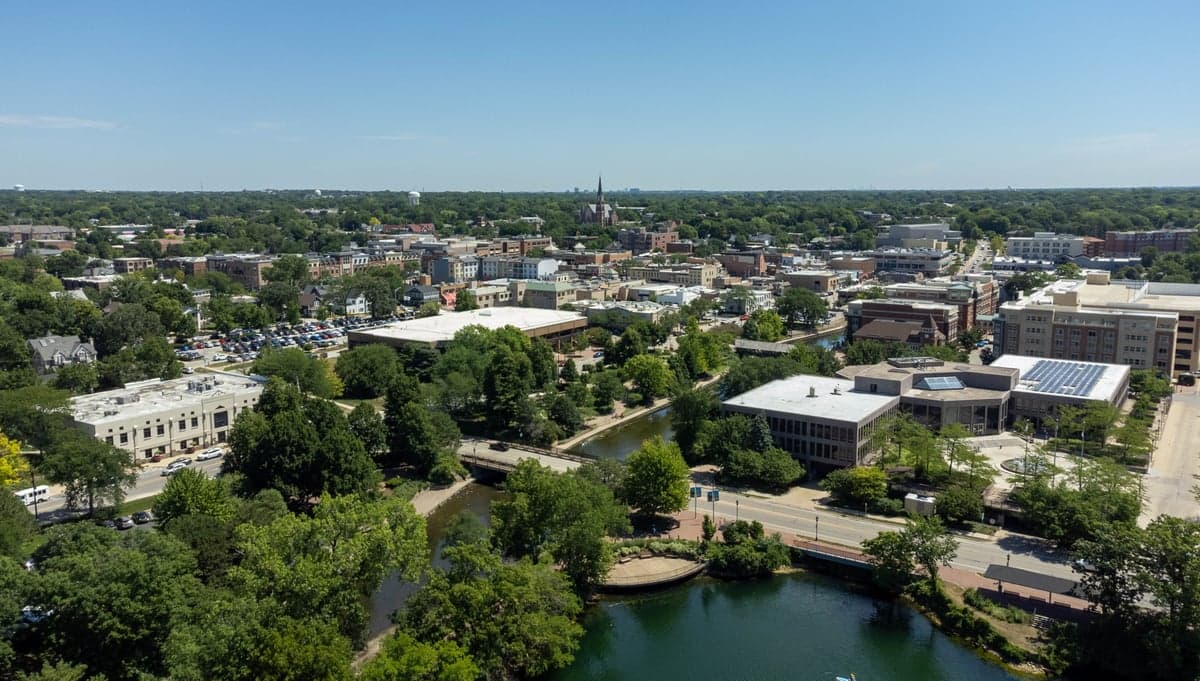
Photo: Wikipedia
Political ClimatePolitical Climate in Naperville, IL
District shown is the primary district for this city’s centroid. Cities may span multiple districts.
Local Political AnalysisPolitical Analysis of Naperville, IL
Naperville’s political climate has shifted noticeably over the past decade, and if you’ve lived here as long as I have, you’ve felt it. The city sits in a Cook Partisan Voting Index of D+6, meaning it leans about six points more Democratic than the national average. That wasn’t always the case. Back in the 1990s and early 2000s, Naperville was a reliably conservative suburb—think solid Republican majorities in local races and a general skepticism of big government. Today, the trajectory is unmistakably progressive, with the city council and school board increasingly embracing policies that raise eyebrows among those who value personal freedoms and limited government.
How it compares
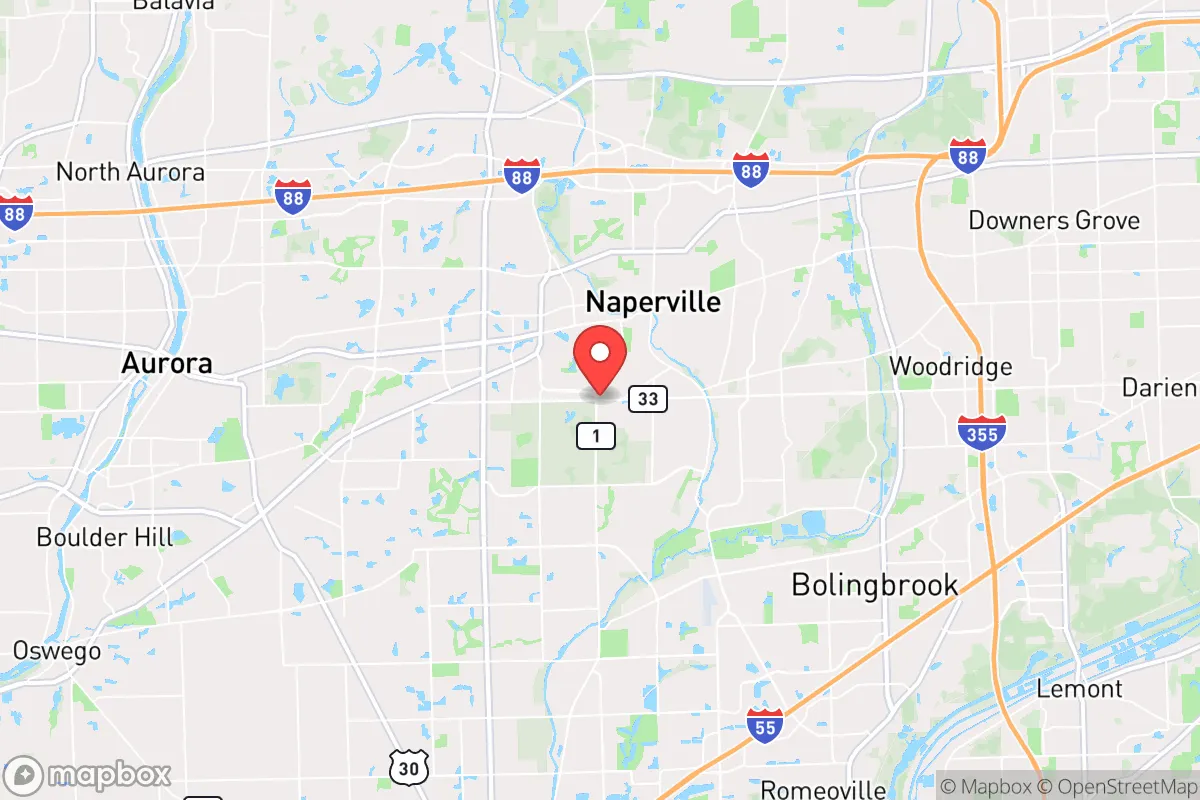
Drive ten miles west to Aurora or fifteen miles south to Plainfield, and you’ll find a different political landscape. Aurora, while diverse, still has a more moderate-to-conservative streak in its western wards, and Plainfield’s Will County precincts often vote red. Naperville, by contrast, has become a blue island in a sea of purple and red suburbs. Neighboring Bolingbrook and Lisle lean more moderate, but Naperville’s recent city council elections have been dominated by candidates backed by progressive groups like Indivisible. The contrast is stark: where nearby towns still debate tax rates and road repairs, Naperville’s local government spends time on climate action plans and equity initiatives. That shift didn’t happen overnight, but it’s accelerating.
What this means for residents
For a longtime resident, the most concerning change is the creeping expansion of government into daily life. The city’s push for “equity” policies in schools and hiring has raised red flags about ideological conformity. The school board, once focused on academics and fiscal responsibility, now debates curriculum content that some parents feel prioritizes social activism over core subjects. There’s also been talk of increasing property taxes to fund new programs—a classic sign of government overreach when the private sector and families could handle those needs better. If you value the freedom to raise your kids without the state dictating their worldview, Naperville’s direction is worth watching closely. The city’s growth has brought new residents from Chicago and other blue areas, and their voting patterns are reshaping local policy.
Culturally, Naperville still has its conservative roots—you’ll find plenty of churches, Boy Scout troops, and Fourth of July parades that feel like small-town America. But the policy distinctions are growing. The city council’s 2023 resolution declaring Naperville a “Welcoming City” for immigrants, for example, was a symbolic step that many saw as a nod to progressive activism rather than a practical need. Long-term, if the current trend holds, Naperville could become a mirror of Evanston or Oak Park—places where personal freedoms take a backseat to government-mandated social engineering. For now, it’s still a great place to live, but the political winds are blowing in a direction that should give any freedom-loving resident pause.

State Political ClimatePolitical Climate in Illinois
State Political AnalysisPolitical Environment in the State
Illinois is a deeply blue state in statewide elections, but its political landscape is far more complicated than a simple partisan label suggests. The Democratic stronghold is built on the massive population of Cook County and Chicago, which alone delivers enough votes to decide every statewide race, while the rest of the state—particularly downstate and many collar counties—has been trending red for over a decade. Over the last 20 years, the state has shifted from a purple battleground to a solidly Democratic-controlled state, with the GOP last winning a governor’s race in 2014 and last carrying the state for president in 1988. For a conservative considering a move here, the reality is that your vote in statewide elections will be largely symbolic, but your local community and county government may feel very different.
Urban vs. rural divide
The political map of Illinois is a tale of two worlds. Chicago and its inner suburbs (Cook County) are the engine of Democratic power, delivering roughly 40% of the state’s total vote. The city itself is reliably progressive, with a strong machine politics tradition that has shifted leftward on social issues, policing, and taxes. The collar counties—DuPage, Lake, Kane, McHenry, and Will—were once GOP strongholds but have been steadily trending purple or blue, especially in presidential years. For example, DuPage County, which voted for George W. Bush by 15 points in 2004, voted for Joe Biden by 8 points in 2020. Downstate, the story is reversed. Rural counties like Effingham, Jasper, and Wayne routinely vote 70-80% Republican, and even medium-sized cities like Peoria, Rockford, and Springfield have become more competitive or outright red in local races. The divide is stark: drive 60 miles west of Chicago and you’ll find counties that haven’t voted for a Democrat for president since Lyndon Johnson.
Policy environment
Illinois’s policy environment is a mixed bag that leans heavily progressive at the state level, which can be a shock for newcomers from red states. The state has a flat income tax rate of 4.95%, but property taxes are among the highest in the nation—averaging over 2% of home value statewide, and often exceeding 3% in the Chicago suburbs. There is no right-to-work law, and union influence remains strong, particularly in construction and public education. On education, Illinois has a robust school choice program through tax-credit scholarships, but it’s capped and under constant attack from teachers’ unions. The state also passed a comprehensive reproductive health act in 2019 that codified abortion access and removed parental notification requirements for minors, which is a major concern for conservative parents. Election laws are relatively permissive: no voter ID requirement, automatic voter registration, and mail-in voting was expanded permanently after 2020. Gun laws are among the strictest in the nation, including a 2023 ban on many semi-automatic firearms and magazines, which has sparked massive legal challenges and grassroots pushback.
Trajectory & freedom
Over the last five years, Illinois has become less free by nearly any measure of personal liberty that conservatives care about. The 2023 Protect Illinois Communities Act banned the sale and possession of dozens of commonly owned firearms and magazines, effectively ending the state’s long tradition of gun ownership for self-defense. The law is currently being litigated, but it’s already driving gun owners to neighboring Indiana, Missouri, and Wisconsin. On parental rights, the state passed a law in 2021 that removed the requirement for schools to notify parents if a child changes their gender identity or pronouns, which has become a flashpoint in suburban school board races. The state also expanded Medicaid coverage for gender transition procedures and has a sanctuary state law (the TRUST Act) that limits local law enforcement cooperation with federal immigration authorities. On the positive side for conservatives, Illinois has no state-level rent control, and property rights are generally respected outside of Chicago’s zoning and tenant protection ordinances. But the overall trajectory is clear: the state legislature has been moving left on social and cultural issues with little resistance from the governor’s office.
Civil unrest & political movements
Illinois has seen its share of political turbulence, particularly in Chicago. The 2020 George Floyd protests in Chicago were among the largest and most destructive in the nation, with looting and arson in the Loop and along the Magnificent Mile. The city’s response—or lack thereof—led to a significant suburban backlash, with many families moving to the collar counties or out of state entirely. On the right, there is a growing county-level secession movement in downstate Illinois, with several counties passing symbolic resolutions to explore leaving the state and forming a new state called “New Illinois.” This is largely rhetorical, but it reflects deep frustration with Chicago-dominated governance. Immigration politics are a constant flashpoint: the state has sent buses of migrants from the southern border to Chicago, straining city resources and creating tension between progressive activists and working-class neighborhoods. Election integrity remains a concern for many conservatives, especially after the 2020 election saw widespread use of mail-in ballots and no voter ID requirement, though no major fraud has been proven in court.
Projection
Looking ahead 5-10 years, Illinois is likely to become more Democratic and more progressive at the state level, driven by continued population loss in rural areas and growth in the Chicago suburbs. The 2020 census cost Illinois a congressional seat, and the state has lost population for nine straight years, with most of the losses coming from downstate and the more conservative collar counties. The in-migration from other states is overwhelmingly from blue states like California and New York, and these newcomers tend to reinforce the existing political lean. However, there is a counter-trend: many conservative families are moving to exurban counties like Kendall, Grundy, and DeKalb, which are becoming new red islands. The state’s fiscal situation is a ticking time bomb—the pension system is underfunded by over $140 billion, and the state’s credit rating is the worst in the nation. This will eventually force either massive tax hikes or severe service cuts, which could accelerate the exodus of businesses and families. For a conservative moving in now, expect the state-level political environment to remain hostile to gun rights, parental rights, and tax relief, but local communities in the exurbs and downstate will continue to offer a more traditional way of life.
Bottom line for a new resident: If you’re a conservative, Illinois is a state where you can find a great community, good schools, and affordable housing in the right county—but you will be fighting an uphill battle at the state level. Your vote for president or governor will be meaningless, but your vote for county board, school board, and local judges can make a real difference. Be prepared for high property taxes, strict gun laws, and a state government that is increasingly out of step with your values. If you can stomach that, places like Effingham, Quincy, or the exurbs of McHenry County offer a quality of life that’s hard to beat for the price. Just don’t expect the state to change direction anytime soon.
* Values derived from national, state, county, city and local statistics and may differ in a specific area. Last updated: 2026-04-24T14:16:35.000Z
Narrative content on this page is AI-generated and may contain mistakes. Verify any details that matter before acting on them.
ReloMaps may earn a commission from affiliate links at no extra cost to you.

