Photo: Wikipedia
Political ClimatePolitical Climate in Oregon
Political Environment in the State
Oregon is a state of stark political contrasts, with a Cook PVI of D+8 that masks a deep and growing divide between its liberal urban core and its increasingly frustrated conservative rural expanse. Over the last 20 years, the state has shifted from a purple battleground—where George W. Bush nearly won in 2000—to a reliably blue state driven by explosive growth in the Portland metro area, while the rest of Oregon has trended redder. For a conservative considering relocation, the state offers breathtaking natural beauty and a strong independent spirit in its eastern and southern counties, but you’ll be living under a state government in Salem that has steadily pushed progressive policies on taxes, regulation, and social issues, often overriding local control.
Urban vs. rural divide
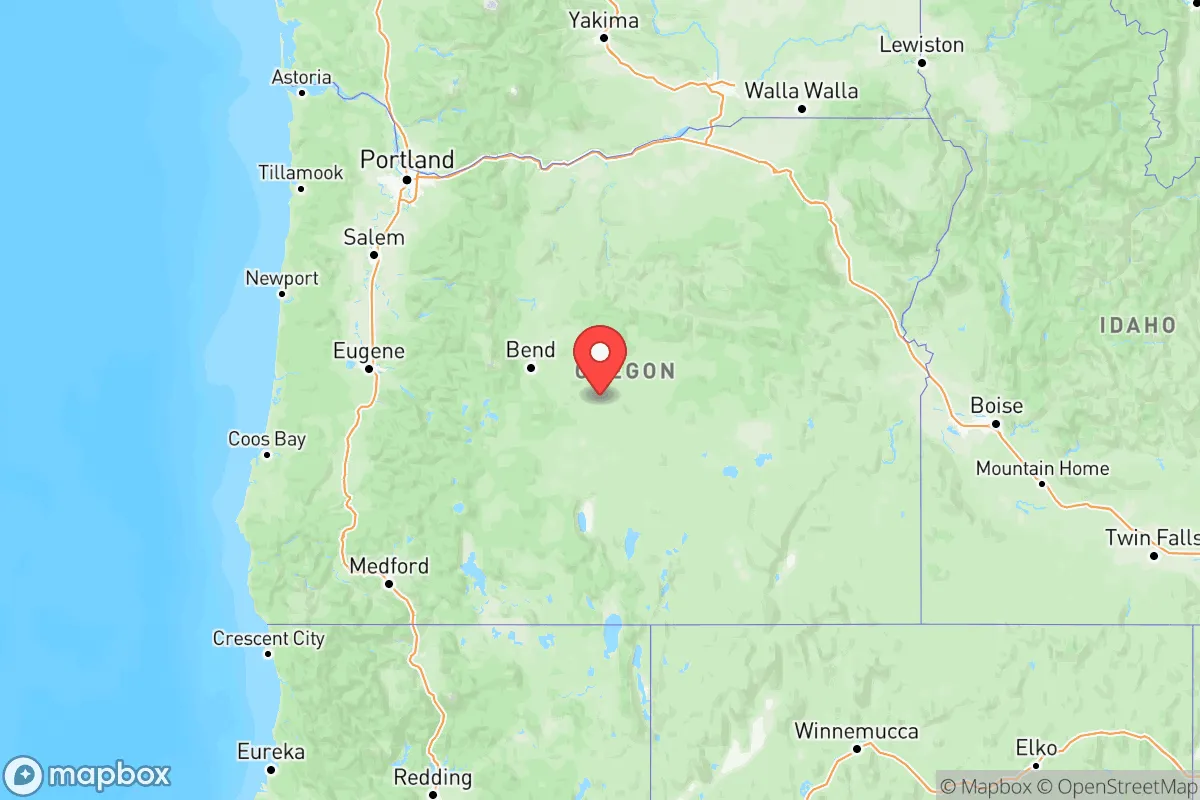
The political map of Oregon is essentially two states. The I-5 corridor from Portland down through Salem and Eugene is the engine of Democratic power. Multnomah County (Portland) alone delivers roughly 20% of the state’s vote and consistently goes 75-80% Democratic. Washington County (suburban Portland) and Lane County (Eugene) are also solidly blue, though with more moderate pockets. In contrast, the rest of the state is deeply conservative. Eastern Oregon counties like Malheur, Harney, and Lake routinely vote 70-80% Republican. Southern Oregon’s Jackson County (Medford) and Josephine County (Grants Pass) are reliably red, though Medford has seen some in-migration from California that has nudged it slightly more purple. The real flashpoint is the growing exurban ring—places like Clackamas County (Oregon City) and Yamhill County (McMinnville)—which have flipped from swing to lean-Democrat as Portland’s sprawl pushes outward. Meanwhile, Deschutes County (Bend) has been a bellwether: once reliably red, it has become a competitive toss-up as wealthy, liberal-leaning remote workers flood in, making it a microcosm of the state’s demographic shift.
Policy environment
Oregon’s policy environment is a mixed bag for conservatives. On the plus side, there is no state sales tax, which keeps the effective tax burden lower than in neighboring California or Washington for many goods. However, Oregon has one of the highest state income tax rates in the nation, with a top marginal rate of 9.9%—and that kicks in at just $125,000 for single filers, hitting upper-middle-class earners hard. Property taxes are moderate but vary widely by county, with urban areas seeing faster increases due to Measure 5 (1990) caps being eroded by inflation. The regulatory environment is heavy: Oregon’s land-use laws (SB 100) are among the most restrictive in the country, limiting development and driving up housing costs, especially in the Willamette Valley. Education policy is a sore point—the state consistently ranks near the bottom in high school graduation rates despite above-average per-pupil spending, and school choice options are limited. Healthcare is heavily regulated, with a state-run Medicaid expansion (the Oregon Health Plan) that covers a large portion of the population. Election laws are notably progressive: Oregon was the first state to implement all vote-by-mail (1998) and automatic voter registration (2016), and it has no voter ID requirement, which raises concerns about election integrity among conservatives. The state also has a “sanctuary” law (ORS 181A.820) that prohibits state and local law enforcement from using resources to enforce federal immigration law, a policy that has been a flashpoint in rural areas.
Trajectory & freedom
Over the past decade, Oregon has become less free by nearly any conservative measure of personal liberty. The most glaring example is gun rights: in 2023, the state passed Measure 114, which requires a permit to purchase a firearm, a completed background check for every transfer, and bans magazines over 10 rounds. It was immediately challenged in court and is currently blocked by a Harney County judge, but the political will behind it is strong. On parental rights, Oregon has moved aggressively in the opposite direction of states like Florida. HB 2002 (2023) declared Oregon a “sanctuary state” for gender-affirming care, protecting access for minors and shielding providers from out-of-state lawsuits, effectively overriding parental consent in some cases. Medical autonomy took a hit with the state’s strict COVID-19 mandates, which were among the longest-lasting in the nation, including a vaccine mandate for healthcare workers that led to staffing shortages in rural hospitals. Property rights have been eroded by the aforementioned land-use laws and by HB 2001 (2019), which effectively banned single-family-only zoning in cities with more than 10,000 people, allowing duplexes and triplexes in formerly quiet neighborhoods. On the tax front, Measure 110 (2020) decriminalized possession of small amounts of hard drugs, a policy that has been widely blamed for a surge in public drug use and homelessness in Portland and other cities—though it was partially rolled back in 2024. The trajectory is clear: Salem is not slowing down.
Civil unrest & political movements
Oregon has a long history of civil unrest, and recent years have been no exception. The 2020 Portland protests were among the most sustained and violent in the nation, with nightly clashes between far-left antifa groups and federal law enforcement that lasted for months. The city became a national symbol of progressive governance gone awry, and the damage to downtown Portland’s business district is still visible. On the right, rural Oregon has seen a resurgence of the “Greater Idaho” movement, which proposes moving the state line to allow 13 eastern Oregon counties to secede and join Idaho. This movement has gained real traction—11 counties have passed measures in support of the idea, and it’s a serious topic in Salem. Immigration politics are tense: the sanctuary law has led to a standoff between Portland and federal ICE, while rural sheriffs in places like Linn County have publicly refused to comply with state directives to limit cooperation with federal authorities. Election integrity remains a hot-button issue: Oregon’s all-mail system, while convenient, has no voter ID requirement, and the 2020 election saw a high number of returned ballots that were “cured” without clear oversight. The state’s Independent Party of Oregon (the third-largest party) has become a vehicle for disaffected conservatives and moderates, often playing a spoiler role in close races.
Projection
Looking ahead 5-10 years, the trend lines are not favorable for conservatives. In-migration from California and other blue states continues to fuel growth in the Portland metro and Bend, while rural counties are losing population. The 2024 redistricting already gave Democrats a structural advantage in the state legislature, and the state’s growing diversity (especially in the Portland suburbs) is likely to reinforce Democratic dominance. However, there are countercurrents: the Greater Idaho movement could gain enough momentum to force a serious legislative debate, and the backlash against Measure 110’s drug decriminalization has shown that even liberal voters have limits. The real wildcard is housing—if the state’s restrictive land-use laws continue to choke supply, the cost of living could drive out the very people who are moving in. For a conservative moving to Oregon today, the best bet is to target a red county like Douglas County (Roseburg) or Klamath County (Klamath Falls), where local governance is still conservative and the state’s overreach is felt less acutely. But you will always be fighting Salem.
Bottom line: Oregon is a beautiful state with a strong independent tradition, but its state government has become a laboratory for progressive policies that will likely continue to expand. If you value low taxes, gun rights, parental control, and local autonomy, you will find yourself at odds with Salem on nearly every issue. The rural areas offer a refuge, but the political tide is against you. Come for the mountains and the lack of sales tax, but be prepared to fight for your freedoms at the ballot box and in the courts.

Most Conservative Cities in Oregon

Most Liberal Cities in Oregon

* Values derived from national, state, county, city and local statistics and may differ in a specific area. Last updated: 2026-04-14T06:20:14.000Z
Narrative content on this page is AI-generated and may contain mistakes. Verify any details that matter before acting on them.
ReloMaps may earn a commission from affiliate links at no extra cost to you.

