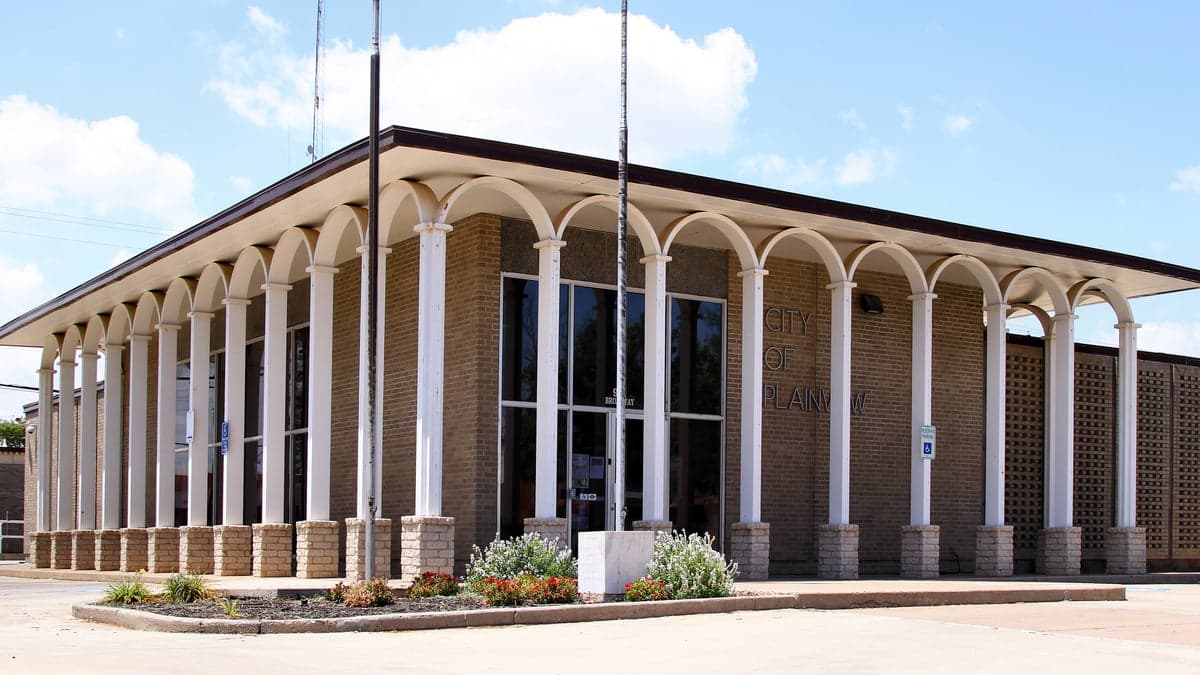
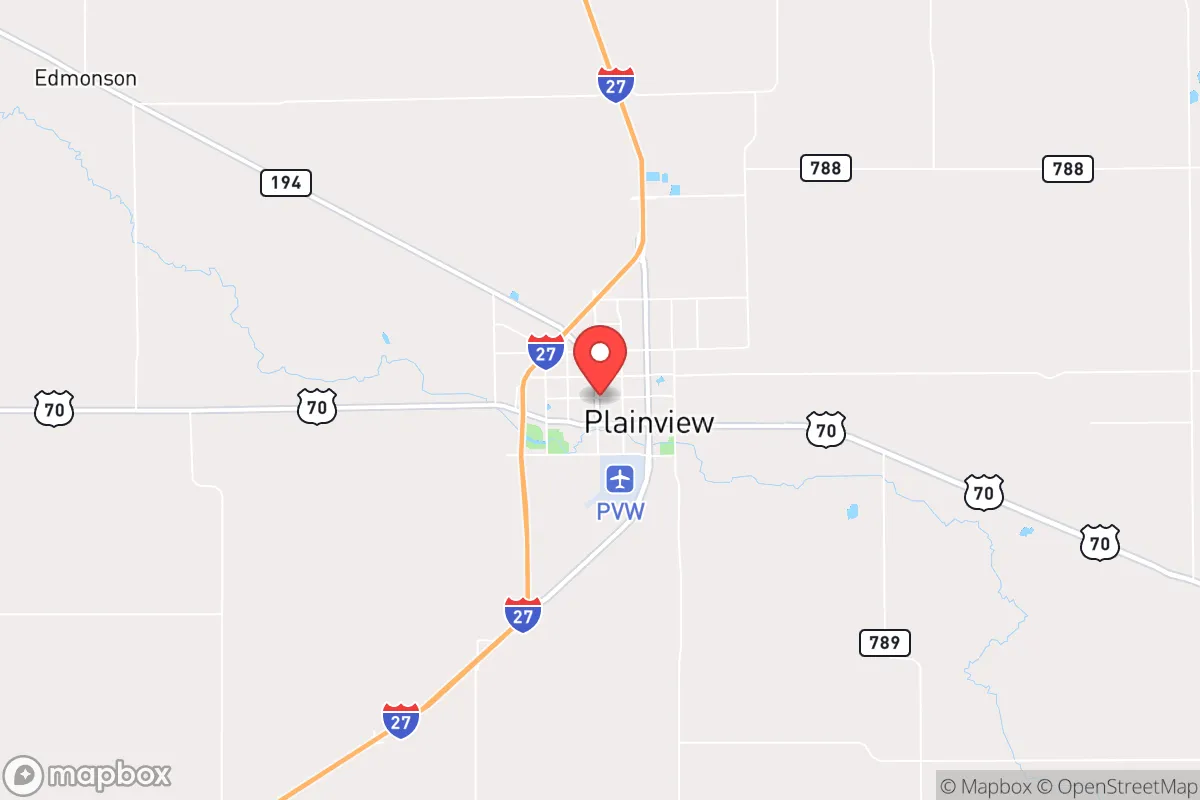
Photo: Wikipedia
Political ClimatePolitical Climate in Plainview, TX
District shown is the primary district for this city’s centroid. Cities may span multiple districts.
Local Political AnalysisPolitical Analysis of Plainview, TX
Plainview is about as solidly Republican as any town in Texas, and that’s saying something. The Cook PVI here is R+25, meaning the district votes 25 points more Republican than the national average, which is a full 21 points redder than the state of Texas as a whole (R+4). That gap isn’t just a number—it’s the difference between a place where Democrats are a real force in local elections (like in Lubbock or Amarillo) and a place where the only real primary action is on the GOP side. The trajectory has been steady: Plainview has been reliably red for decades, and if anything, the rural-urban divide has only deepened that loyalty since 2020.
How it compares
To understand Plainview’s politics, you have to look at the surrounding area. Hale County, where Plainview sits, voted for Donald Trump by a margin of about 40 points in 2024. That’s far more conservative than Lubbock (about 25 points redder than the national average) or Amarillo (about 20 points redder). The closest city with a noticeably different political flavor is Lubbock, which has a small but vocal liberal presence around Texas Tech University. Even there, though, the city council is all Republican. The real contrast is with places like Austin or Dallas, where you’ll find Democratic strongholds. But those are a three- to four-hour drive away. In the South Plains, Plainview is the norm, not the outlier. The only nearby town that’s even slightly less conservative is Levelland, which has a PVI of about R+20, but that’s still deep red territory.
What this means for residents
For conservative residents, Plainview is a comfortable fit. Local government, school board meetings, and county commission decisions all tend to reflect a small-government, pro-business, and socially conservative outlook. You’ll see “God Bless America” signs on storefronts, and the local Chamber of Commerce is closely aligned with Republican priorities. For liberal residents, the reality is more nuanced. They’re not shut out—there are a handful of active Democrats in town, and the local Democratic Party chapter does hold meetings—but they’re a clear minority. In practice, that means liberal voices are rarely heard in city council debates, and progressive policy ideas (like expanding public transit or increasing minimum wage for city workers) face an uphill battle. Socially, it can feel isolating if you’re openly progressive, but most folks just keep their politics to themselves in casual conversation. The key is that Plainview isn’t hostile—it’s just overwhelmingly one-sided.
One cultural distinction that sets Plainview apart from some other deep-red towns is its strong sense of community across political lines. People here know their neighbors, and the local churches, schools, and the annual Plainview Rodeo bring everyone together regardless of party. You won’t find the same kind of political polarization you see in bigger cities. That said, the policy reality is clear: taxes are low, regulations are minimal, and the local economy is heavily tied to agriculture and energy, both of which benefit from Republican-friendly policies. Looking ahead, Plainview will likely stay R+25 or even redder as younger, more conservative families move in from rural areas. The only wild card is if the Hispanic population, which makes up about 60% of the town, shifts its voting patterns—but so far, that hasn’t happened in a way that changes the overall lean.

State Political ClimatePolitical Climate in Texas
State Political AnalysisPolitical Environment in the State
Texas has been a reliably Republican state for the past three decades, with a Cook Partisan Voting Index of R+4, but the story is far more nuanced than a simple red-state label. The dominant coalition remains conservative, anchored by the state’s sprawling suburbs, rural counties, and the oil-and-gas economy, but the margin has been shrinking. In 2012, Mitt Romney carried Texas by nearly 16 points; by 2024, the Republican presidential margin had narrowed to roughly 9 points, driven by explosive growth in the Democratic-leaning urban cores of Houston, Dallas, Austin, and San Antonio, and a massive influx of out-of-state transplants. The state is in the middle of a slow, grinding realignment that has made it a perennial battleground in down-ballot races, even as it remains safely red at the presidential level for now.
Urban vs. rural divide
The political map of Texas is a study in extremes. The state’s four largest metros — Houston (Harris County), Dallas-Fort Worth (Dallas and Tarrant counties), San Antonio (Bexar County), and Austin (Travis County) — are solidly Democratic, with Travis County voting for Joe Biden by over 50 points in 2020. But the suburbs around these cities are where the real action is. Tarrant County (Fort Worth) flipped from red to blue in 2018 and has stayed competitive, while Collin County (north of Dallas) and Williamson County (north of Austin) are shifting from deep red to purple, with Williamson County voting for Biden by a narrow margin in 2020. Meanwhile, the vast rural stretches of West Texas, the Panhandle, and East Texas remain overwhelmingly Republican. Lubbock, Amarillo, and Midland-Odessa are GOP strongholds, often voting 70-80% Republican. The Rio Grande Valley, once a Democratic bastion, has shifted sharply right since 2020, with counties like Starr and Zapata flipping to Trump, driven by cultural conservatism and frustration with the border crisis. The divide isn’t just geographic — it’s demographic: urban counties
* Values derived from national, state, county, city and local statistics and may differ in a specific area. Last updated: 2026-08-25T23:24:49.000Z
Narrative content on this page is AI-generated and may contain mistakes. Verify any details that matter before acting on them.
ReloMaps may earn a commission from affiliate links at no extra cost to you.

