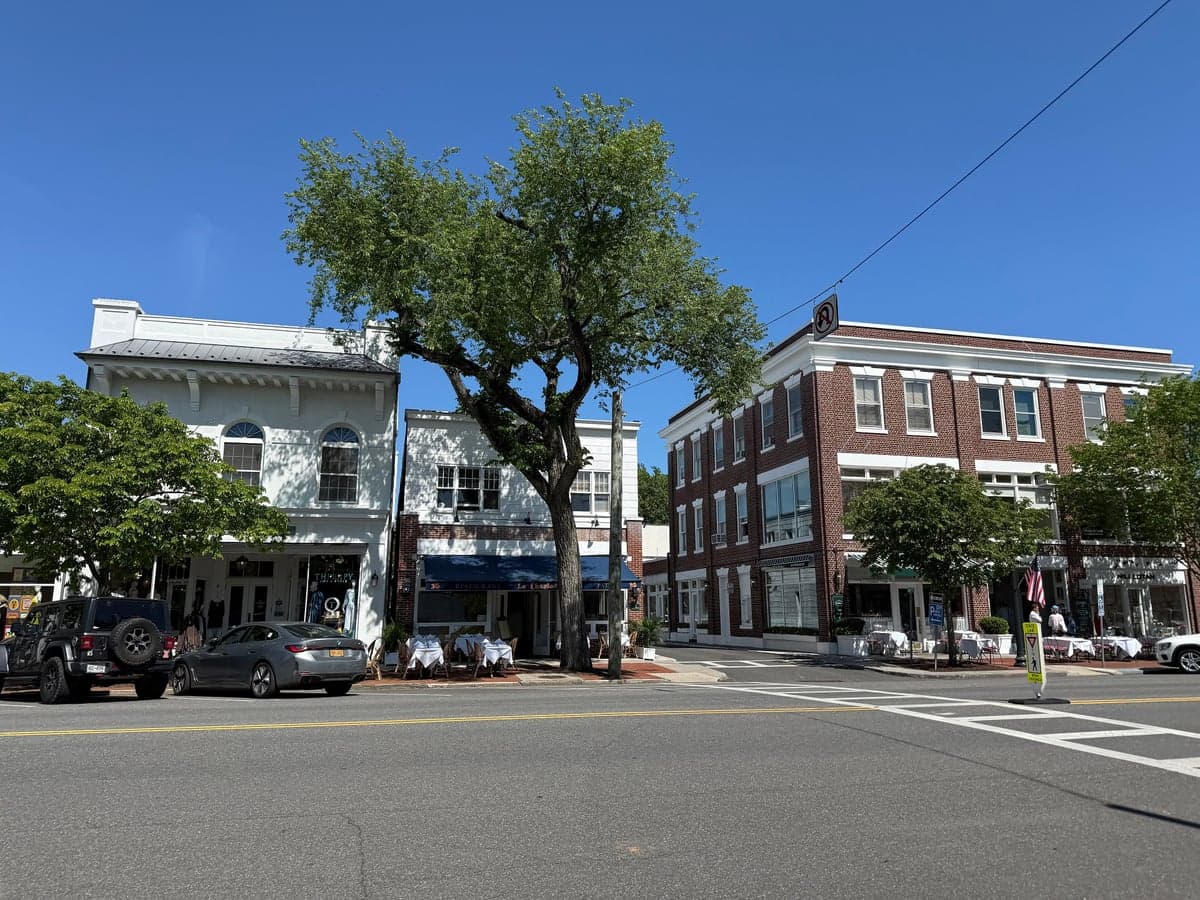
Photo: Wikipedia
Political ClimatePolitical Climate in Southampton, NY
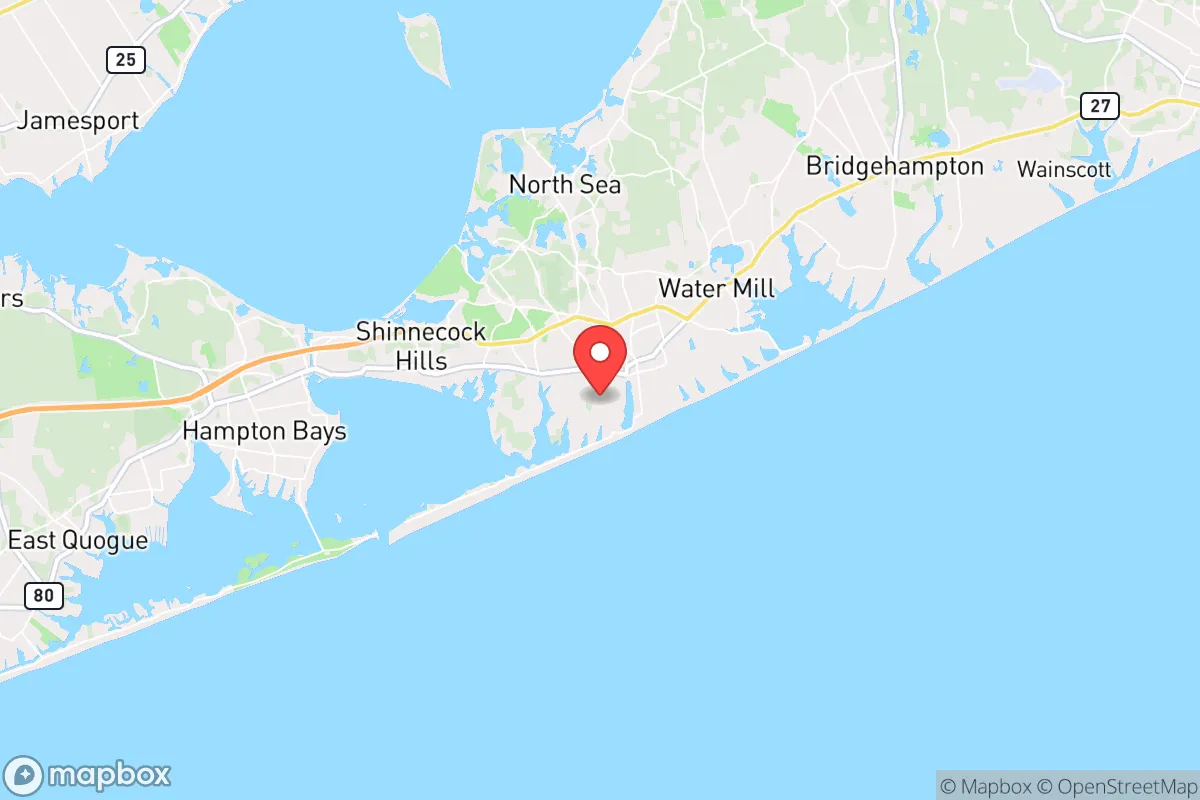
District shown is the primary district for this city’s centroid. Cities may span multiple districts.
Local Political AnalysisPolitical Analysis of Southampton, NY
Southampton, New York, has a Cook PVI of R+4, meaning it leans Republican by a modest four points, but that number tells only part of the story. If you’ve lived here as long as I have, you’ve watched this town shift from a reliably conservative stronghold—where folks minded their own business and the government stayed out of your backyard—to a place where progressive ideas are creeping in, especially in the village proper. The surrounding towns like Bridgehampton and Water Mill still hold a more traditional line, but Southampton Village itself has seen a noticeable tilt toward left-leaning policies, particularly on land use and local ordinances. It’s not a blue wave, but it’s a slow erosion of the common-sense, small-government ethos that used to define this area.
How it compares
Compared to its neighbors, Southampton is actually a bit of an outlier. East Hampton to the east leans more liberal, with a PVI around D+4 or so, and you can feel it in their zoning battles and tax-and-spend approach to public services. Sag Harbor, just up the road, has gone full progressive in recent years, with local officials pushing things like plastic bag bans and stricter rental regulations that feel like government overreach to a lot of us. Meanwhile, out west toward Riverhead and Flanders, you’ll find a much more conservative vibe—folks who still believe in property rights and keeping the county’s nose out of your business. Southampton sits right in the middle, but the worry is that the village’s influence is pulling the whole town leftward, one zoning variance and noise ordinance at a time.
What this means for residents
For residents, the practical effect is a slow creep of rules that chip away at personal freedoms. The town board has gotten more aggressive with short-term rental restrictions, telling homeowners how they can use their own property. There’s been talk of expanding historic district designations, which means more red tape if you want to put a new window in your house. And the school board has started pushing diversity, equity, and inclusion initiatives that feel less about education and more about social engineering. If you value being left alone to live your life without a bureaucrat’s permission slip, these trends are concerning. The long-term trajectory, if unchecked, could turn Southampton into another East Hampton—where every decision requires a committee and a permit.
Culturally, Southampton still holds onto some of its old-school charm—the farm stands, the volunteer fire departments, the sense that your neighbor’s business is their own. But the policy shifts are unmistakable. The town has banned single-use plastics, tightened noise ordinances, and made it harder to build anything without jumping through hoops. These aren’t just minor inconveniences; they’re signs of a government that thinks it knows better than you do. If you’re considering a move here, keep an eye on the local elections. The next few years will decide whether Southampton stays a place where freedom still means something, or becomes just another coastal enclave where the state tells you how to live.

State Political ClimatePolitical Climate in New York
State Political AnalysisPolitical Environment in the State
New York State has shifted from a classic swing state to a solidly Democratic stronghold over the past two decades, with Democrats holding every statewide office and a supermajority in the state legislature. The state hasn't voted for a Republican presidential candidate since 1984, and the partisan gap has widened considerably since the 2010s, driven largely by the massive population and political influence of New York City. While upstate regions and some suburban counties still lean conservative, the state's overall trajectory has been defined by a powerful urban coalition that increasingly dictates policy for the entire state, leaving many residents outside the five boroughs feeling like they live in a different country.
Urban vs. rural divide
The political map of New York is a tale of two states. New York City, particularly Manhattan and Brooklyn, is the engine of the state's progressive tilt, delivering massive Democratic margins that swamp the rest of the state. The city's five boroughs alone account for over 40% of the state's vote. The immediate suburbs—Nassau, Westchester, and Suffolk counties on Long Island—have been trending blue for years, with Suffolk County flipping to Biden in 2020 after decades of being a bellwether. Upstate, the picture is starkly different. The vast rural and exurban regions—places like the Southern Tier, the North Country, and the Finger Lakes—vote overwhelmingly Republican. Counties like Wyoming, Orleans, and Allegany routinely give Republicans 65-70% of the vote. The major upstate cities—Buffalo, Rochester, Syracuse, and Albany—are Democratic islands in a red sea, but their populations are too small to counterbalance the NYC metro area. The divide is so sharp that a resident of, say, Chautauqua County near Lake Erie has almost nothing in common politically with a voter in Park Slope, Brooklyn.
Policy environment
New York's policy environment is among the most progressive in the nation, and it's been accelerating. The state has the highest combined state and local tax burden in the country, with a progressive income tax that tops out at 10.9% for high earners. Property taxes are also among the nation's highest, especially in the suburbs of Westchester County and Long Island. The regulatory posture is heavy, with strict rent control laws in NYC, a statewide ban on natural gas hookups in new construction starting in 2026, and some of the nation's toughest environmental regulations. On education, the state has eliminated charter school caps in NYC but maintains a complex funding formula that heavily favors wealthy districts. Healthcare is dominated by the state's expansive Medicaid program and the NY State of Health exchange. Election laws have been loosened significantly: no-excuse absentee voting was passed, early voting was expanded, and the state moved to a top-two primary system for some offices. The state also passed the "New York Voting Rights Act" in 2022, which imposes additional oversight on local election changes. For a conservative, the policy environment feels like a one-way ratchet toward bigger government and higher costs.
Trajectory & freedom
New York is unquestionably becoming less free by any standard measure of personal liberty, especially for conservatives. The 2019 "Green Light Law" allows undocumented immigrants to obtain driver's licenses, and the state has a "sanctuary" policy that limits cooperation with federal immigration enforcement. Gun rights have been severely curtailed: the 2022 "Concealed Carry Improvement Act" (CCIA), passed after the Supreme Court's Bruen decision, made New York one of the most restrictive states for gun owners, requiring "good moral character" affidavits, banning firearms in "sensitive locations" (including Times Square and houses of worship), and requiring social media background checks. The law is being challenged in court, but it's currently in effect. Parental rights have taken a hit with the state's "Child Victims Act" and the expansion of "gender-affirming care" protections for minors, which some parents see as undermining their authority. Medical autonomy was expanded for abortion—New York passed the "Reproductive Health Act" in 2019, codifying abortion rights up to viability and allowing non-physicians to perform some procedures. On property rights, the state's rent stabilization laws were tightened in 2019, making it harder for landlords to deregulate apartments. The overall trajectory is one of expanding state control over personal decisions, from what you can carry to who you can rent to.
Civil unrest & political movements
New York has been a flashpoint for political activism on both sides. The 2020 Black Lives Matter protests in NYC were among the largest in the nation, and the city saw significant property damage and looting. The state's response included the repeal of 50-a, a law that had shielded police disciplinary records. On the right, the "Second Amendment" movement is strong upstate, with regular rallies in Albany and Buffalo against the CCIA. The "parental rights" movement has gained traction in suburban school board races, particularly in Nassau County and Westchester County, where parents have pushed back against critical race theory and LGBTQ+ curriculum. Immigration politics are a constant source of tension: New York City has seen a surge of asylum seekers since 2022, straining shelters and schools, and the state's sanctuary policies have been a rallying cry for conservatives. There's been some secessionist talk—the "Breakaway New York" movement in the Southern Tier and Western New York has floated the idea of forming a separate state, though it's mostly symbolic. Election integrity remains a concern for many conservatives, given the state's mail-in voting expansion and the lack of voter ID requirements. A new resident would notice the visible political polarization: "Defund the Police" signs in Brooklyn coexist with "Don't Tread on Me" flags in Steuben County.
Projection
Over the next 5-10 years, New York is likely to become even more progressive, driven by demographic trends. New York City continues to attract young, left-leaning transplants, while upstate regions are losing population. The state's tax burden and regulatory climate are pushing businesses and higher-income residents to Florida, Texas, and the Carolinas, but the political power of the NYC metro area is only growing. The state legislature is unlikely to flip, and the governor's mansion will remain Democratic. Expect further expansion of rent control, more aggressive climate mandates (like the ban on gas cars by 2035), and continued erosion of Second Amendment rights. The parental rights movement may win some local school board battles, but state-level policy will continue to favor progressive education and healthcare mandates. A conservative moving in now should expect to be a permanent minority in state politics, with their vote effectively canceled by the NYC metro area. The best-case scenario is that the state's fiscal problems—a massive budget deficit and pension liabilities—force some moderation, but don't count on it.
For a conservative considering a move to New York, the bottom line is this: you'll be paying high taxes for a government that actively works against many of your values. If you're in the suburbs or upstate, you can find like-minded communities, but you'll have no real say in state-level policy. Your best bet is to look at counties like Richmond County (Staten Island), Saratoga County, or Ontario County, where local governments are more conservative, but even there, state law will override local preferences on guns, taxes, and education. If you value personal freedom in the traditional sense—low taxes, gun rights, school choice, and limited government—New York is a tough place to call home. If you're willing to fight for your values in a hostile environment, you'll find plenty of allies, but be prepared for a long, uphill battle.
* Values derived from national, state, county, city and local statistics and may differ in a specific area. Last updated: 2026-04-24T01:45:23.000Z
Narrative content on this page is AI-generated and may contain mistakes. Verify any details that matter before acting on them.
ReloMaps may earn a commission from affiliate links at no extra cost to you.

