 Popular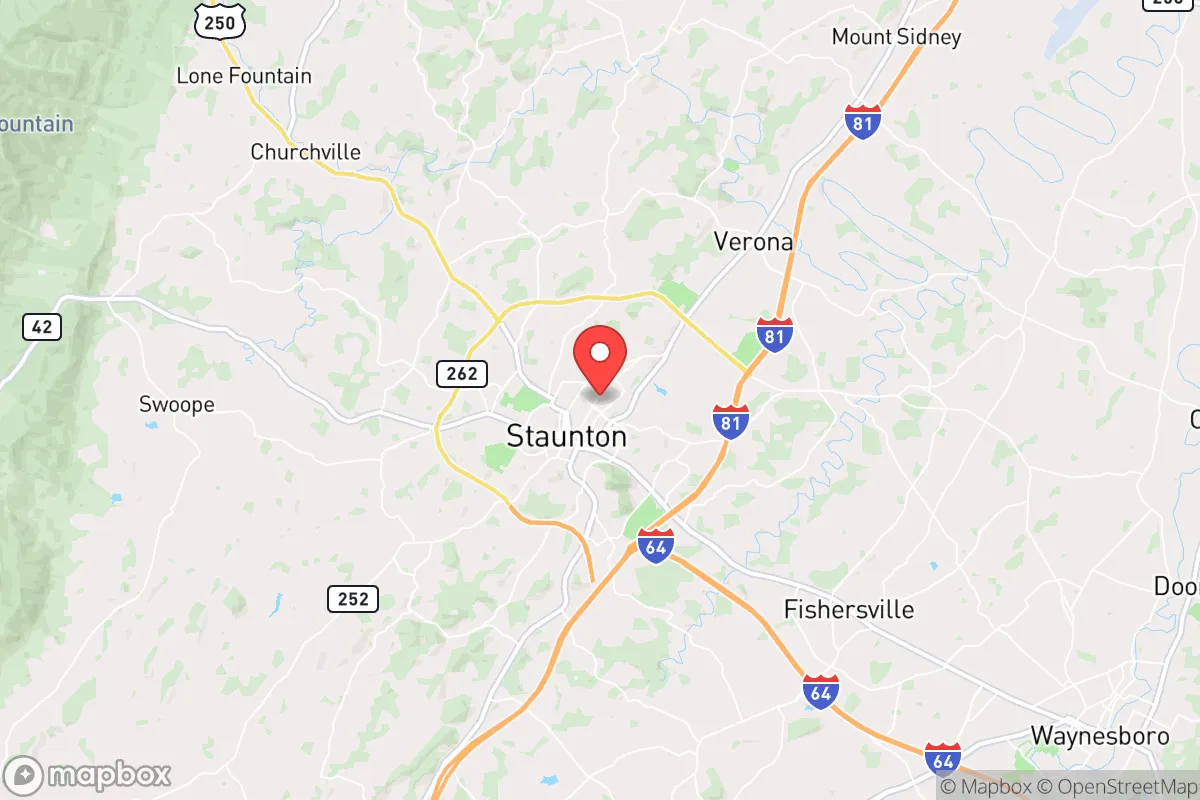
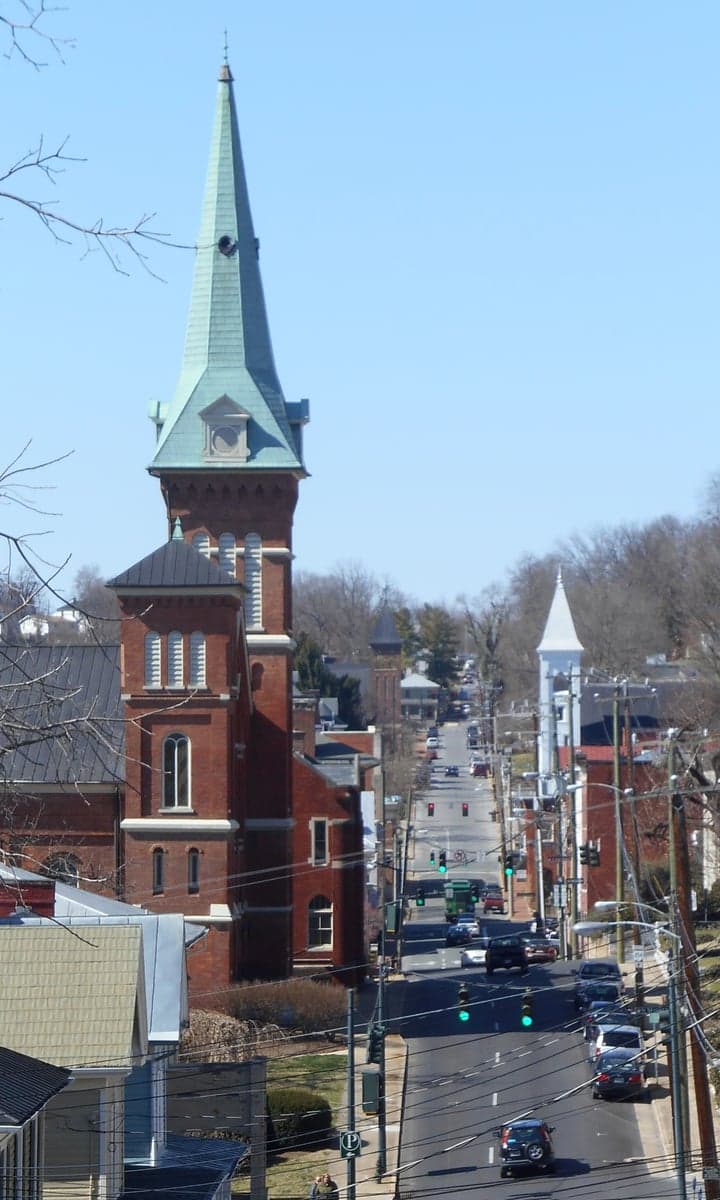
Photo: Wikipedia
Political ClimatePolitical Climate in Staunton, VA
District shown is the primary district for this city’s centroid. Cities may span multiple districts.
Inherited from parent state — no local data available.
Local Political AnalysisPolitical Analysis of Staunton, VA
Staunton, Virginia, has historically been a conservative stronghold, but like many smaller cities in the Shenandoah Valley, it's seeing a slow but noticeable shift. The Cook PVI rating of R+12 tells you the district still leans heavily Republican, but that number masks a growing tension between the old guard and newer, more progressive arrivals. If you've been here a while, you remember when the local elections were a foregone conclusion; now, you see more yard signs for candidates who talk about "equity" and "inclusion" rather than fiscal responsibility and individual liberty. It's not a blue wave, but it's a definite purple tinge, and it's got a lot of folks watching the city council meetings a little more closely.
How it compares
Drive 20 minutes north to Harrisonburg, and you'll see what Staunton could become if the trend continues. Harrisonburg's city council has embraced a much more progressive agenda, with higher taxes and a focus on social programs that some residents feel have overstepped into personal freedoms. Meanwhile, head south to Lexington, and you'll find a town that's even more conservative than Staunton, with a strong military and college presence that keeps things rooted in tradition. Staunton sits right in the middle—a sort of political buffer zone. The surrounding Augusta County is solidly red, but the city itself is where the real friction happens. You'll hear folks at the diner grumble about "those people from up north" moving in and trying to change things, and there's some truth to that. The influx of remote workers and retirees from more liberal areas is slowly diluting the local voting base.
What this means for residents
For a long-time resident, the biggest concern is government overreach creeping into daily life. We've seen it in the push for stricter zoning laws that make it harder to run a small business out of your home, and in the school board debates over curriculum that seem to prioritize social agendas over basic reading and math. The property tax rate is still reasonable compared to Northern Virginia, but there's constant pressure to raise it for "community initiatives" that sound good on paper but often mean more bureaucracy. The Second Amendment is still respected here—you won't get sideways looks for carrying—but there's a quiet worry that the state government in Richmond will eventually try to impose its will on localities like ours. The real test will come in the next few election cycles, as the older, more conservative residents are outnumbered by younger families who don't share the same skepticism of government power.
One thing that hasn't changed is the cultural vibe. Staunton still feels like a place where people know their neighbors and look out for each other. The downtown is charming, with a thriving arts scene that leans a bit left, but the surrounding farmland and small businesses keep things grounded. The biggest policy distinction is that Staunton has resisted the kind of "sanctuary city" nonsense you see in places like Charlottesville. The local police still cooperate with federal immigration authorities, and the city hasn't gone down the road of defunding or reimagining public safety. That's a relief, but it's a battle that has to be fought every budget cycle. If you're thinking of moving here, just know that the political climate is in flux. It's still a good place to raise a family if you value personal freedom and a low-tax environment, but you'll need to stay engaged to keep it that way.

State Political ClimatePolitical Climate in Virginia
State Political AnalysisPolitical Environment in the State
Virginia has shifted from a reliably purple swing state to a solidly blue one over the past two decades, driven primarily by explosive growth in the Washington, D.C. suburbs. The state’s overall partisan lean is now Democratic-leaning by about 5-7 points in statewide races, but that number masks a deep and growing chasm between the urban crescent and the rest of the commonwealth. The 2021 gubernatorial race saw Republican Glenn Youngkin win by a narrow 1.6 points, but that was an outlier fueled by parental rights backlash; the 2020 presidential election gave Joe Biden a 10-point win, and Democrats have controlled the state legislature for most of the last decade. For a conservative considering relocation, the key question is whether you’re moving into the blue bubble of Northern Virginia or the redder, more traditional parts of the state like the Shenandoah Valley or Southside.
Urban vs. rural divide
The political map of Virginia is essentially a tale of two commonwealths. The urban crescent — Arlington, Alexandria, Fairfax County, and Richmond — drives the state’s Democratic majorities. Fairfax County alone casts more votes than many entire states, and it went for Biden by 38 points in 2020. Richmond, once a moderate Southern capital, has become a reliably blue city, while Virginia Beach and Norfolk in Hampton Roads lean Democratic but with a stronger military and veteran presence that keeps them more competitive. Meanwhile, the rural and exurban areas — Lynchburg, Roanoke, the Shenandoah Valley (Harrisonburg, Staunton), and Southside (Danville, Martinsville) — vote heavily Republican. The 2021 gubernatorial race saw Youngkin flip Chesapeake and Loudoun County (the epicenter of the parental rights movement) back to red, but those were narrow wins in a low-turnout, anti-establishment wave. The fundamental demographic trend is that the D.C. suburbs are growing faster than the rest of the state, meaning the blue vote is structurally increasing.
Policy environment
Virginia’s policy environment has lurched leftward since Democrats took full control in 2020. The state’s income tax is a flat 5.75% (scheduled to drop to 5.5% by 2026 under a bipartisan deal), but property taxes are locally set and can be high in Northern Virginia. Sales tax is 5.3% (plus local add-ons). The regulatory posture is mixed: Virginia is a right-to-work state, but the minimum wage was raised to $12/hour in 2023 and is indexed to inflation. Education policy has been a flashpoint — the state eliminated its Standards of Learning (SOL) graduation requirements for certain students and adopted the controversial "Model Policies" on transgender students under Governor Ralph Northam, which Youngkin reversed via executive order. Election laws are relatively loose: no voter ID requirement (though a photo ID is requested), same-day registration is available, and no-excuse absentee voting is permanent. The state also legalized marijuana possession in 2021, but retail sales remain stalled due to political infighting. For conservatives, the biggest red flags are the state’s strong environmental regulations (Virginia is part of the Regional Greenhouse Gas Initiative, though Youngkin is trying to withdraw) and the growing influence of organized labor in government contracting.
Trajectory & freedom
Virginia’s trajectory on personal freedom is a mixed bag that leans concerning for conservatives. On the positive side, the state passed a "Second Amendment Sanctuary" resolution in over 100 counties in 2020, and Youngkin signed a permitless concealed carry law in 2022, restoring some gun rights after the 2020 Democratic ban on assault weapons and high-capacity magazines. Parental rights saw a major win with Youngkin’s executive order on "Model Policies" that require schools to notify parents of changes in a child’s gender identity. However, the state has expanded government overreach in other areas: the 2020 "Virginia Values Act" added sexual orientation and gender identity as protected classes in housing and employment, and the "Clean Economy Act" mandates a 100% carbon-free grid by 2050, driving up energy costs. Medical freedom took a hit with the state’s strict COVID-19 vaccine mandates for state employees and healthcare workers, though those have since been rescinded. Property rights are under pressure from localities like Arlington and Alexandria that have upzoned single-family neighborhoods, reducing homeowner control. The overall trend is that Northern Virginia’s progressive policies are slowly being imposed on the rest of the state through state-level legislation.
Civil unrest & political movements
Virginia has been a battleground for political movements on both sides. The 2017 "Unite the Right" rally in Charlottesville and the subsequent violence left a lasting scar, and the city remains a symbol of racial and political tension. The 2020 Black Lives Matter protests in Richmond led to the removal of Confederate statues on Monument Avenue, and the city’s police budget was cut by $1.5 million. On the right, the "Parents Matter" movement exploded in Loudoun County in 2021 after a sexual assault case involving a transgender student in a bathroom, leading to the ouster of the school board and Youngkin’s victory. The "Second Amendment Sanctuary" movement saw over 100 counties pass resolutions vowing not to enforce new gun laws, though these are largely symbolic. Immigration politics are less heated than in border states, but Prince William County and Fairfax County have declared themselves "sanctuary" jurisdictions, limiting cooperation with ICE. Election integrity remains a sore point: the 2020 election saw widespread use of drop boxes and mail-in ballots, and the state’s voter rolls were purged of 3,200 non-citizens in 2023, but critics say the system remains vulnerable. A new resident in Northern Virginia will see political yard signs and bumper stickers year-round, while in rural areas, the culture is more quietly conservative.
Projection
Over the next 5-10 years, Virginia is likely to continue its slow drift leftward, driven by in-migration from D.C. and other blue states. The 2020 census showed that Northern Virginia and Hampton Roads grew while rural areas shrank, and that trend is accelerating. The state’s Democratic majority in the legislature is likely to hold, meaning more progressive policies on taxes, energy, and education. However, there is a counter-trend: the exodus of conservatives from Northern Virginia to exurbs like Fredericksburg and Spotsylvania is turning those areas redder, and the Shenandoah Valley is seeing an influx of remote workers from D.C. who may lean moderate. The 2025 gubernatorial race will be a bellwether — if a Republican can win again, it will signal that the state is still competitive, but if Democrats hold the governorship, expect a full embrace of California-style policies. For a conservative moving in now, the realistic expectation is that you’ll be living in a state where your vote in statewide races will be in the minority, but your local community may still reflect your values if you choose the right county.
For a new resident, the bottom line is that Virginia offers a high quality of life with strong schools and a robust economy, but the political climate is increasingly hostile to conservative values at the state level. If you’re moving to Lynchburg or the Shenandoah Valley, you’ll find a like-minded community and local control. If you’re moving to Northern Virginia, expect to be a political minority with limited influence. The state’s trajectory is toward more government intervention, higher taxes, and progressive social policies, but the pace is slower than in California or New York. Choose your county carefully, and be prepared to engage in local politics to protect your freedoms.
* Values derived from national, state, county, city and local statistics and may differ in a specific area. Last updated: 2026-04-24T19:56:10.000Z
Narrative content on this page is AI-generated and may contain mistakes. Verify any details that matter before acting on them.
ReloMaps may earn a commission from affiliate links at no extra cost to you.

