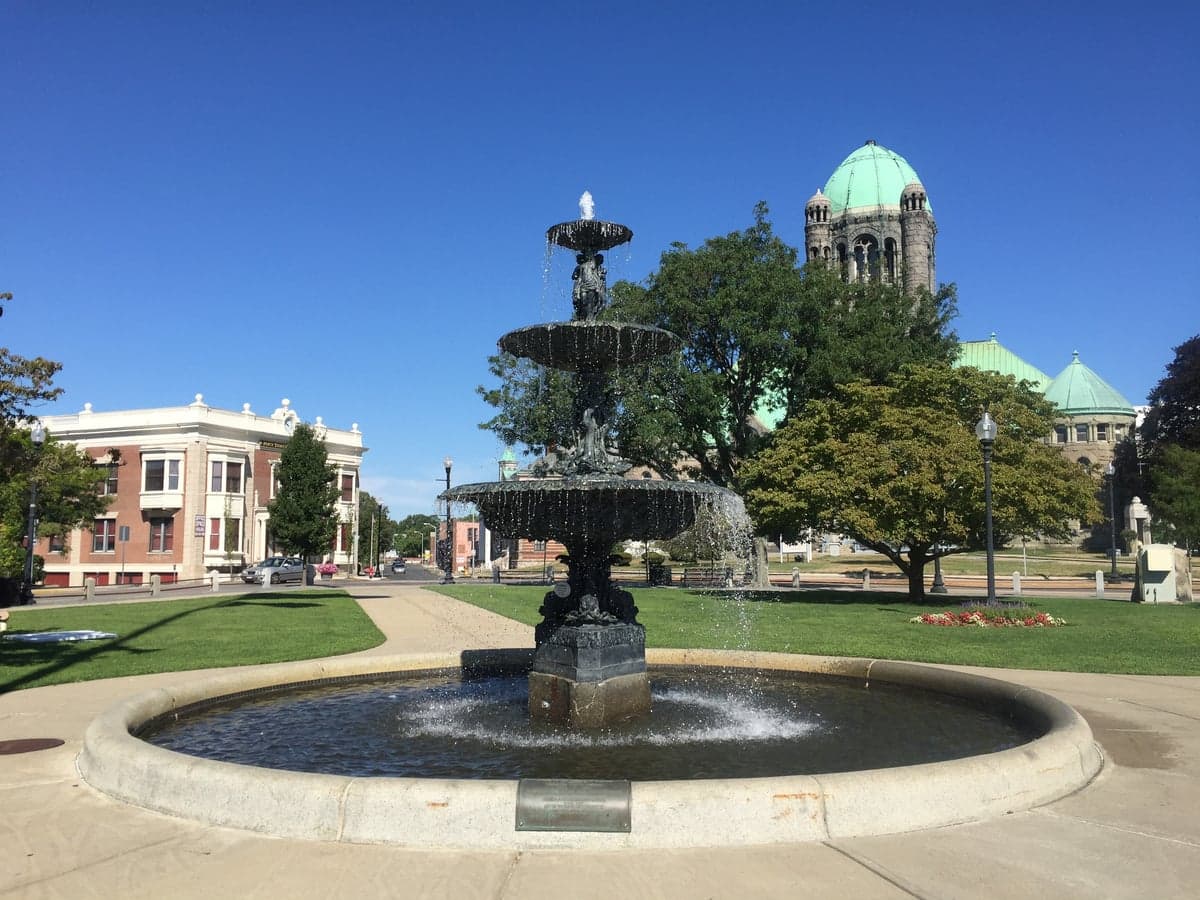
Photo: Wikipedia
Political ClimatePolitical Climate in Taunton, MA
District shown is the primary district for this city’s centroid. Cities may span multiple districts.
Local Political AnalysisPolitical Analysis of Taunton, MA
Taunton, Massachusetts, sits squarely in deep-blue territory with a Cook Partisan Voting Index of D+11, meaning it votes about 11 points more Democratic than the national average. That wasn't always the case. I remember when this city was a lot more balanced—working-class folks, Portuguese and Irish families, union guys who'd vote for a Democrat but wouldn't touch the progressive stuff. Now, it's shifted hard left, and the trajectory is concerning if you value personal freedoms and local control. The last few election cycles have seen the city council and school board tilt further into progressive hands, and the state-level pressure from Boston only amplifies it.
How it compares
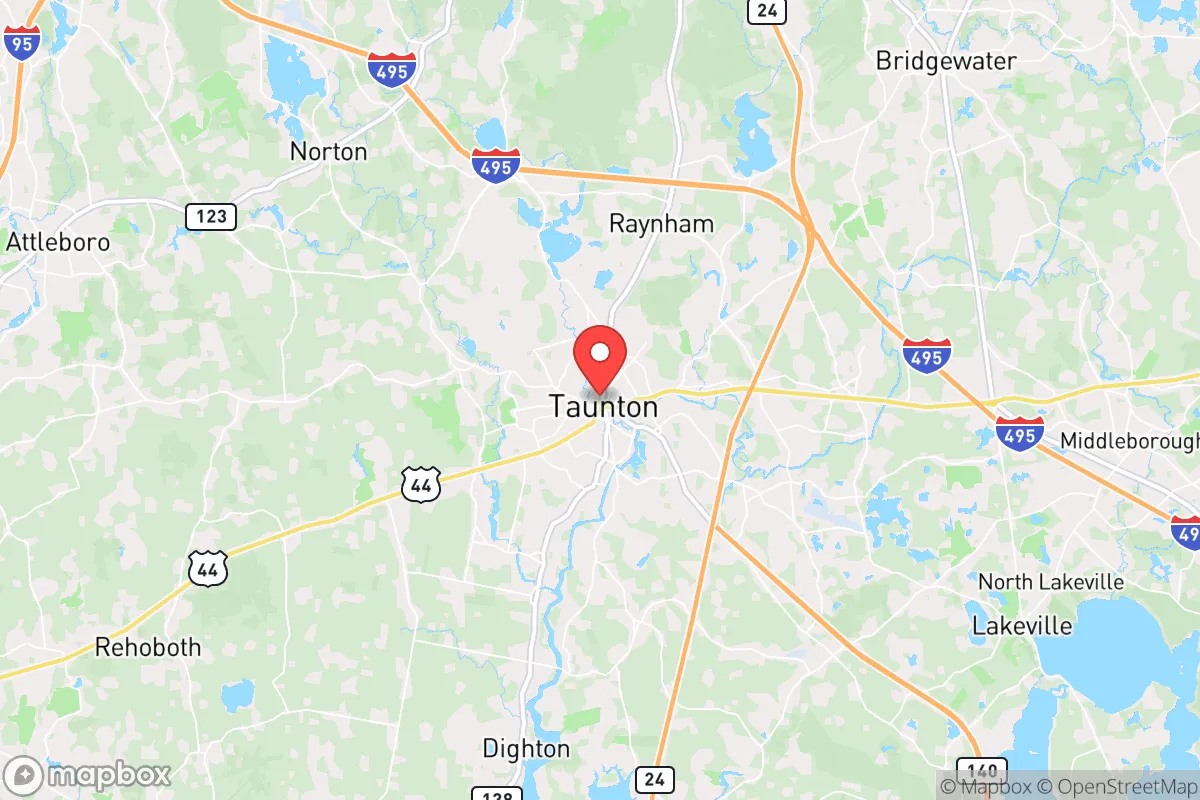
If you drive ten miles west to Raynham or fifteen miles north to Bridgewater, you'll feel a different vibe. Those towns lean more conservative—Raynham voted for Trump in 2020, and Bridgewater is a toss-up. Even nearby Norton and Berkley have a stronger independent streak. Taunton, though, is surrounded by that deep-blue Bristol County influence, and the city itself has become a staging ground for state-level mandates. The contrast is stark: you can be in a town where people still grumble about mask mandates and vaccine passports, then cross into Taunton and see the city council pushing sanctuary city policies and equity initiatives without much pushback. It's a real split in the region, and it's getting wider every year.
What this means for residents
For someone who values personal freedoms—like choosing whether to send your kid to a school with a certain curriculum or opting out of a vaccine mandate—Taunton's political climate is a red flag. The city government has been quick to adopt state-level progressive policies, from zoning changes that override local property rights to police reform measures that some feel go too far. The school committee has also moved toward more centralized, equity-focused programming, which can feel like a top-down approach rather than listening to parents. If you're a homeowner or a small business owner, you're dealing with higher taxes and more regulations than you'd see in the surrounding towns. The city's leadership seems more aligned with Boston's agenda than with the everyday concerns of folks here.
On the cultural side, Taunton still has its old-school charm—the diners, the Portuguese bakeries, the annual Taunton River Festival. But the political shift is real. You'll see more pride flags and "In This House We Believe" signs than you did a decade ago, and the local paper covers more identity politics than infrastructure. The city council meetings can get heated, with debates over things like defunding the police or renaming Columbus Day. It's not the Taunton I grew up in, where the biggest fight was over a new shopping plaza. The long-term trend is clear: more government involvement in daily life, less room for dissent, and a political machine that rewards conformity. If you're looking for a place where you can live and let live without the state breathing down your neck, you might want to look at the towns just outside the city limits.

State Political ClimatePolitical Climate in Massachusetts
State Political AnalysisPolitical Environment in the State
Massachusetts has long been one of the most reliably Democratic states in the country, with a partisan lean that has only deepened over the past two decades. In the 2024 presidential election, Kamala Harris carried the state by roughly 25 points, a margin that has held steady or widened since 2004, when John Kerry won it by about the same spread. The dominant coalition is a mix of urban progressives, well-educated suburbanites, and union-aligned working-class voters in the old industrial cities, while the state’s small but vocal conservative minority is largely confined to rural central and western counties and a few outer suburbs. For a conservative considering relocation, the headline is clear: Massachusetts is a deep-blue state where progressive policy is the baseline, and the political culture can feel suffocating for those who value limited government, gun rights, or traditional social values.
Urban vs. rural divide
The political map of Massachusetts is a textbook case of the urban-rural split, but with a twist: even the suburbs lean left. Greater Boston, including Cambridge, Somerville, and Newton, is the engine of Democratic dominance, routinely delivering 80-90% of the vote for Democratic candidates. The city of Boston itself is a progressive stronghold, but the real driver is the ring of affluent, highly educated suburbs like Lexington, Brookline, and Wellesley, where voters are reliably liberal on social issues and taxes. Western Massachusetts offers a more mixed picture: Springfield and Worcester are Democratic but more moderate, while rural towns like Sturbridge, Palmer, and the hill towns of Berkshire County often vote Republican. The Cape and Islands (Barnstable, Falmouth) are swing areas, but even there, the trend has been toward Democrats in recent cycles. The only county that voted for Trump in 2020 was Barnstable County (Cape Cod), and even that flipped back to Harris in 2024. For a conservative, the practical reality is that you’ll find like-minded neighbors in small towns west of Worcester or in the rural pockets of the Berkshires, but you’ll be a distinct minority in most of the state.
Policy environment
Massachusetts’ policy environment is aggressively progressive, and the state’s tax and regulatory posture reflects that. The state has a flat income tax rate of 5%, but in 2022 voters approved a “millionaires tax” (a 4% surcharge on income over $1 million), which effectively created a progressive income tax. Property taxes are moderate by national standards but high relative to the region, and the state’s estate tax kicks in at just $1 million, one of the lowest thresholds in the country. On education, Massachusetts spends more per pupil than almost any other state, and its public schools are consistently ranked among the best nationally, but the system is heavily centralized, with curriculum mandates and a strong teachers’ union influence that can frustrate parents seeking school choice or charter alternatives. Healthcare is dominated by the state’s 2006 universal coverage law (the model for the ACA), and the state has aggressively expanded Medicaid, making it one of the most regulated insurance markets in the country. Election laws are among the most liberal: no-excuse mail-in voting, same-day registration, and automatic voter registration are all in place, and the state has no voter ID requirement for in-person voting. For a conservative, the policy environment feels like a one-party state where the legislature routinely overrides local control on issues like zoning, energy, and education.
Trajectory & freedom
Massachusetts is moving decisively in the direction of less personal freedom, particularly on issues of gun rights, parental rights, and medical autonomy. The state already has some of the strictest gun laws in the nation—including an assault weapons ban, a 10-round magazine limit, and a discretionary licensing system that gives local police chiefs broad authority to deny permits—and in 2024 the legislature passed a sweeping new gun law that bans “ghost guns,” expands the red flag law, and requires microstamping on new handguns. On parental rights, the state passed a 2022 law (An Act Relative to Parental Notification) that actually weakened parental consent requirements for minors seeking abortions, and the state’s Department of Elementary and Secondary Education has issued guidance that effectively mandates LGBTQ-inclusive curricula without an opt-out for parents. On medical autonomy, Massachusetts was one of the first states to mandate COVID-19 vaccines for schoolchildren (a policy that was later rescinded), and the state’s public health bureaucracy retains broad emergency powers. Property rights are constrained by the state’s powerful zoning laws and the Chapter 40B affordable housing statute, which allows developers to override local zoning in towns that don’t meet state housing targets. For a conservative, the trajectory is unmistakable: the state is becoming more interventionist, not less.
Civil unrest & political movements
Massachusetts has a long history of political activism, but the flashpoints in recent years have been overwhelmingly on the left. The 2020 Black Lives Matter protests in Boston were large and occasionally violent, with property damage in the Downtown Crossing area. The state’s sanctuary status—Massachusetts has a 2017 law that limits local law enforcement cooperation with federal immigration authorities—has been a persistent source of tension, particularly in cities like Lawrence, Chelsea, and Lynn, where immigrant populations are large and federal immigration enforcement is a frequent flashpoint. On the right, the state’s conservative movement is small but organized, with groups like the Massachusetts Fiscal Alliance and the Massachusetts Gun Owners Action League pushing back on tax and gun policies. There have been scattered “Second Amendment sanctuary” resolutions passed by towns like Granby, Monson, and Palmer, but these are symbolic and have no legal force. Election integrity controversies are minimal—the state’s mail-in voting system has been widely accepted—but there is a persistent undercurrent of frustration among conservatives who feel their votes are irrelevant in a one-party state. A new resident would notice the ubiquity of political signage and activism in liberal areas, and the relative quiet in conservative towns, where people tend to keep their politics private.
Projection
Over the next 5-10 years, Massachusetts is likely to become even more progressive, driven by in-migration from other blue states and the continued urbanization of the Boston metro area. The state’s population is aging and slowly declining in rural areas, but the Boston region is growing, fueled by the tech, biotech, and education sectors. This demographic shift will reinforce the existing political trends: expect more gun control, more state intervention in housing and education, and higher taxes on the wealthy. The state’s Republican Party is effectively a non-factor in statewide elections, and the legislature’s Democratic supermajority means that even moderate Democratic governors (like Charlie Baker, who left office in 2023) have limited ability to block progressive legislation. For a conservative moving in now, the realistic expectation is that the state will continue to feel like a place where your political views are out of step with the majority, and where policy will continue to move in a direction that prioritizes collective action over individual liberty.
For a new resident, the bottom line is that Massachusetts offers world-class education, healthcare, and economic opportunity, but at the cost of living in a state where the government is deeply involved in your personal choices—from what kind of firearm you can own to how your children are educated to how much of your income you keep. If you value high-quality public services and can tolerate a heavy regulatory hand, the state has a lot to offer. If you prioritize personal freedom, limited government, and a political culture that respects individual rights, you will find Massachusetts a frustrating place to call home. The best bet for a conservative is to target the rural towns of western Massachusetts or the outer Cape, where you can find a small community of like-minded neighbors, but even there, the state-level policy environment will be a constant source of friction.
* Values derived from national, state, county, city and local statistics and may differ in a specific area. Last updated: 2026-05-01T07:34:21.000Z
Narrative content on this page is AI-generated and may contain mistakes. Verify any details that matter before acting on them.
ReloMaps may earn a commission from affiliate links at no extra cost to you.

