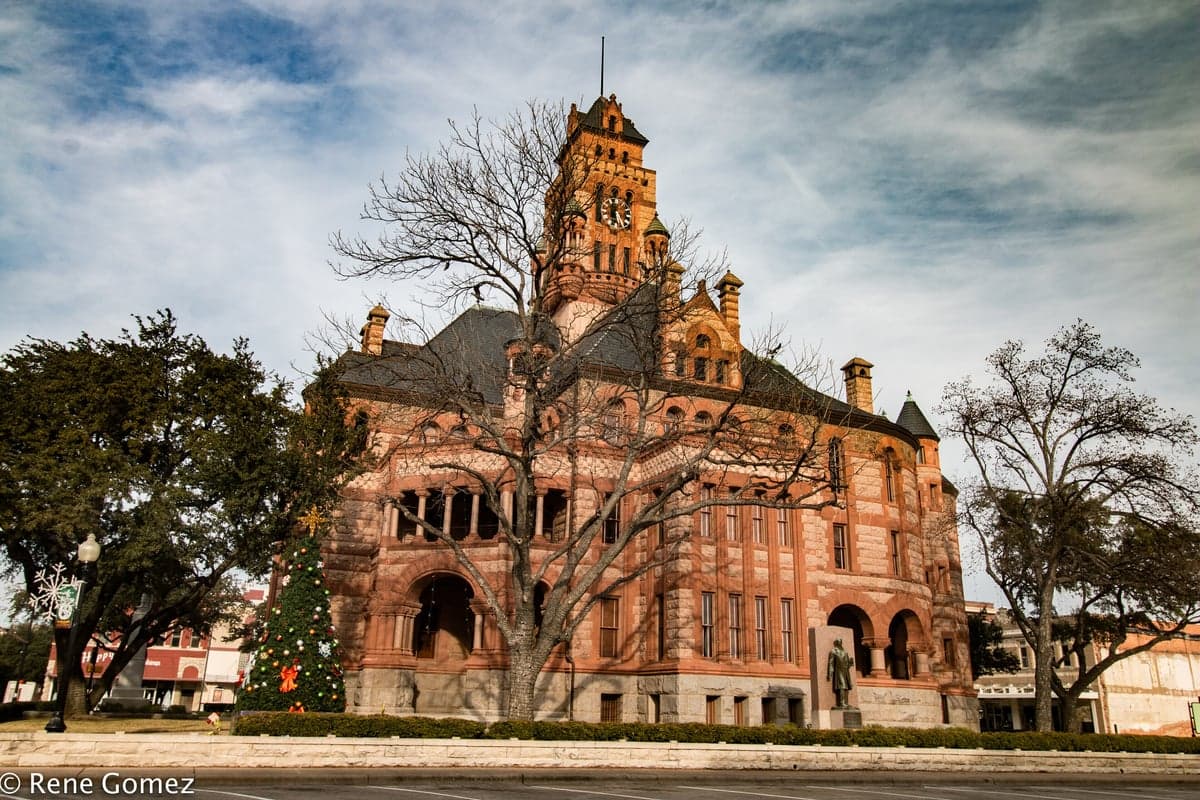
Photo: Wikipedia
Political ClimatePolitical Climate in Ellis County
Showing district-level results — no local-only data available.
Local Political AnalysisPolitical Analysis of Ellis County
Ellis County has long been a conservative stronghold, and that hasn't changed much despite the rapid growth from the Dallas metro. The Cook PVI sits at R+14 — a full ten points redder than the state as a whole, which is R+4. So while Texas as a whole has shifted toward competitive, Ellis County remains deep red. But if you've lived here as long as I have, you can feel the ground shifting in subtle ways. The political center hasn't moved left by much, but the kind of politics that controls your life — property taxes, school mandates, zoning — is where the real tension is brewing.
How it compares
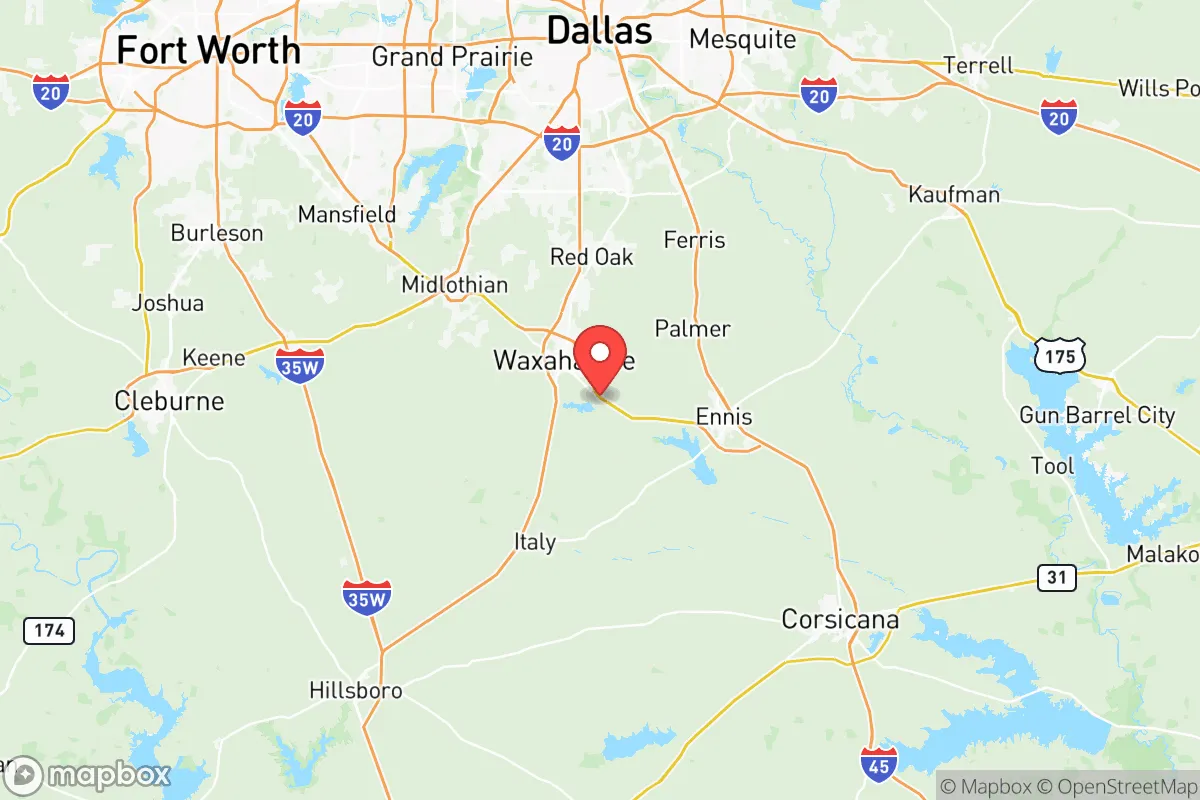
Statewide, Texas still leans Republican but has drifted toward purple as urban centers like Dallas, Houston, and Austin exploded and in-migration brought a lot of blue-leaning voters. Ellis County, on the other hand, was already red and stayed red. The difference is stark: in 2024, the county gave the Republican candidate about 70% of the vote, while statewide that number was closer to 56%. But don't get the idea that the whole county votes the same. You've got towns like Waxahachie — the county seat — where there's a small but noticeable progressive pocket around the historic downtown and the college campus (Southwestern Assemblies of God University is conservative, but its faculty and younger residents have brought some diversity of thought). Down in Ennis, the Czech heritage crowd is reliably conservative, but those railroad-worker families have a strong union streak that sometimes shows up in local races. The real contrast is between the rural western towns like Maypearl or Italy — reliably red with minimal fuss — and the booming eastern suburbs like Red Oak and Glenn Heights, where new arrivals from Dallas often bring a more moderate, "leave me alone" libertarian vibe that still leans Republican but is less predictable in primaries.
What this means for residents
For those of us who value local control and want to keep government out of our personal lives, Ellis County mostly delivers. You won't find the kind of heavy-handed zoning or school board activism you see in Dallas County. The county commissioners have held the line on property tax rate increases for several years, though rising appraisals eat into that relief. The real watch item is how the school districts handle curriculum mandates from Austin. So far, most districts have pushed back on any progressive overreach — Waxahachie ISD and Midlothian ISD both have conservative majorities on their boards and have kept things focused on basics. But as more families move in from blue areas, I see school board meetings getting louder every spring. The concern isn't that a progressive wave will sweep the county — it's that a steady drip of small policy changes could slowly erode the freedom and local accountability we've enjoyed. If you're moving here for that small-town conservative ethos, know that the eastern edge is already changing.
One of Ellis County's best-kept cultural distinctions is its fierce independence from Dallas's political machine. Ovilla, for instance, fought hard to keep its rural character and has one of the most restrictive ordinances against utility-scale solar farms in North Texas — a direct response to state-level pressure to allow them. That kind of community pushback is common here. You'll also find a deep distrust of any property-rights infringements, whether it's tree ordinances in Palmer or wetland rules near the Trinity River. The county's identity is still rooted in its farming and ranching history, but the next decade will test whether that identity can survive the influx. If you value a place where the government stays small and leaves you alone, Ellis County is still one of the best bets in the state — but keep an eye on those school board races.

State Political ClimatePolitical Climate in Texas
State Political AnalysisPolitical Environment in the State
Texas has long been the crown jewel of the conservative movement, but the last 10-20 years have reshaped its political DNA in ways that both energize and unsettle long‑time residents. The state leans Republican at the presidential level by a solid R+4 Cook PVI, but that surface‑level number hides a fierce tug‑of‑war between booming progressive metros and a deeply rooted rural‑exurban conservative base. While Republicans still control every statewide office and both legislative chambers, the margins in the suburbs have thinned noticeably since the 2010s, and a surging population from California, New York, and Illinois has brought a new political intensity to places that used to be reliably red.
Urban vs. rural divide
The political map of Texas is best understood as two warring galaxies. The deep‑blue islands are Austin, El Paso, Houston’s Harris County, Dallas County, and San Antonio’s Bexar County — metros where progressive activists and Democratic machine politics have held sway for a decade or more. Austin in particular has become the poster child of left‑coast transplantation, with city council races dominated by housing‑first advocates and defunding‑adjacent rhetoric. El Paso remains a Democratic stronghold driven by its binational culture and long‑standing union ties. Meanwhile, the rural heartland — places like Lubbock, Midland, Odessa, and the vast Panhandle — votes Republican by 30, 40, even 50 points. The real action is in the suburban ring counties that decide statewide races: Collin, Denton, Tarrant, Williamson, and Montgomery. In 2020, Tarrant County (Fort Worth) flipped to Biden after decades of red, and Collin County’s margin shrank to single digits. Those suburbs are now the central battlefield where the state’s political future is being fought.
Policy environment
On paper, Texas still offers the core package that attracts conservative movers: no state income tax, weak regulatory agencies, a right‑to‑work labor code, and a business‑friendly tort system. Property taxes, however, are among the nation’s highest — a trade‑off that grates on homeowners every spring. The 2023 property tax cut package (SB 2 and Proposition 4) was a serious attempt to lighten that load, sending billions back to taxpayers and raising the homestead exemption to $100,000. On education, the state passed a universal school choice bill in 2025 (HB 42) after years of false starts, giving families vouchers to use at private or religious schools. Healthcare remains a mixed bag: Texas didn’t expand Medicaid, and rural hospital closures are a persistent worry, but the 2023 ban on most abortions (SB 8’s trigger law) and the new medical freedom laws protecting doctors from forced participation reflect a culture that prizes bodily autonomy over government mandates. Election integrity got a major overhaul with SB 1 in 2021, tightening ID requirements, limiting drive‑through voting, and banning 24‑hour polling places — measures that have held up in court and are widely supported by the conservative base.
Trajectory & freedom
The freedom narrative in Texas is a paradox: the state has expanded personal liberty in some arenas while eroding it in others. On the plus side, permitless carry (HB 1927, 2021) made Texas a constitutional carry state, and the 2025 pre‑emption bill stripped local governments of the power to pass sanctuary‑city gun ordinances — a direct rebuke of Austin and Houston’s attempts to micro‑regulate firearms. Parental rights got a boost with the 2023 “Parents’ Bill of Rights” (SB 694), requiring schools to get written permission before teaching about sexual orientation or gender identity. But the flip side is the creeping reach of state authority: the 2025 law criminalizing “cyberbullying” of elected officials (HB 1589) has free‑speech advocates worried, and the 2024 data privacy law (SB 1372) was watered down so badly that Big Tech still hoards your information. Medical freedom took a hit with the 2023 ban on gender‑transition care for minors (SB 14), which many parents applaud as protecting kids, but the state also moved to restrict COVID‑19 mandates in schools — so the direction depends on which freedom you’re talking about. Overall, I’d say Texas is more free on family, gun, and economic issues, but less free on matters of local control and digital speech.
Civil unrest & political movements
Texas has seen its share of street‑level turbulence. The 2020 George Floyd protests in Austin, Houston, and Dallas turned into weeks of property destruction and clashes with law enforcement, rattling suburbanites who saw city leaders hesitate to restore order. The “defund the police” push in Austin led to a 2021 budget cut that was quickly reversed after a surge in violent crime, a cautionary tale that still colors local elections. On the right, the “Constitutional Sheriff” movement gained traction in rural counties like Montgomery and Smith, where sheriffs publicly refuse to enforce new state liquor‑license laws they see as federal overreach, though that’s more symbolic than actionable. Immigration politics are front and center: the 2023 Operation Lonestar deployed thousands of troops and state police to the border near El Paso and the Rio Grande Valley, leading to constitutional fights with the Biden administration over the state’s right to install razor wire and buoys in the Rio Grande. The “secession” talk — #Texit — flares up every election cycle, but it’s more a negotiating tactic than a real movement; a 2024 Texas GOP platform plank endorsing a secession referendum was quietly dropped after party leadership realized it was a distraction. Election integrity remains a litmus test: Democratic‑run Harris County’s chaotic 2022 primary and the subsequent state takeover of its elections administration are still raw, with each side accusing the other of disenfranchisement.
Projection
Looking five to ten years down the road, the trajectory is not a straight line. The demographic math is real: 70% of Texas population growth since 2010 has come from minority communities, and Hispanic voters — especially younger ones — have drifted leftward, though not as fast as national averages. The in‑migration from blue states is concentrated in the suburbs, and those newcomers bring voting habits that dilute the old Reagan Democrat stock. I expect statewide races to stay competitive — the 2024 presidential margin was already under 5 points, and by 2028 or 2032, Texas could be a toss‑up. But the structural advantages for conservatives remain: no state income tax means less reliance on government services, the Legislature draws its own maps and has gerrymandered the State House to protect rural seats, and the rural‑exurban base is still growing faster than urban cores thanks to people fleeing high‑crime cities. The wild cards are whether the GOP can keep suburban moms on side with school choice and parental rights, and whether the border crisis overwhelms the state’s budget. A new resident moving in today should expect a state that stays conservatively Republican for the next cycle or two, but with constant cultural clashes in the suburbs and a Legislature that will keep passing bills on education, immigration, and guns — because that’s what the base demands.
For someone choosing Texas as a home, the bottom line is this: you’re getting a state where your taxes will stay low on income but high on property, where your kids can attend private or religious schools with state money, where you can carry a gun without permission, and where local governments in blue cities will constantly be at war with the state capital over issues like mask mandates, homeless camps, and zoning. That tension is actually a feature — it means you can pick a county that matches your comfort level. If you want the full red‑state experience, look at the exurbs north of Dallas or the oil‑patch towns. If you want some urban energy but still lean right, Fort Worth and its western suburbs are holding the line. Just know that the politics are changing fast, and the friend who tells you Texas is “solid red” may be remembering 2014, not 2024.
* Values derived from national, state, county, city and local statistics and may differ in a specific area. Last updated: 2026-05-22T01:06:16.000Z
Narrative content on this page is AI-generated and may contain mistakes. Verify any details that matter before acting on them.
ReloMaps may earn a commission from affiliate links at no extra cost to you.

