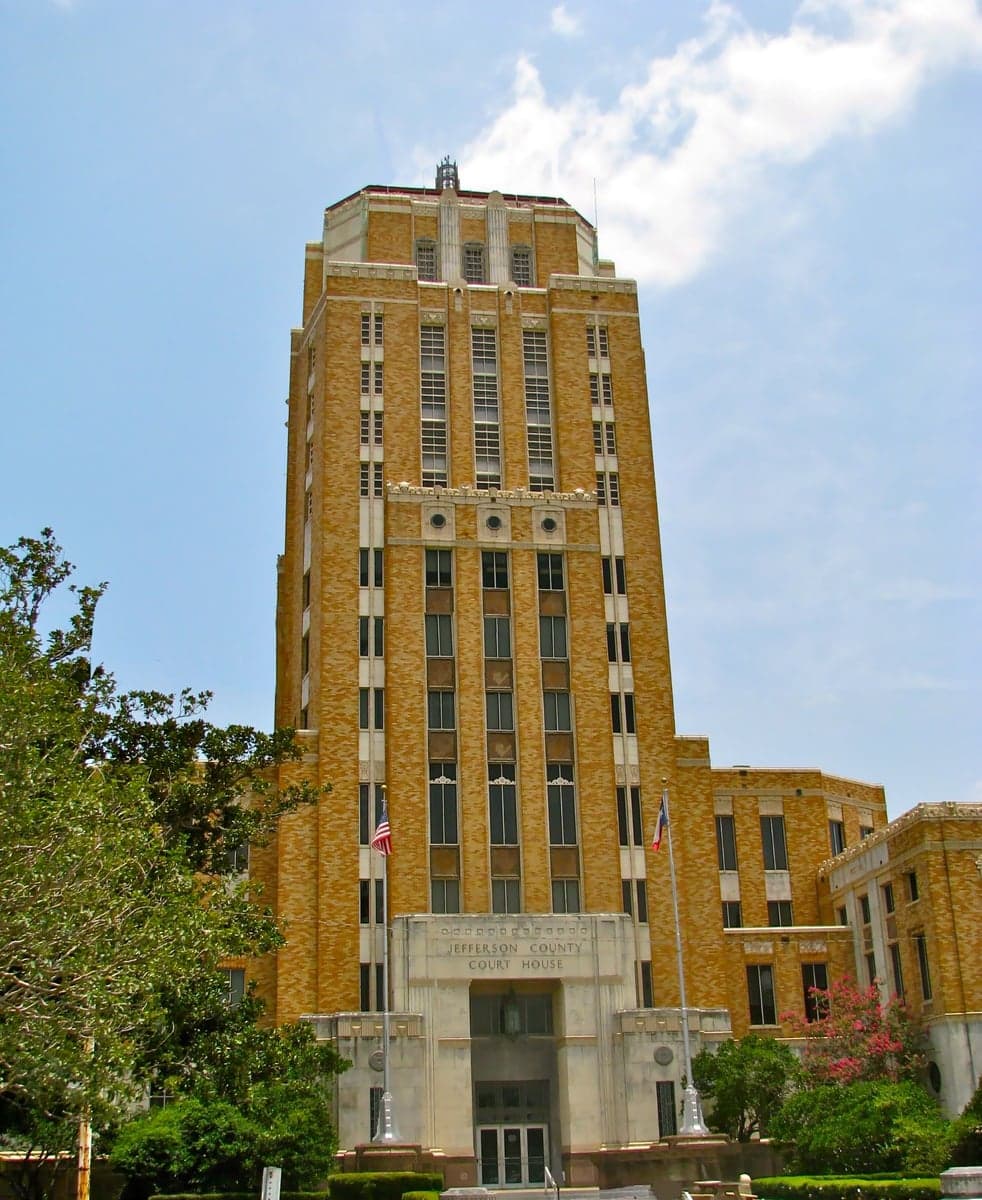
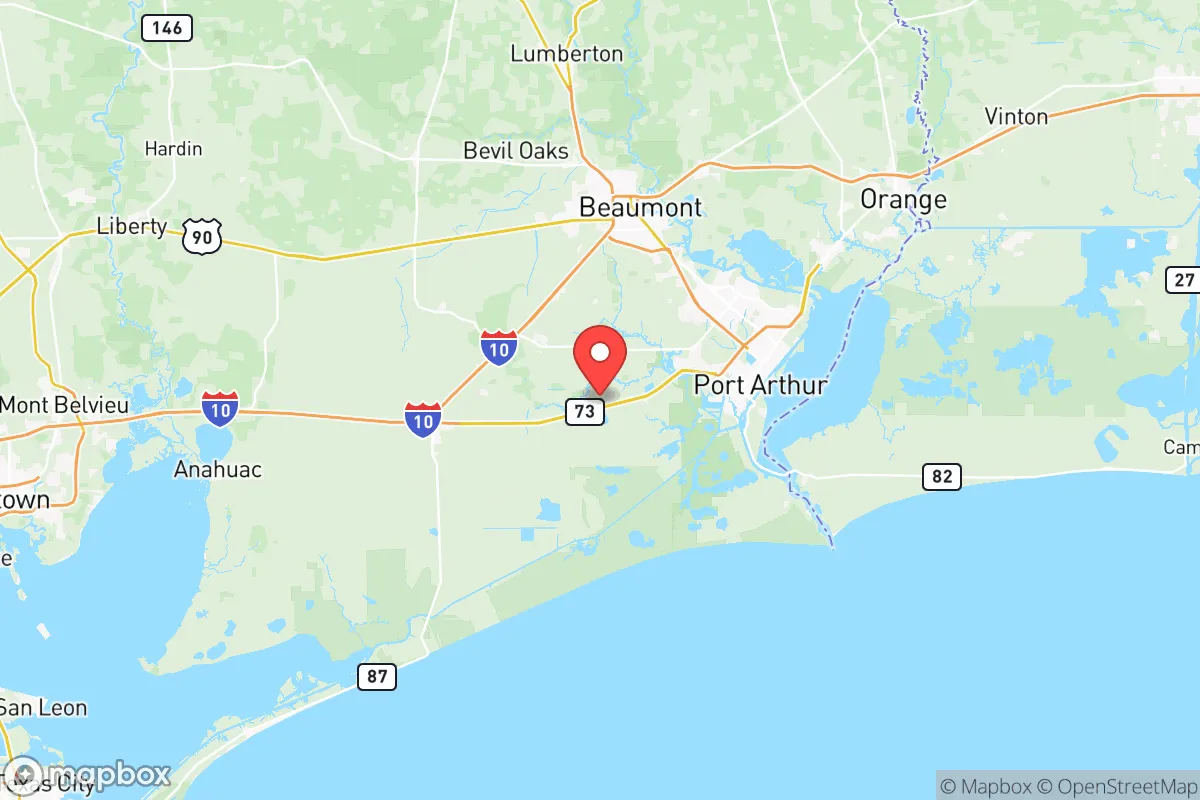
Photo: Wikipedia
Political ClimatePolitical Climate in Jefferson County
Showing district-level results — no local-only data available.
Local Political AnalysisPolitical Analysis of Jefferson County
Jefferson County, Texas, is a solidly conservative stronghold with a Cook PVI of R+17, meaning it votes about 13 points more Republican than the state of Texas as a whole, which sits at R+4. This isn't a new trend; it's been a reliably red area for decades, anchored by the working-class oil and gas communities and the deep-rooted cultural conservatism of Southeast Texas. The county has shifted rightward in recent cycles, with the rural and suburban precincts pulling harder for the GOP while the city of Beaumont has become a bit of a blue island, but the overall trajectory is firmly Republican.
How it compares
Compared to the rest of Texas, Jefferson County is a redder, more culturally traditional place. The state as a whole is trending purple, driven by explosive growth in the urban metros of Dallas, Houston, and Austin, which are pulling the state's PVI toward the center. Jefferson County, by contrast, is losing population—down about 5% since 2020—and its political character is becoming more entrenched. The biggest contrast is in the county's internal dynamics. Beaumont's central core and the Lamar University area lean blue, often voting 55-60% Democrat, thanks to a mix of union households, minority communities, and younger voters. But drive ten minutes outside the city limits, and you hit precincts in Nederland, Port Neches, and Groves that routinely vote 75-80% Republican. The swing precincts are in the unincorporated areas like Fannett and Hamshire, where the vote is reliably 65-70% GOP, but can shift a few points based on local oil prices or school board controversies. The county's R+17 rating is actually a bit misleading—it's a tale of two electorates, with the rural and suburban vote overwhelming the urban one.
What this means for residents
For a conservative resident, this political climate means a government that generally stays out of your way on the issues that matter most. Property taxes are a constant headache, but the county commission and city councils in the red towns keep spending in check—you won't see the kind of progressive social engineering that's creeping into Austin or Houston. The local school boards in Nederland and Port Neches are still focused on core academics and parental rights, not woke curriculum experiments. The biggest concern I hear from folks is the slow creep of state-level mandates from Austin—like the push for more renewable energy mandates that threaten the local petrochemical industry, which employs thousands. Beaumont's city council has flirted with progressive policies like "sanctuary city" rhetoric and DEI initiatives, but those efforts have been consistently voted down or watered down by the more conservative suburbs that dominate countywide elections. The real red flag is the demographic shift: as the county's population ages and young people leave for jobs in Houston, the remaining electorate is getting older and more conservative, which could lead to a disconnect with the state's broader trends.
Cultural and policy distinctions
What sets Jefferson County apart from the rest of Texas is its deep, almost stubborn cultural identity. This is Cajun-influenced, gumbo-cooking, deer-hunting country where the Fourth of July parade in Port Neches is a bigger deal than any election. The county has a strong "don't tread on me" streak—gun rights are sacrosanct, and the local sheriff's office is known for its no-nonsense approach to law enforcement. There's a palpable distrust of federal environmental regulations, which are seen as a direct threat to the refineries and chemical plants that pay the bills. The policy distinction is stark: while Texas as a whole has embraced some deregulation and business-friendly policies, Jefferson County's leaders are often more skeptical of any government intervention, even from the state. You'll find a lot of support for school choice and Second Amendment sanctuary resolutions here, but very little appetite for the kind of urban-style zoning or public transit projects that are gaining traction in Dallas or Houston. It's a place that values its independence and isn't shy about telling Austin or Washington to keep their hands off. The near-term future looks like more of the same—a red county getting redder, with the blue pockets in Beaumont becoming more isolated and less influential in countywide races.

State Political ClimatePolitical Climate in Texas
State Political AnalysisPolitical Environment in the State
Texas has been a solidly Republican state for decades, with a Cook PVI of R+4 reflecting its consistent lean, but the coalition holding it together is shifting under your feet. The dominant force remains a mix of suburban conservatives, rural traditionalists, and business-minded libertarians, but the 10-to-20-year arc shows a slow but real erosion of that advantage—driven largely by explosive growth in the blue-leaning metros of Austin, Dallas, Houston, and San Antonio. If you’re looking at Texas as a relocation option, understand that the state’s political identity is no longer a monolith; it’s a battleground between a deeply entrenched conservative establishment and an increasingly organized progressive movement that’s gaining ground in the urban cores.
Urban vs. rural divide
The political map of Texas is a tale of two worlds. The vast rural expanse—places like Lubbock, Amarillo, and the Panhandle—votes overwhelmingly Republican, often by margins of 70% or more. Meanwhile, the major metros are the engines of Democratic growth. Austin is the state’s most liberal city, with Travis County delivering a 40-point margin for Democrats in recent cycles. El Paso and the Rio Grande Valley have historically leaned Democratic, though the Valley has shown some rightward drift in 2020 and 2024. Dallas and Houston are more nuanced: their suburban rings—places like Collin County (north of Dallas) and Fort Bend County (southwest of Houston)—have been flipping from red to purple, driven by educated, affluent newcomers who are increasingly uncomfortable with the GOP’s cultural stances. The 2020 election saw Tarrant County (Fort Worth) flip to Biden for the first time since 1964, a major warning sign for conservatives. The rural-urban split isn’t just a voting pattern; it’s a cultural chasm that defines every policy debate in the state.
Policy environment
Texas’s policy environment is a mixed bag for a conservative-leaning newcomer. On the plus side, there’s no state income tax, which is a massive draw for high-earners and families. Property taxes are high—among the highest in the nation—but the state has used budget surpluses to fund modest relief, like the 2023 property tax cut package that reduced school tax rates. The regulatory posture is generally business-friendly, with minimal red tape for startups and a right-to-work law that keeps unions weak. On education, the state has leaned into school choice: the 2023 legislative session passed a universal education savings account (ESA) program, allowing parents to use state funds for private or homeschool expenses—a win for parental rights. Healthcare is a sore spot: Texas has the highest uninsured rate in the country, and the refusal to expand Medicaid under Obamacare remains a point of contention. Election laws have tightened: the 2021 Senate Bill 1 restricted mail-in voting, added ID requirements, and banned drive-through voting, which conservatives argue protects integrity but critics call suppression. For a conservative, the policy environment is largely favorable, but the property tax burden and healthcare gaps are real concerns.
Trajectory & freedom
The trajectory of freedom in Texas is a tale of two trends. On one hand, the state has aggressively expanded personal liberty in areas conservatives care about. The 2021 permitless carry law (HB 1927) allows most adults to carry a handgun without a license, a major expansion of Second Amendment rights. The 2023 “Save Women’s Sports” Act (SB 15) bans transgender athletes from female school sports, and the 2021 abortion ban (SB 8) effectively ended most abortions after six weeks, with a near-total ban following the Dobbs decision. Parental rights were strengthened with the 2023 “Parental Bill of Rights” (HB 900), which requires schools to notify parents about curriculum changes and restricts sexually explicit materials. On the other hand, the state has shown a worrying appetite for government overreach in other areas. The 2023 law targeting “gender-affirming care” for minors (SB 14) criminalizes doctors who provide such care, which some see as a necessary protection and others as an intrusion into medical decisions. The state’s aggressive use of the death penalty and its strict drug laws also raise questions about personal freedom. Overall, Texas is becoming more free in the traditional conservative sense—gun rights, school choice, parental control—but less free in areas like medical autonomy and criminal justice reform. The net direction depends on your priorities.
Civil unrest & political movements
Texas has seen its share of political flashpoints. The 2020 Black Lives Matter protests in Austin and Houston were large and occasionally violent, leading to property damage and a lasting police reform debate. The 2021 “People’s March” in Austin drew thousands against the restrictive voting law. On the right, the “Trump Train” phenomenon—where convoys of flag-waving trucks blocked Biden campaign buses in 2020—highlighted a militant grassroots energy. Immigration politics are a constant tinderbox: the state’s Operation Lone Star, launched in 2021, deployed state troopers and National Guard to the border, leading to clashes with the Biden administration and humanitarian groups. El Paso and the border counties have seen migrant surges that strain local resources. Secession rhetoric has flared, with the Texas Nationalist Movement pushing for a 2024 referendum on independence, though it remains fringe. Election integrity remains a hot-button issue: the 2020 audit of four counties (including Dallas and Tarrant) found no widespread fraud, but the controversy hasn’t died down. A new resident will notice the political polarization in daily life—yard signs, bumper stickers, and heated local news coverage are the norm.
Projection
Over the next 5-10 years, Texas is likely to become more competitive at the statewide level, but not necessarily more liberal. The in-migration from California and other blue states is real—about 1,000 people move to Texas each day—and many of them are educated professionals who lean left. However, many are also conservatives fleeing high taxes and regulation. The key battleground will be the suburbs: places like Collin County, Denton County, and Hays County (south of Austin) are growing fast and trending purple. The state’s Hispanic population, long a Democratic base, is showing signs of shifting right, especially in the Rio Grande Valley, which could offset urban gains. The Republican-controlled legislature will likely continue to push conservative priorities—school choice, gun rights, abortion restrictions—but may face increasing resistance from a growing Democratic minority. The biggest wildcard is the 2026 gubernatorial race: if a Democrat wins, it would signal a major shift. For a new resident, expect the political climate to remain conservative at the state level for at least another decade, but with more noise, more competitive races, and a growing sense that the old order is under pressure.
Bottom line for a new resident: Texas offers a largely conservative policy environment with no income tax, strong gun rights, and expanding school choice, but you’ll pay for it with high property taxes and a healthcare system that leaves many uncovered. The political culture is increasingly polarized, with urban centers pulling left and rural areas digging in. If you’re moving here for freedom, you’ll find it in many areas—but be prepared for a state that’s fighting over what that freedom means, and where the outcome of that fight is far from settled.
* Values derived from national, state, county, city and local statistics and may differ in a specific area. Last updated: 2026-06-06T16:30:44.000Z
Narrative content on this page is AI-generated and may contain mistakes. Verify any details that matter before acting on them.
ReloMaps may earn a commission from affiliate links at no extra cost to you.

