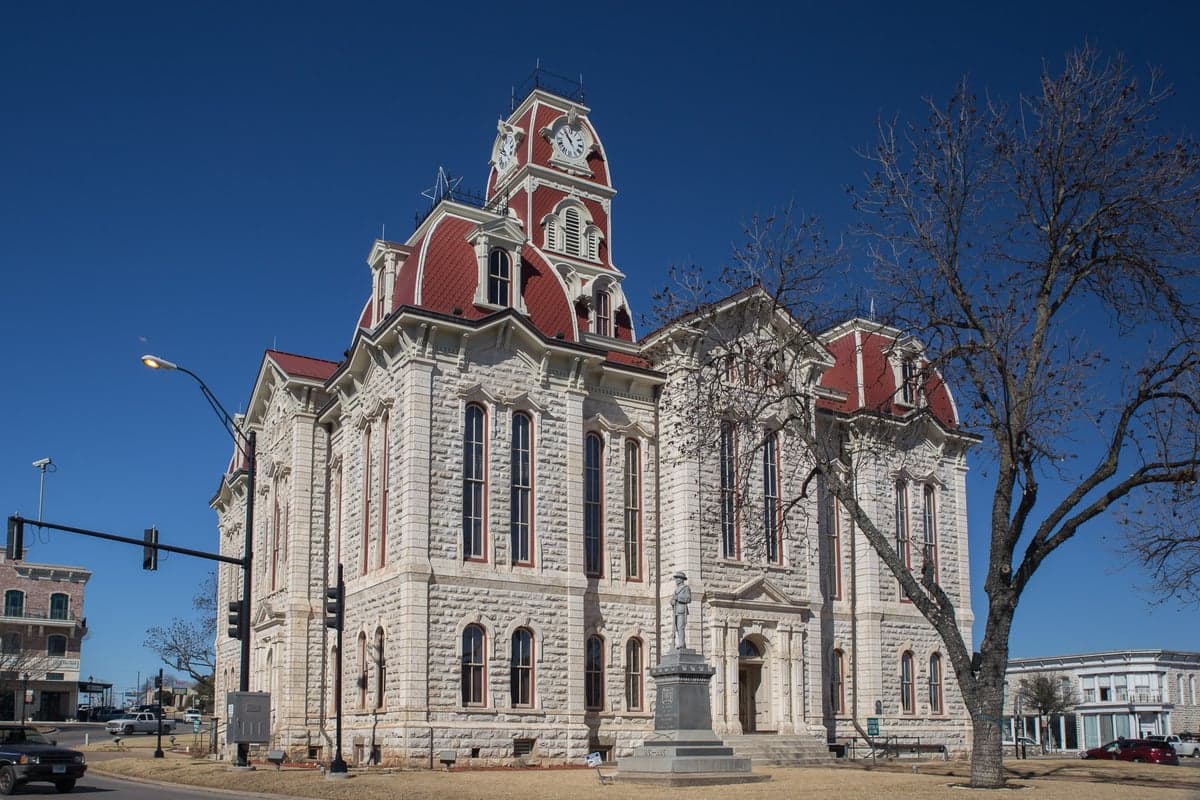
Photo: Wikipedia
Political ClimatePolitical Climate in Parker County
Showing district-level results — no local-only data available.
Local Political AnalysisPolitical Analysis of Parker County
Parker County, Texas, is about as rock-ribbed conservative, with a Cook PVI of R+11 that makes it significantly redder than the state as a whole (R+4). This isn’t a recent shift—it’s been a deep-red stronghold for decades, and the trajectory is actually hardening. While Texas has seen some suburban drift toward the center in places like Tarrant County next door, Parker County has held the line and, if anything, is pulling further right. The 2024 election saw Donald Trump carried the county by over 30 points, and local races are often decided in the Republican primary, not the general election. That said, there are subtle variations across the county worth knowing about if you’re looking to put down roots.
How it compares
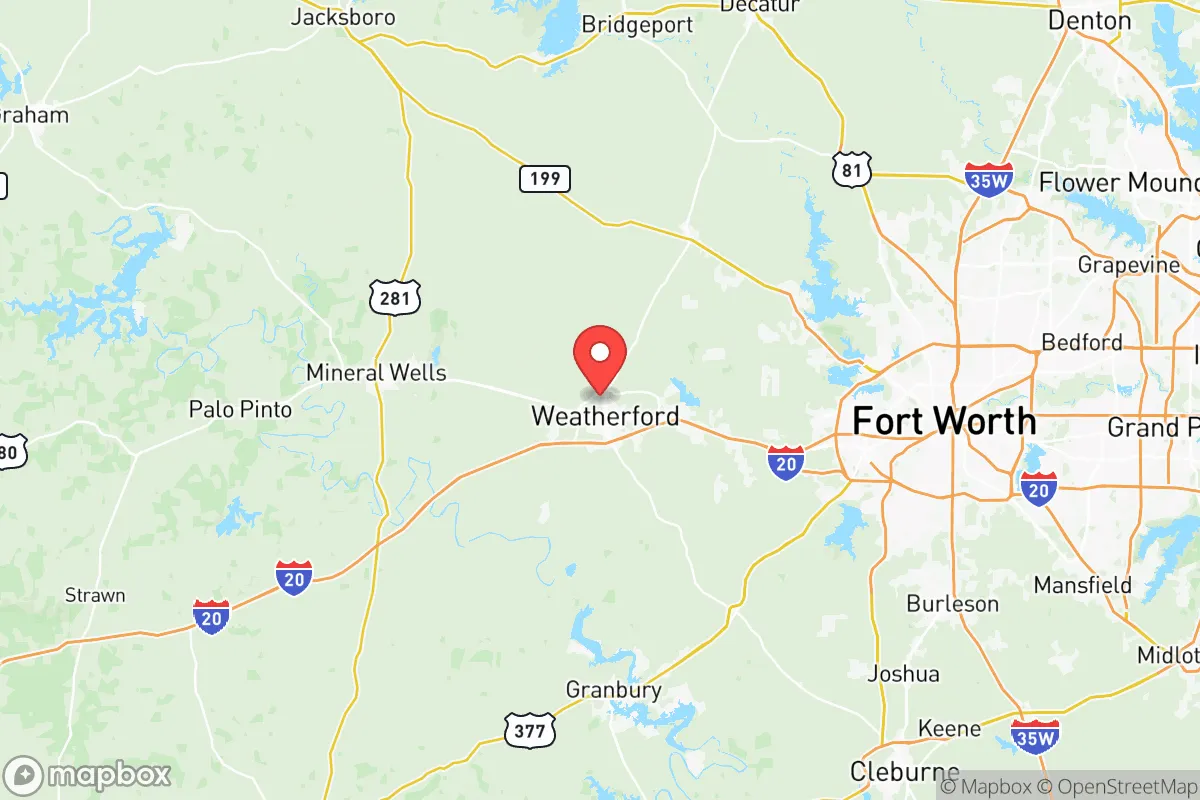
The gap between Parker County’s R+11 and Texas’s R+4 isn’t just a number—it reflects a fundamentally different political culture. In the state at large, you’ve got deep-blue urban islands (Houston, Dallas, Austin) pulling the average left, but Parker County is almost entirely rural and exurban, with no major city to counterbalance it. Within the county, Weatherford (the county seat) is reliably red but has a small, vocal progressive minority concentrated around the courthouse square and the arts district. Aledo>Aledo is even redder—think high-income, high-turnout, and fiercely libertarian-leaning on property rights and school choice. The real contrast is Springtown and Brock, which are among the most conservative precincts in the entire state. These are areas where you’ll see “Don’t Tread on Me” flags flying next to Trump signs, and where the local school board meetings get heated over curriculum transparency. The only precincts that lean blue are tiny pockets around Willow Park and Hudson Oaks, where some Tarrant County commuters have settled—but even those are still R+5 or so. Swing precincts? There aren’t many. This county doesn’t swing; it stays put.
What this means for residents
For someone who values personal freedom and limited government, Parker County is about as good as it gets in Texas. Property taxes are high (around 2.5% effective rate), but the county commissioners have consistently resisted bond measures for things like light rail or regional transit authorities, so you’re not paying for programs you don’t want. The sheriff’s office is aggressively pro-Second Amendment and has a policy of not enforcing any federal gun restrictions they deem unconstitutional. COVID-era mandates? The county never had a mask mandate, and the school districts (Aledo ISD, Weatherford ISD, Brock ISD) kept kids in class full-time while Dallas and Fort Worth were locked down. That’s the kind of local control you get when local government actually listens to the people who live there. The downside? If you’re hoping for a shift toward progressive policies—say, zoning reform or diversity initiatives—you’ll be disappointed. The county for a long wait. The county’s Republican Party is dominated by the Texas GOP’s conservative wing, and any candidate who even hints at “common-sense gun safety” or “affordable housing mandates” gets primaried out fast.
The cultural distinction here is that Parker County isn’t just Republican—it’s culturally>libertarian in a way that even some other red parts of Texas aren’t always. You won’t find a lot of “we know what’s best for you” from local officials. The county’s motto might as well be “leave us alone.” That’s why you see so many people moving here from California and Colorado—they’re not looking for a big government solution; they’re looking for a place where the government stays out of their business. The long-term concern? As more people flood in from blue states, there’s always the risk that the county’s culture gets diluted. But so far, the newcomers are self-selecting for the same values. If that changes, you’ll see it first in the precincts around Azle and Reno, where the housing developments are going up fastest. For now, though, Parker County remains a bastion of conservative common sense in a state that’s still pretty red but showing cracks around the edges.

State Political ClimatePolitical Climate in Texas
State Political AnalysisPolitical Environment in the State
Texas has been a reliably Republican state for decades, with a Cook Partisan Voting Index of R+4, but the political landscape is far from monolithic. The dominant coalition remains conservative, anchored by rural and suburban voters, but explosive growth in the Dallas-Fort Worth metroplex, Houston, and San Antonio has introduced real demographic churn. Over the last 10-20 years, the state has shifted from deep red to a lighter shade — still solidly Republican at the state level, but with urban counties like Harris (Houston), Dallas, and Bexar (San Antonio) trending blue, while the exurbs and small towns have hardened their conservative stance. If you’re moving here expecting a uniform political culture, you’ll find a patchwork of fiercely independent regions.
Urban vs. rural divide
The political map of Texas is a study in contrasts. The big metros — Austin, El Paso, Houston, Dallas, and San Antonio — are the engines of Democratic growth. Austin’s Travis County voted 71% for Biden in 2020, and El Paso’s county went 65% blue. Meanwhile, the rural and small-town spine of the state — places like Lubbock, Midland, Odessa, and the Panhandle — routinely deliver 75-80% Republican margins. The real battleground is the suburban ring: Collin County (north of Dallas) flipped from +18 R in 2016 to +8 R in 2020, while Fort Bend County (southwest of Houston) went from +6 R to +2 D over the same period. These fast-growing suburbs are where the state’s political future will be decided. If you’re looking for a deep-red enclave, head to the Permian Basin or the Hill Country; if you want a purple community, check out the outer suburbs of Fort Worth or San Antonio.
Policy environment
Texas’s policy posture is unmistakably conservative, but with some nuance. There is no state income tax — a huge draw for families and single earners alike — and property taxes are high to compensate, averaging about 1.7% of assessed value. The regulatory climate is business-friendly: no state-level minimum wage above the federal $7.25, and right-to-work laws keep unions weak. On education, the state has expanded school choice through charter schools and the Education Savings Account program passed in 2023, though it remains limited compared to some other states. Healthcare policy is a mixed bag: Texas did not expand Medicaid under the ACA, leaving about 1.5 million uninsured, but the state has also passed laws to protect medical conscience rights and limit vaccine mandates. Election laws tightened after 2020 with Senate Bill 1, which restricted mail-in voting, added ID requirements, and banned 24-hour and drive-through voting. For a conservative moving in, the policy environment is largely aligned with limited-government principles, though the high property tax burden is a real pain point.
Trajectory & freedom
Over the past five years, Texas has moved in a decidedly more freedom-oriented direction on several fronts — but not without some worrying countercurrents. The state passed permitless carry (HB 1927) in 2021, allowing law-abiding adults to carry a handgun without a license. The Texas Heartbeat Act (SB 8) banned abortion after about six weeks and empowered private citizens to enforce it. Parental rights were strengthened with the 2023 law requiring school libraries to remove books deemed “sexually explicit” and giving parents more control over curriculum. On the other hand, the state has also expanded government power in ways that concern liberty-minded residents: the 2021 election law (SB 1) added bureaucratic hurdles for voters, and the state’s aggressive use of the “abortion travel ban” (SB 4, currently blocked in court) raises questions about interstate freedom. Property rights remain strong — no statewide rent control, and eminent domain protections are decent — but homeowners associations can still be overbearing. Overall, Texas is freer than most states on guns, taxes, and speech, but the trend toward using state power to enforce social policy cuts both ways.
Civil unrest & political movements
Texas has seen its share of political flashpoints. The 2020 protests in Austin and Dallas over George Floyd’s death led to property damage and a heavy police response, and the city of Austin later defunded its police department by about $150 million — a move that was partially reversed after crime spiked. Immigration politics are a constant source of tension: Governor Abbott’s Operation Lone Star has deployed state troopers and National Guard to the border, busing migrants to sanctuary cities like New York and Chicago. The Texas Nationalist Movement (Texit) has gained some traction, with a 2022 poll showing about 31% support for secession, though it remains a fringe idea. On the right, groups like Moms for Liberty and the Texas GOP’s grassroots have been active in school board races and library controversies. Election integrity remains a hot-button issue: Attorney General Ken Paxton’s office has investigated voter fraud cases, though actual convictions have been rare. A new resident will notice the political energy — yard signs, bumper stickers, and local news coverage of school board meetings are all more intense than in many other states.
Projection
Looking ahead 5-10 years, Texas is likely to remain Republican at the state level, but the margin will continue to shrink. In-migration from California and other blue states is bringing more moderate and left-leaning voters, especially to the suburbs of Dallas, Houston, and Austin. The Hispanic vote, long a Republican target, is slowly shifting rightward — counties like Starr and Zapata in the Rio Grande Valley moved 10-15 points toward Trump between 2016 and 2020. If that trend holds, the GOP could offset losses in the suburbs. However, the state’s rapidly diversifying population and the continued growth of urban centers mean that by 2032, Texas could be a true battleground. For a conservative moving in now, expect to see more competitive elections, more policy fights over education and taxes, and a political culture that is increasingly polarized between the big cities and the rest of the state. The freedom trajectory will depend on who controls the legislature after the 2030 redistricting cycle.
For a new resident — especially a conservative single or parent — Texas offers a strong alignment with limited-government values on taxes, guns, and parental rights, but you’ll need to pick your location carefully. The rural and exurban counties are still deeply red; the inner suburbs are turning purple; the urban cores are blue. If you want to live in a place where your vote counts and your values are reflected in local policy, look at Collin County, Denton County, Montgomery County, or the Hill Country around Kerrville and Fredericksburg. Avoid Austin and El Paso unless you’re comfortable being in a progressive minority. The bottom line: Texas is still a freedom-friendly state, but the political winds are shifting — and where you plant your flag matters more than ever.
* Values derived from national, state, county, city and local statistics and may differ in a specific area. Last updated: 2026-05-14T21:08:03.000Z
Narrative content on this page is AI-generated and may contain mistakes. Verify any details that matter before acting on them.
ReloMaps may earn a commission from affiliate links at no extra cost to you.

