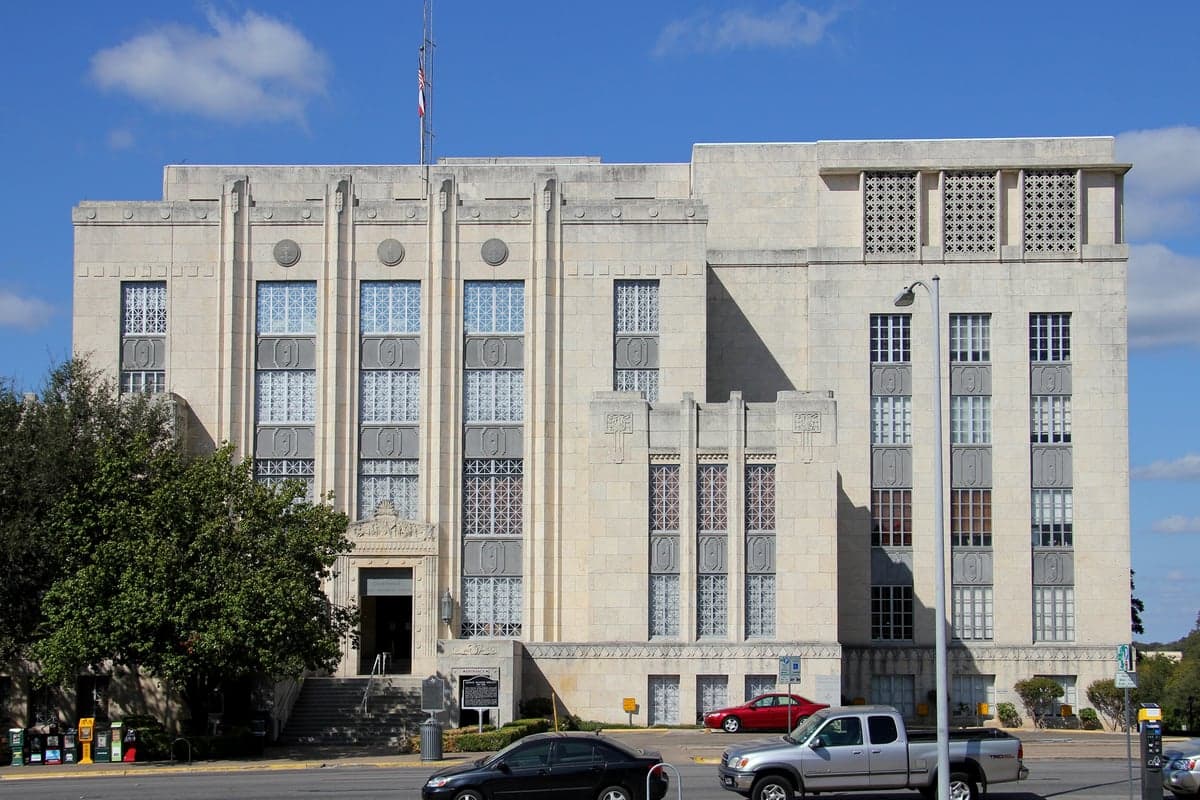
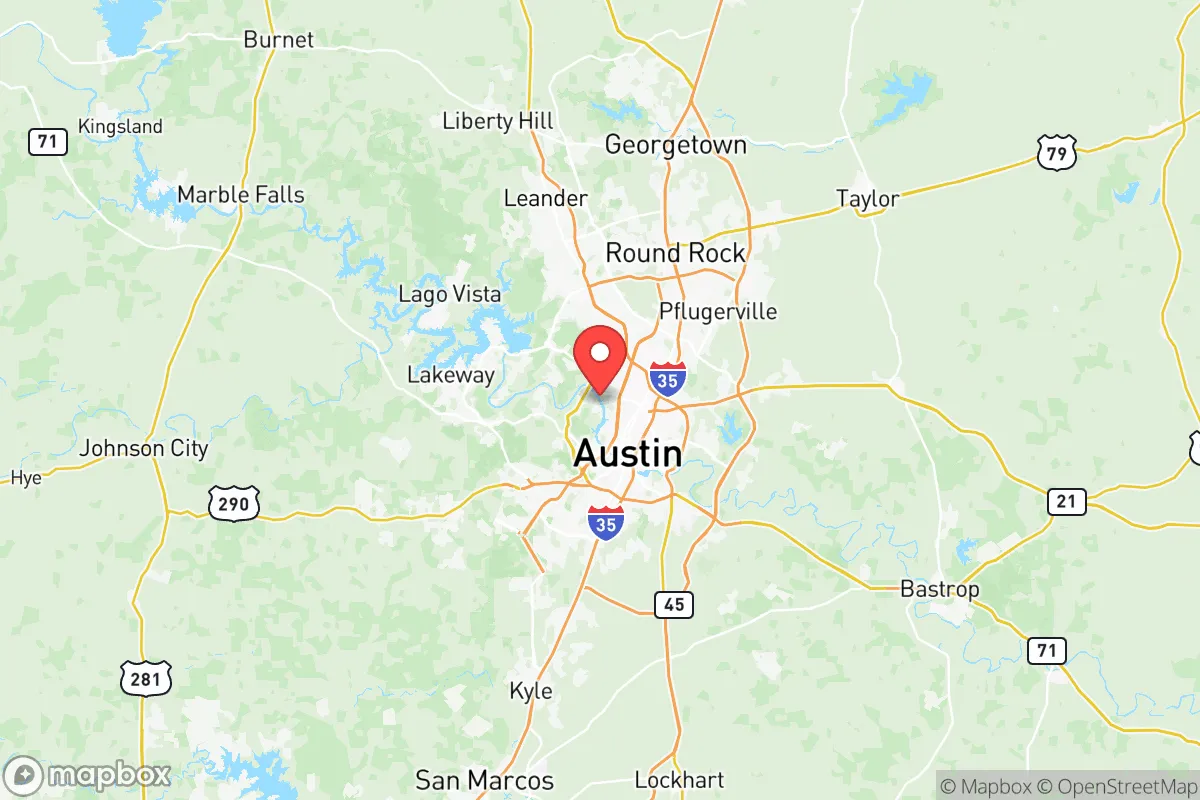
Photo: Wikipedia
Demographics of Travis County
Affluence Level in Travis County
An upper-middle-class area. Household wealth, education levels, and homeownership run ahead of national benchmarks.
People of Travis County
Travis County today is a dense, fast-growing urban core of over 1.3 million people, anchored by Austin and defined by a stark demographic split: a white plurality (47.7%) coexists with a large Hispanic population (32.5%), while Black (7.8%), East/Southeast Asian (4.2%), and Indian-subcontinent (3.2%) communities form smaller but rapidly expanding enclaves. The county is among the most educated in Texas, with 55.5% of adults holding a college degree, a figure that reflects the tech-driven migration of the past three decades. This is a place where a deep-rooted Tejano and German heritage now rubs shoulders with a transient, highly skilled workforce drawn by companies like Tesla, Apple, and Google.
Settlement & growth (pre-1960)
Before European contact, the area now called Travis County was home to the Tonkawa and Coahuiltecan peoples, who lived along the Colorado River. Spanish expeditions passed through in the 17th and 18th centuries, but no permanent Spanish settlement took hold here; the nearest mission was in San Antonio. Anglo-American settlement began in earnest after Texas independence in 1836. The Republic of Texas selected a site on the Colorado River for its new capital, naming it Waterloo in 1838, then renaming it Austin in 1839. The first wave of settlers were primarily Anglo-Americans from the U.S. South—Tennessee, Kentucky, and the Deep South—who arrived as planters and small farmers, bringing enslaved Black people with them. By 1850, enslaved African Americans made up roughly 30% of the county's population, concentrated on cotton plantations in the fertile river bottoms near Manor and Webberville.
After the Civil War and Reconstruction, freed Black families established rural communities like Pleasant Hill and St. John's (now neighborhoods within Austin). The next major wave came from German and Czech immigrants in the 1870s–1890s, drawn by railroad construction and land grants. They settled in the northern and eastern parts of the county, founding towns like Pflugerville (named for a German settler) and Elgin, which became a center for Czech sausage-making and brick manufacturing. A smaller but notable group of Italian immigrants arrived around the same time, working in the stone quarries near Bee Cave and Lakeway. The early 20th century brought Mexican migration driven by the Mexican Revolution (1910–1920) and later by agricultural labor demand. These families settled in East Austin and the unincorporated community of Del Valle, forming the foundation of today's Hispanic population.
The Dust Bowl and Great Depression pushed Okies and Arkies from the Southern Plains into Travis County in the 1930s, many finding work in construction and the growing state government. World War II and the subsequent Cold War transformed the county: the establishment of Bergstrom Air Force Base (1942) and the rise of the University of Texas at Austin as a research powerhouse drew educated migrants from across the country. By 1960, Travis County's population had reached 212,000, still majority white and Anglo, but with a significant Black and Hispanic minority concentrated in segregated neighborhoods.
Modern era (post-1965)
The 1965 Hart-Cellar Act opened immigration from Asia and Latin America, reshaping Travis County's demographics. The most dramatic change was the explosion of the Hispanic population, which grew from roughly 15% in 1970 to 32.5% today. This growth came from both continued immigration from Mexico and Central America and high birth rates among established Tejano families. The historic Hispanic core of East Austin has dispersed as gentrification pushed families eastward into Del Valle, Manor, and Kyle (in adjacent Hays County).
The 1990s and 2000s brought a massive domestic migration of educated professionals from California, the Northeast, and the Rust Belt, drawn by the tech boom and Austin's reputation as a liveable, affordable city. This wave is overwhelmingly white and Asian, and it has concentrated in Central Austin, South Austin, and the western suburbs of West Lake Hills and Lakeway. The county's foreign-born population stands at 10.1%, lower than many coastal metros, but the composition has shifted: East/Southeast Asian communities (Chinese, Vietnamese, Korean) have grown to 4.2%, with a notable Vietnamese enclave forming along North Lamar Boulevard. The Indian-subcontinent population (3.2%) is newer and more dispersed, concentrated in tech-heavy neighborhoods like Domain and Mueller, as well as the suburban Cedar Park area (in Williamson County, but drawing Travis County workers).
The Black population, historically centered in East Austin, has declined as a share of the total (7.8%) due to displacement from rising property values. Many Black families have relocated to Pflugerville and Hutto (Williamson County), while newer Black migrants from other states tend to settle in more affordable eastern Travis County. The county's white population, while still the largest group at 47.7%, is aging and increasingly concentrated in wealthier western neighborhoods, while younger white professionals are more likely to live in denser urban areas.
The future
Travis County is becoming more diverse, but the pattern is one of spatial sorting by income and education rather than integration. The Hispanic and Black populations are growing fastest in the eastern and southern suburbs—Del Valle, Manor, and Buda—while white and Asian professionals cluster in the urban core and western hills. The Indian-subcontinent and East/Southeast Asian populations are projected to grow fastest, driven by tech hiring, and will likely remain concentrated in higher-income areas. The county's overall growth rate is slowing as Austin becomes less affordable, but Travis County is still adding roughly 20,000–25,000 people per year. The next decade will see continued infill development in the urban core and expansion of exurbs like Elgin and Bastrop (the latter in Bastrop County, but functionally part of the metro).
Culturally, the county is becoming more secular and politically liberal, but the rural eastern and southern fringes remain more conservative and religious. The tension between the fast-growing, highly educated urban population and the older, working-class Hispanic and Black communities is likely to intensify over housing, schools, and political representation.
For someone moving in now, Travis County offers a bifurcated experience: a dense, expensive, progressive urban core with world-class amenities, or more affordable, family-oriented suburbs that are rapidly diversifying. The county's identity is no longer "Austin and its farms"—it is a sprawling, stratified metro where the old Tejano and German roots are being overlaid by a global, tech-driven population. The key question for newcomers is which Travis County they want to live in: the one of high-rises and bike lanes, or the one of subdivisions and school zones.

* Values derived from national, state, county, city and local statistics and may differ in a specific area. Last updated: 2026-06-08T02:21:57.000Z
Narrative content on this page is AI-generated and may contain mistakes. Verify any details that matter before acting on them.
ReloMaps may earn a commission from affiliate links at no extra cost to you.

