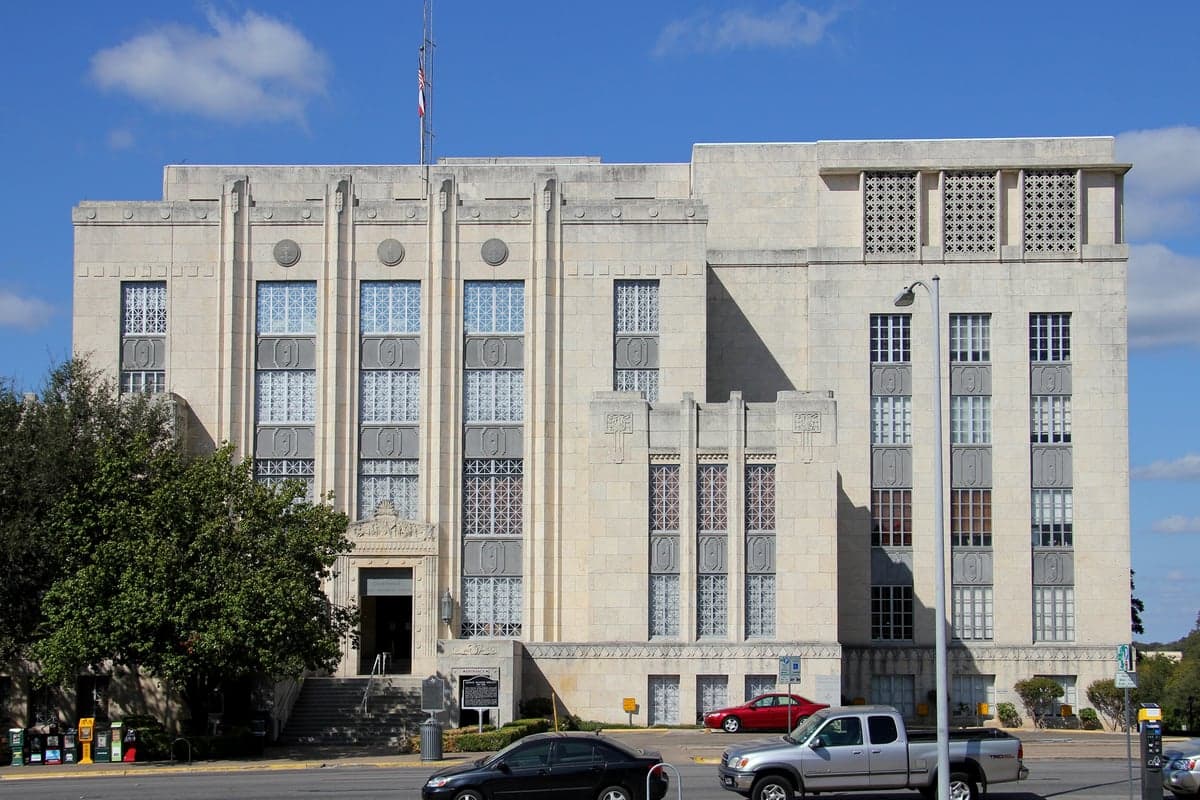
Photo: Wikipedia
Quality of Life in Travis County
A livable area that tracks near national norms for affordability, walkability, and neighborhood health.
What does Quality of Life tell us?
Quality of Life measures an area by evaluating factors like cost of living, nearby amenities, country club access, airport proximity, socioeconomic signals and neighborhood character. For large states, this is a general average — quality of life can vary dramatically between metro areas, suburbs, and rural communities within the same state.
What does this tell us?
Quality of Life measures an area by evaluating factors like cost of living, nearby amenities, country club access, airport proximity, socioeconomic signals and neighborhood character. For large states, this is a general average — quality of life can vary dramatically between metro areas, suburbs, and rural communities within the same state.
Cost of Living
55% above national average
70%
The Real Cost of Living in Travis County for 2026
| Tier | Individual | Family (4) |
|---|---|---|
| Survival | $27k | $50k |
| Comfortable | $95k | $139k |
| Luxury | $176k+ | $272k+ |
| Elite (Top 5%) | $230k+ | $356k+ |
Quality-of-Life Analysis
Travis County, Texas, offers one of the widest quality-of-life spectrums in the state, ranging from the dense urban core of Austin to the quiet, unincorporated stretches of the Hill Country. The county draws tech professionals and creatives to its high-energy city centers, while families and retirees often gravitate toward the lower-density suburbs and rural pockets that still lie within commuting distance of downtown. This diversity means that a single county can feel like three different worlds depending on where you live.
Largest town(s) & population centers
Austin is the dominant population center, home to roughly 975,000 residents and the engine of the region's economy. Daily life in Austin is defined by a fast-paced job market anchored by major employers like Tesla, Dell Technologies, and the University of Texas at Austin. The city offers a dense network of restaurants, live music venues, and cultural institutions, but that vibrancy comes with trade-offs: the average commute in Travis County sits at 25.4 minutes, though many central Austin routes push closer to 35 minutes during peak hours. Outside of Austin proper, the suburban cities of Cedar Park (partially in Williamson County) and Lakeway offer a more planned, family-oriented lifestyle with larger lot sizes and access to Lake Travis. These areas still feel connected to Austin's economy but provide quieter neighborhoods and better-rated public school districts like Lake Travis ISD.
Smaller towns & rural pockets
Travis County retains several smaller communities that feel distinctly separate from the Austin metro. Bee Cave, a village of about 9,000 residents, sits along Highway 71 and offers a mix of high-end retail at the Hill Country Galleria and direct access to the Colorado River. Further west, Dripping Springs (technically in Hays County but bordering Travis) and the unincorporated area of Spicewood are known for their rolling hills, wineries, and slower pace. In the eastern part of the county, Manor and Elgin (partially in Bastrop County) provide more affordable housing options and a small-town feel, with Manor experiencing rapid growth as a bedroom community for Austin commuters. The truly rural pockets are found in the far western reaches near Mount Gainor and along the Pedernales River, where properties often sit on 5–20 acres and residents rely on well water and septic systems.
Cost & lifestyle range
The cost of living in Travis County is well above the national average, with a composite index of 155 (100 = US average). The median home value is $487,600, and median rent is $1,669, but these figures mask a wide spread. At the high end, neighborhoods like Westlake Hills and Barton Creek see median home prices exceeding $1.5 million, with large estates and proximity to top-rated schools. In the middle, areas like South Austin (78745 zip code) and North Burnet offer smaller homes and condos in the $350,000–$450,000 range, often with shorter commutes to downtown tech hubs. At the lower end, eastern Travis County near Colton and Webberville still has homes under $300,000, though these areas are farther from major employment centers and have fewer retail amenities. Lifestyle varies accordingly: central Austin residents walk to coffee shops and use bike lanes, while those in rural Spicewood drive 30 minutes to the nearest grocery store but enjoy privacy and dark night skies.
Travis County works best for people who want access to a major urban economy without being locked into a single lifestyle. Tech workers and young professionals thrive in the dense core of Austin, while families and remote workers often choose the suburban ring or rural Hill Country for more space and lower per-square-foot costs. The county's diversity means that a person earning the median income can find a viable option somewhere within its borders, though the trade-off between commute time and housing cost is a constant calculation for most residents.

Crime in Travis County
Crime rates similar to the national median for U.S. locations.
Violent CrimeViolent Crime Analysis
Property CrimeProperty Crime Analysis
Crime Analysis
Travis County, anchored by Austin, presents a mixed safety picture where property crime rates significantly exceed both state and national averages, while violent crime sits slightly above the national median. The county's 2024 reported violent crime rate of 344.4 per 100,000 residents and property crime rate of 1,791.9 per 100,000 reflect a jurisdiction where progressive criminal justice policies under District Attorney José Garza have drawn sharp criticism from law enforcement and victims' advocacy groups. Residents in suburban areas like Lakeway and West Lake Hills generally experience lower crime rates than those in central Austin or unincorporated pockets near Del Valle and Manor.
Crime in context
Travis County's violent crime rate of 344.4 per 100,000 is roughly 10% below the Texas state average of 383 per 100,000 but about 5% above the national rate of 328 per 100,000. The property crime rate of 1,791.9 per 100,000, however, is 35% higher than the Texas average of 1,327 per 100,000 and nearly double the national figure of 1,000 per 100,000. This disparity is driven largely by auto theft and theft-from-vehicle incidents, which have surged since 2020. For comparison, neighboring Williamson County (Round Rock, Cedar Park) reports a violent crime rate of just 210 per 100,000 and a property crime rate of 1,200 per 100,000, making Travis County the most crime-prone of the five-county Austin metro area. The progressive policies of the Travis County District Attorney's office, including reduced bond amounts for repeat property offenders and a 2023 policy declining to prosecute certain low-level thefts under $2,500, are frequently cited by local police chiefs as contributing factors to the elevated property crime numbers.
What residents experience
Daily life for Travis County residents involves navigating a noticeable property crime environment. Car break-ins and catalytic converter thefts are the most common crimes reported, particularly in downtown Austin parking garages, the Domain shopping district, and near the University of Texas campus. Residential burglaries concentrate in neighborhoods near major thoroughfares like I-35 and US 290, with areas in East Austin and the Rundberg corridor seeing higher incident density. Violent crime, while less frequent, is not evenly distributed: homicides and aggravated assaults cluster in a handful of zip codes, including 78702 (east of I-35), 78744 (southeast Austin), and 78753 (north Austin near Rundberg). Suburban cities like Bee Cave (violent crime rate: 85 per 100,000) and Rollingwood (violent crime rate: 62 per 100,000) offer dramatically lower risk, while the city of Austin itself reports a violent crime rate of 398 per 100,000. The progressive judicial philosophy in Travis County—where judges routinely set low or no-cash bonds for defendants with prior theft or drug charges—means many property criminals cycle through the system quickly, a pattern that frustrates residents and business owners alike.
Neighborhood-level variation
Safety in Travis County is highly neighborhood-dependent, with sharp divides between affluent enclaves and lower-income areas. The safest communities include West Lake Hills, Rollingwood, and Lakeway, all of which report violent crime rates under 100 per 100,000 and property crime rates below 800 per 100,000. These areas benefit from small, well-funded police departments and limited commercial zones. In contrast, unincorporated areas near Del Valle and Manor experience property crime rates exceeding 2,500 per 100,000, driven by rural theft rings and limited sheriff patrol coverage. Central Austin neighborhoods like Zilker and Travis Heights see moderate property crime but very low violent crime, while the St. John's and Montopolis neighborhoods report elevated rates of both. The progressive criminal justice policies of Travis County—including the 2024 "cite and release" expansion for theft under $750—mean that even in safer neighborhoods, residents must remain vigilant about locking vehicles and securing packages, as property crime is a countywide concern that crosses municipal boundaries.
* Values derived from national, state, county, city and local statistics and may differ in a specific area. Last updated: 2026-06-08T02:21:57.000Z
Narrative content on this page is AI-generated and may contain mistakes. Verify any details that matter before acting on them.
ReloMaps may earn a commission from affiliate links at no extra cost to you.

