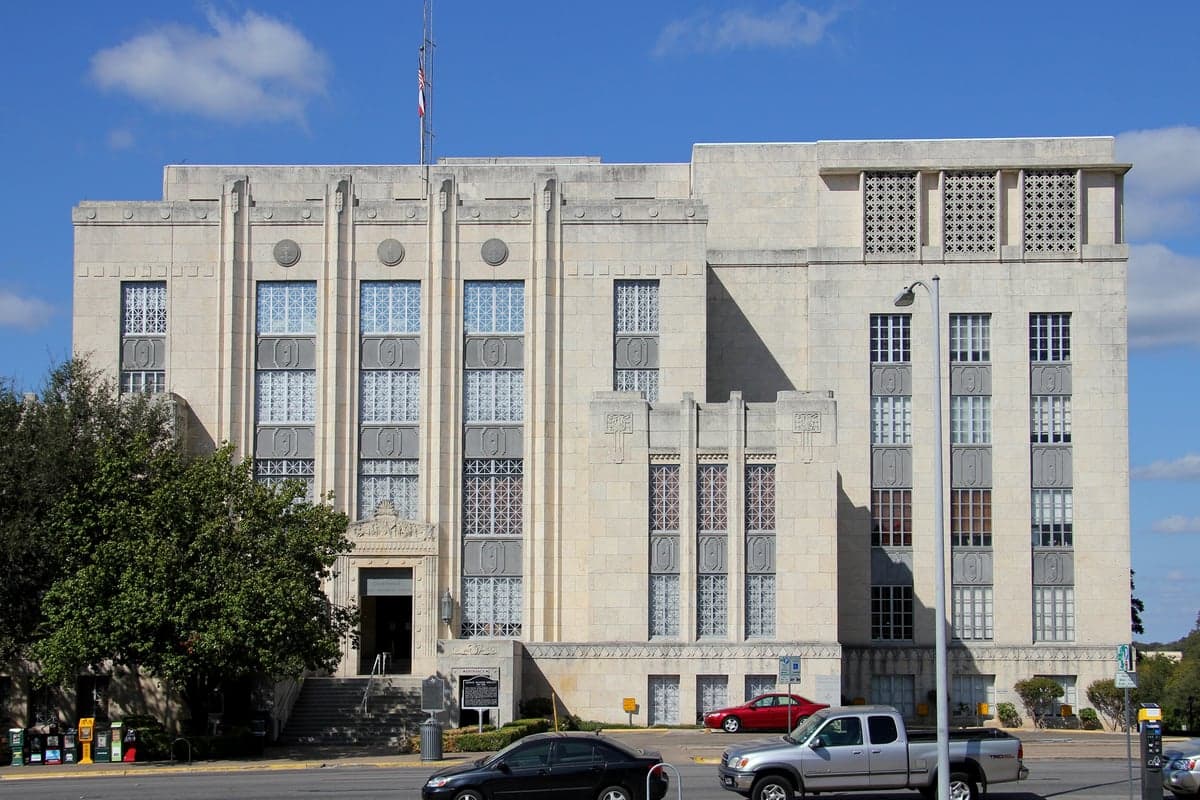
Photo: Wikipedia
Political ClimatePolitical Climate in Travis County
Showing district-level results — no local-only data available.
Local Political AnalysisPolitical Analysis of Travis County
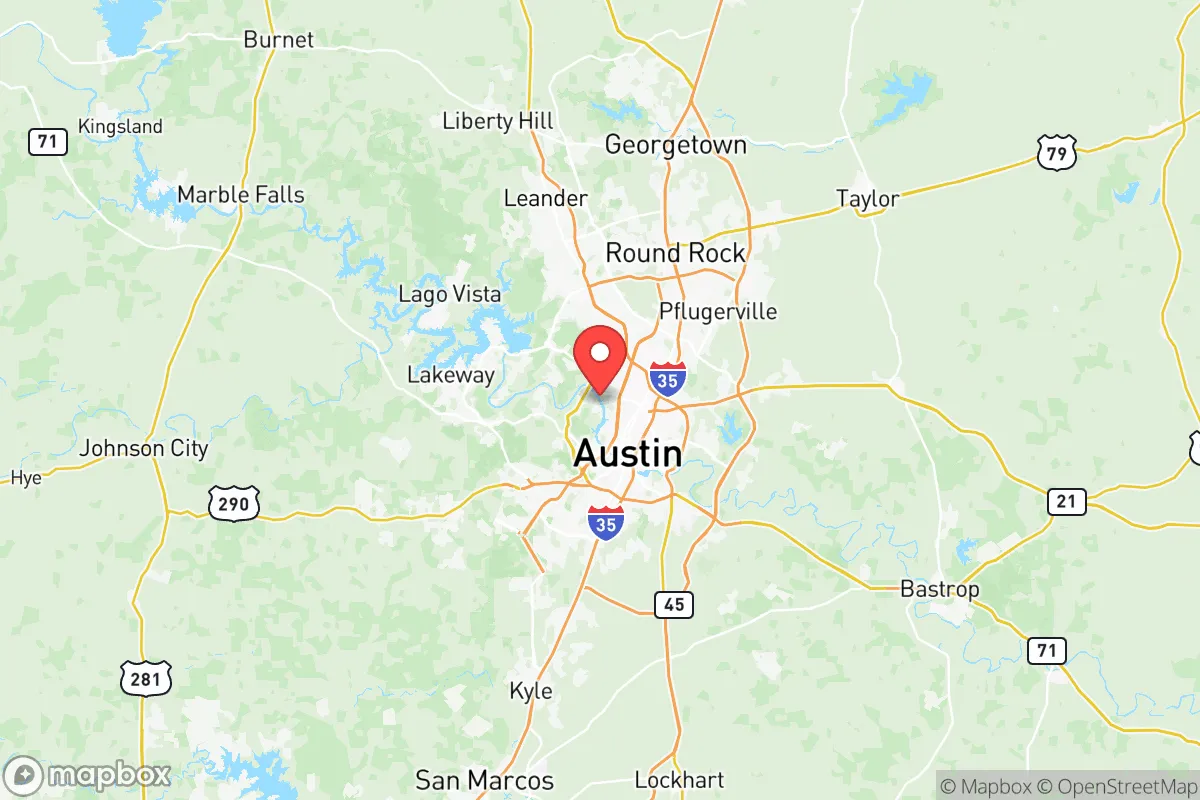
Travis County is one of the most reliably Democratic strongholds in Texas, with a Cook Partisan Voting Index (PVI) of D+26, meaning it votes about 30 points more Democratic than the state as a whole, which sits at R+4. This isn't a recent fluke; the county has been trending blue for decades, driven by the explosive growth of Austin and its surrounding suburbs. The shift accelerated noticeably after 2010, and by 2024, Democratic presidential candidates were winning the county by margins exceeding 50 points in many precincts, though the county's overall growth has also brought in some more moderate and conservative-leaning voters in the outer edges.
How it compares
The contrast between Travis County and the rest of Texas is stark. While the state tilts Republican by a modest R+4 margin, Travis County is a deep blue island in a red sea. This isn't a uniform blue, though. The core of Austin—precincts in Central Austin, South Congress, and the University of Texas area—routinely vote 80-90% Democratic. In contrast, the more rural and exurban parts of the county, like the towns of Lago Vista and Jonestown on Lake Travis, often vote Republican by 10-20 points. The swing precincts are largely in the fast-growing suburbs of Kyle and Buda (which are actually in Hays County, but the pattern holds for Travis County's own southern edge around Manchaca and Onion Creek), where new arrivals from other states and from within Texas have created a more competitive, purple dynamic. Even so, the county's overall Democratic lean is so pronounced that it effectively cancels out the Republican votes from the rest of the state in statewide elections, making Travis County a critical battleground for Democratic turnout.
What this means for residents
For liberal residents, the political climate is generally comfortable. Local governance—the Travis County Commissioners Court, the Austin City Council, and the school boards—is overwhelmingly Democratic. This translates into policies like strong tenant protections, significant funding for public transit (Project Connect), and a local minimum wage that has been pushed above the state floor. For conservative residents, the experience is more mixed. They are a clear minority in local elections, meaning their preferred candidates rarely win countywide office. However, they often find their voice in state-level politics, where Republican legislators from surrounding districts frequently challenge Austin's local ordinances (the "freedom city" vs. state preemption battles). In practice, this means a conservative resident might feel their vote doesn't count much for county judge or sheriff, but they can still reliably elect their state representative and senator, and their property taxes are influenced by a state-level cap that local officials can't easily override.
Culturally, the divide is visible in daily life. Austin's "Keep Austin Weird" ethos—with its live music, food trucks, and tech-driven counterculture—is the dominant vibe in the urban core. Drive 20 minutes west to Lakeway or Bee Cave, and you'll find a more traditional, family-oriented suburban lifestyle with a higher concentration of conservative-leaning voters. Policy-wise, the most notable distinction is the county's approach to criminal justice reform: Travis County has a well-funded public defender's office, a district attorney (José Garza) who has declined to prosecute certain low-level offenses, and a strong push for diversion programs. This stands in sharp contrast to the "tough on crime" rhetoric common in much of Texas. For anyone moving here, the key takeaway is that your experience of the political climate will depend heavily on which part of the county you land in—the deep blue urban core, the purple suburbs, or the redder rural fringe.

State Political ClimatePolitical Climate in Texas
State Political AnalysisPolitical Environment in the State
Texas has been a reliably Republican state for the past three decades, with a Cook Partisan Voting Index of R+4, but that label masks a far more volatile and shifting reality than the simple number suggests. The state hasn't voted for a Democratic presidential candidate since Jimmy Carter in 1976, yet the margin of victory has shrunk from 15.8 points in 2012 to 9 points in 2016 and just 5.6 points in 2020. The dominant coalition remains a mix of rural conservatives, suburban moderates, and evangelical voters, but explosive growth in the urban crescent—from Dallas-Fort Worth down through Austin to San Antonio and Houston—is steadily eroding the GOP's structural advantage. If you're moving here, you're landing in a state that is politically red but demographically trending purple, and the tension between those two forces defines nearly every policy debate.
Urban vs. rural divide
The political map of Texas is a study in stark contrasts. The vast rural and exurban stretches—places like Lubbock, Midland, and the Panhandle—vote Republican by margins of 60 to 80 percent. These areas anchor the GOP's statewide power. Meanwhile, the major metros are increasingly Democratic strongholds. Harris County (Houston) flipped from red to blue in 2018 and has stayed there, delivering 56% for Biden in 2020. Dallas County, Tarrant County (Fort Worth), and Bexar County (San Antonio) have all trended sharply left, with Tarrant—once the largest red county in the nation—narrowly going for Biden in 2020. The real battleground is the suburbs: Collin County (north of Dallas) and Williamson County (north of Austin) are still Republican but by shrinking margins, while Fort Bend County (southwest of Houston) is now a swing county with a majority-minority population. Austin's Travis County is the state's most liberal enclave, voting 71% for Biden, while El Paso remains a Democratic stronghold on the border. The urban-rural gap in Texas is as wide as anywhere in the country, and it's widening every election cycle.
Policy environment
Texas's policy environment is defined by a low-tax, low-regulation posture that has been remarkably consistent across both Republican and, historically, Democratic governors. There is no state income tax—funded instead by a reliance on property taxes and a 6.25% state sales tax (local options can push it to 8.25%). The regulatory climate is business-friendly, with minimal permitting hurdles and a right-to-work law that has kept unionization rates among the lowest in the nation. On education, the state funds schools through a complex "Robin Hood" system that redistributes property tax revenue from wealthy districts to poor ones, but per-pupil spending remains below the national average. Healthcare policy is notably hands-off: Texas did not expand Medicaid under the Affordable Care Act, leaving roughly 18% of the population uninsured—the highest rate in the country. Election laws have tightened in recent years: SB 1 (2021) restricted mail-in voting, added ID requirements, and banned 24-hour and drive-through voting, changes that critics say suppress turnout and supporters say protect ballot integrity. The state also has a near-total ban on abortion (trigger law effective August 2022, with no exceptions for rape or incest), permitless carry for handguns (HB 1927, 2021), and a strong Castle Doctrine and Stand Your Ground law.
Recent policy direction
The last five years have seen Texas lurch decisively to the right on social and cultural issues, even as the electorate has become more competitive. HB 1927 (2021) made Texas the 21st state to allow permitless carry of handguns, meaning any law-abiding adult 21 or older can carry a concealed or openly displayed firearm without a license or training. On education, HB 3979 (2021) and SB 3 (2023) restricted how teachers can discuss race, gender, and current events in the classroom, and the state has banned books in school libraries at a rate that leads the nation. Parental rights were strengthened through the creation of a "Parental Bill of Rights" (SB 1515, 2023), which gives parents the ability to review curriculum and opt their children out of certain instruction. On privacy and surveillance, Texas passed a data privacy law (HB 4390, 2023) that requires opt-in consent for the sale of sensitive personal data, but it's weaker than California's. Medical and bodily autonomy saw the state's near-total abortion ban take effect in 2022, with a unique civil enforcement mechanism that allows private citizens to sue anyone who performs or aids an abortion. Property rights remain strong, with no statewide rent control and a homestead exemption that protects primary residences from forced sale to pay most debts. On voting, SB 1 (2021) made it a crime for election officials to proactively mail out absentee ballot applications and added new ID requirements for mail ballots. The overall direction is toward more individual liberty on guns and property, less on reproductive choice and classroom speech, and a tightening of election procedures.
Civil unrest & political movements
Texas has a long history of political activism from both ends of the spectrum, and recent years have seen flashpoints that a new resident would notice. The 2020 George Floyd protests in Austin, Houston, and Dallas were among the largest in the country, with Austin seeing sustained demonstrations for weeks and a police budget cut that was later partially restored. On the right, the "Texas Nationalist Movement" has pushed for a referendum on secession, though it remains a fringe effort with no serious legislative traction. Immigration politics are a constant flashpoint: Governor Abbott's Operation Lone Star (2021) deployed state troopers and National Guard to the border, bused migrants to Democratic-led cities like New York and Chicago, and installed razor wire along the Rio Grande—actions that have drawn lawsuits from the Biden administration. Sanctuary city policies are banned statewide (SB 4, 2017), and sheriffs who refuse to cooperate with federal immigration enforcement face criminal penalties. Election integrity controversies have been intense, with Trump's 2020 loss in Texas sparking "Stop the Steal" rallies in Austin and Houston, and a subsequent audit of the 2020 election in four counties that found no evidence of widespread fraud. A new resident would see a state where political polarization is visible in yard signs, bumper stickers, and local news coverage, but where daily life remains largely civil and neighborly.
Projection
Over the next 5-10 years, Texas is likely to continue its slow shift toward competitiveness, driven by demographic change and in-migration from blue states. The state's population is growing by roughly 1,000 people per day, many of them moving from California, New York, and Illinois—and while not all are Democrats, the net effect is a slight leftward tilt. The suburbs of Dallas, Houston, and Austin are diversifying rapidly, and younger voters are more liberal than their parents. However, the rural and exurban vote is not shrinking in absolute terms, and the state's Republican legislature has shown a willingness to gerrymander congressional and state house districts aggressively to maintain power. Texas could be a true swing state by 2032 or 2034, but it's equally possible that continued Republican control of the redistricting process and a national environment that favors the GOP could keep it red for another decade. What's certain is that the policy environment will remain a battleground: expect more fights over school vouchers, property tax reform, abortion access (via interstate travel and medication), and election laws. A new resident moving in now should expect a state that is politically divided but functionally conservative at the state level, with a growing progressive counterweight in the cities.
For a new resident, the bottom line is this: Texas offers a low-tax, low-regulation environment with strong gun rights and a hands-off approach to property and business, but it also comes with the highest uninsured rate in the country, a restrictive abortion ban, and a public education system that is underfunded and politically contested. If you're conservative, you'll find a state government that largely reflects your values and a culture that prizes self-reliance. If you're liberal, you'll find vibrant blue cities where your views are the majority, but you'll be living under state laws you may disagree with. Either way, the political climate is dynamic, engaged, and far from settled—and that's what makes Texas interesting to watch and live in.
* Values derived from national, state, county, city and local statistics and may differ in a specific area. Last updated: 2026-06-08T02:21:57.000Z
Narrative content on this page is AI-generated and may contain mistakes. Verify any details that matter before acting on them.
ReloMaps may earn a commission from affiliate links at no extra cost to you.

