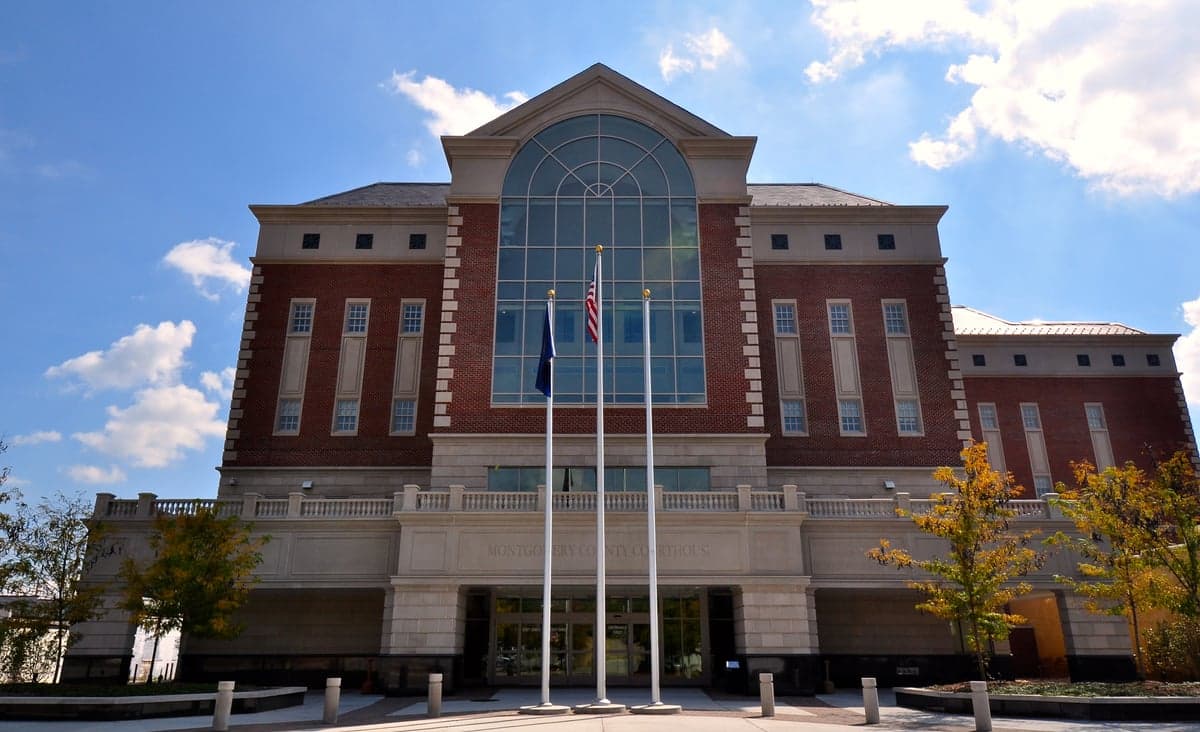
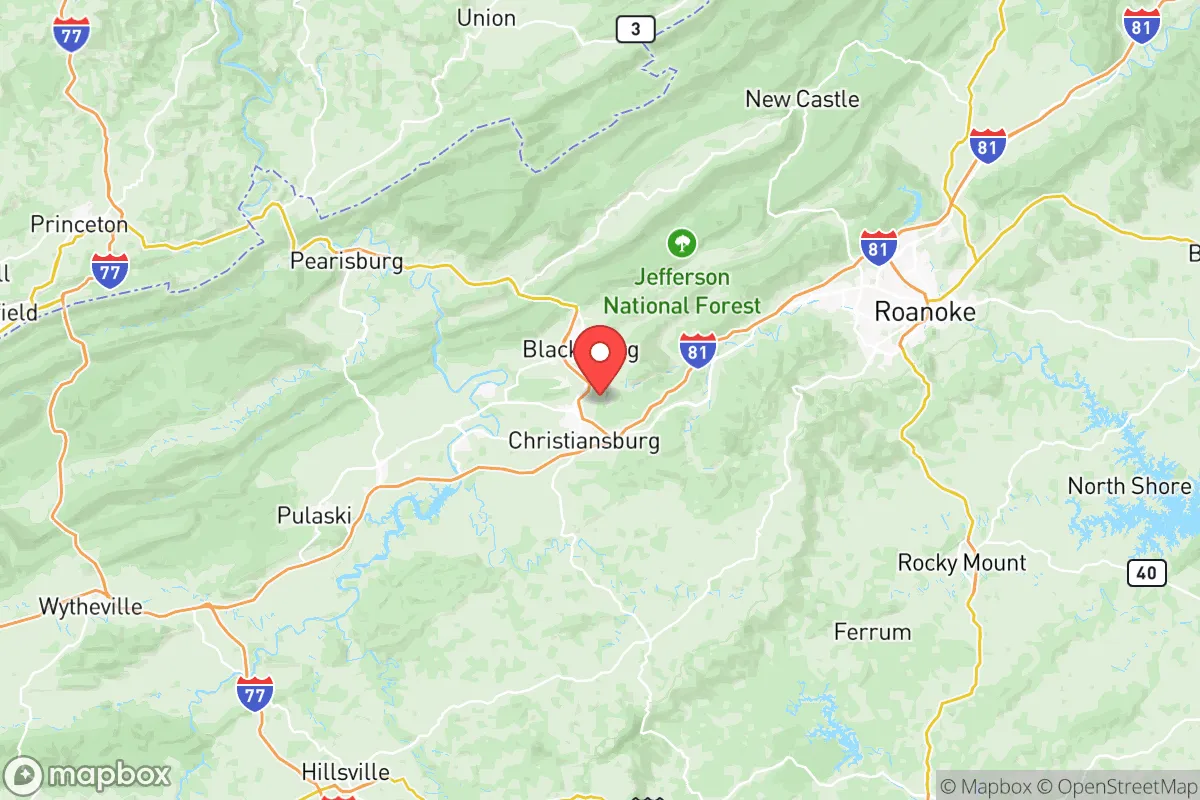
Photo: Wikipedia
Personal Sovereignty in Montgomery County
Viable for self-reliance. Generally workable, though some barriers may limit total independence.
What does Personal Sovereignty tell us?
Personal Sovereignty measures your capacity for self-reliance and independence with minimal government friction. Higher scores mean fewer barriers between you and the way you want to live... but it assumes you have the space you need and good neighbors.
What does this tell us?
Personal Sovereignty measures your capacity for self-reliance and independence with minimal government friction. Higher scores mean fewer barriers between you and the way you want to live... but it assumes you have the space you need and good neighbors.
State Policy
Energy independence: Importer (20% of energy produced in-state)
Personal Liberty
Homesteading

Personal Liberty Analysis
Montgomery County, Virginia offers a notably high degree of personal sovereignty compared to many parts of the Mid-Atlantic, with a regulatory environment that leans toward individual autonomy in taxation, self-defense, and land use. The county's rural character, combined with Virginia's status as a "right-to-work" state and its relatively restrained state-level government, creates a framework where residents in towns like Blacksburg, Christiansburg, and Radford experience markedly different levels of freedom than those in more densely regulated Northern Virginia or the Richmond metro area. For single individuals and families prioritizing independence, the key trade-offs involve balancing the county's strong gun culture and homesteading potential against local zoning variances and a moderate property tax burden.
Tax burden and regulatory posture: How Montgomery County compares to surrounding areas
Montgomery County's tax burden is moderate by Virginia standards, with a real property tax rate of approximately $1.12 per $100 of assessed value as of 2025, which is lower than the state average of $1.18 but higher than neighboring Floyd County's $0.85. The county imposes no local income tax, relying instead on a combination of property taxes, sales tax (5.3% combined state and local), and personal property tax on vehicles and business equipment. This personal property tax—a hallmark of Virginia's tax code—is a recurring annual cost that can surprise newcomers from states without such levies. Regulatory posture varies significantly within the county: Blacksburg, home to Virginia Tech, enforces stricter building codes and zoning ordinances, particularly in its historic district and near the university, while unincorporated areas like Prices Fork and McCoy operate under lighter county-level oversight. The county's comprehensive plan emphasizes preserving agricultural and rural character, which generally favors property owners who want to develop land without excessive bureaucratic hurdles, though any subdivision of parcels under 20 acres triggers a more rigorous review process. For businesses, Montgomery County is relatively business-friendly, with no local business license tax for most small operations, though home-based enterprises must register with the county and comply with zoning restrictions that vary by district.
Self-defense and gun law specifics: What Virginia's legal framework means for residents
Virginia is a "shall-issue" state for concealed handgun permits, meaning Montgomery County's circuit court must issue a permit to any qualified applicant who passes a background check and completes a certified safety course. The county has no additional local restrictions beyond state law, which allows open carry of handguns and long guns without a permit for anyone 18 or older who can legally possess a firearm. This creates a distinctly gun-friendly environment compared to states like Maryland or New York, and residents in Christiansburg and Radford routinely exercise their Second Amendment rights without social friction. However, Virginia's 2020 "one-handgun-a-month" law remains in effect, limiting handgun purchases to one per 30-day period, though long guns are exempt. The county's sheriff's office has publicly stated it will not enforce any future federal firearms restrictions it deems unconstitutional, a stance that resonates with the conservative-leaning population in the county's rural precincts. For self-defense outside the home, Virginia law recognizes the "stand your ground" doctrine, with no duty to retreat in any place where a person has a legal right to be. This legal clarity is a significant advantage for residents prioritizing personal safety autonomy, particularly in more isolated areas like Riner or Shawsville, where law enforcement response times can exceed 20 minutes.
Self-reliance and homesteading viability: Lot sizes, zoning, and off-grid feasibility
Montgomery County's zoning code explicitly supports self-reliance through its Agricultural (A-1) and Rural (R-1) districts, which permit a wide range of homesteading activities including livestock keeping, beekeeping, and crop cultivation on parcels as small as 2 acres. The minimum lot size for a single-family home in rural areas is 1 acre, but many properties in Elliston and Lafayette sit on 5- to 20-acre tracts that are ideal for small-scale farming or off-grid living. Off-grid feasibility is high in unincorporated areas: the county does not require connection to municipal water or sewer systems, allowing residents to drill wells and install septic systems with standard health department permits. Solar panel installation is permitted without special zoning approval, though net metering with Appalachian Power—the dominant utility—is capped at 25 kilowatts for residential systems, which limits full energy independence. Rainwater collection is legal and encouraged for non-potable uses, but any system used for drinking water must meet Virginia Department of Health standards. The county's building code does not require a certificate of occupancy for structures under 200 square feet, making small sheds, workshops, or tiny houses feasible without a full permitting process. For those seeking maximum autonomy, properties in the county's western end near Newport offer the lowest density and fewest regulatory constraints, while areas closer to Blacksburg and Christiansburg have more restrictive covenants and homeowners' association rules that can limit homesteading activities.
Personal liberties: Parental rights, medical autonomy, speech, and property
Montgomery County operates within Virginia's broader legal framework, which has seen significant shifts in personal liberties over the past decade. Parental rights are strongly protected under state law, with Virginia Code §1-240.1 affirming parents' "fundamental right to make decisions concerning the upbringing, education, and care of their children." The county's school board has maintained a policy of parental notification for any health or counseling services provided to students, and local school divisions in Blacksburg and Christiansburg have resisted state-level mandates on curriculum content that conflict with community values. Medical autonomy is more constrained: Virginia requires parental consent for minors seeking most medical treatments, including vaccinations, but the state's vaccine mandate for school attendance remains in effect, with only narrow religious exemptions available. Property rights are robust in Montgomery County, with no county-level rent control or short-term rental bans outside of Blacksburg's town limits, where Airbnb-style rentals are restricted in residential zones. Free speech is protected under the First Amendment, and the county has no local ordinances restricting political signage or public assembly, though Virginia's "campaign finance disclosure" laws require reporting for any independent expenditures over $100. For families and individuals who value these liberties, the county's balance of state-level protections and local flexibility is generally favorable, though those seeking maximal medical autonomy may find Virginia's regulatory environment more restrictive than states like Idaho or Oklahoma.
Overall, Montgomery County offers a solid foundation for personal sovereignty that ranks above the Virginia average but below the most libertarian-leaning counties in the western United States. The combination of a moderate tax burden, strong gun rights, permissive homesteading regulations, and robust parental rights creates an environment where self-reliant individuals and families can exercise significant control over their lives. The key differentiator is location within the county: Blacksburg and Christiansburg offer more services but also more regulation, while Radford, Riner, and Shawsville provide greater autonomy at the cost of convenience. For a conservative-leaning reader weighing relocation, Montgomery County represents a pragmatic middle ground—enough freedom to live independently, but within a state that still maintains a functional regulatory framework. It is not a haven for those seeking to opt out of all government oversight, but it is a place where personal responsibility and community self-reliance are genuinely valued and legally supported.

* Values derived from national, state, county, city and local statistics and may differ in a specific area. Last updated: 2026-09-23T05:16:59.000Z
Narrative content on this page is AI-generated and may contain mistakes. Verify any details that matter before acting on them.
ReloMaps may earn a commission from affiliate links at no extra cost to you.

