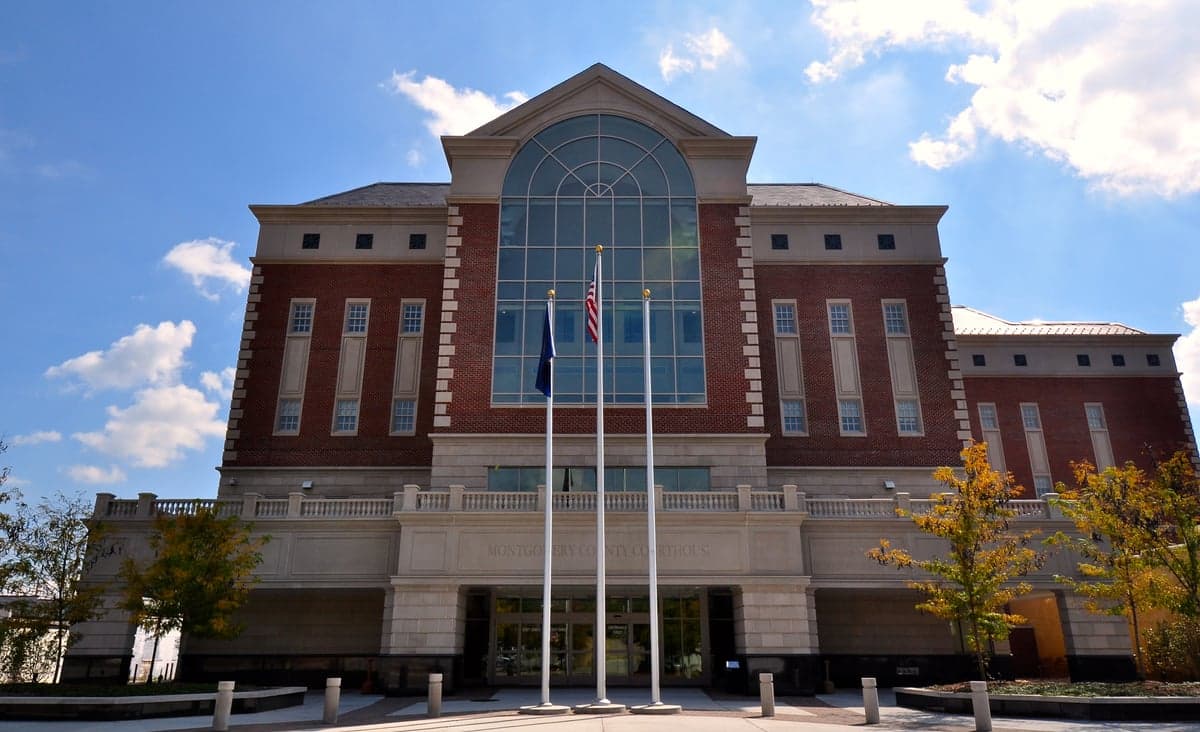
Photo: Wikipedia
Demographics of Montgomery County
Affluence Level in Montgomery County
A middle-class area roughly in line with national averages across income, home values, education, and employment.
People of Montgomery County
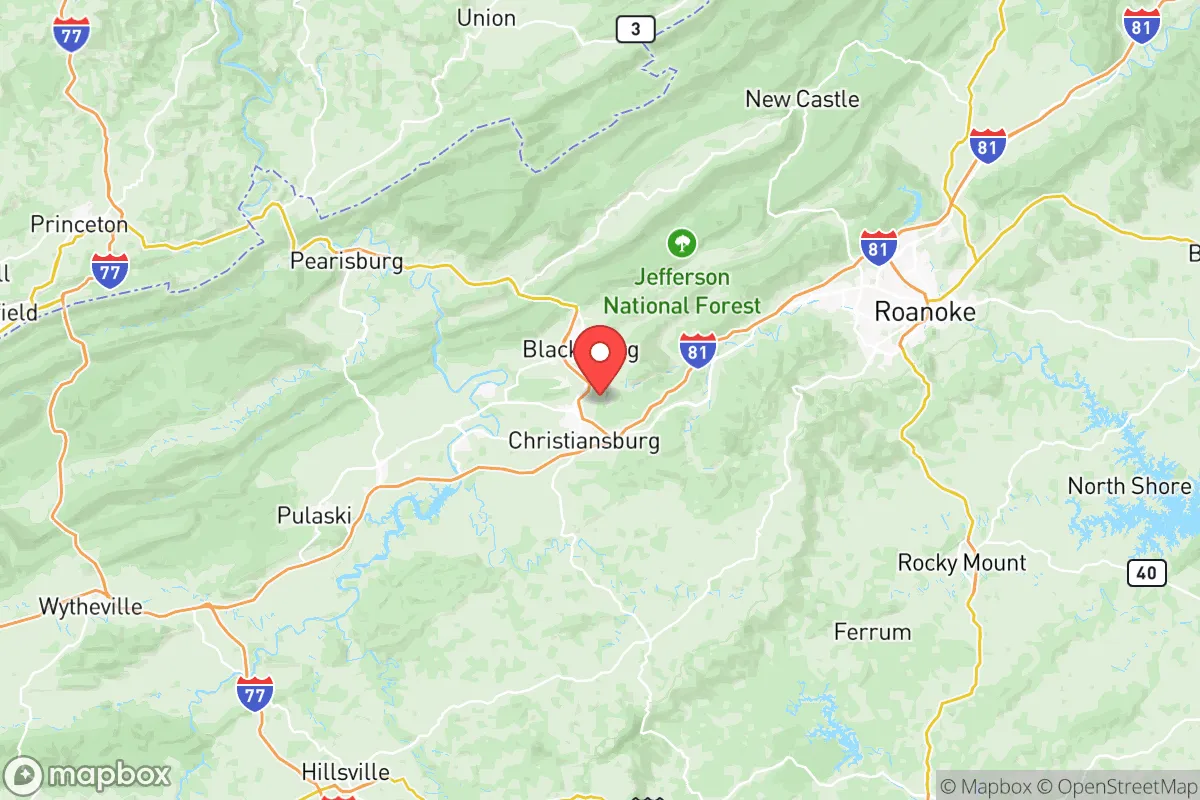
Montgomery County, Virginia, is home to roughly 99,000 residents, a population shaped by its dual identity as both a historic Appalachian crossroads and a modern university-anchored community. The county’s character is defined by the presence of Virginia Tech in Blacksburg and Radford University in Radford, giving it a notably young, educated, and transient feel—48.4% of adults hold a college degree, well above the national average. Yet the county also retains a strong rural and small-town conservative undercurrent, with a population that is 81.5% white and a foreign-born share of just 6.0%, reflecting slower demographic change than Virginia’s urban crescent. The result is a place where a politically engaged, family-oriented base of lifelong residents coexists with a large student and academic workforce, creating a distinctive blend of Blue Ridge tradition and research-driven modernity.
Settlement & growth (pre-1960)
Long before European settlement, the region now known as Montgomery County was part of the vast homeland of the Siouan-speaking Tutelo and Saponi peoples, who lived in fortified villages along the New River and its tributaries. By the mid-1700s, pressure from the Iroquois Confederacy to the north and encroaching English colonists had pushed these groups out, and the area became a contested frontier. The first permanent European settlers were primarily Scots-Irish and German migrants moving southwest from Pennsylvania and the Shenandoah Valley along the Great Wagon Road, arriving in the 1740s and 1750s. They were drawn by the promise of cheap, fertile land in the New River Valley, granted through the Loyal Company and other speculative ventures. These early families—names like Ingles, Draper, and Preston—established farms and small mills in what are now Blacksburg, Christiansburg, and the rural stretches of Price’s Fork and Mountain Lake.
Montgomery County was formally created from Fincastle County in 1777, and its early economy was built on subsistence agriculture, livestock grazing, and small-scale ironworks. The county remained overwhelmingly rural and white through the 19th century, with enslaved African Americans making up roughly 20% of the population before the Civil War—a lower proportion than in Virginia’s Tidewater, but concentrated on larger farms near the New River. After the war, the Black population declined sharply as freed families moved toward industrial jobs in Roanoke and northern cities. The county’s transformative event came in 1872 with the founding of Virginia Agricultural and Mechanical College (now Virginia Tech) in Blacksburg. This land-grant institution began drawing faculty, students, and support staff from across Virginia and the broader South, slowly diversifying the county’s base. The arrival of the Norfolk and Western Railway through Christiansburg in the 1880s spurred a modest commercial boom, turning the county seat into a regional trading hub for tobacco, livestock, and timber. By 1900, the population had reached roughly 15,000, still overwhelmingly native-born white, with small enclaves of German and Irish railroad workers in Shawsville and Riner.
The first half of the 20th century saw steady, gradual growth. The expansion of Virginia Tech under presidents like John McBryde and Julian Burruss turned Blacksburg from a sleepy village into a college town, while the construction of U.S. Route 460 and later Interstate 81 improved connections to Roanoke and the rest of the state. The Great Depression and World War II brought little new immigration, but the post-war G.I. Bill flooded Virginia Tech with returning veterans, doubling enrollment and spurring a housing boom in Blacksburg and Merrifield. By 1960, the county’s population had reached 29,000, still 95% white, but with a growing professional class tied to the university and the nascent research economy.
Modern era (post-1965)
The 1965 Hart-Cellar Act had a muted immediate effect on Montgomery County compared to Virginia’s suburbs of Washington, D.C., but its long-term impact is visible in the county’s small but growing Asian and Indian populations. The most significant driver of demographic change has been the expansion of Virginia Tech into a top-tier research university, which began actively recruiting international graduate students and faculty in the 1980s and 1990s. Today, East and Southeast Asian communities—primarily Chinese, Korean, and Vietnamese—make up 4.1% of the county’s population, concentrated in Blacksburg near the Virginia Tech campus and in the apartment complexes along South Main Street and Prices Fork Road. Indian-subcontinent residents, at 2.0%, form a smaller but highly educated cohort, many employed in engineering and computer science roles at Virginia Tech and the nearby Corporate Research Center. These groups have established cultural organizations, grocery stores, and places of worship—including the Hindu Temple of Virginia Tech and the Korean Presbyterian Church in Blacksburg—but have not formed the dense ethnic enclaves seen in larger metro areas.
Domestic migration has also reshaped the county. The rise of the New River Valley as a technology and engineering hub has attracted professionals from the Rust Belt, the Northeast, and California, drawn by lower housing costs and the region’s natural amenities. The Hispanic population, now 4.6%, has grown steadily since the 1990s, driven by labor demand in construction, landscaping, and agriculture. Many Hispanic families have settled in Christiansburg and Radford, where affordable housing and proximity to poultry processing and light manufacturing plants provide entry-level employment. The Black population, at 3.9%, remains relatively small and is concentrated in Christiansburg and the rural communities of Wake Forest and McCoy, with a historic anchor in the St. Paul African Methodist Episcopal Church in Christiansburg. Suburbanization has been most pronounced along the U.S. 460 corridor between Blacksburg and Christiansburg, where new subdivisions, shopping centers, and the New River Valley Mall have created a continuous suburban strip that now houses a significant share of the county’s families.
The future
Montgomery County’s population is projected to continue growing modestly, driven by Virginia Tech’s steady enrollment increases and the broader New River Valley’s appeal as a lower-cost alternative to Northern Virginia. The county is becoming slightly more diverse, but at a slower pace than the state as a whole. The Asian and Indian populations are likely to grow as Virginia Tech expands its international recruitment and as tech-adjacent industries—such as the planned data centers and advanced manufacturing facilities in the region—attract skilled immigrants. The Hispanic share is also expected to rise, particularly in Christiansburg and Radford, as service-sector and construction jobs continue to draw families. However, the white population will remain the overwhelming majority for the foreseeable future, and the county’s political and cultural identity—a mix of Appalachian conservatism and university liberalism—is unlikely to shift dramatically. New residents are dispersing across the Blacksburg-Christiansburg corridor rather than forming concentrated ethnic neighborhoods, which means the county’s social fabric will remain relatively integrated but also less visibly diverse than larger metro areas.
For someone moving to Montgomery County now, the bottom line is this: you are entering a community that is educated, family-oriented, and economically anchored by two major universities, but that remains culturally and demographically more homogeneous than much of modern Virginia. The county offers a safe, high-quality school system, strong job prospects in engineering and education, and a slower pace of life, but it lacks the deep ethnic diversity and urban amenities of places like Richmond or Northern Virginia. The people here are shaped by a history of Scots-Irish self-reliance, university-driven growth, and a cautious openness to change—a combination that makes Montgomery County a stable, welcoming, but distinctly traditional place to put down roots.

* Values derived from national, state, county, city and local statistics and may differ in a specific area. Last updated: 2026-09-23T05:16:59.000Z
Narrative content on this page is AI-generated and may contain mistakes. Verify any details that matter before acting on them.
ReloMaps may earn a commission from affiliate links at no extra cost to you.

