
Photo: Wikipedia
Political ClimatePolitical Climate in Montgomery County
Showing district-level results — no local-only data available.
Local Political AnalysisPolitical Analysis of Montgomery County
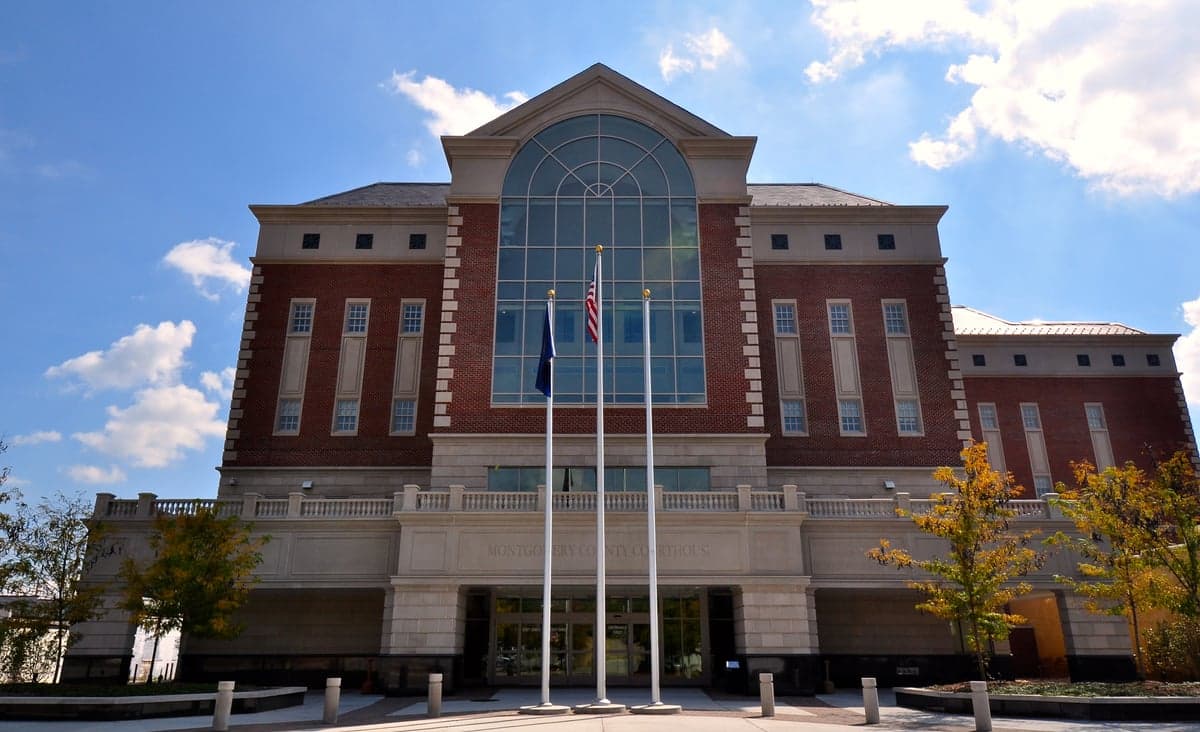
Montgomery County, Virginia, is a solidly conservative area with a Cook PVI of R+22, meaning it votes about 22 points more Republican than the nation as a whole. That puts it in stark contrast to the state of Virginia, which has shifted to a D+4 lean in recent years, driven largely by the explosive growth of Northern Virginia and the Richmond suburbs. But if you spend any time here, you quickly realize that "conservative" doesn't tell the whole story—there's a real split between the rural, deep-red precincts and the more moderate, even blue-leaning pockets around the university.
How it compares
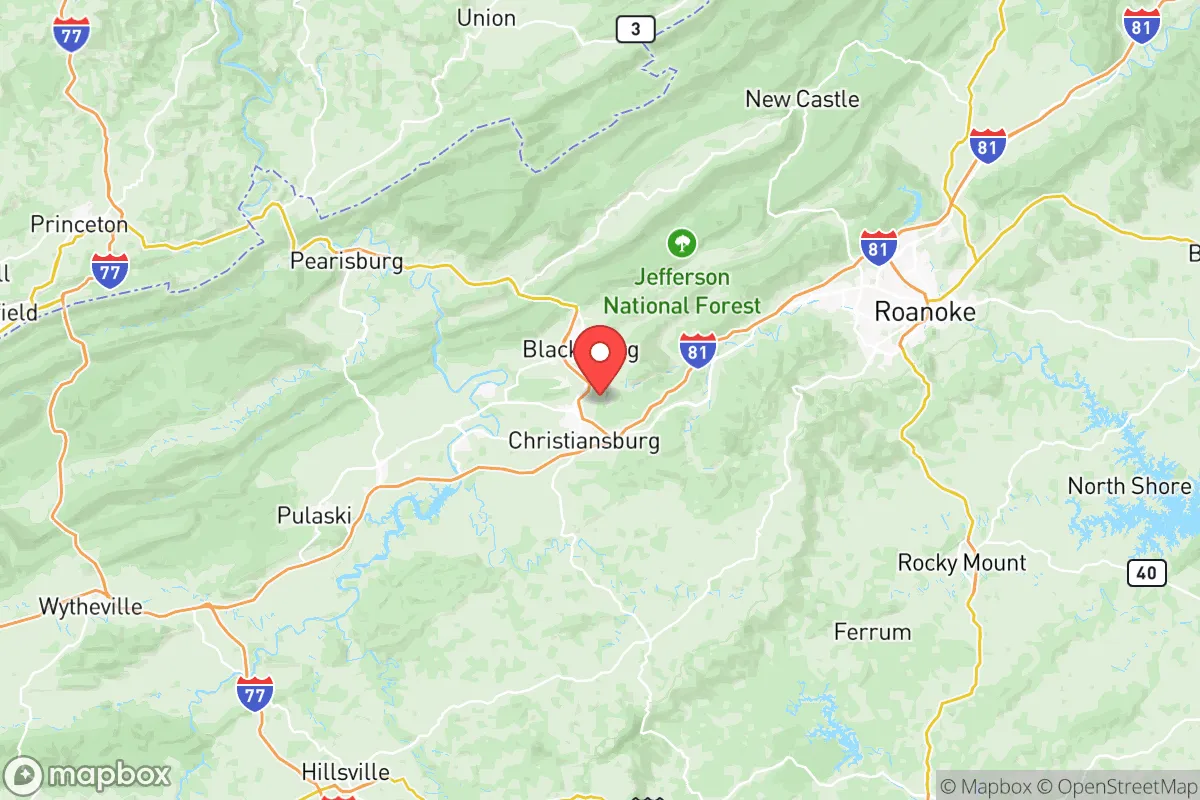
The county's R+22 rating is a full 26 points to the right of Virginia's D+4 statewide average. That gap is one of the widest in the state, and it's not just a statistical quirk—it reflects a genuine cultural and economic divide. The rural western and southern parts of the county, like the towns of Riner and Prices Fork, are overwhelmingly Republican, often voting 70-80% for GOP candidates. In contrast, the precincts around Blacksburg and Virginia Tech are the county's liberal anchor, frequently voting Democratic by similar margins. Christiansburg, the county seat, is the real battleground—its precincts can swing either way, with newer subdivisions near the I-81 corridor trending more moderate, while older neighborhoods closer to the historic downtown lean red. This internal split means that while the county as a whole is reliably Republican, local elections can be competitive, especially for school board and board of supervisors seats where turnout in the university precincts can tip the balance.
What this means for residents
For conservative residents, Montgomery County feels like a safe harbor in a state that's trending blue. You'll find that local government, law enforcement, and most civic institutions reflect traditional values, and it's common to see campaign signs for Republican candidates on nearly every rural road. For liberal residents, especially those in Blacksburg, the county's overall lean can feel isolating, but the university provides a strong counterweight—there's an active Democratic party presence, progressive student groups, and a local culture that's more tolerant and diverse than the surrounding countryside. In practice, this means that while state-level politics may feel distant, local issues like land use, school funding, and economic development are where the real friction happens. The county's conservative majority tends to favor limited government and low taxes, while the Blacksburg-area minority pushes for more investment in public services and environmental protections.
Culturally, the biggest distinction is the presence of Virginia Tech. The university brings in a steady stream of students, faculty, and staff from across the country and the world, creating a bubble of progressive thought that sits uneasily alongside the county's rural, agricultural roots. You'll see this in everything from the local food scene—farm-to-table restaurants in Blacksburg versus classic diners in Christiansburg—to the way people talk about growth and development. The county's conservative leadership has generally been pro-business and pro-development, but there's a growing tension between those who want to preserve the area's rural character and those who see the university as an engine for economic diversification. Long-term, the trajectory is toward a slow, steady blue shift as the university's influence grows and more retirees and remote workers move in, but for now, Montgomery County remains a reliably red island in a purple state.

State Political ClimatePolitical Climate in Virginia
State Political AnalysisPolitical Environment in the State
Virginia has shifted from a reliably purple swing state to a solidly Democratic-leaning one over the past two decades, carrying a Cook PVI of D+4. The transformation is driven by explosive growth in the Washington, D.C. suburbs—particularly in Northern Virginia—which now supply the lion’s share of Democratic votes, while the rest of the state remains competitive or outright Republican. A relocator should understand that Virginia’s politics are a tale of two Virginias: the densely populated, diverse, and increasingly progressive urban crescent, and the more rural, conservative, and economically challenged areas west and south of Richmond.
Urban vs. rural divide
The political map of Virginia is starkly split. The Democratic stronghold is the “urban crescent” stretching from Northern Virginia (Fairfax, Loudoun, Prince William counties) down through Richmond and into Hampton Roads (Norfolk, Virginia Beach). These areas account for roughly 70% of the state’s population. Loudoun County, once a Republican bastion, flipped decisively blue in the 2010s and now votes D+20 or more in statewide races. Conversely, rural and exurban regions—like the Shenandoah Valley (Harrisonburg, Staunton), Southside Virginia (Danville, Martinsville), and Southwest Virginia (Bristol, Roanoke)—vote heavily Republican. The 2021 gubernatorial race saw Republican Glenn Youngkin win by running up huge margins in these rural areas while losing the suburbs by narrower-than-expected margins. The divide is not just geographic but cultural: Northern Virginia’s economy is tied to federal contracting and tech, while rural areas depend on agriculture, manufacturing, and natural resources.
Policy environment
Virginia’s policy landscape reflects this split. The state has a relatively low income tax rate (top rate of 5.75%) but a high sales tax (5.3% state plus local add-ons). Property taxes are set locally and vary widely—Fairfax County’s effective rate is about 1.1%, while rural counties like Lee County are under 0.6%. Education policy is a flashpoint: Virginia has a statewide school choice program (the Education Improvement Scholarships Tax Credit) but no universal voucher system. The state’s public schools are among the best nationally, but funding disparities between wealthy Northern Virginia districts and poorer rural ones are stark. Healthcare policy is similarly divided: Virginia expanded Medicaid under the Affordable Care Act in 2018, covering roughly 400,000 low-income adults, but the state also has some of the most restrictive abortion laws in the South after a 2024 law banned most abortions after 15 weeks. Election laws are moderately restrictive: Virginia requires a photo ID to vote, has no-excuse absentee voting, and has same-day voter registration available during early voting but not on Election Day.
Recent policy direction
Virginia’s recent legislative history shows a state lurching between Democratic and Republican control. Under Governor Glenn Youngkin (2022-2026), the state enacted a 15-week abortion ban, expanded school choice through lab schools and charter school funding, and passed a “Parents’ Bill of Rights” requiring schools to notify parents of curriculum changes and health services. On gun rights, Virginia remains a “shall-issue” state for concealed carry, but Youngkin signed a law banning “ghost guns” and raising the purchase age for assault-style rifles to 21. Property rights saw a win for landowners with a 2024 law limiting eminent domain for private economic development. On privacy, Virginia passed the Consumer Data Protection Act in 2021, giving residents control over how companies use their personal data. Medical and bodily autonomy is a mixed bag: the 15-week abortion ban is among the strictest in the South, but the state also legalized marijuana possession (up to one ounce) in 2021, though retail sales remain unregulated. Voting access has tightened slightly: the 2024 session saw a law requiring all absentee ballots to be received by 7 p.m. on Election Day, ending the previous three-day grace period.
Civil unrest & political movements
Virginia has been a stage for some of the most visible political flashpoints in the country. The 2017 “Unite the Right” rally in Charlottesville, which turned violent, remains a scar on the state’s reputation and galvanized both left-wing anti-fascist movements and right-wing nationalist groups. Immigration politics flared in 2023 when Youngkin deployed the Virginia State Police to assist with border enforcement in Texas, a move that drew praise from conservatives and condemnation from immigrant-rights groups. Sanctuary city debates are active: Fairfax County and Richmond have declared themselves “welcoming cities” limiting cooperation with ICE, while rural counties like Russell and Tazewell have passed resolutions opposing such policies. Election integrity remains a live issue: Youngkin’s 2021 victory was fueled in part by voter concerns over ballot security, and the state has since purged roughly 3,000 non-citizens from voter rolls. A new resident will notice the political polarization in everyday life—yard signs, bumper stickers, and local news coverage are heavily partisan, especially in the suburbs.
Projection
Over the next five to ten years, Virginia’s political trajectory points toward continued Democratic dominance, but with a caveat. Northern Virginia’s population growth shows no signs of slowing, and its voters are becoming more Democratic with each cycle. However, the 2021 gubernatorial race showed that a moderate Republican like Youngkin can still win by appealing to suburban parents and rural voters on education and economic issues. The key swing areas are the exurbs—places like Spotsylvania, Stafford, and Hanover counties—where growth is bringing in a mix of D.C. commuters and locals. Demographic shifts favor Democrats: the state’s growing Asian and Hispanic populations, concentrated in Northern Virginia, lean Democratic. But the rural vote is hardening, and if national trends push the GOP further right, Virginia could become more polarized. A relocator moving in now should expect a state where state government flips between parties every few years, but where the cultural and economic center of gravity is increasingly in the blue urban crescent.
For a new resident, the bottom line is this: Virginia offers a high quality of life with good schools and a strong economy, but you will live in a politically divided environment. If you lean conservative, you’ll find your views represented in rural and exurban areas, but you’ll be outvoted on most statewide issues. If you lean liberal, you’ll feel at home in the cities and suburbs, but you’ll face periodic Republican governors who can slow or reverse progressive policies. The practical takeaway is to choose your locality carefully—the political culture of Loudoun County is night-and-day different from that of Roanoke or Bristol. Virginia is not a red state or a blue state; it’s a state of two colors, and where you land determines which one you experience most.
* Values derived from national, state, county, city and local statistics and may differ in a specific area. Last updated: 2026-09-23T05:16:59.000Z
Narrative content on this page is AI-generated and may contain mistakes. Verify any details that matter before acting on them.
ReloMaps may earn a commission from affiliate links at no extra cost to you.

